BTC - Bitcoin
 USDTERC20 - USDT ERC20
 ETH - Ethereum
 BNB - Binance
 BCH - Bitcoin Cash
 DOGE - Dogecoin
 TRX - TRON
 USDTTRC20 - USD TRC20
 LTC - LiteCoin

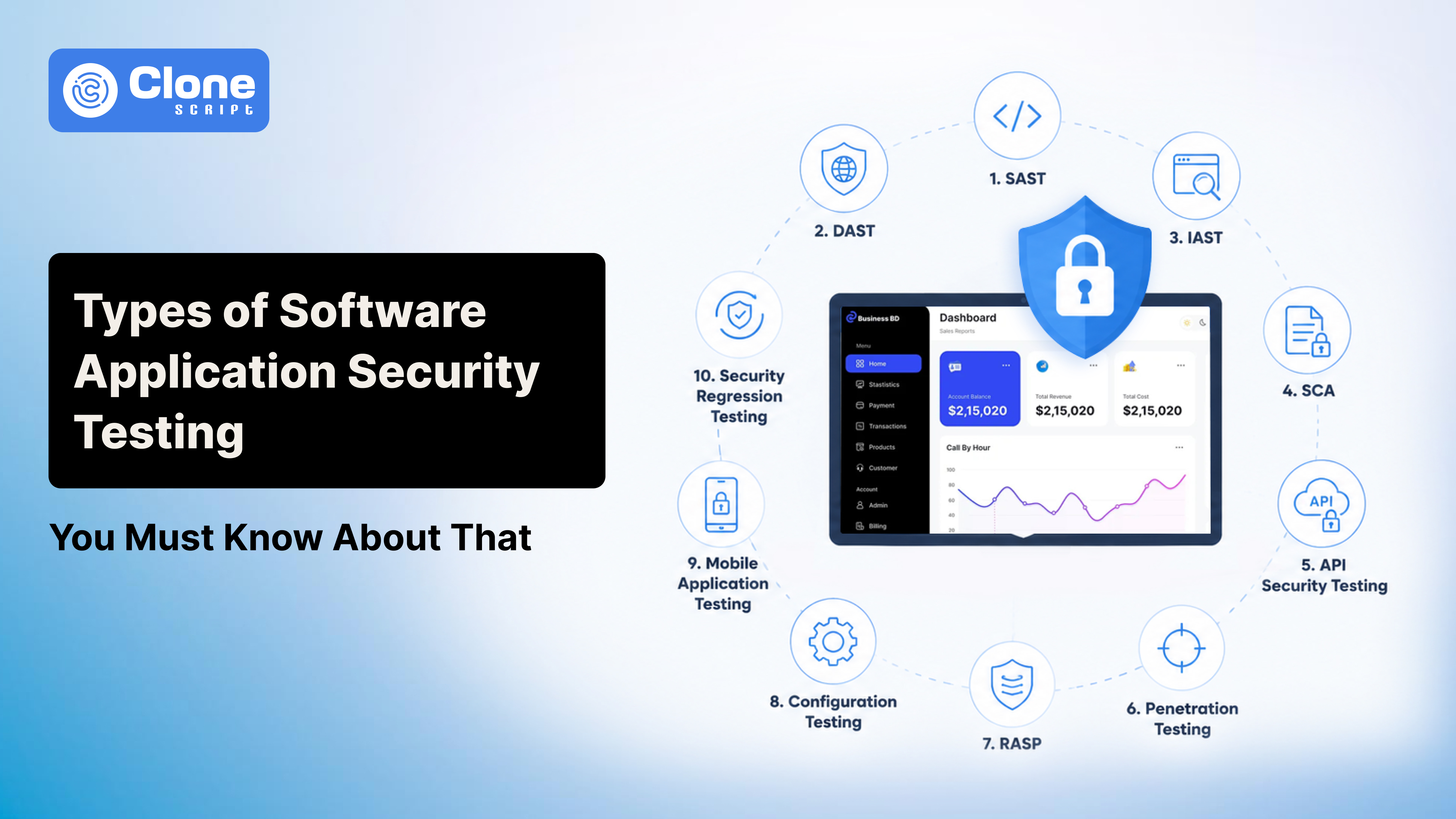
The 10 Types of Software Application Security Testing to Prove First-Grade Safety
Do only large enterprises suffer from software issues? This fact no longer exists.
Now, startups, SaaS platforms, fintech apps, healthcare systems, and e-commerce websites are all targets.
Take a look at these statistics.
In 2025, the average cost of a data breach reached $4.88 million globally, according to IBM’s annual Cost of a Data Breach report.
At the same time, API attacks, ransomware, and cloud misconfigurations continue to rise across industries.
That means security testing is no longer a “final-stage QA task.” It has become a core part of the software development strategy.
The problem is that many businesses still rely on only one type of security test, usually vulnerability scanning or penetration testing, and assume their application is secure.
That approach fails in modern environments.
Today’s applications are built with:
-
Third-party libraries
-
Containers
-
Microservices
-
Cloud infrastructure
-
CI/CD pipelines
-
AI-assisted code
Every layer introduces new attack surfaces.
This is why modern DevSecOps teams use multiple types of software application security testing together instead of depending on a single assessment.
This guide explains the 10 most important application security testing methods businesses should understand in 2026.
Why Security Testing Matters More Than Ever
Modern applications change constantly.
A SaaS platform may deploy code several times daily. APIs connect with payment gateways, CRMs, analytics tools, and AI systems. Open-source dependencies are updated weekly.
That speed creates risk.
According to industry research, over 70% of applications contain at least one serious security vulnerability during production deployment.
APIs have become one of the biggest attack vectors because modern applications exchange massive amounts of data between services.
Security testing helps organizations:
-
Detect vulnerabilities before attackers do
-
Reduce breach costs
-
Maintain compliance requirements
-
Protect customer trust
-
Prevent downtime
-
Secure APIs and cloud infrastructure
-
Improve secure development practices
That principle applies to software security: surface-level fixes no longer work.
Businesses need deep, layered protection.
Types of Security Testing Happen in Software Development
Take this list of kinds of testing the DevSecOps team prefers before making the product live. To avoid hidden costs of software development, understanding these security methods is important.
1. Static Application Security Testing (SAST)
Static Application Security Testing analyzes source code before execution, helping developers identify vulnerabilities during early software development stages.
What SAST Detects
-
SQL injection flaws
It detects insecure database queries that attackers exploit to manipulate databases, steal records, or bypass authentication systems.
-
Hardcoded credentials
It helps identify passwords, API keys, and sensitive authentication details directly embedded within application source code.
-
Insecure authentication logic
SAST finds weak login implementations that may allow unauthorized access through poor session validation processes.
-
Buffer overflows
This software testing detects memory handling vulnerabilities that attackers exploit to execute malicious code or crash application environments.
-
Weak encryption usage
Static application security testing identifies outdated cryptographic algorithms and insecure encryption implementations, exposing sensitive user or business information.
-
Cross-site scripting (XSS)
This security testing finds malicious script injection vulnerabilities capable of stealing cookies, sessions, and sensitive browser-based user data.
-
Code quality issues
This SAST detects insecure coding practices, logic weaknesses, and structural issues, potentially creating future security vulnerabilities.
Best Use Cases for Static Application Security Testing
-
Agile development environments
This method of application testing supports rapid vulnerability detection during continuous development cycles without slowing software release timelines significantly.
-
DevSecOps pipelines
SAST integrates automated code security testing directly into CI/CD workflows for continuous secure software delivery practices.
-
Continuous integration workflows
It automatically scans every code commit, helping teams identify vulnerabilities before deployment into staging environments.
-
Enterprise application development
This software testing protects large-scale applications handling sensitive business data, financial transactions, and enterprise customer information securely.
-
Secure coding enforcement
This helps development teams maintain internal security standards and improve secure programming practices consistently.
Limitations of SAST
-
Runtime vulnerabilities
This testing cannot identify vulnerabilities triggered only during live application execution, server interactions, or runtime user activities.
-
Business logic abuse
SAST fails to detect workflow manipulation vulnerabilities involving application functionality rather than insecure coding patterns directly.
-
Misconfigured infrastructure
Static application testing does not analyze cloud settings, server configurations, or infrastructure-related security weaknesses affecting deployed applications.
-
Authentication session issues
This type of software testing cannot fully evaluate token handling, session expiration, or runtime authentication management vulnerabilities effectively.
2. Dynamic Application Security Testing (DAST)
Dynamic Application Security Testing evaluates running applications externally by simulating cyberattacks against live systems and application environments.
What DAST Identifies
-
Authentication weaknesses
This kind of security testing detects insecure login mechanisms. So, attackers can’t gain unauthorized access through weak passwords or session handling implementations.
-
Server misconfigurations
To identify insecure server settings exposing applications to unnecessary external attack surfaces and security vulnerabilities, dynamic application testing is used.
-
Runtime injection flaws
This application testing detects SQL injections, command injections, and runtime exploit opportunities that attackers abuse during application execution.
-
Session management vulnerabilities
DAST finds insecure session handling practices exposing users to hijacking, impersonation, or unauthorized account access risks.
-
API security gaps
For identifying exposed endpoints, insecure API authentication, and weak request validation mechanisms affecting application security, this type of testing is used.
-
Broken access control
Detects authorization failures, allowing users access to restricted resources, functions, or sensitive administrative operations.
Why DAST Became Critical in 2026
-
Cloud-native application growth
Modern applications rely heavily on cloud infrastructure, creating dynamic runtime vulnerabilities that traditional scanning often misses. This DAST helps to resolve it.
-
API ecosystem expansion
Rapid API adoption increased exposed endpoints, making runtime security testing essential for detecting exploitable weaknesses.
-
Real-world attack simulation
DAST evaluates applications exactly as attackers interact with publicly accessible software systems and services.
-
Continuous deployment environments
Frequent software updates require automated runtime testing to maintain consistent application security across releases.
3. Interactive Application Security Testing (IAST)
This type of security testing in software development combines runtime monitoring with source code analysis to identify vulnerabilities more accurately during execution.
What IAST Analyzes
-
Data flow tracking
Interactive Application Security Testing monitors sensitive information movement across applications to identify insecure processing or exposure vulnerabilities effectively.
-
Runtime behavior analysis
This type of security testing evaluates application behavior during execution to detect exploitable vulnerabilities overlooked by static security testing methods.
-
Vulnerability execution paths
Interactive security testing identifies how vulnerabilities become exploitable through real application interactions, requests, and internal processing workflows.
-
Application response patterns
IAST detects abnormal responses revealing security flaws, insecure configurations, or runtime attack opportunities within applications.
Why Security Teams Prefer IAST
-
Reduced false positives
Interactive software testing confirms vulnerabilities during execution, minimizing inaccurate alerts commonly generated by traditional scanning technologies.
-
Faster remediation guidance
This testing method pinpoints exact vulnerable code locations, helping developers resolve security issues more efficiently and accurately.
-
Improved exploit visibility
It shows whether vulnerabilities are genuinely exploitable instead of merely theoretical security concerns during testing processes.
-
DevSecOps compatibility
Interactive app testing integrates effectively into continuous delivery pipelines, supporting rapid vulnerability detection across modern development environments.
4. Penetration Testing
Software penetration testing involves ethical hackers manually exploiting vulnerabilities to evaluate real-world attack risks against software applications.
Types of Penetration Testing
-
Black Box Testing
In this method, testers receive no internal system knowledge, simulating realistic external cyberattacks against target applications or environments.
-
White Box Testing
Here, security testers access architecture details, credentials, and source code, enabling deeper internal security assessments.
-
Gray Box Testing
In this type of penetration testing, testers receive limited system access, balancing external attack simulation with partial internal application visibility.
What Penetration Testing Reveals
-
Privilege escalation paths
This kind of testing identifies methods that attackers exploit to gain higher-level permissions within applications or enterprise systems illegally.
-
Authentication bypasses
This software testing finds weaknesses allowing attackers access without valid credentials through flawed authentication implementations or workflows.
-
Business logic flaws
Penetration security checks detect vulnerabilities involving insecure application functionality rather than traditional coding or infrastructure weaknesses directly.
-
Multi-stage attack scenarios
To simulate chained exploits, attackers use them to compromise applications through multiple interconnected vulnerabilities sequentially.
-
Sensitive data exposure
For identifying insecure storage, transmission, or access controls exposing confidential customer or organizational information publicly, penetration testing is used.
-
Real exploitability validation
Confirms whether vulnerabilities are practically exploitable instead of merely theoretical security weaknesses during assessments.
Why Human Testing Still Matters
-
Creative attack simulation
Human testers identify unconventional attack paths that automated scanners often fail to detect accurately within applications.
-
Workflow understanding
Ethical hackers analyze business operations that attackers may manipulate for unauthorized access or financial exploitation attempts.
-
Social engineering insights
Human testers evaluate manipulation techniques exploiting user behavior, trust, or organizational communication weaknesses effectively.
-
Advanced exploit chaining
Security professionals combine multiple vulnerabilities, revealing sophisticated attack scenarios that automated systems usually overlook.
5. Vulnerability Scanning
Vulnerability scanning automatically identifies known security weaknesses across applications, servers, software dependencies, and network infrastructure environments.
Common Vulnerability Sources
-
Outdated software
This software app testing helps to detect unsupported application versions containing publicly disclosed vulnerabilities that attackers commonly target across industries globally.
-
Unpatched libraries
To identify third-party packages missing security updates, exposing applications to continuously exploitable known vulnerabilities, this testing method is used.
-
Known CVEs
This vulnerability testing scans systems against publicly documented Common Vulnerabilities and Exposures databases for existing security risks.
-
Weak configurations
It manages to detect insecure settings, significantly reducing application resilience against unauthorized access or cyberattack attempts.
-
Exposed services
Identifies publicly accessible services that attackers may exploit for reconnaissance, unauthorized access, or malicious activities.
-
Deprecated encryption protocols
Find outdated encryption standards vulnerable to modern cyberattack techniques and cryptographic exploitation methods.
Why It Matters
-
Third-party dependency risks
Modern applications heavily depend on external libraries, increasing supply chain vulnerability exposure significantly today.
-
Large-scale automation
Automated scanning enables organizations to monitor thousands of systems without extensive manual security review efforts.
-
Continuous vulnerability management
Helps businesses maintain visibility across evolving software environments and emerging security threats consistently.
Limitations for Vulnerability Testing
-
Unknown vulnerabilities
It cannot detect zero-day vulnerabilities absent from public databases or known vulnerability intelligence repositories.
-
Business logic flaws
This testing method misses workflow manipulation vulnerabilities involving application functionality instead of technical software weaknesses directly.
-
Advanced attack chains
Vulnerability testing cannot simulate sophisticated multi-stage attacks combining multiple vulnerabilities across distributed environments effectively.
6. Mobile Application Security Testing (MAST)
Mobile Application Security Testing secures Android and iOS applications against mobile-specific vulnerabilities, attacks, and insecure data exposure risks.
What MAST Tests
-
Local data storage
It evaluates whether applications securely store sensitive user information on mobile devices or local databases.
-
Insecure APIs
To detect weak API security implementations exposing mobile applications to unauthorized access or data manipulation attacks, MAST is used.
-
Certificate validation
It identifies improper SSL certificate verification practices, enabling attackers to intercept encrypted mobile communications.
-
Reverse engineering risks
This testing type assesses whether attackers can decompile applications and extract sensitive business logic or credentials.
-
Weak encryption
Mobile application security testing detects insecure encryption mechanisms, exposing stored mobile data to unauthorized access or cybercriminal exploitation.
-
Jailbreak/root detection
Verifies whether applications recognize compromised devices vulnerable to elevated malware or unauthorized modifications.
-
Session handling
Tests token management and authentication persistence mechanisms, protecting mobile user sessions from hijacking attempts.
Why Mobile Security Became a Priority
-
Mobile banking growth
Financial applications process sensitive transactions, increasing cybercriminal interest in mobile platform vulnerabilities dramatically.
-
Healthcare application expansion
Mobile healthcare platforms store regulated patient information requiring stronger data protection and security controls.
-
API-driven ecosystems
Mobile applications depend heavily on APIs, increasing risks associated with insecure authentication and authorization mechanisms.
-
Personal device exposure
User devices frequently operate on public networks, increasing attack opportunities targeting insecure mobile applications.
7. API Security Testing
API Security Testing evaluates application programming interfaces for vulnerabilities affecting authentication, authorization, data exposure, and request handling processes.
Common Application Programming Interface Vulnerabilities
-
Broken object-level authorization
Attackers access unauthorized resources through improper object permission validation mechanisms within APIs.
-
Weak authentication
This security testing detects insecure token management and authentication systems, exposing APIs to unauthorized access attempts frequently.
-
Excessive data exposure
API testing identifies APIs returning unnecessary sensitive information attackers may exploit or collect maliciously from responses.
-
Rate-limiting failures
It detects missing request restrictions allowing brute-force attacks, abuse attempts, or denial-of-service exploitation risks.
-
Injection vulnerabilities
This API security testing finds insecure API input handling, exposing systems to malicious commands, database manipulation, or code execution.
-
Insecure endpoints
It identifies publicly exposed APIs lacking sufficient encryption, authentication, or access control protections.
Why API Testing Is Essential
-
Microservices architecture growth
Modern applications rely heavily on APIs connecting services, applications, and cloud infrastructure components continuously.
-
AI integration expansion
AI-powered systems depend extensively on APIs, increasing the risks associated with insecure third-party integrations significantly.
-
OWASP API risk warnings
Industry security frameworks consistently rank API vulnerabilities among the highest modern cybersecurity threats globally.
-
Public endpoint exposure
APIs often remain internet-accessible, making them attractive attack targets for cybercriminal organizations worldwide.
8. Cloud Security Testing
Cloud Security Testing identifies vulnerabilities affecting cloud infrastructure, configurations, permissions, containers, and distributed application environments.
Major Cloud Risks in Software Apps
-
Publicly exposed databases
Misconfigured databases may unintentionally expose sensitive customer records or internal organizational information publicly.
-
Weak access controls
Improper IAM configurations allow unauthorized users excessive permissions across cloud infrastructure environments, dangerously.
-
Misconfigured S3 buckets
Incorrect cloud storage permissions expose confidential files, backups, or sensitive enterprise data publicly online.
-
Excessive permissions
Overprivileged accounts increase the risks of insider threats, compromised credentials, or lateral movement attacks significantly.
-
Insecure workloads
It is helpful to know vulnerable containers and workloads that expose applications to runtime attacks, privilege escalation, or unauthorized access risks.
Why This Security Testing Matters
-
Dynamic cloud environments
Cloud resources change constantly, making manual infrastructure security management extremely difficult at enterprise scale.
-
Containerized application growth
Kubernetes and container adoption introduced new security complexities, requiring specialized testing methodologies consistently.
-
Shared responsibility models
Organizations remain responsible for securing applications and configurations despite cloud provider infrastructure protections.
9. Runtime Application Self-Protection (RASP)
Runtime Application Self-Protection monitors application behavior internally and blocks malicious activities during active software execution processes automatically.
What RASP Does
-
Detect attacks instantly
This testing method identifies suspicious activities during execution before attackers successfully compromise targeted application environments completely.
-
Block malicious requests
This software testing prevents harmful requests from reaching vulnerable application components through automated runtime protection mechanisms effectively.
-
Monitor execution flow
It tracks application behavior continuously to identify abnormal activities or exploit attempts occurring internally.
-
Prevent exploit attempts
RASP testing stops attackers from exploiting vulnerabilities before unauthorized access or data exposure incidents occur successfully.
-
Analyze suspicious behavior
This testing evaluates runtime anomalies, helping organizations investigate potential cyberattacks and malicious activities rapidly.
Why RASP Is Growing
-
Perimeter security limitations
Traditional firewalls cannot fully protect modern applications against internal runtime exploitation techniques effectively today.
-
Application-layer attack growth
Cybercriminals increasingly target application vulnerabilities instead of attacking network infrastructure directly now.
-
Real-time defense requirements
Organizations need immediate attack detection capabilities to prevent data breaches and service disruptions proactively.
-
Critical industry adoption
Financial, healthcare, and SaaS organizations increasingly deploy RASP to protect highly sensitive application environments.
10. Software Composition Analysis (SCA)
Software Composition Analysis identifies vulnerabilities, licensing risks, and insecure dependencies inside open-source software components used within applications.
What Software Composition Analysis Detects
-
Open-source libraries
It scans external packages for publicly disclosed vulnerabilities affecting software application security significantly today.
-
Package managers
This testing type helps to evaluate dependency ecosystems managed through npm, Maven, PyPI, and similar package management platforms.
-
Third-party dependencies
Software composition analysis detects vulnerable external components integrated into applications through app development or deployment processes continuously.
-
Licensing risks
SCA identifies incompatible software licenses, potentially creating legal, compliance, or intellectual property concerns for businesses.
-
Vulnerable frameworks
It finds insecure frameworks containing exploitable weaknesses that attackers frequently target across software ecosystems globally.
Why SCA Is Crucial
-
Supply chain attack growth
Attackers increasingly compromise open-source ecosystems to distribute malicious code across dependent applications widely.
-
CI/CD pipeline targeting
Cybercriminals exploit development pipelines and package repositories, compromising software before deployment stages directly.
-
Dependency complexity increases
Modern applications contain hundreds of dependencies, making manual security verification practically impossible today.
-
Proactive vulnerability management
SCA enables organizations to identify insecure components before exploitation causes operational or financial damage.
Which Security Testing Method Is Most Important?
There is no single “best” security testing approach.
Every testing method solves different problems.
| Security Testing Type | Primary Purpose |
|---|---|
| SAST | Secure source code |
| DAST | Detect runtime vulnerabilities |
| IAST | Combine code + runtime analysis |
| Penetration Testing | Simulate real attacks |
| Vulnerability Scanning | Identify known flaws |
| MAST | Secure mobile applications |
| API Security Testing | Protect APIs |
| Cloud Security Testing | Secure cloud infrastructure |
| RASP | Runtime attack prevention |
| SCA | Secure third-party dependencies |
Strong security programs combine multiple approaches.
That layered strategy is now considered essential for modern software environments.
The Future of Application Security Testing
Security testing is evolving rapidly because software development itself is changing.
Three major trends are reshaping application security in 2026:
-
AI-Assisted Development
Developers increasingly use AI coding tools. While productivity improves, insecure code generation risks also increase. Security testing must now evaluate AI-generated code patterns.
-
DevSecOps Integration
Security is shifting left. Organizations now integrate security directly into CI/CD pipelines instead of performing testing only before release.
-
Continuous Security Validation
Applications no longer remain static after deployment. Continuous monitoring, runtime protection, and automated scanning are becoming standard practices. The same principle applies to cybersecurity: long-term resilience beats short-term fixes.
Conclusion
Software application security testing is required.
Cyberattacks are becoming more sophisticated, APIs are expanding rapidly, and cloud-native infrastructure introduces new vulnerabilities every day.
Organizations that rely on a single security assessment method leave major gaps exposed.
Modern security strategies require:
-
Automated testing
-
Human-led assessments
-
Runtime protection
-
Dependency monitoring
-
API validation
-
Continuous cloud security
The businesses succeeding in 2026 are the ones building security into development from the beginning, not treating it as an afterthought.
Because in modern software environments, prevention costs far less than recovery.