BTC - Bitcoin
 USDTERC20 - USDT ERC20
 ETH - Ethereum
 BNB - Binance
 BCH - Bitcoin Cash
 DOGE - Dogecoin
 TRX - TRON
 USDTTRC20 - USD TRC20
 LTC - LiteCoin

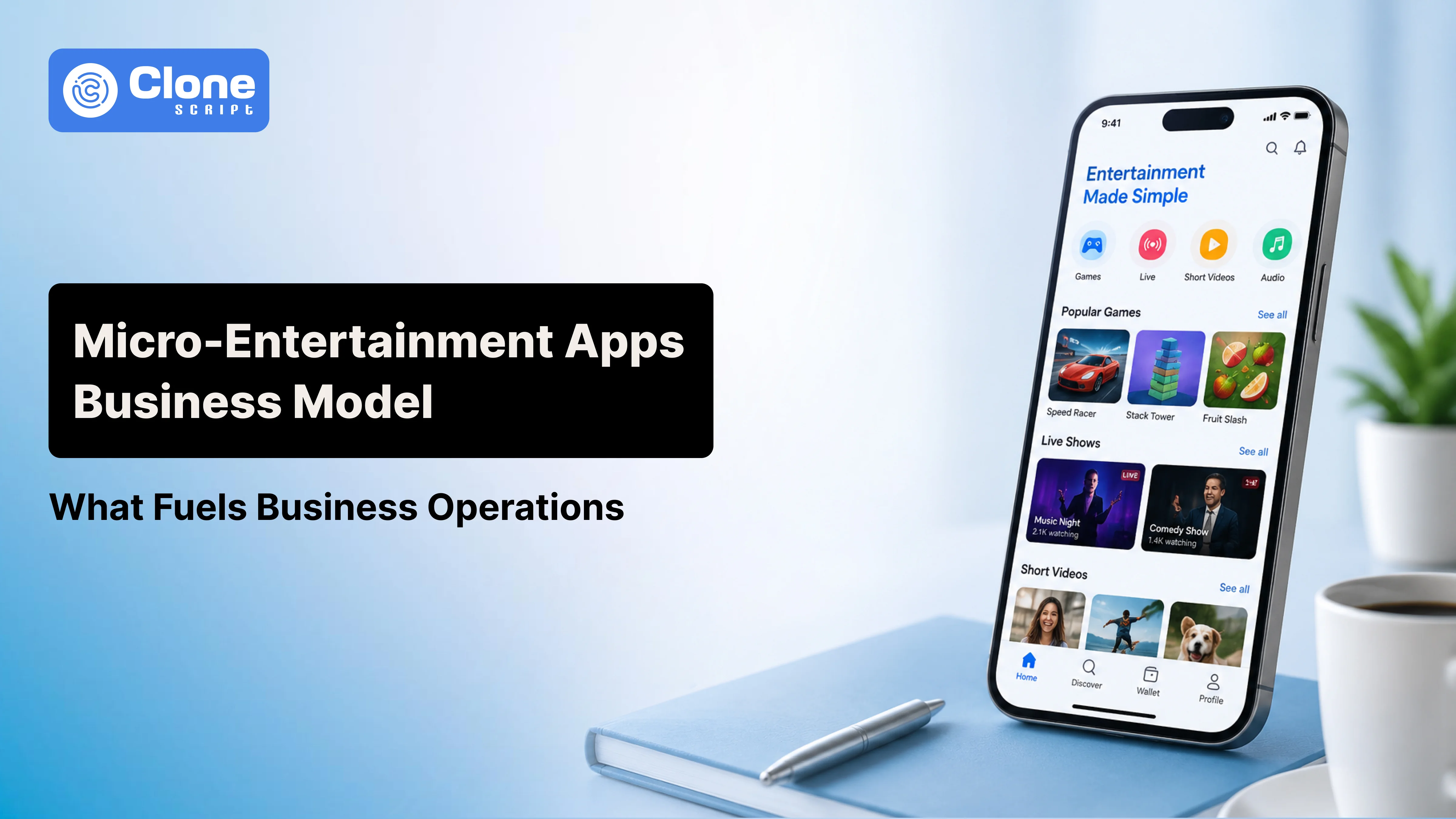
Micro-Entertainment Apps Business Model: What Fuels Business Operations
Do you ever think about what makes users open an entertainment app dozens of times a day? It’s the ability to deliver instant entertainment (you can call it micro-entertainment) whenever people have a few free minutes. The growth of TikTok, Instagram Reels, and YouTube Shorts is the prime example of how longer videos or bigger content libraries are no longer important.
Another side, SaaS startups, media companies, and entrepreneurs are looking to build profitable digital products using a TikTok clone script. In that, a short-form content app helps them achieve both goals: 1. Generating revenue and 2. Keeps users engaged for a longer time on the platform.
Before asking any of the development agency or even a freelancer, understand the business model behind micro-entertainment. It has the same importance as choosing the right features or technology. In this guide, we explain what drives micro-entertainment app businesses, the revenue streams of successful platforms, and market trends. Ultimately, even if you’re looking to launch the app in Europe or the Asian market, it will help you to enter with a scalable and sustainable entertainment app product.
Micro-Entertainment Apps Business Model at a Glance
The model works on this idea: Attract Users →Show Short-form Personalized Content →Generate Revenue. There’s no single income source, but advertising, subscription, creator monetization, virtual purchases, and brand partnerships are among the best options.
| Business Component | Purpose | Business Impact |
|---|---|---|
| Target Audience | Attract viewers and content creators | Builds an active user base |
| Core Value | Deliver quick, engaging entertainment | Increases daily app usage |
| Content Strategy | Mix user-generated and platform content | Reduces content production costs |
| Revenue Streams | Ads, subscriptions, in-app purchases, virtual gifts, brand collaborations | Creates multiple income sources |
| User Engagement | Personalized recommendations, gamification, notifications | Improves retention and watch time |
| Creator Monetization | Revenue sharing, tips, exclusive content, creator rewards | Encourages high-quality content creation |
| Technology | AI recommendations, cloud infrastructure, analytics, content moderation | Supports scalability and platform performance |
| Growth Strategy | Referral programs, influencer partnerships, social sharing | Drives user acquisition at a lower cost |
Why Is the Micro-Entertainment Industry Growing So Fast?
Because people want to consume entertainment in minutes or even seconds. They are no longer interested into 5 hours long video. They want to see only 15-20-second unique content and feel time saved.
Did you know? The average internet user spends 2 hours and 21 minutes per day on social media. This was found in DataReportal’s 2025 digital report.
-
Mobile-First Content Consumption
Millions of users prefer smartphones as a primary source for entertainment. They can access it anywhere, like commuting, waiting in line, or taking a break. People naturally turn to short videos, memes, and interactive content that can be consumed within minutes.
-
The Creator Economy Is Expanding
This is another major factor. Most independent creators, influencers, and educators are making content at an unprecedented pace. The best part is business offering creators monetization tools, audience insights, and engagement features can attract quality content without producing everything in-house.
-
AI Is Improving Content Discovery
Personalization with AI in micro-entertainment apps is a key factor. In modern recommendation engines, they’re designed to analyze user behavior such as the type of content, shares, likes, and comments. Then it delivers the relevant content.
-
Businesses See Long-Term Revenue Potential
Ads, premium memberships, virtual gifting, and brand collaborations are income streams in short-video apps. This can allow businesses to implement a model for planning scalable digital products.
Micro-Entertainment App Business Model Understanding
Take the example of TikTok and YT Shorts. You may have noticed that it is more than a content-watching platform. It is a connected ecosystem where users, creators, advertisers, and the platform owner each contribute to business growth. The more value each group receives, the stronger and more profitable the platform becomes.
How the Business Model Works
-
Creators publish engaging short-form content such as videos, audio clips, memes, or interactive media.
-
Users consume, share, like, and interact with the content, increasing watch time and daily activity.
-
AI recommends relevant content based on user behavior, improving engagement and retention.
-
Businesses monetize user activity through advertisements, subscriptions, virtual purchases, sponsorships, and creator-focused services.
-
Revenue is reinvested into platform improvements, creator incentives, marketing, and new features to support long-term growth.
This model is scalable. For example, if currently 5,000 users are already registered and 500 creators join in the next 4 months, the numbers are growing rapidly. As the app becomes famous, the creators chase fresh audiences, and it increases advertising demand and subscription conversions.
What Revenue Streams Fuel Micro-Entertainment Apps?
There are six streams: advertising, premium subscription, in-app purchases, creator monetization, brand partnerships and collaborations, licensing and content distribution.
-
Advertising Revenue
Advertising is the most common monetization model for entertainment platforms with a large user base. As users spend more time on the app, businesses can generate recurring income by displaying relevant advertisements.
Common advertising formats include:
-
In-feed native ads
-
Rewarded video ads
-
Pre-roll and mid-roll video ads
-
Display banners
-
Sponsored content and branded campaigns
The more engaged the audience, the higher the potential advertising revenue.
-
Premium Subscriptions
Many platforms offer a free version alongside paid membership plans. Users who subscribe gain access to additional benefits that improve their overall experience.
Premium plans may include:
-
Ad-free viewing
-
Exclusive content
-
Early access to new releases
-
Offline downloads
-
Higher streaming quality
-
Creator-exclusive communities
This model creates predictable recurring revenue for the business.
-
In-App Purchases
Virtual purchases allow users to spend money without leaving the platform. Small transactions generate significant revenue when supported by an active user community.
Popular in-app purchases include:
-
Virtual coins
-
Digital gifts
-
Stickers and reactions
-
Premium filters and effects
-
Paid content unlocks
These purchases also encourage stronger interactions between users and creators.
-
Creator Monetization
Successful platforms invest in creators because they drive user engagement. Providing earning opportunities motivates creators to publish high-quality content consistently.
These creator monetization options include:
-
Revenue-sharing programs
-
Fan subscriptions
-
Live-stream gifts
-
Tips and donations
-
Paid creator memberships
When creators earn more, they are more likely to stay active on the platform.
-
Brand Partnerships and Sponsorships
As audience size grows, businesses can collaborate directly with brands looking to reach targeted users. These partnerships generate higher revenue than traditional display advertising on the platform.
Examples include sponsored challenges, influencer campaigns, product placements, affiliate promotions, and co-branded content.
-
Licensing and Content Distribution
Original content can create value beyond the platform itself. Businesses may license popular videos, creator content, or exclusive shows to publishers, media companies, or streaming services, creating an additional long-term revenue stream.
Diversifying revenue sources makes micro-entertainment apps more resilient. If advertising demand slows, subscriptions, virtual purchases, creator services, and strategic partnerships can continue supporting business growth and operational stability.
Key Features That Drive User Engagement and Revenue
The features of a micro-entertainment app encourage users to stay longer, return more, or spend money on the platform. The right combination of engagement and monetization features creates a better user experience and supports long-term business growth.
-
AI-Powered Personalized Feed
As explained before, this feature is important to make users feel the platform cares about what they have to watch in a short timeframe rather than searching manually.
-
Creator Dashboard
Here, YouTube is the prime example to add the feature for the creator dashboard. There are all kinds of tools available helping in monitoring performance, tracking earnings, and understanding audience engagement.
-
Social Engagement Features
Interactive features keep users actively involved instead of passively consuming content. These include:
-
Likes and reactions
-
Comments
-
Shares
-
Save or bookmark options
-
Follow creators
-
Personalized watch history
Each interaction provides valuable data that improves future content recommendations.
-
Live Streaming and Virtual Gifting
Live sessions create real-time engagement between creators and their audiences. Users can support creators by sending virtual gifts, making donations, or purchasing digital items during broadcasts.
-
Gamification
Reward systems motivate users to stay active on the platform. Businesses can introduce:
-
Daily login rewards
-
Achievement badges
-
Viewing challenges
-
Referral incentives
-
Loyalty points
These mechanics encourage repeat visits and higher engagement.
-
Smart Notifications
Well-timed push notifications remind users about new uploads, trending content, live events, and creator activities. Personalized notifications bring inactive users back without overwhelming them with unnecessary alerts.
-
Secure Content Moderation
As user-generated content grows, moderation becomes essential. AI-assisted moderation combined with human review helps detect inappropriate content, copyright violations, spam, and fake accounts.
-
Business Analytics Dashboard
An analytics dashboard helps administrators monitor platform performance through metrics such as active users, watch time, revenue, creator growth, and content trends. These insights support data-driven decisions that improve user engagement and profitability.
How AI Is Transforming Micro-Entertainment Apps?
Delivering more personalized, engaging experiences and improving business efficiency are the three core tasks handled by AI in micro-entertainment apps.
-
Automatic Captions and Translation
AI-generated subtitles and multilingual translations make content more accessible to diverse audiences. Businesses can expand into new markets without asking creators to produce separate versions of their content.
-
Smarter Advertising
AI analyzes user interests to deliver more relevant advertisements. Better targeting improves campaign performance for advertisers and increases revenue opportunities for the platform to explore.
-
Predictive Analytics
Machine learning identifies engagement patterns, trending content, and potential user churn. These insights help businesses make informed decisions about product improvements and marketing strategies.
-
AI-Powered Creator Support
AI tools assist creators with caption generation, hashtag suggestions, video editing, and publishing recommendations. This reduces content creation time and helps creators reach a wider audience more effectively.
Technology Stack Required to Build a Scalable Micro-Entertainment Platform
A micro-entertainment app must handle thousands or even millions of users watching, uploading, and sharing content simultaneously. Choosing a scalable technology stack from the start helps businesses maintain performance, strengthen security, and reduce future infrastructure costs.
-
Front-end Development
The front-end app development should deliver a fast, intuitive experience across Android, iOS, and the web. Cross-platform frameworks can reduce development time and maintain a consistent user interface.
-
Back-end and Cloud Infrastructure
A robust back-end development manages user accounts, content delivery, payments, notifications, and analytics. Cloud-based infrastructure allows the platform to scale automatically during moments of high traffic.
-
Video Streaming and Storage
Since video is the core of most micro-entertainment apps, businesses need reliable cloud storage, media processing, and content delivery networks (CDNs) to ensure smooth playback with minimal buffering.
-
AI and Analytics
AI powers personalized recommendations, moderation, and advertising. The analytics dashboards track user engagement, creator performance, and revenue metrics and also help to manage. These insights support continuous product improvements and business growth.
-
Security and Payment Integration
Strong security measures, encrypted data storage, secure authentication, and trusted payment gateways protect user information and support subscriptions, virtual gifting, and in-app purchases, building long-term trust in the platform.
Challenges Businesses Should Prepare For
Building a micro-entertainment app is only the first step. As the platform grows, businesses must overcome operational, technical, and regulatory challenges that can affect user experience and profitability. Addressing these issues early helps create a stable and scalable platform.
-
User Retention
Acquiring users is expensive, but retaining them is even more important. Businesses need fresh content, personalized recommendations, and regular feature updates to keep users engaged over time.
-
Content Moderation
User-generated content requires continuous monitoring to prevent spam, harmful material, copyright violations, and misinformation. Combining AI-powered moderation with human review helps maintain a safe platform.
-
Infrastructure Costs
As video uploads and active users increase, expenses for cloud storage, streaming, and bandwidth also rise. A scalable cloud architecture helps manage costs without affecting performance.
-
Data Privacy and Compliance
Businesses must comply with data protection laws and implement strong security measures to safeguard user information. Secure authentication, encrypted data storage, and transparent privacy policies are essential for building user trust.
-
Creator Acquisition and Competition
The success of a platform depends on attracting quality creators. Offering monetization opportunities, creator support tools, and a seamless publishing experience can help businesses stand out in a competitive market.
Cost to Develop a Micro-Entertainment App
From $20,000 to $50,000 and beyond is the cost for a micro-entertainment app. This can change as per feature set, platform compatibility, AI capabilities, and infrastructure requirements. Businesses begin with an MVP to validate the idea before investing in a feature-rich platform. This phased approach reduces risk and allows improvements based on real user feedback.
| Development Stage | Estimated Cost* | Ideal For |
|---|---|---|
| MVP | US$20,000-US$40,000 | Startups testing product-market fit |
| Mid-Level Platform | US$40,000-US$80,000 | Businesses launching with monetization features |
| Enterprise Solution | US$80,000-US$200,000+ | Large-scale platforms with AI, live streaming, and advanced analytics |
*Actual costs vary based on project scope, development location, technology choices, and third-party integrations.
Businesses begin with an MVP to validate the idea before investing in a feature-rich platform. This phased approach reduces risk and allows improvements based on real user feedback.
Factors That Influence Development Cost
-
AI-powered recommendation engine
-
Short-video upload and streaming infrastructure
-
Live streaming functionality
-
Creator monetization features
-
Payment gateway integration
-
Admin dashboard and analytics
-
Content moderation system
-
Cross-platform development (Android, iOS, and Web)
-
Cloud hosting and CDN services
Businesses should evaluate the total cost of ownership, not just the initial development budget. Ongoing expenses such as cloud infrastructure, security updates, feature enhancements, maintenance, and customer support are equally important for operating a successful micro-entertainment platform.
How to Choose the Right Micro-Entertainment App Development Company
An experienced development company understands the technical challenges of video streaming, AI personalization, cloud scalability, and platform security. This helps businesses launch a reliable product that can grow with user demand.
Before selecting a development partner, evaluate these key factors:
-
Industry experience in entertainment, media, or social platforms.
-
Portfolio of similar projects with proven expertise in scalable applications.
-
AI and recommendation engine capabilities for personalized user experiences.
-
End-to-end development services, including UI/UX design, back-end development, testing, and deployment.
-
Scalable cloud architecture that supports increasing traffic and content uploads.
-
Post-launch maintenance and support for updates, security, and performance optimization.
-
Transparent development process with clear timelines, milestones, and communication.
A reliable development partner should do more than write code. They should help refine your product strategy, recommend the right technology stack, identify monetization opportunities, and build a platform that aligns with your long-term business goals. This collaborative approach reduces development risks and accelerates the path from concept to market.
All Clone Script app development company can help you to launch the micro-entertainment app using the pre-built solutions. Contact us now.