BTC - Bitcoin
 USDTERC20 - USDT ERC20
 ETH - Ethereum
 BNB - Binance
 BCH - Bitcoin Cash
 DOGE - Dogecoin
 TRX - TRON
 USDTTRC20 - USD TRC20
 LTC - LiteCoin

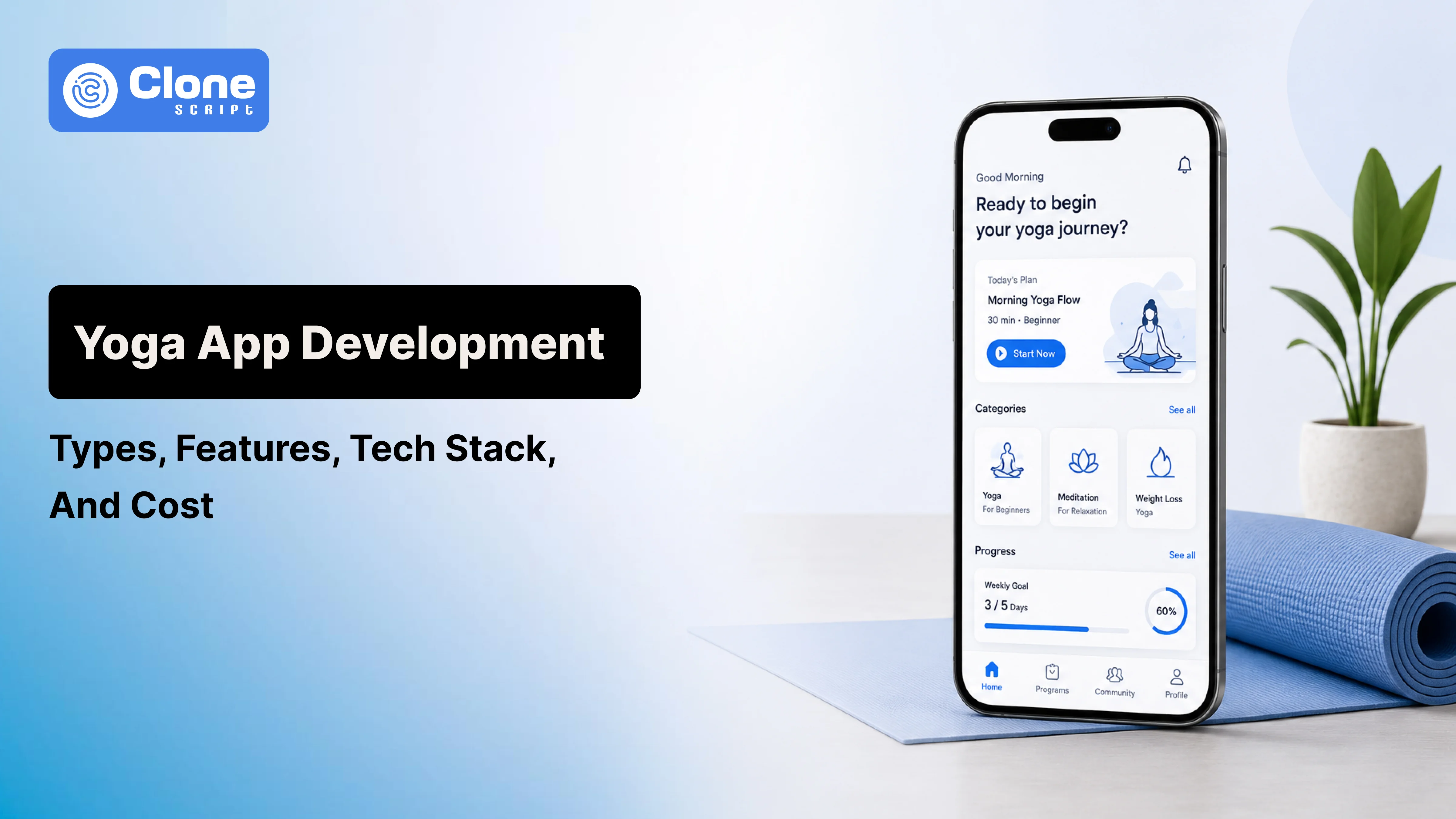
Create a Yoga App: Types, Features, Tech Stack, and Cost Complete Guide
Since the internet revolution and smartphone adoption, fitness enthusiasts are practicing yoga at home, during travel, or whenever it fits their schedule. On mobile apps, they will access guided classes, meditation, progress tracking, and personalized workout plans. Now, startups, yoga instructors, fitness brands, and wellness businesses can launch their own digital platforms.
We accept that through AI tools, yoga mobile app development becomes organized tasks. But the challenges are non-negotiable. That means which features help people or what technology stack to integrate for managing yoga app cost; every decision affects the launch timeline and budget.
In this guide, you can understand how to create a yoga app by following the steps. We'll cover the planning process, development options, estimated costs, monetization strategies, and practical ways to launch. Make your new idea successful and explore the ready-made solutions.
Why Build a Yoga App in 2026?
The digital wellness industry is expanding rapidly as people seek convenient ways to stay healthy. The global fitness app market is projected to exceed USD 33 billion by 2033, creating significant opportunities for startups and wellness businesses. A well-planned yoga app development project can generate recurring revenue and reach users worldwide.
-
Digital Wellness Growth
Consumers now prefer practicing yoga anytime, anywhere. This shift has increased demand for on-demand wellness platforms.
-
Subscription Economy
Monthly and yearly subscriptions provide predictable revenue and encourage long-term customer retention.
-
Remote & AI Coaching
Live virtual classes, one-on-one coaching, and AI-powered recommendations deliver personalized yoga routines based on user goals and progress.
-
Connected Wearables & Personalized Fitness
Integration with smartwatches, Apple Health, and Google Fit enables heart rate, activity, and progress tracking. This creates tailored fitness experiences that keep users engaged and improve retention.
Different Types of Yoga Apps You Can Build
Before starting yoga app development, define the type of app you want to build. Your choice will determine the features, technology, monetization strategy, and development cost.
| Yoga App Type | Best For | Key Features |
|---|---|---|
| On-Demand Yoga App | Startups, fitness brands | Pre-recorded classes, offline viewing, progress tracking |
| Live Yoga Class App | Yoga instructors, studios | Live streaming, class scheduling, chat, bookings |
| AI-Powered Yoga App | Tech startups | Personalized routines, pose recommendations, AI coaching |
| Meditation & Wellness App | Wellness businesses | Meditation, breathing exercises, sleep programs |
| Yoga Studio Booking App | Yoga studios | Class booking, memberships, trainer profiles, payments |
| Corporate Wellness App | Enterprises | Employee wellness programs, analytics, team challenges |
Every yoga app is designed to serve different audiences and business models.
Prioritize These Essential Features in a Yoga App.
In yoga app development, these features lay the foundation of your app's success. You should begin with features that make learning, tracking, and managing yoga sessions simple for users and administrators.
If you fail to offer them with perfection, whatever advanced technology or resources you invest will go to ruin.
-
User Features
-
Easy sign-up and profile management
-
On-demand yoga video library
-
Live yoga classes and session booking
-
Personalized workout plans
-
Progress and activity tracking
-
Offline video access
-
Push notifications and reminders
-
Secure subscription and payment options
-
Instructor Features
-
Upload and manage video content
-
Schedule live classes
-
Track student participation
-
Create personalized yoga programs
-
Manage subscriptions and earnings
-
Admin Features
-
User and instructor management
-
Content moderation
-
Subscription and payment management
-
Analytics and performance reports
-
Promotions, offers, and CMS management
Don’t to be early introduced AI-powered tools in the app and wearable integrations, it can be done later when the app has still enough user base.
Advanced Features That Differentiate Your Yoga App
Launching with core features is important, but advanced functionality is what keeps users engaged and encourages long-term subscriptions. As your platform grows, these features can improve user satisfaction and give your app a competitive advantage.
-
AI-Powered Yoga Coach
Use AI to recommend yoga routines based on a user's fitness level, goals, practice history, and available time. It creates a more personalized experience without requiring manual planning.
-
Pose Detection & Real-Time Feedback
Computer vision technology can analyze body posture through the device's camera and provide real-time guidance to help users perform poses safely and correctly.
-
Wearable & Health App Integration
Connect with Apple Health, Google Fit, and smartwatches to sync heart rate, calories burned, activity levels, and workout history. This gives users a complete view of their wellness journey.
-
Community & Gamification
Increase retention with challenges, achievement badges, leaderboards, discussion groups, and referral rewards. These features motivate users to stay consistent and build an active fitness community.
How to Create a Yoga App: Step-by-Step Development Process
First of all, you have to follow the clear roadmap that mentioned below for creating a professional yoga app. We recommend not building every feature in a single time. Just keep focus on solving real user problems with an MVP website and app features. Once everything is ready to go, then introduce the advanced features based on user feedback.
-
Validate Your Idea
The first step is to know your audience, then understand what competitors are doing and know what the market is demanding. By identifying the problem your app solves, helping to define your unique value proposition.
-
Plan Features & User Experience
Now that the idea is validated, the next thing is to outline the features and user experience. This includes video classes, live sessions, subscriptions, and progress tracking. Design an intuitive UI that makes navigation effortless.
-
Choose the Right Technology
The third step is to initiate the development task by selecting a reliable tech stack based on your budget and scalability needs. Many startups choose Flutter for cross-platform development, while others opt for custom native apps.
-
Develop & Test the App
In this step, build the front-end app, connect it to the back-end, admin panel, and APIs. Perform usability, security, and performance testing before launch to ensure a smooth user experience.
-
Launch, Monitor & Improve
The time has come to release your app on Android and iOS, monitor user behavior with analytics, collect feedback, and regularly update the platform with new content and features to improve retention.
Best Technology Stack for Yoga App Development
Designing the yoga app MVP or a complete featured platform, selecting proven technologies ensures a smoother launch and easier maintenance.
| Development Layer | Recommended Technology | Purpose |
|---|---|---|
| Mobile App | Flutter, React Native | Build Android and iOS apps from a single codebase |
| Front-end | Flutter, React.js | Deliver a fast and responsive user experience |
| Back-end | Node.js, Laravel | Manage users, APIs, authentication, and business logic |
| Database | PostgreSQL, MongoDB, Firebase | Store user profiles, classes, subscriptions, and progress |
| Cloud Storage | AWS S3, Google Cloud Storage | Securely host videos, images, and documents |
| Live Streaming | Agora, Twilio, Zoom SDK | Enable live yoga sessions and virtual coaching |
| Payments | Stripe, PayPal | Process subscriptions and in-app purchases securely |
| Notifications | Firebase Cloud Messaging | Send reminders, offers, and class updates |
| Analytics | Firebase Analytics, Mixpanel | Track user behavior, engagement, and app performance |
The ideal tech stack depends on your business goals, expected user base, and budget. For startups looking to launch quickly, Flutter with a scalable back-end is the most cost-effective choice because it reduces development time while supporting future growth.
How Much Does Yoga App Development Cost?
The cost to create a yoga app depends on its features, design complexity, development approach, and platform choice. A basic MVP with essential features costs significantly less than an AI-powered app with live classes, wearable integrations, and personalized coaching. Startups begin with an MVP to validate their idea before investing in advanced functionality and resources.
| Development Stage | Estimated Cost |
|---|---|
| UI and UX Design | $500 - $1,000 |
| Mobile App Development | $1,000 - $3,000 |
| Back-end Development | $2,000 - $4,000 |
| Admin Panel | $1,000 - $3,000 |
| QA & Testing | $500 - $1,500 |
| Complete MVP | $2,000 - $10,000 |
| Advanced Yoga App | $10,000 - $50,000+ |
What are the Ways to Reduce Development Costs?
Use UI kits, Flutter app templates, and customizable clone scripts to shorten the app development timelines for a yoga platform. This approach can reduce initial costs, speed up your launch, and still allow room for future customization as your user base grows.
Custom Development vs Ready-Made Yoga App Solutions
The right development approach depends on such factors: app budget, launch timeline, and long-term business goals. Custom development brings complete flexibility and requires more time and investment. On the other hand, ready-made solutions are ideal for startups that want to validate their idea and establish market position quickly.
| Factor | Custom Development | Ready-Made Solution |
|---|---|---|
| Development Time | 4-8 months | 2-6 weeks |
| Initial Cost | High | Low to Moderate |
| Customization | Unlimited | High (based on the product) |
| Time to Market | Longer | Faster |
| Maintenance | Built from scratch | Easier with existing architecture |
| Best For | Large enterprises, unique products | Startups, SMEs, MVPs |
Launch Your Yoga App Faster with Ready-Made Solutions
At All Clone Script, we offer a complete Figma UI design kit and an HTML template for websites and apps. Additionally, we have a clone script and Flutter template to start on. With customization, the product is ready to launch and start booking yoga classes.
-
Yoga App Figma UI Kit
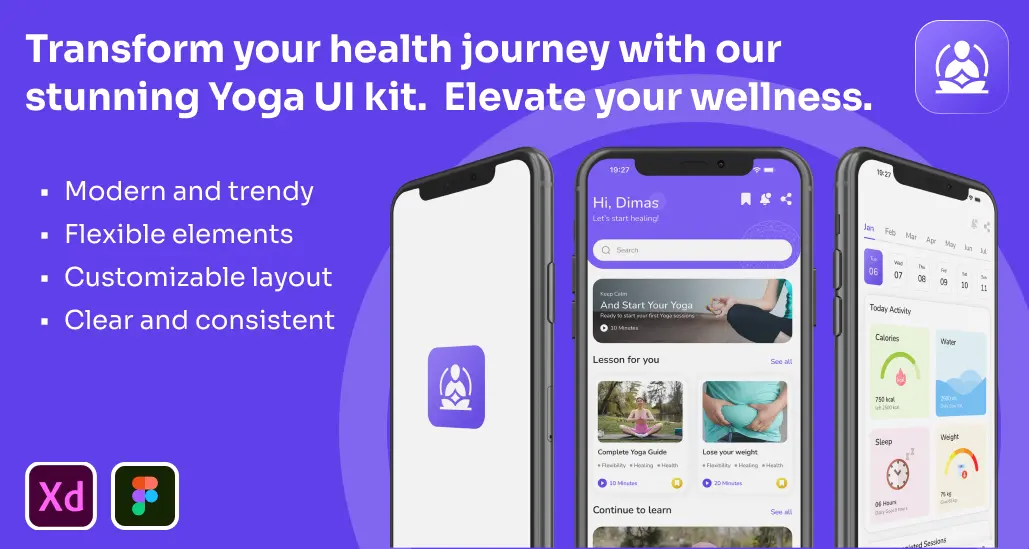
Save time designing the mobile app UI and UX for your yoga app development. This app Figma UI kit has pre-designed screens for onboarding, class browsing, instructor profiles, subscriptions, and user dashboards.
-
Yoga Trainer Website UI Kit
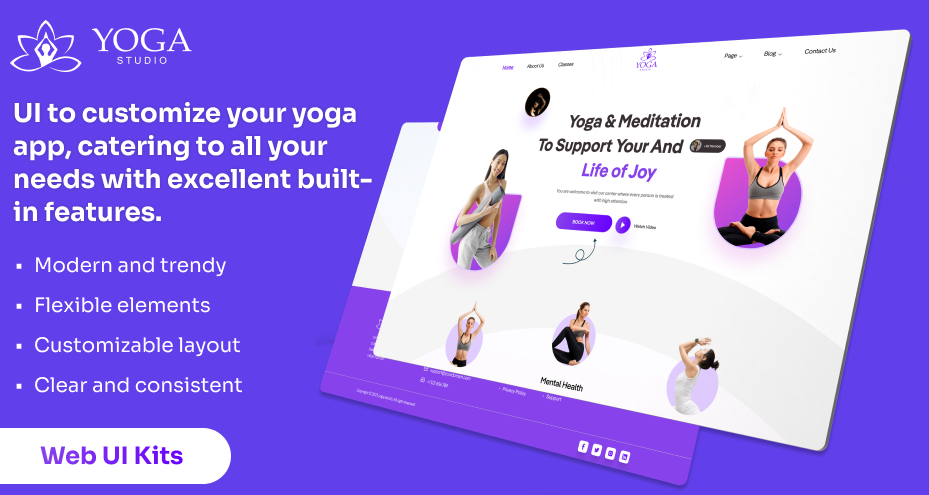
Are you making a yoga training website instead of an application? This website UI kit can be helpful, as the assets are already in organized layouts and help to initiate development within a proposed timeline.
-
Yoga Website HTML Template
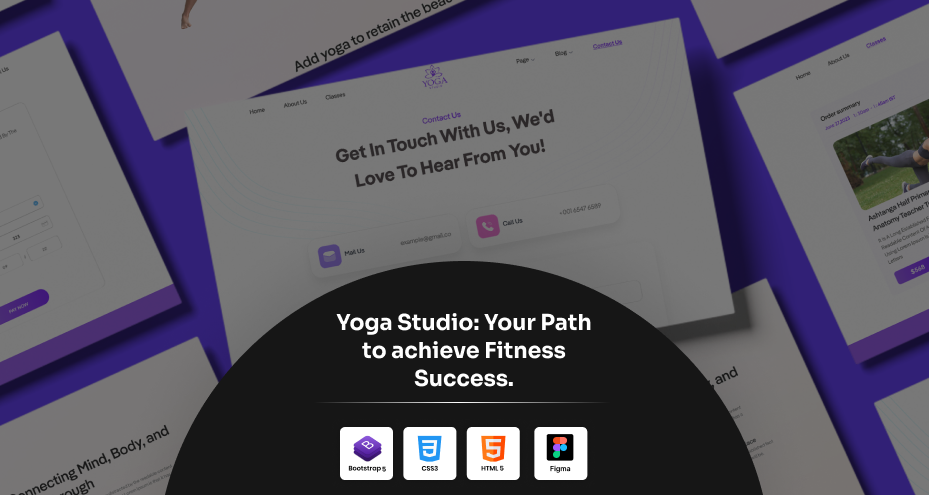
Establish your online presence with a responsive website using this HTML template for yoga. Showcase classes, trainers, pricing, schedules, testimonials, and contact information to attract new customers before they access your website.
-
FitYoga App Script
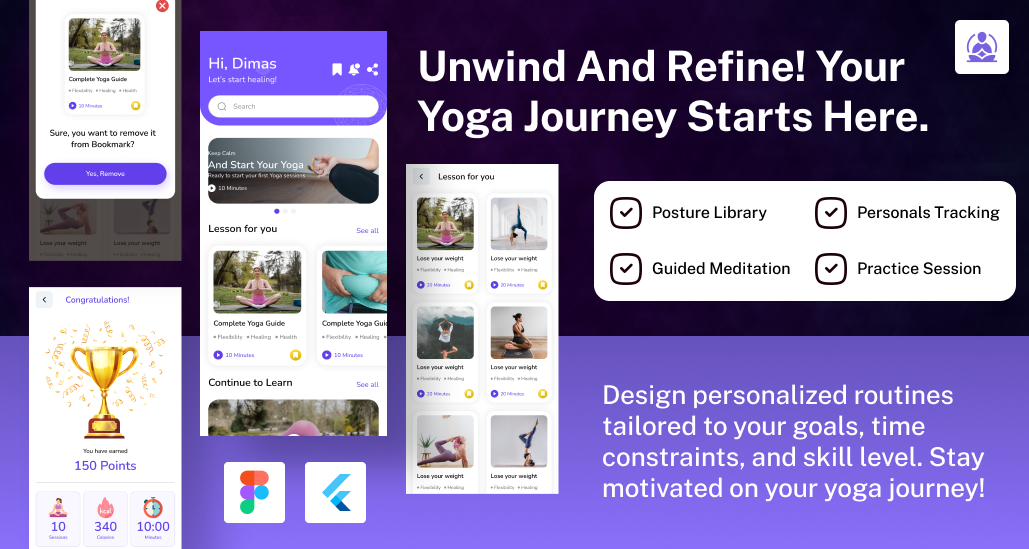
Launch a fully functional yoga platform with essential features like user registration, video classes, subscriptions, progress tracking, and admin management. It's an ideal solution for database design, back-end development, Flutter app source code, app Figma UI, and web admin panel.
-
Fityoga Flutter Template
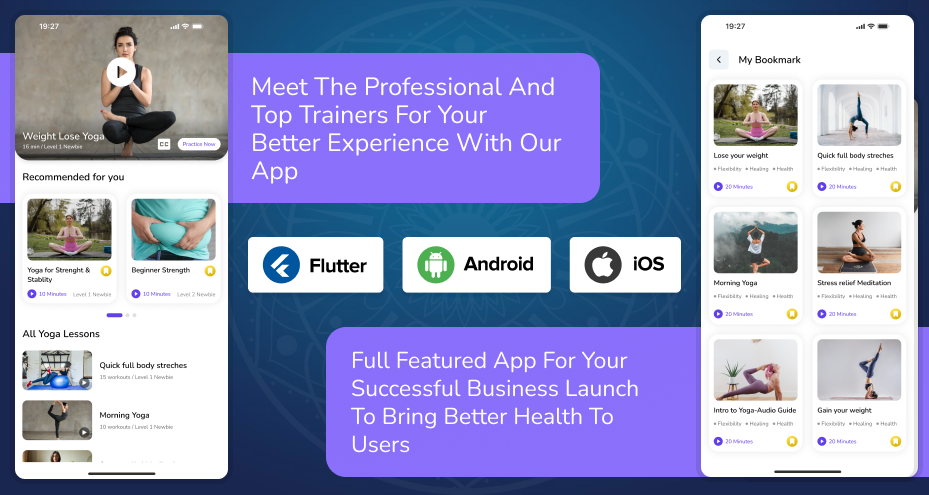
Build Android and iOS apps from a single codebase using a customizable Flutter template. It reduces development time, simplifies maintenance, and provides flexibility to add new features as your business scales.
Ready to Create a Yoga App? Let's Turn Your Idea into Reality
Launching a successful yoga app requires:
-
The right strategy
-
Technology
-
Development partner
Whether you're building a subscription-based wellness platform, a virtual yoga studio, or an AI-powered fitness app, starting with a scalable foundation can save months of development time and thousands of dollars.
At AllCloneScript, we help startups, entrepreneurs, and businesses create yoga apps that are fast, scalable, and ready for the market. Choose from professionally designed UI kits, responsive website templates, customizable Flutter templates, or a complete yoga app script to accelerate your launch. If you need unique features or enterprise-level functionality, our development team can also build a fully customized solution tailored to your business goals.
Have an idea for a yoga app? Let's discuss your requirements and build a solution that helps you launch faster, attract more users, and grow your wellness business with confidence.
FAQs
-
Who should create a yoga app?
Yoga instructors & studios, fitness startups & wellness brands, gyms & personal trainers, and healthcare & corporate wellness providers can develop a yoga app.
-
What are common challenges in yoga app development?
Maintaining video streaming quality and performance is a major challenge. While user retention, content, instructor management, security, and scalability are important to handle.
-
What are monetization strategies for a yoga app to implement?
First is to integrate subscription plans where the revenue can be stable. Then, additional choices are pay-per-class & online workshops, in-app purchases, advertising & brand partnerships, and corporate wellness programs.
-
What kind of future trends exist for yoga training apps?
AI personalization is the first thing that can revolutionize how online yoga training can be done. Others are smart wearable integration, immersive learning experiences, and community-driven wellness.
-
Can a development partner deploy the app on the Play Store?
It depends on the contract you mutually discussed with them. Most of the app developers are liable to deploy the app on the Google Play Store and App Store and carefully upload the app as per the store policy.