BTC - Bitcoin
 USDTERC20 - USDT ERC20
 ETH - Ethereum
 BNB - Binance
 BCH - Bitcoin Cash
 DOGE - Dogecoin
 TRX - TRON
 USDTTRC20 - USD TRC20
 LTC - LiteCoin

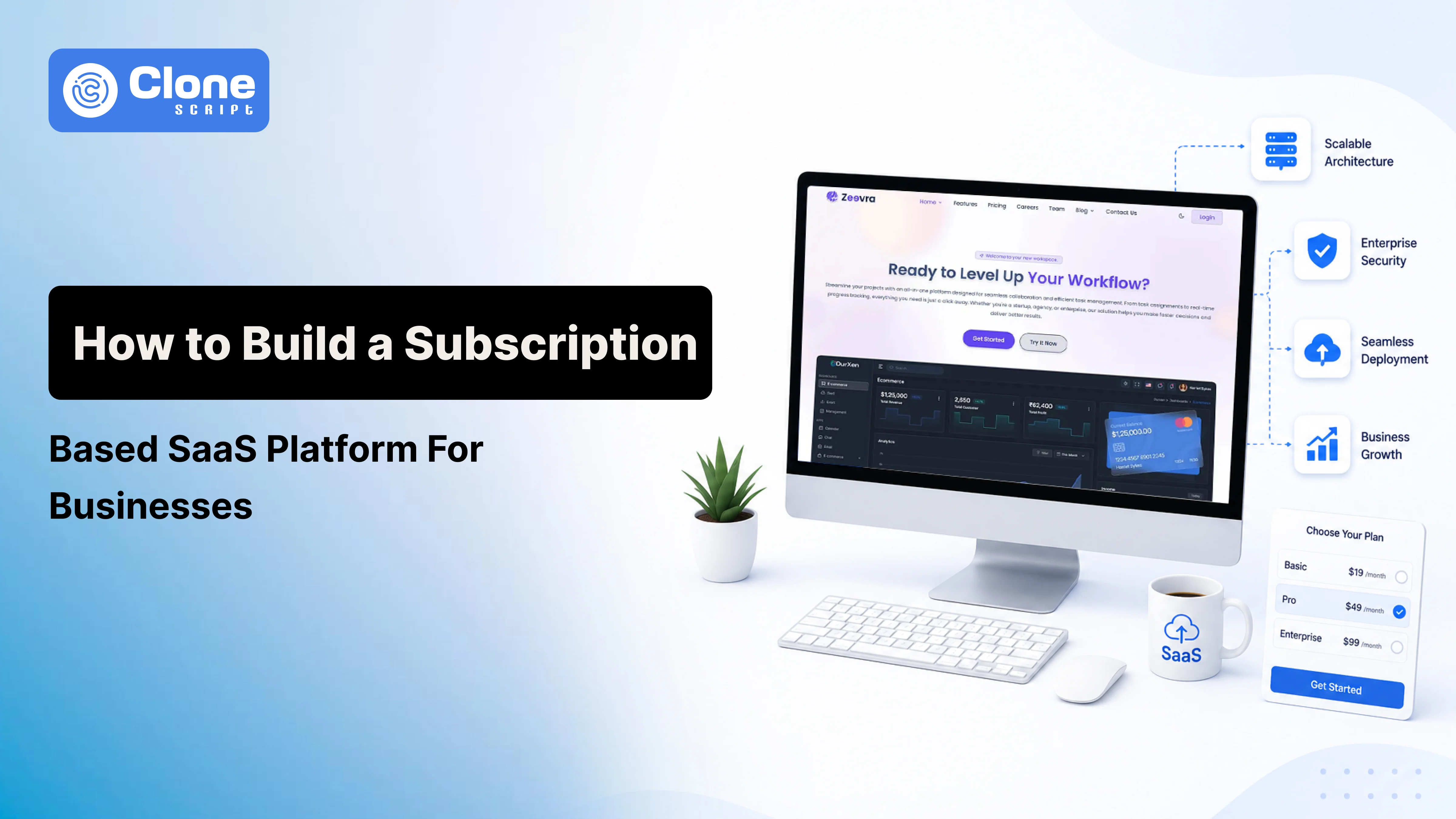
How to Build a Subscription-Based SaaS Platform
Imagine you've built a software product that solves a real business problem. Your first customers sign up, use the platform, and love the experience. Instead of making a single sale and hoping they'll return, they continue paying every month because your software keeps delivering value. That's the foundation of a subscription-based SaaS platform, a business model that generates recurring revenue and builds long-term customer relationships.
Turning that idea into a successful SaaS product, however, takes much more than great features. You need to plan your product carefully, choose the right architecture, build a secure and scalable application, integrate recurring billing, and ensure the platform performs reliably as your user base grows. Every technical decision influences your ability to scale, retain customers, and stay competitive.
Whether you're a startup founder validating a new idea or an established business moving to a subscription model, understanding the complete development process can save time, reduce costs, and prevent expensive mistakes later. In this guide, you'll learn how to build a subscription-based SaaS platform step by step, from planning and development to deployment, scaling, and long-term success.
What Is a Subscription-Based SaaS Platform?
A subscription-based SaaS (Software as a Service) platform is a cloud application that customers access through a recurring monthly or annual subscription instead of purchasing a one-time software license.
The software is hosted on cloud infrastructure, allowing users to log in from anywhere. The provider handles maintenance, updates, security, and performance.
This business model enables companies to generate predictable recurring revenue, reduce software distribution costs, and continuously improve the product based on customer feedback.
How Does a Subscription-Based SaaS Platform Work?
A subscription-based SaaS platform operates through an automated cloud-based workflow that manages user access, recurring payments, and software delivery. Instead of purchasing software permanently, customers subscribe to a plan that matches their needs and access the application through the internet.
The provider manages the infrastructure, security, updates, and maintenance, ensuring users always have access to the latest version without manual installations.
-
User Registration and Authentication
Users create an account using an email address or social login. Secure authentication, including password encryption and multi-factor authentication (MFA), protects user identities and business data.
-
Subscription and Billing
Customers select a subscription plan based on features, user limits, or storage. Integrated payment gateways automate recurring billing, invoice generation, plan upgrades, renewals, and payment failure notifications.
-
Access and Data Management
Once payment is successful, the platform unlocks features according to the selected plan. User data is securely stored in the cloud with regular backups, allowing seamless access across devices.
-
Monitoring and Continuous Service
The system continuously monitors subscriptions, usage, and platform performance. Administrators can manage users, analyze revenue, and deploy feature updates without interrupting customer access.
This centralized approach helps businesses scale efficiently for providing customers with a secure, reliable, and always up-to-date software experience.
Planning Your Subscription-Based SaaS Platform: Where Success Begins
Many SaaS products fail not because of poor development but because they solve the wrong problem or target the wrong audience.
Before writing a single line of code, you need a clear product strategy that validates your idea, defines your target market, and creates a roadmap for sustainable growth.
Investing time in planning helps reduce development costs, shorten time to market, and build a SaaS platform that customers are willing to pay for.
-
Validate Your SaaS Idea Through Market Research
Start by identifying a real business problem and researching how existing SaaS solutions address it. Analyze competitors, customer reviews, industry trends, and feature gaps to discover opportunities for differentiation. This research also helps define your ideal customer profile (ICP) and unique value proposition (UVP).
-
Build an MVP Instead of a Full Product
Rather than developing every feature at once, focus on a Minimum Viable Product (MVP) with essential functionality. An MVP allows you to launch faster, gather user feedback, validate product-market fit, and prioritize future development based on actual customer needs.
-
Define Your Subscription Pricing Strategy
Your pricing model directly impacts customer acquisition and recurring revenue. Depending on your business model, you can offer free trials, freemium plans, monthly or annual subscriptions, tiered pricing, or usage-based billing. The pricing structure should align with your target audience to support long-term business growth.
-
Plan for Scalability, Security, and Integrations
Modern SaaS application development requires more than feature planning. Define your cloud infrastructure, multi-tenant or single-tenant architecture, API integrations, security standards, database design, and compliance requirements early.
A scalable technical foundation ensures your subscription-based SaaS platform can handle growing users, recurring transactions, and future feature expansions without costly redevelopment.
Choose the Right SaaS Architecture
The architecture you choose determines how your subscription-based SaaS platform performs, scales, and evolves. It influences everything from infrastructure costs and maintenance to security, customization, and customer experience. Selecting the right SaaS architecture during the planning stage helps avoid expensive migrations as your user base grows.
-
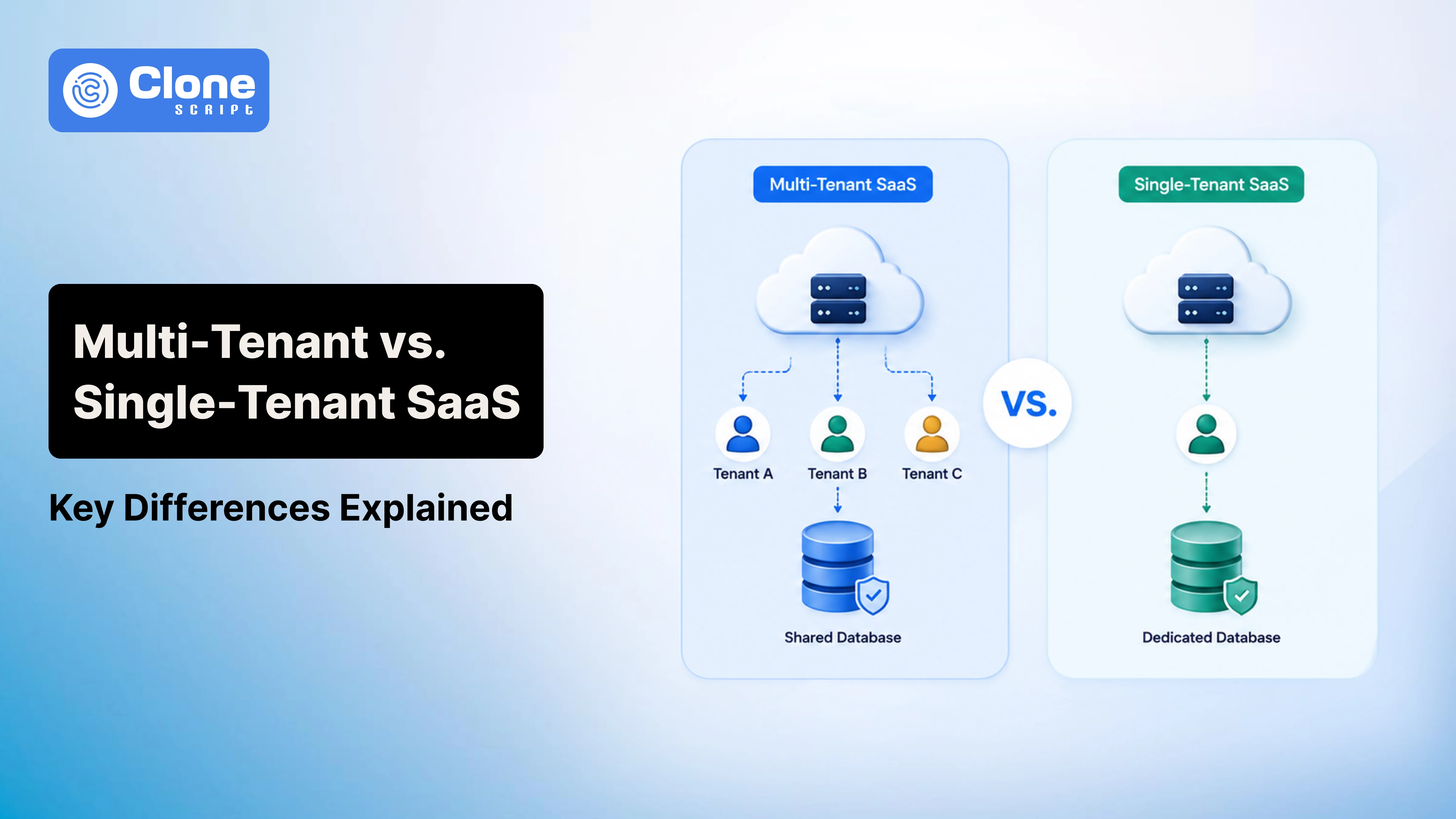
Multi-Tenant Architecture
In a multi-tenant SaaS architecture, a single application and shared infrastructure serve multiple customers (tenants). Each tenant's data is logically isolated, ensuring privacy and maximizing resource utilization.
Best for: Startups, SMB-focused SaaS products, and businesses aiming for rapid growth.
Advantages
-
Lower infrastructure and operational costs
-
Easier maintenance with centralized updates
-
Faster deployment of new features
-
Highly scalable for a growing customer base
Limitations
-
Limited infrastructure customization
-
Shared resources may require careful performance optimization
-
Single-Tenant Architecture
A single-tenant architecture provides each customer with a dedicated application instance and database. This offers greater control, stronger isolation, and easier customization, making it suitable for organizations with strict compliance requirements.
Best for: Enterprise SaaS platforms, healthcare, banking, and government solutions.
Advantages
-
Enhanced data isolation and security
-
Better customization for enterprise clients
-
Easier compliance with industry regulations
-
Independent performance for each customer
Limitations
-
Higher infrastructure and maintenance costs
-
More complex deployment and updates
| Feature | Multi-Tenant | Single-Tenant |
|---|---|---|
| Infrastructure Cost | Lower | Higher |
| Scalability | Excellent | Moderate |
| Data Isolation | Logical | Dedicated |
| Maintenance | Centralized | Individual |
| Customization | Limited | Extensive |
| Ideal For | Startups & SMBs | Enterprises & Regulated Industries |
Essential Features Every Subscription-Based SaaS Platform Needs
A successful subscription-based SaaS platform is more than a collection of features. It should provide a seamless user experience, automate recurring business processes, and scale as the customer base grows. While the exact functionality depends on your industry, the following features form the foundation of most SaaS applications.
-
User Authentication and Role-Based Access
Implement secure user registration, login, password recovery, and multi-factor authentication (MFA). Role-based access control (RBAC) ensures administrators, managers, and end users can only access the data and features relevant to their responsibilities.
-
Subscription and Billing Management
The platform should allow users to purchase, renew, upgrade, downgrade, or cancel subscriptions effortlessly. Automated recurring billing, invoice generation, tax calculation, coupon management, and payment reminders improve the customer experience by reducing manual work.
-
User Dashboard
A centralized dashboard gives users quick access to account information, subscription details, usage statistics, recent activities, and important notifications. A well-designed dashboard improves engagement and simplifies navigation.
-
Payment Gateway Integration
Integrate trusted payment gateways that support secure transactions, multiple payment methods, recurring payments, and international currencies. Reliable payment processing minimizes failed transactions and customer churn.
-
Notifications and Communication
Keep users informed through email, SMS, or in-app notifications for payment confirmations, subscription renewals, security alerts, feature updates, and system announcements.
-
Analytics, Reporting, and API Integrations
Built-in analytics help businesses monitor user activity, subscription growth, customer retention, and revenue metrics. API integrations enable seamless connectivity with CRM, ERP, accounting software, marketing automation tools, and third-party services, making the SaaS platform more flexible and valuable.
Choosing the Right Technology Stack for SaaS Development
The technology stack is the key to your subscription-based platform. It affects application performance, scalability, security, development speed, and future maintenance.
| Component | Recommended Technologies | Purpose |
|---|---|---|
| Front-end | React, Angular, Vue.js | Build responsive and interactive user interfaces |
| Back-end | Node.js, Python (Django/FastAPI), Java, .NET | Handle business logic, APIs, authentication, and server operations |
| Database | PostgreSQL, MySQL, MongoDB | Store user data, subscriptions, transactions, and application records |
| Cloud Platform | AWS, Microsoft Azure, Google Cloud | Host, scale, and secure the SaaS application |
| Payment Gateway | Stripe, PayPal, Razorpay | Process recurring subscriptions and online payments |
| DevOps & Deployment | Docker, Kubernetes, GitHub Actions, Jenkins | Automate deployment, scaling, monitoring, and CI/CD pipelines |
Beyond choosing the right technologies, developers should prioritize REST or GraphQL APIs, containerized deployment, cloud-native architecture, caching mechanisms, CDN integration, and automated monitoring. These technologies improve application reliability, simplify future updates, and support thousands of concurrent users without affecting performance.
A carefully selected technology stack not only accelerates SaaS application development but also reduces technical debt, improves security, and ensures your platform can evolve as customer expectations and business requirements continue to grow.
Building a Secure Subscription Billing System
The subscription billing system is the core of every SaaS business because it directly impacts revenue, customer retention, and user experience.
-
Recurring Payments and Subscription Management
Your platform should automatically process monthly or annual payments based on the customer's selected plan. Users should be able to start a free trial, upgrade or downgrade their subscription, pause services, or cancel their plan without losing their account data.
-
Invoice Generation and Tax Compliance
Every successful transaction should generate an invoice automatically. Depending on your target market, the billing system should also calculate applicable taxes, maintain transaction records, and support multiple currencies to simplify global SaaS operations.
-
Failed Payment Recovery
Payment failures are inevitable, but they don't always mean losing a customer. Implement automated retry mechanisms, payment reminders, grace periods, and alternative payment options to recover failed transactions and reduce customer churn.
-
Customer Self-Service Portal
Allow users to manage payment methods, download invoices, update billing information, and monitor subscription history from a dedicated billing dashboard. Self-service capabilities reduce support requests and improve customer satisfaction.
A reliable SaaS billing system not only automates revenue collection but also builds trust through transparent pricing, secure transactions, and flexible subscription management; it's an essential component of any successful subscription-based SaaS platform.
Security and Compliance Best Practices for SaaS App
Security is one of the biggest factors influencing customer trust in a subscription-based SaaS platform.
-
Implement Strong Security Measures
Protect user accounts with password encryption, multi-factor authentication (MFA), role-based access control (RBAC), and secure API authentication. Encrypt data both in transit using HTTPS/TLS and at rest to minimize security vulnerabilities.
-
Follow Industry Compliance Standards
Depending on your industry and customer location, your SaaS platform may need to comply with regulations such as GDPR, SOC 2, HIPAA, or PCI DSS. Meeting these standards demonstrates your commitment to data privacy and secure payment processing.
-
Monitor, Backup, and Respond to Threats
Continuous security monitoring, automated backups, disaster recovery planning, and vulnerability assessments help keep the platform available even during unexpected incidents. Regular software updates and security patches also reduce the risk of cyberattacks.
-
Build Customer Trust
Display clear privacy policies, maintain transparent data handling practices, and notify users about security updates or suspicious account activity.
When customers know their data is protected, they are more likely to continue their subscriptions, recommend your platform, and remain loyal.
Testing, Deployment, and Scaling Your SaaS Website
Building your subscription-based SaaS website is only part of the journey. Before launching, you must ensure the application is stable, secure, and capable of handling real-world traffic.
-
Test Every Core Functionality
Perform comprehensive testing to identify issues before they affect customers. This includes unit testing, integration testing, performance testing, security testing, and user acceptance testing (UAT). Validate critical workflows such as user registration, subscription activation, payment processing, and API integrations to ensure they function without errors.
-
Automate Deployment
Implement a CI/CD (Continuous Integration and Continuous Deployment) pipeline to automate code testing and deployment. Hosting your application on cloud platforms like AWS, Azure, or Google Cloud enables faster releases, minimizes manual intervention, and simplifies rollback if issues occur.
-
Design for Scalability
As your subscriber base increases, your infrastructure should scale without compromising performance. Use load balancers, auto-scaling, caching, content delivery networks (CDNs), database optimization, and application monitoring to maintain speed and availability during traffic spikes.
-
Monitor and Improve Continuously
Launching the platform is just the beginning. Continuously monitor application performance, server health, error logs, and customer feedback to identify opportunities for optimization. Regular updates, feature enhancements, and proactive maintenance ensure your SaaS platform remains competitive, secure, and capable of supporting long-term business growth.
Build In-House or Partner With a SaaS Development Company?
After finalizing your product strategy and technical requirements, the next decision is how to develop your subscription-based SaaS platform. While some businesses have the resources to build everything internally, many choose to work with a specialized SaaS development company to reduce risks and accelerate product delivery.
-
Build In-House
An in-house development team is a good choice if you already have experienced software engineers, UI/UX designers, DevOps specialists, and QA testers. This approach gives you complete control over product development, feature prioritization, and long-term innovation. However, it also requires significant investment in hiring, infrastructure, training, and ongoing maintenance.
-
Partner With a SaaS Development Company
Working with a professional SaaS development company is the faster and more cost-effective option for startups and growing businesses.
Experienced developers can build a scalable subscription-based SaaS platform with cloud-native architecture, recurring billing integration, secure APIs, multi-tenant capabilities, and third-party integrations to follow industry best practices.
This approach reduces development time, minimizes technical risks, and allows your team to focus on product growth and customer acquisition.
If your goal is to launch a secure, scalable, and feature-rich SaaS product without building a large internal engineering team, partnering with an experienced SaaS development company can significantly improve your chances of delivering a successful platform on time and within budget.
At All Clone Script, we offer complete development for a SaaS subscription-based platform. If you need a dedicated system or a clone script solution, we have it. Contact us.
Conclusion
Building a subscription-based SaaS platform requires more than developing software. It demands a clear business strategy, scalable architecture, secure infrastructure, and a customer-focused approach. Every stage, from validating your idea and selecting the right technology stack to implementing recurring billing and strengthening security, plays a role in the platform's long-term success.
As your user base grows, continuous monitoring, regular feature updates, performance optimization, and customer feedback become equally important. Whether you're launching a new SaaS startup or transforming an existing software product into a subscription-based service, investing in the right development approach will help you create a platform that delivers consistent value, supports recurring revenue, and remains competitive in a rapidly evolving SaaS market.