BTC - Bitcoin
 USDTERC20 - USDT ERC20
 ETH - Ethereum
 BNB - Binance
 BCH - Bitcoin Cash
 DOGE - Dogecoin
 TRX - TRON
 USDTTRC20 - USD TRC20
 LTC - LiteCoin

How Much Does a Professional Landing Page Design Cost? (2026’s Breakdown)
When businesses search for landing page design cost, they are rarely just curious about numbers. Most of the time, they are worried about spending too much and still not getting results. Some fear hiring a designer will drain their budget. Others are unsure whether a landing page is even worth the investment.
The real problem is not the cost itself. It is the lack of clarity around what goes into pricing, what actually impacts conversions, and whether there is a better way to achieve the same goal. This guide explains landing page design costs in a practical way and helps you decide where your money should go if conversions matter to you.
What Is Included in Landing Page Design Cost?
Landing page design cost usually covers multiple components, and these components together decide whether the page converts or fails. A standard landing page design includes:
-
Layout structure
-
Visual hierarchy
-
Spacing
-
Typography
-
Headlines
-
Call-to-action buttons
-
Forms
-
Trust signals
The pricing of the landing page is not associated only with design. But come with basic UX planning, like user scroll behavior, the usability flow for reducing the effort. Some freelance designers and agencies are offering content placement and image sourcing. Others charge extra.
Understanding what is included helps you compare prices fairly. The assumption that all landing pages are built the same way will not be required.
Average Landing Page Design Cost in 2026
Landing page pricing in 2026 varies widely depending on who builds it and how it is built. Here is the explanation:
-
Freelancers: Freelancers usually charge anywhere between $30 and $70/hour. Also, they may offer pricing per landing page, depending on experience and complexity. While this option may look affordable, revision cycles and delays often increase the final cost.
-
Design agencies: Landing page design agencies' pricing starts from $600 to $6000+ or more for a single landing page. This price includes strategy discussions, custom visuals, and multiple rounds of feedback. Agencies are suitable for large PPC or marketing campaigns, but can be expensive for small teams or startups.
-
In-house designer: In-house designers are involved in a fixed average monthly salary ($49k to $103k), software costs, and ongoing management. When calculated per landing page, this turns out to be the most expensive option unless the design output is high.
-
DIY landing page builder: For the cost-saving option, you can prefer a landing page builder tool available on the monthly and annual subscriptions starting from $29/month. Some tools offer free options, too. The best part is that these tools come with AI support.
Many businesses overlook hidden costs such as revisions, developer handoff, delayed launches, and maintenance. These indirect costs exceed the original quote.
5 Factors That Directly Affect Landing Page Pricing
The cost of how much to pay for a professional-looking landing page depends on the following factors:
-
Number of Sections and Page Length
A simple landing page with five sections costs far less than a long, content-heavy page with multiple CTAs, testimonials, and feature blocks. More sections require more design decisions, alignment, and testing.
-
Level of Visual Customization
To accomplish conversion on the website or app, the landing page design should look unique, not static or generic. For that, custom illustrations, unique graphics, and brand-specific animations required that significant increase in design cost.
-
Content Writing Requirements
If the designer is expected to write headlines, subtext, and CTA copy, pricing goes up. Conversion-focused copywriting is a specialized skill and is billed separately. For getting more leads through the dedicated landing page, the copywriting matters and is non-negotiable.
-
Industry Complexity
Landing pages for SaaS, fintech, or healthcare require more structure and trust elements than general business pages. This added complexity is reflected in pricing. After all, it’s all about the expertise associated with the work.
-
Turnaround Time
Urgent projects almost always cost more for a reason. Faster delivery means designers shift priorities or compress processes, which increases fees.
Custom Landing Page Design: Cost vs Value
Now, most businesses think the custom landing page brings more leads. But the reality is different.
Custom landing page design makes sense when branding is extremely specific or when the product requires a unique presentation. However, many businesses pay for customization that does not affect performance.
So, what does that indicate?
Custom landing page designs involve long feedback loops, subjective opinions, and multiple revisions. Each change adds time and sometimes cost. While the final output may look unique, uniqueness alone does not guarantee conversions.
Another overlooked factor is long-term maintenance. Every new campaign may require another custom page, restarting the cost cycle. Over time, this becomes financially inefficient, especially for marketers running frequent campaigns.
The question is still: the business has to manage the budget and quality. How can it be possible?
Landing page templates make it real.
Landing Page Templates: A Cost-Effective Alternative to Pick
Landing page templates are designed to solve the same problem at a certain cost. Instead of building from scratch, templates offer ready-made structures optimized for conversions.
The cost of landing page templates is usually a one-time payment. It is lower than even the cheapest custom design, like $50 to $200. More importantly, templates eliminate revision costs, reduce dependency on designers, and speed up launches.
But is the template guaranteeing the landing page remains branded or looks generic?
The answer is yes. Modern design templates are built using proven UX patterns, proper spacing, readability, and CTA placement. With simple customization, they can match brand identity without heavy design work.
Cost Comparison: Custom Design vs Ready-Made Templates
There’s always a different thinking about custom design and template costs for landing pages. Startups look to save costs so they can opt a templates, while established businesses have to go with a custom design.
Here is the difference in cost to know.
|
Cost Factor |
Custom Landing Page Design |
Ready-Made Landing Page Templates |
|---|---|---|
|
Initial Design Cost |
$500 – $6,000 per page (freelancer to agency) |
$50 – $200 one-time |
|
Time to Launch |
2–6 weeks (briefing, design, revisions) |
Same day or within a few hours |
|
Revision Cost |
$50 – $300 per revision |
$0 (self-editable) |
|
Cost for New Campaign Page |
Full redesign: $300 – $3,000 |
$0 (reuse the template) |
|
Monthly Dependency Cost |
$300 – $1,500 (designer/agency support) |
None |
|
A/B Testing Pages |
$200 – $1,000 per variation |
Free (duplicate and edit) |
|
Annual Landing Page Spend (Ads-focused business) |
$3,000 – $15,000+ |
$49 – $199 total |
|
Scalability |
Slow and expensive |
Fast and flexible |
|
Conversion Reliability |
Depends on the designer's experience |
Based on tested layouts |
For businesses running paid social media ads, speed matters. Delayed launches can cost more in lost opportunities than the design itself. Templates allow teams to test, iterate, and launch campaigns quickly without repeating design expenses.
For most use cases, templates deliver similar or better conversion performance because they are built on tested layouts rather than subjective creativity.
How Templates Reduce Landing Page Cost Without Affecting Conversions?
They come with the tested UI elements (colors, icons), components (sections), layouts (designed pages), and visual assets, along with the quality code (only available in premium templates). So, the development team doesn’t have to start the work from the ground level. The base is already prepared, and they have the privilege to initiate the web development process.
Look at this example:
QuickBook, a SaaS website design for an appointment booking platform. This design is built with a simple goal: get visitors to book an appointment without making them think too much. The value proposition appears immediately, benefits are easy to scan, and the booking action feels obvious rather than forced. Whether it’s tattoo appointment booking or hair salon scheduling platforms development, this landing page design is helpful to have.
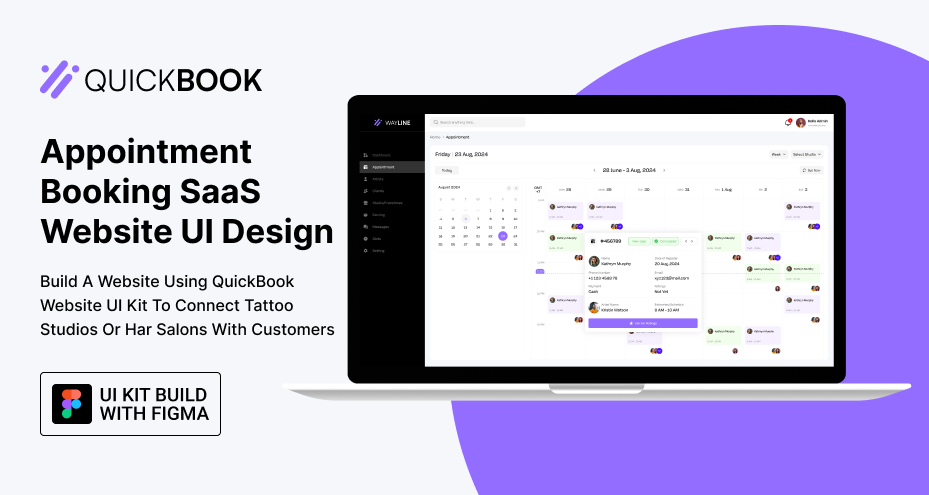
When it comes to customization in templates, especially in premium web design templates, you have to focus on the branding. The intention is not to add different colors, visuals, or write marketing copy. But it has to be related to the business goal: conversion.
Common Landing Page Design Pricing Mistakes Businesses Make
There is a chance to overpay or pay below-average costs for the landing page that does not help what you want to achieve. Here is the list of common mistakes you may make:
-
Assuming higher cost means better results.
Many businesses make this mistake. They believe that if they pay $500 to a designer agency, the design automatically leads to higher conversions. It never happens. The conversion depends on your product, features, use cases, and pricing.
So, the overspending on animations, illustrations, and visual effects that look good but do not improve user action.
-
Designing without a clear conversion goal.
A landing page should focus on one primary action: conversion. There are certain goals businesses have, like sign-up, purchase, or booking.
Using the elements of the purchase landing page for the booking goal is guiding to add multiple CTAs or mixed objectives increases design effort, raises costs, and confuses visitors. Startups can’t play with this.
So, the goal can’t be achieved. It also affects the brand reputation and drives users away. Even the best product or service can’t help.
-
Over-customizing the layout.
Adding extra sections, features, or unique design elements may seem helpful, but simple landing pages usually convert better. Over-customization increases cost while reducing clarity.
-
Ignoring page speed and responsiveness
Slow-loading pages or poor mobile optimization waste both design and advertising budgets. Performance issues can cancel out even the most expensive design work.
How to Choose the Right Landing Page Option for Your Budget?
Here is the list of aspects that help you pick the landing page.
-
If you have a limited budget and need fast results.
Choose ready-made landing page templates. They allow you to launch quickly, avoid high upfront design costs, and focus your budget on traffic and testing instead of design.
-
If you run frequent marketing or ad campaigns.
Templates are the smarter option. You can reuse the same layout for multiple campaigns, create variations easily, and avoid paying for a new design every time.
-
If you have a moderate budget and need consistency.
Landing page design templates help maintain a uniform look across pages while keeping costs predictable. Small custom changes can be made without starting from scratch.
-
If you have a high budget and complex branding needs.
Custom landing page design may make sense, but only when the project truly requires unique visuals or advanced interactions in the web product.
-
If speed and flexibility matter more than uniqueness.
Templates provide better control, faster launches, and lower long-term costs. Most growing businesses can select them and have registered their brand as a contender with minimal effort for conversions.
Final Thoughts
Landing page design cost should be viewed as an investment, not an expense. The goal is not to spend more, but to spend smarter.
For most businesses, landing page templates offer the best balance between cost, speed, and performance. They eliminate unnecessary expenses while delivering results that matter.
FAQs
-
Why Buying Landing Page Templates Makes Business Sense?
It reduces design costs, speeds up launches, removes designer dependency, and delivers proven conversion-focused layouts for business goals achievement.
-
Who Should Use Landing Page Templates?
Startups, SaaS founders, marketers, agencies, and small businesses running frequent campaigns benefit most from reusable, scalable landing page templates.
-
What to Look for Before Buying a Landing Page Template?
Look for clean structure, mobile responsiveness, fast loading, easy customization, platform compatibility, and layouts optimized for conversions.
-
How much should a landing page really cost?
A landing page should cost under $100 using templates, compared to thousands for a custom design. However, the cost depends on the features, integrations, and support included.
-
Are landing page templates good for paid ads?
Yes, marketing templates are designed for paid ads because they enable faster testing, quick iterations, and consistent performance across campaigns.
-
Can templates perform like custom designs?
Templates perform equally or better because they use tested layouts instead of subjective design choices. But the custom design works good than the template as it speaks its own language.
-
How fast can I launch using a template?
Most landing pages built with templates can be launched within a few hours after basic customization. However, the setup of the website or app requires time to go live.
-
Do templates work for different industries?
Yes. Well-designed templates adapt easily across SaaS, healthcare, consulting, ecommerce, and service-based industries for conversions.