BTC - Bitcoin
 USDTERC20 - USDT ERC20
 ETH - Ethereum
 BNB - Binance
 BCH - Bitcoin Cash
 DOGE - Dogecoin
 TRX - TRON
 USDTTRC20 - USD TRC20
 LTC - LiteCoin

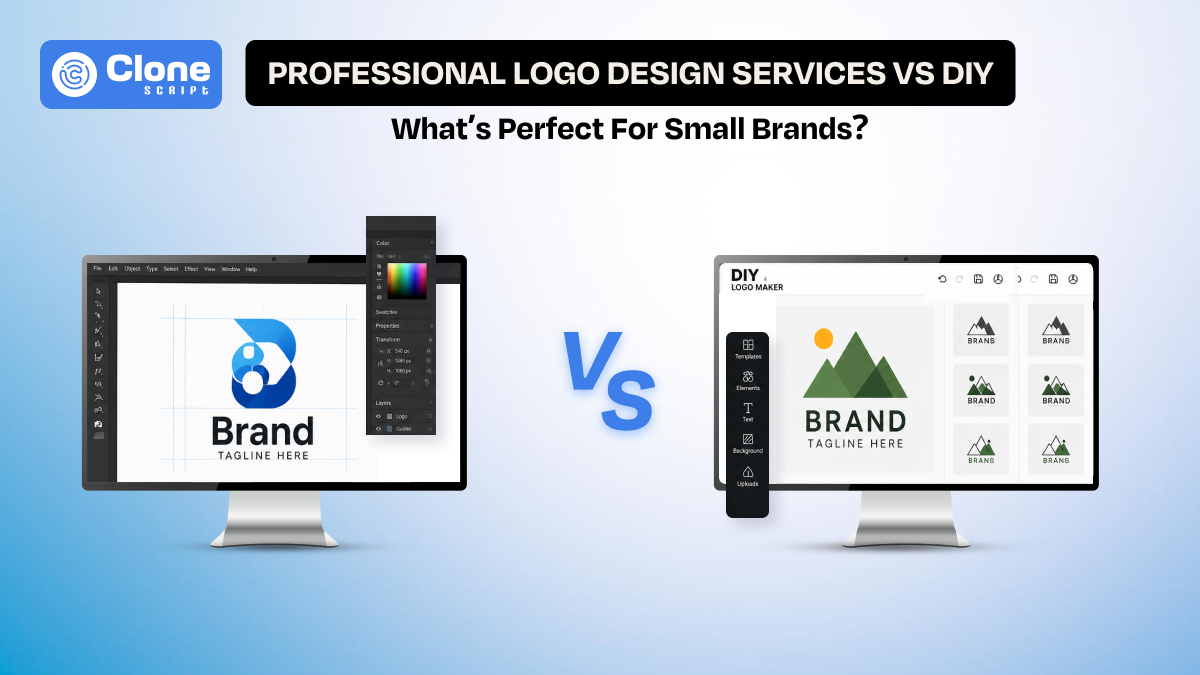
Professional Logo Design Services vs DIY: What’s Perfect for Small Brands?
For small brands, a logo is the first visual cue customers notice. It appears on business websites, packaging, social media, invoices, and advertisements. In many cases, it becomes the symbol customers associate with trust, quality, and recognition.
For business owners working with limited budgets, the decision usually comes down to two options: hiring a professional logo designer or creating a logo through do-it-yourself tools. Both approaches can work, but the right choice depends on business stage, goals, and long-term branding needs.
This decision is no longer just about design preference. It affects brand perception, customer confidence, scalability, and even market positioning. Understanding the strengths and limitations of each path helps small businesses invest wisely.
Why Logo Design Matters for Small Brands and Startups
A brand logo is more than decoration. It serves as a strategic branding asset that communicates identity in a compact visual form.
Research from Forbes and branding studies consistently shows that strong visual identity improves recognition and customer recall. For small brands competing in crowded markets, differentiation is critical.
A custom-developed logo helps businesses:
-
Build immediate visual trust
-
Create consistency across marketing channels
-
Support long-term brand recognition
-
Strengthen perceived professionalism
-
Improve customer memorability
For startups and local businesses, these factors influence purchasing decisions more than many owners realize.
What about the generic or weak logo? It reduces credibility, especially in digital-first markets where consumers judge businesses within seconds.
Understanding DIY Logo Design for New Brands
DIY logo design refers to creating a logo using online platforms, templates, or design software without hiring an expert. Sounds good, right?
Popular logo design tools include drag-and-drop generators, AI-assisted design apps, and template marketplaces. These platforms are attractive because they reduce cost and simplify the process.

For many early-stage businesses, DIY seems practical.
The benefits are straightforward:
-
Low upfront investment
-
Quick turnaround
-
Access to editable templates
-
Beginner-friendly interfaces
-
Full control over revisions
For businesses testing a concept or launching with minimal capital, this route can provide a temporary solution.
However, DIY tools often rely on pre-made visual structures. This creates limitations in originality and strategic depth.
A logo may look polished on the surface, but fail to represent the business meaningfully.
You can’t play with it if the goal is establishing the brand perception, as most successful brands have already achieved.
What Professional Logo Design Services Offer
Custom logo design services involve collaboration with experienced designers or branding agencies who create custom visuals based on business goals, target audience, and industry positioning.
Unlike automated tools, professionals approach logo creation as part of a broader branding framework.

This process usually includes:
-
Brand discovery sessions
-
Audience research
-
Concept development
-
Custom typography or iconography
-
Scalability testing
-
Final asset delivery in multiple formats
Professional logo designers consider technical and strategic requirements that DIY solutions may overlook.
For example, a logo must function equally well on a mobile screen, storefront signage, product labels, and business documents.
A custom-built design ensures adaptability across these environments.
Cost Comparison: DIY vs Professional Services for Logo Design
For small businesses, logo design costs should be viewed as a strategic investment rather than a one-time creative expense. While DIY platforms appear budget-friendly, the long-term value depends on how well the logo supports business growth, credibility, and consistency.
| Option | Typical U.S. Cost | Best For |
|---|---|---|
| DIY Logo Platforms | $20–$100 one-time or $10–$50/month | Startups testing ideas |
| Freelance Designers | $300–$2,500 | Small businesses needing custom work |
| Branding Agencies | $3,000–$10,000+ | Growth-focused or premium brands |
The lower price of DIY tools makes them appealing, but cost alone should not define the decision.
Key financial considerations:
-
Short-term savings: DIY reduces initial spending
-
Customization level: Professional work offers originality
-
Scalability: Custom logos adapt better as businesses expand
-
Rebranding risk: Weak logos often require replacement later
Small business rebranding can cost $5,000 to $30,000, depending on website changes, packaging updates, and customer communication efforts.
For brands with long-term ambitions, investing more up front often prevents larger corrective expenses later. The true comparison is not just what each option costs today, but what it may cost the business over the next five years.
Quality and Originality Differences Between Professional Logo and DIY Tools
When comparing DIY logo tools with branded logo design, the most significant difference is originality. A logo is not just a visual mark. It represents how a business is perceived in the market.
DIY platforms depend on pre-built templates, stock icons, and shared typography libraries. While these tools allow some customization, the final design may still resemble logos used by other businesses.
| Aspect | DIY Platforms | Professional Services |
|---|---|---|
| Design Source | Templates and presets | Custom-built concepts |
| Uniqueness | Limited | High |
| Brand Alignment | Surface-level | Strategy-driven |
| Ownership Rights | May involve shared assets | Exclusive deliverables |
For industries where trust matters. such as finance, healthcare, technology, or consulting, a generic logo can reduce perceived credibility.
Why originality matters:
-
Builds stronger brand recognition
-
Differentiates from competitors
-
Supports premium positioning
-
Reduces legal complications during trademark registration
Expert designers create logos based on business goals, audience behavior, and market context. That process produces a visual identity that is both distinctive and scalable.
For growing businesses, originality is not a design luxury. It is a competitive asset.
Speed and Convenience Considerations in Logo Design
For small businesses operating under tight deadlines, turnaround time can heavily influence branding decisions. This is where DIY logo tools hold a clear advantage.
A logo can be created, edited, and downloaded within the same day. For business owners launching a side project, testing a concept, or preparing for a short-term campaign, this level of speed is highly practical.
| Approach | Typical Delivery Time | Workflow Style |
|---|---|---|
| DIY Platforms | A few hours to 1 day | Self-service |
| Freelance Designers | 3 to 10 days | Collaborative |
| Branding Agencies | 2 to 6 weeks | Research-driven |
The convenience of DIY is in instant access. There are no meetings, design briefs, or waiting periods.
Where speed matters most:
-
Temporary promotions
-
MVP launches
-
Event-based campaigns
-
Internal or low-visibility projects
Custom logo design services require more time because the process includes discovery, revisions, and strategic alignment. While slower, this structured approach results in stronger brand consistency.
For businesses building long-term recognition, the extra time is not a delay. It is part of creating a durable visual identity. Fast execution solves immediate needs, but thoughtful website development supports sustainable growth.
Brand Strategy and Market Positioning with Branded Logo
A logo should support how a business wants to be perceived in its market. For small brands, this becomes essential because visual identity often shapes first impressions before any product or service is experienced.
DIY platforms focus on design execution, but they rarely address strategic positioning. That means a logo may look polished while failing to communicate the brand’s actual value.
A professional services approach treats logo creation as part of a broader branding system.
| Strategic Factor | Why It Matters |
|---|---|
| Audience Fit | Aligns visuals with customer expectations |
| Industry Relevance | Matches sector-specific trust signals |
| Price Positioning | Supports premium or budget perception |
| Brand Consistency | Strengthens recognition across channels |
A healthcare startup, for example, requires trust-driven design choices, while a creative agency benefits from bold differentiation.
Strategic branding advantages:
-
Attracts the intended customer segment
-
Improves credibility in competitive markets
-
Applies business value proposition
For growing brands, positioning begins visually. A logo aligned with strategy becomes a business asset, not just a design element.
When Do-it-Yourself Logo Design Makes Sense
DIY is a reasonable option under certain conditions.
It works best when:
-
The business is in the testing phase
-
Branding is temporary
-
The budget is highly restricted
-
Market competition is low
-
Design needs are minimal
For freelancers, side projects, or short-term ventures, DIY can provide functional branding without a large investment.
It is also useful for internal projects where public-facing identity is less critical.
However, business owners should treat DIY as a stepping stone rather than a permanent branding strategy when planning long-term expansion.
When Professional Services Are the Better Choice
Professional logo design is more suitable when branding directly affects customer trust and purchase decisions.
This includes businesses aiming for:
-
Scalable growth
-
Investor confidence
-
Strong digital presence
-
Competitive differentiation
-
Trademark readiness
-
Premium positioning
For e-commerce brands, SaaS companies, agencies, and service providers, custom branding delivers measurable value.
A well-crafted logo strengthens every marketing effort that follows a strategic approach in a way.
When customer perception drives revenue, professional design becomes an operational asset rather than an expense.
What Hidden Risks of Do-it-Yourself Tools and Logo Design Service
These risks are making the logo design complicated:
-
Limited Ownership and Usage Rights
Many DIY platforms use shared design assets. This is a red flag, and it can create legal or trademark complications in free usage. Without exclusive ownership, businesses may face restrictions as they expand.
-
Inconsistent Brand Representation
Template-based logos may not adapt well across digital, print, and product applications. This can lead to fragmented branding and reduced customer recognition.
-
Quality Gaps in Low-Cost Services
Some budget logo design services prioritize speed over strategy, delivering visuals that do not have depth, scalability, or industry relevance. This can create issues when the brand logo is applied to every business platform.
-
Future Rebranding Expenses
A poorly aligned logo requires redesign as the business matures. This adds costs for websites, packaging, and updated marketing assets. For startups, these costs are underlying and have to be managed.
-
Missed Competitive Positioning
Without strategic design thinking, businesses risk going into the market competition instead of standing apart. It can limit long-term brand growth.
How Small Brands Should Decide Between DIY Tools and Expert Logo Design Making
Choosing between these two options requires an honest evaluation of business priorities.
Ask these questions:
-
Is the logo central to customer-facing communication?
-
Will the business scale within the next few years?
-
Does the industry demand strong visual credibility?
-
Is long-term differentiation important?
-
Can future rebranding costs be avoided with better initial investment?
If most answers point toward growth and visibility, professional services are likely the stronger choice.
If the business is still validating its model, DIY may be sufficient for the current stage.
The decision should match business maturity rather than personal preference.
All Clone Script's Professional Logo Design Service for Small Business Success
Our service focuses on delivering custom logo concepts tailored to business needs. With multiple design options, revision support, and high-quality file delivery formats, businesses receive assets ready for websites, social media, print materials, and product branding.
| Service Feature | Business Advantage |
|---|---|
| Custom logo concepts | Unique market positioning |
| Revision rounds | Design refinement for accuracy |
| Multi-format files | Ready for digital and print use |
| Professional process | Scalable branding support |
Why it matters for small brands:
-
Creates a distinctive identity
-
Improves professional credibility
-
Supports future growth initiatives
For businesses seeking reliable branding foundations, All Clone Script’s professional logo design service offers both creative precision and practical business value.