BTC - Bitcoin
 USDTERC20 - USDT ERC20
 ETH - Ethereum
 BNB - Binance
 BCH - Bitcoin Cash
 DOGE - Dogecoin
 TRX - TRON
 USDTTRC20 - USD TRC20
 LTC - LiteCoin

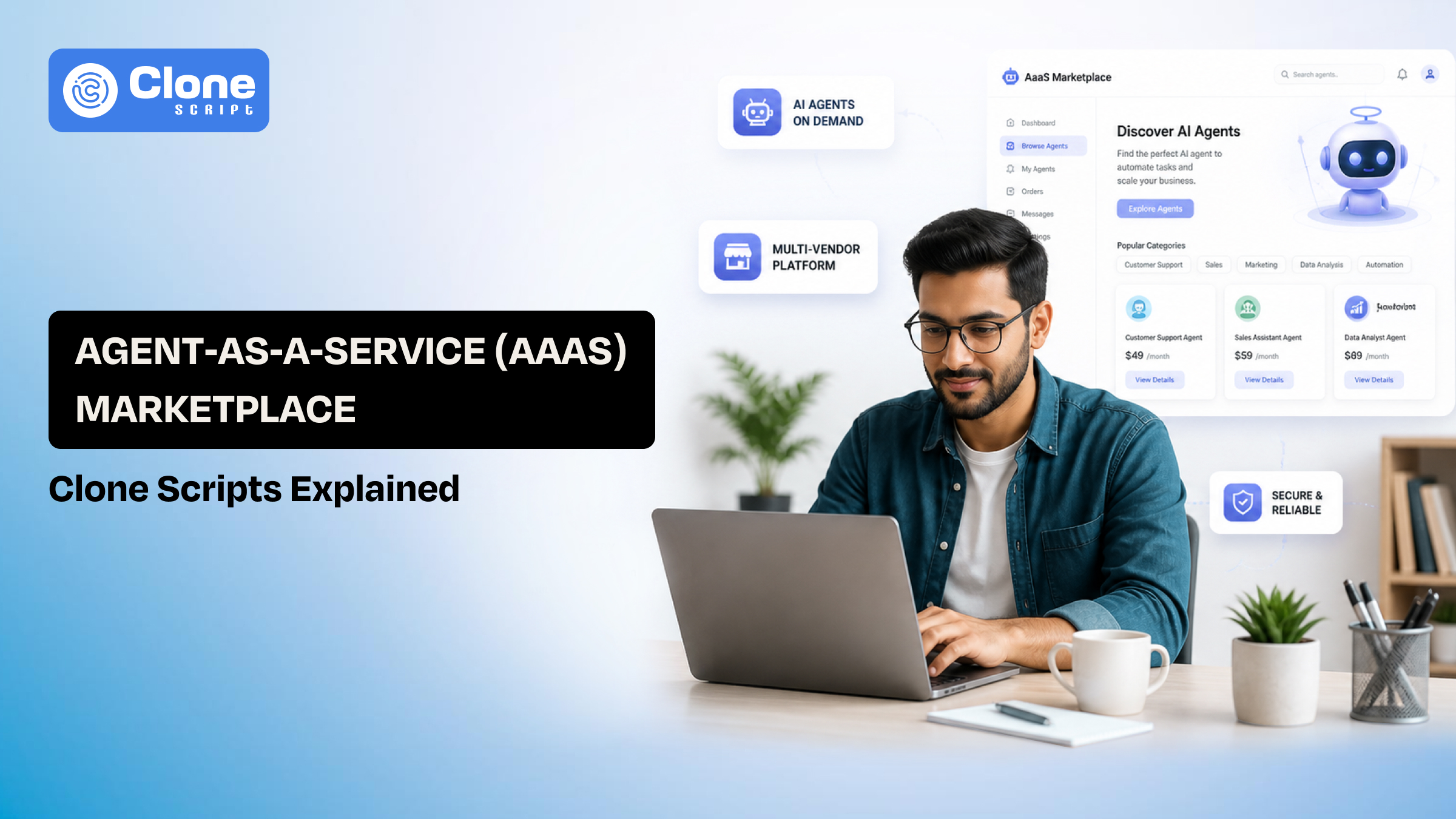
Agent-as-a-Service (AaaS) Marketplace Clone Scripts Explained
Nowadays, AI agents are evolving into a service-based business model. They’re not only standalone tools. Most of the organizations use them for:
-
Automation
-
Customer engagement
-
Analytics
-
Workflow execution
As adoption grows, businesses are looking for structured platforms to distribute and monetize these solutions efficiently.
This has led to the rise of Agent-as-a-Service (AaaS) marketplaces. These platforms allow users to access specialized AI agents through subscriptions, API integrations for front-end and back-end, or service-based licensing. The model creates recurring revenue opportunities while making intelligent automation more accessible across industries.
But the question is: Do you have a $50k+ development budget and 6-12 months of waiting time to build such a platform? Then, proceed happily with custom development.
On the other hand, if we say there is no need to invest in infrastructure, billing systems, security, and AI orchestration. That complexity has pushed many businesses toward marketplace clone scripts, pre-built frameworks designed to accelerate deployment.
For companies entering the AI marketplace, website and app clone scripts provide a faster, scalable, and more cost-efficient path to launch.
What Is an Agent-as-a-Service Marketplace?
An Agent-as-a-Service (AaaS) marketplace is a digital platform where businesses can access, deploy, and manage AI-powered agents based on operational requirements. Instead of developing every automation workflow internally, organizations subscribe to specialized agents that are already trained, integrated, and ready for use.
That means the AaaS marketplace is not like traditional software marketplaces, as a downloadable tool. It is an intelligent service layer designed to perform tasks, automate decisions, and improve execution efficiency.
Common use cases include:
-
Customer support automation
-
Lead qualification and outreach
-
Document analysis and processing
-
Workflow execution
-
Sales intelligence
-
Operational decision support
This model shifts the focus from owning software to consuming outcomes.
For enterprises, that means reducing internal development dependency. For providers, it creates scalable monetization opportunities through:
-
Subscription plans
-
Usage-based billing
-
Licensing agreements
-
API access fees
In practice, an AaaS marketplace connects three key participants:
-
Businesses seeking automation solutions
-
Developers or vendors offering AI agents
-
Platform owners facilitating transactions and revenue flow
That multi-party ecosystem is what makes the marketplace commercially viable and strategically scalable.
What Are Marketplace Clone Scripts?
These scripts are pre-built and designed software frameworks replicating the operational structure of successful platforms. Through customization and adding new functionalities, a new platform can be live in days.
In the context of Agent-as-a-Service platforms, they provide the technical foundation required to launch an AI agent marketplace without building the system entirely from 1st step in SDLC.
Businesses can start with an existing architecture that already supports marketplace workflows.
A standard AaaS clone script usually includes:
-
Vendor onboarding systems
-
Agent listing and categorization
-
Subscription and billing modules
-
Admin dashboards
-
User authentication
-
API integration support
-
Analytics and reporting tools
This reduces development complexity while accelerating product readiness.
A well-structured clone script acts as a launch framework, not a limitation. It gives businesses the ability to build differentiated platforms while avoiding the cost and delay of foundational engineering.
Why Businesses Are Adopting AaaS Clone Scripts Instead of Custom Web Development?
Businesses adopt AaaS clone scripts because they reduce the gap between concept and market launch. In an AI-driven sector, timing plays a direct role in competitiveness, and lengthy development cycles can slow growth before revenue begins.
Custom marketplace website development, including an app, often demands significant technical planning, integration work, and testing before the platform becomes commercially usable. For companies entering a new niche, that level of investment may not be practical at the early stage.
A clone script offers a structured alternative.
Key business advantages include:
-
Faster deployment timelines
-
Lower development costs
-
Pre-built marketplace functionality
-
Reduced technical overhead
-
Scalable architecture for future upgrades
This allows teams to focus on customer acquisition, partnerships, and service positioning rather than foundational engineering.
For startups, it supports quicker validation. For established businesses, it creates expansion opportunities without disrupting existing operations.
The strategic benefit is simple: businesses gain a launch-ready framework that supports growth while minimizing early-stage risk.
Core Technical Architecture Behind an AaaS Marketplace
An Agent-as-a-Service marketplace depends on a layered architecture that supports scale, automation, and service reliability. The platform is not just a storefront. It is an operational system that manages users, vendors, AI execution, and revenue flows.
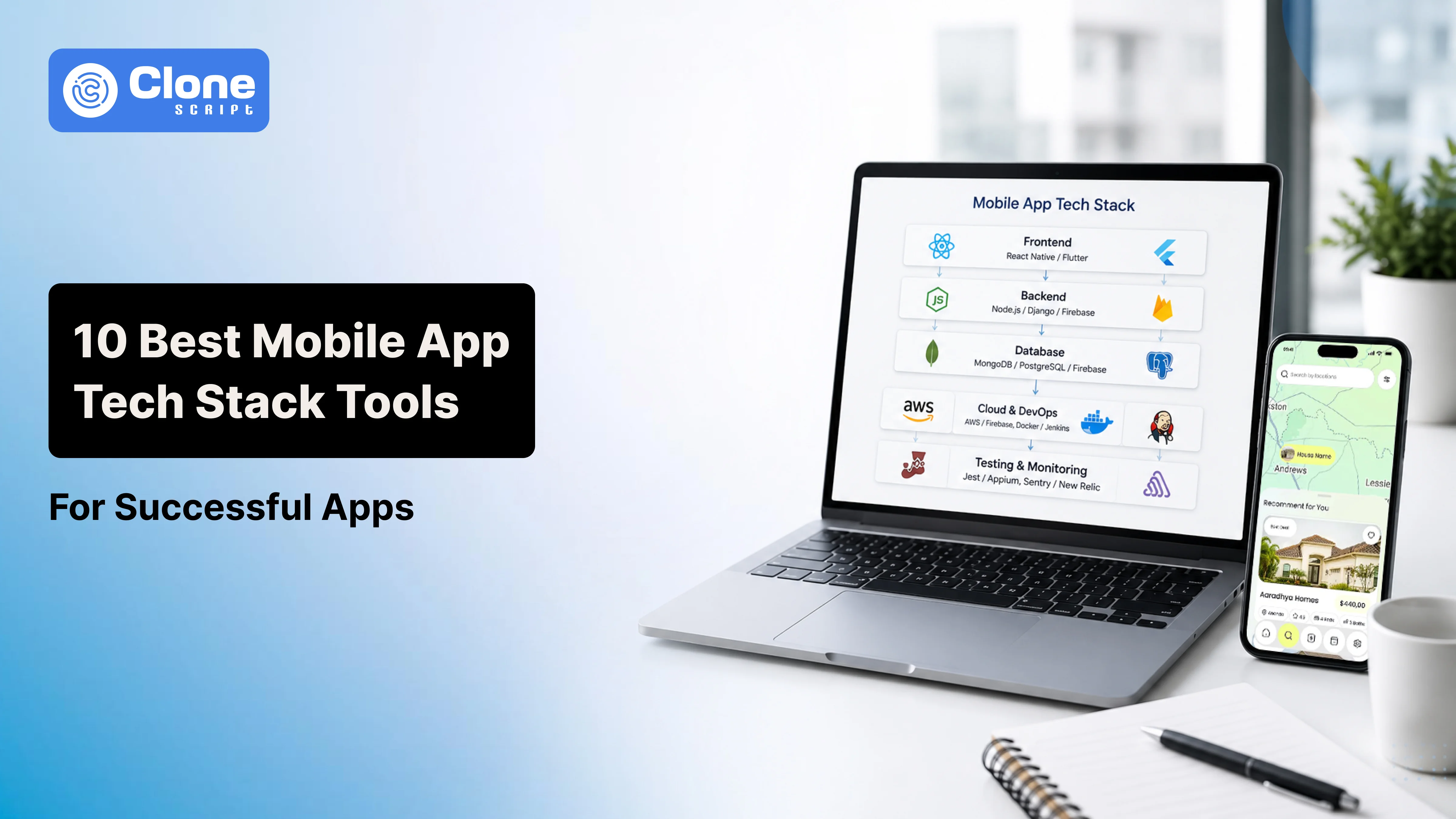
The technical foundation usually includes:
-
Front-end development layer for user interaction, dashboards, and marketplace navigation.
-
Back-end services for authentication, transactions, subscriptions, and business logic.
-
AI orchestration engine for task routing, model execution, and workflow automation.
-
Database infrastructure for user data, logs, and service history.
-
Billing systems for subscriptions, commissions, and usage tracking.
Frameworks such as React, Node.js, Python, PostgreSQL, and cloud-native deployment tools are commonly used to support these layers.
A reliable clone script should already account for this architecture.
Without a strong technical structure, marketplace performance declines as vendor activity and user demand increase. That is why architectural quality matters more than interface design when evaluating an AaaS platform solution.
Features That Make an AaaS Clone Script Business-Ready
A marketplace clone script should do more than replicate a business model. It should provide the operational structure required for real commercial use. If the platform lacks essential systems, businesses often face redevelopment costs soon after launch.
That is why feature depth matters.
A business-ready AaaS clone script should support:
-
Vendor management for onboarding and monitoring service providers
-
Service listing modules for organizing AI agents by category or use case
-
Flexible pricing systems for subscriptions, usage-based billing, or licensing
-
API integration layers for external tools and enterprise workflows
-
Performance analytics for tracking adoption and revenue trends
-
Security controls such as permissions, access levels, and audit logs
These features create operational efficiency while improving user trust.
Equally important is adaptability. Businesses should be able to customize workflows, branding, and monetization models without affecting platform stability.
A reliable clone script is not judged by design alone. It is measured by how well it supports growth, control, and long-term marketplace scalability.
Business Models Supported by Agent-as-a-Service Platforms
An Agent-as-a-Service marketplace is only as strong as its monetization strategy. The platform must support revenue models that align with both customer demand and long-term scalability.
Different businesses adopt different approaches based on service complexity and target audience.
Common monetization models include:
-
Subscription-based access for recurring monthly or annual revenue
-
Usage-based pricing, where customers pay per interaction or execution volume
-
Commission structures for transactions between buyers and service providers
-
Enterprise licensing for dedicated deployments or internal usage rights
-
API billing tied to request limits or consumption tiers
A flexible platform can combine multiple models within one ecosystem.
For example, a marketplace may charge vendors subscription fees while also collecting commissions on customer transactions. This layered revenue strategy improves profitability and reduces dependency on a single income source.
The right clone script should support these models from the start, allowing businesses to adapt pricing strategies as market demand evolves. Monetization flexibility is a critical factor in long-term marketplace success.
Key Considerations Before Choosing a Clone Script
Selecting an AaaS clone script should involve more than comparing pricing or interface design. The long-term value of the platform depends on technical quality, ownership rights, and scalability.
A low-cost script may appear attractive initially, but limited flexibility can create operational issues as the marketplace grows.
Before investing, businesses should evaluate:
-
Source code access for future customization and upgrades
-
Technology stack compatibility with the preferred infrastructure
-
Scalability readiness for handling increased users and vendors
-
Security standards, including data protection and access controls
-
Integration support for APIs, payment gateways, and AI services
-
Post-launch maintenance for updates and technical assistance
These factors directly affect platform stability and business continuity.
A clone script should function as a growth asset, not a temporary launch tool.
Choosing the right solution early reduces redevelopment costs and creates a stronger foundation for expansion. In the AaaS market, infrastructure decisions often determine how effectively a business can scale and compete.
Launching a clone script legality matters, and when you get that, consider knowing the license-related regulations.
The Future of Agent-as-a-Service Marketplaces
Agent-as-a-Service marketplaces are positioned to become a core distribution model for AI-driven business solutions. As organizations seek faster ways to adopt automation, marketplaces provide a centralized environment for discovering, deploying, and managing specialized agents.
This model supports scalability across industries where operational efficiency is a priority.
Growth opportunities are emerging in sectors such as:
-
Customer service
-
Healthcare operations
-
Financial analysis
-
Legal documentation
-
Sales enablement
-
Supply chain management
As enterprise adoption increases, demand will shift toward platforms that offer trusted, integration-ready, and domain-specific agents.
For marketplace owners, this creates long-term commercial potential.
Success will depend on building ecosystems rather than isolated services. Platforms that support multiple vendors, flexible pricing, and enterprise-grade infrastructure will hold stronger market positions.
The future of AaaS is not limited to AI capability. It is defined by how effectively businesses package, distribute, and monetize intelligent services at scale.
Conclusion
Agent-as-a-Service marketplace clone scripts help businesses enter the AI services market with lower development risk and faster execution. Their strength lies in providing scalable infrastructure, monetization flexibility, and operational readiness, allowing companies to focus on growth instead of rebuilding foundational systems.
Is your business prepared to launch an AI-driven marketplace with the right infrastructure before competitors establish their position in this fast-moving industry?