BTC - Bitcoin
 USDTERC20 - USDT ERC20
 ETH - Ethereum
 BNB - Binance
 BCH - Bitcoin Cash
 DOGE - Dogecoin
 TRX - TRON
 USDTTRC20 - USD TRC20
 LTC - LiteCoin

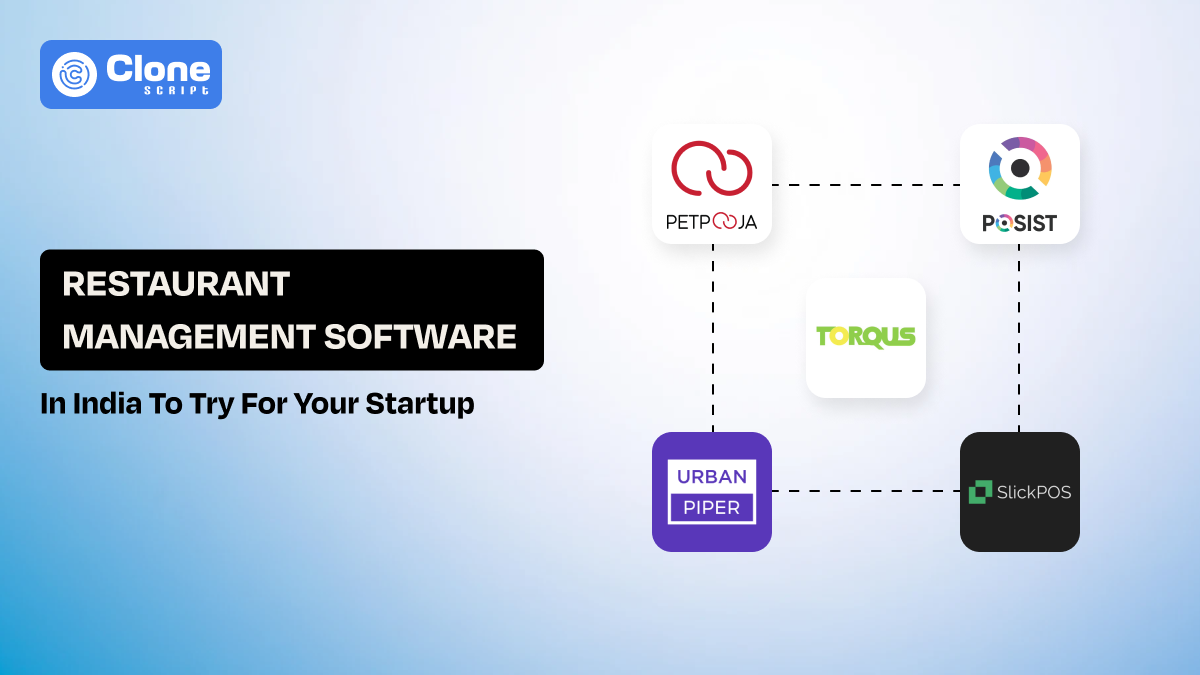
Top 5 Latest Restaurant Management Software in India to Try for Your Startup
India’s food startup ecosystem is growing at a rapid pace. From cloud kitchens and quick service restaurants (QSRs) to niche cafés and delivery-first brands, new ventures are entering the market every day. However, managing daily restaurant operations is not as simple as serving great food.
Food startups often struggle with order management across multiple channels, inventory wastage, billing errors, staff coordination, and a lack of real-time business insights. This is where restaurant management software becomes a crucial operational backbone.
With rising competition and thin profit margins, adopting the right billing and order management software can significantly improve efficiency, reduce costs, and support faster scalability.
In this blog, we will explore the top 5 latest restaurant management software in India that food startups can consider to streamline operations, enhance customer experience, and build a scalable foundation for long-term growth.
What is Restaurant Management Software?
Restaurant management software is a centralized digital solution designed to streamline and automate the day-to-day operations of a food business. These solutions are totally different from traditional billing tools. Modern restaurant POS software is optimized for smooth integration for multiple operational functions, such as:
-
Order processing
-
Inventory tracking
-
Staff management
-
Customer data handling
-
Performance analytics into a single cloud-based platform.
For food startups, this software acts as an operational control system that ensures smoother coordination between the front-of-house and kitchen teams.
Why is Software Required for the Food Business?
They automate the entire operations from dine-in, takeaway, and online delivery platforms. There are no manual error possibilities. That means the service speed will increase.
The complete restaurant ERP software provides deeper insights through reporting dashboards, sales trends, peak hour analysis, and menu performance metrics. This can help restaurant owners to make a decision on data, not assumptions, and save them from burnout.
Why Food Startups in India Need Restaurant Management Software
To automate workflows, manage multi-channel orders, and make data-driven decisions from day one, the software is needed.

-
It improves operational efficiency.
Studies indicate that restaurants using modern restaurant POS software can reduce order processing time by up to 25–30%, leading to faster table turnover and improved customer satisfaction. At the same time, implementing automation minimizes the billing errors and reduces dependency on manual coordination between the service and kitchen teams.
-
Software systems enable better cost control.
Food wastage can account for 4–10% of total restaurant costs. With restaurant inventory management software, startups can track stock consumption, monitor recipe costing, and optimize purchasing decisions. This helps improve margins and ensures better utilization of raw materials.
-
It simplifies multi-channel order management.
With online delivery contributing to 40–60% of revenue for many cloud kitchens, a centralized restaurant order management system becomes essential. Software integrations with aggregators like Swiggy and Zomato help startups handle higher order volumes without operational confusion.
-
It provides real-time business insights.
Data-driven restaurants are proven to make faster pricing and menu decisions. Advanced restaurant analytics software offers insights such as peak ordering hours, high-performing menu items, and daily revenue trends. That means founders can optimize operations proactively.
-
The software supports faster business scalability.
Using a cloud-based ERP software for a restaurant helps startups expand to multiple outlets and locations. Here, they can improve operational consistency by 20-30% because the process remains standardized across branches. This reduces training time and improves brand experience.
For modern food businesses, adopting restaurant technology directly impacts profitability, operational control, and long-term growth potential.
Must-Have Features to Look for in Restaurant Management Software
If you are looking at the software to see how it easily generates the bills, then you may overlook other features. Prioritize the features that support daily operations, reduce complexity, and allow your food startup to grow without switching platforms frequently.

-
Cloud-Based Access
A cloud-based restaurant management system allows founders to monitor sales, inventory, and outlet performance from anywhere. This is especially useful for delivery-first brands and multi-location startups that need real-time visibility without being physically present.
-
Aggregator & Multi-Channel Integration
Your restaurant order control software should seamlessly integrate with Swiggy, Zomato, dine-in, and takeaway orders. A single dashboard helps avoid missed orders, reduces manual entry, and improves operational coordination during peak hours.
-
Inventory & Recipe Management
An effective inventory management system tracks stock levels automatically based on orders processed. Afterwards, recipe mapping ensures accurate food cost calculation that helps startups maintain consistent margins and control wastage.
-
GST-Compliant Billing & POS Flexibility
Reliable restaurant billing software must support GST invoicing, multiple payment modes, and fast checkout. Tablet or mobile-based POS compatibility can also improve order-taking speed in cafés and QSR formats.
-
Reporting & Analytics Dashboard
Built-in restaurant analytics software provides insights like daily revenue, category performance, and peak sales hours. These reports help founders make informed decisions on pricing, menu optimization, and staffing.
-
Multi-Outlet & Role-Based Management
If you plan to scale, choose ERP software that supports multi-outlet management and staff role permissions. This ensures operational control while delegating responsibilities efficiently.
Selecting software with these core capabilities helps food startups build a stable operational foundation and avoid costly technology migrations in the future.
Top 5 Latest Restaurant Management Software in India
Here is the list of useful softwares to be used for making your restaurant profitable.
1. Petpooja
Need complete control of your restaurant operations without juggling multiple tools? Petpooja offers a simple, cloud-based system that helps food startups handle billing, inventory, and online orders more efficiently.
Key Features of Petpooja
-
Easy & Fast Billing System
Petpooja makes daily billing smooth and quick, helping staff manage dine-in, takeaway, and delivery orders without confusion or long waiting times for customers.
-
Centralized Online Order Management
Orders from platforms like Swiggy and Zomato can be viewed and managed in one place, reducing manual errors and helping teams handle peak hours better.
-
Inventory Tracking with Recipe Mapping
The system automatically updates stock based on orders processed. This helps startups control food wastage, manage purchasing smartly, and maintain better profit margins.
-
Clear Business Reports & Insights
Founders can track daily sales, popular menu items, and outlet performance through simple dashboards, making it easier to take quick operational decisions.
-
Supports Multi-Outlet Growth
As the business expands, Petpooja allows startups to manage multiple locations, menus, and staff access from a single platform without operational complexity.
Petpooja Pricing
To know the actual price of this software, you can book a demo, and from there, the cost will be identified. Also, it depends on the number of integrations, outlets, and additional modules needed.
Petpooja Best For
Early-stage food startups, cloud kitchens, cafés, and small restaurant brands need an affordable and easy-to-learn management system.
Petpooja Cons
-
Some advanced integrations are available only in higher plans.
-
Initial setup and staff training may take time.
-
Custom reporting options are limited in basic plans.
2. Posist (Restroworks)
Operational control in a restaurant startup is a must, and Posist (known as Restroworks) software is a prime choice. The best part is the cloud platform integration that helps growing food brands to standardize processes, manage outlets, and improve business performance.
Key Features of Posist
-
Enterprise-Level POS & Billing
The software is designed for high-volume restaurants, and the system ensures faster billing, smooth order flow, and minimal service delays during rush hours.
-
Outlet & Franchise Management
Startups aiming to expand can manage multiple outlets, franchises, and centralized menus. They can maintain consistent pricing and operational standards.
-
Advanced Inventory & Supply Control
The system helps track stock movement across locations, manage vendor purchases, and maintain accurate food costing to avoid margin leakages.
-
Data-Driven Reporting & Forecasting
The dashboard provides deeper insights into sales patterns, demand trends, and menu performance, helping founders make smarter growth and pricing decisions.
-
Third-Party Integrations Ecosystem
Restroworks supports integrations with delivery platforms, payment systems, loyalty tools, and kitchen display systems to build a connected restaurant tech stack.
Restroworks Pricing
Restrowork pricing is usually customized based on business size, number of outlets, and required modules. It is generally positioned higher than entry-level solutions.
Restroworks Best For
Scaling restaurant startups, multi-outlet brands, franchise models, and cloud kitchen chains, looking for structured operational management.
Restroworks Cons
-
This software may feel complex for very small startups.
-
The higher pricing compared to basic POS tools.
-
It requires proper onboarding and training for full utilization.
3. SlickPOS
Running a food startup with simplicity and a combination of strong systems is required to make a profit. SlickPOS software offers an easy-to-use cloud solution that helps restaurants manage billing, online orders, and customer experience without heavy operational complexity.
SlickPOS Key Features
-
Quick Billing & Order Processing
SlickPOS enables fast billing and smooth order handling. That reduces customer waiting time and improves service efficiency during busy hours.
-
Integrated Online Ordering System
Startups can manage orders from food delivery platforms and their own online ordering channels in one place. This ensures better coordination and fewer missed orders.
-
Customer Engagement & Loyalty Tools
Built-in loyalty programs and customer data tracking in SlickPos help restaurants improve repeat orders and build stronger relationships with regular customers.
-
Inventory Monitoring & Stock Alerts
The system helps track ingredient usage and sends alerts for low stock, allowing founders to plan purchases and reduce last-minute shortages.
-
Mobile Reporting & Remote Access
Business owners can check sales reports and outlet performance anytime through mobile access, making it easier to stay updated without being physically present.
SlickPOS Pricing
The pricing of SlickPOS typically starts from around ₹0 to ₹9,999 per month, depending on features, integrations, and outlet requirements. Custom plans are available for growing businesses.
SlickPOS Best For
Cafés, QSR startups, food trucks, and small restaurant brands need a modern yet easy-to-manage restaurant system.
SlickPOS Cons
-
Limited advanced enterprise features
-
Custom integrations may take additional time.
-
Some analytics features are available only in higher plans
4. UrbanPiper
When you have multiple delivery orders at the same time, it feels pathetic to manage. UrbanPiper software helps food startups centralize online order management, streamline menu updates, and improve operational speed without switching between multiple aggregator tablets.
UrbanPiper Key Features
-
Centralized Aggregator Order Management
UrbanPiper brings orders from platforms like Swiggy and Zomato into one dashboard. From that, teams manage high delivery volumes with better accuracy and less confusion.
-
Real-Time Menu Synchronization
Menu changes, pricing updates, and item availability can be updated across all delivery platforms instantly in UrbanPiper. It reduces the risk of order cancellations due to outdated listings.
-
Smart Order Routing to POS/Kitchen
Orders are automatically pushed to POS or kitchen systems, improving preparation speed and reducing manual entry errors during peak hours.
-
Performance Insights for Delivery Channels
UrbanPiper provides visibility into order trends, platform-wise performance, and delivery sales contribution. This supports startups in optimizing their online growth strategy.
-
Scalable Integration Ecosystem
UrbanPiper integrates easily with multiple POS systems, and it is suitable for growing brands that want to build a connected restaurant technology setup.
UrbanPiper Pricing
UrbanPiper pricing is generally subscription-based and varies depending on order volume, integrations, and the number of outlets. Custom pricing is offered for scaling brands.
UrbanPiper Best For
Cloud kitchens, delivery-first startups, and restaurant brands with a strong focus on online food ordering operations.
UrbanPiper Cons
-
This is not a full standalone restaurant POS system.
-
UrbanPiper has a dependency on external POS for billing and inventory.
-
UrbanPiper may feel feature-heavy for very small businesses.
5. Torqus
Does your restaurant startup grow with operational control? Torqus is a restaurant management software that offers a structured management platform. Handling billing, kitchen operations, inventory, and multi-outlet coordination with better process visibility can be done.
Torqus Key Features
-
Reliable POS & Billing Workflow
Torqus supports smooth billing and order management that helps restaurants maintain service speed and accuracy even during peak business hours.
-
Kitchen Display System Support
In Torquse, orders can be routed directly to kitchen screens, improving preparation coordination and reducing dependency on printed order tickets.
-
Inventory & Purchase Management
The platform helps track stock usage, manage vendor purchases, and maintain consistent food costing for proper financial planning.
-
Outlet Performance Monitoring
Business owners can review sales trends, staff productivity, and menu performance through structured reports that support operational improvements.
-
Multi-Location Operational Control
Torqus allows centralized management of menus, pricing, and user permissions, making it easier for startups to expand without losing process consistency.
Torqus Pricing
Torquse pricing is typically customized based on outlet size, deployment type, and required modules. It is often positioned as a mid-to-premium solution.
Torqus Best For
Torqus can help grow restaurant startups, dine-in restaurants, and multi-outlet brands that require stronger process control and kitchen-level operational visibility.
Torqus Cons
-
The interface may feel complex initially.
-
It requires proper setup and staff training.
-
Torqus has a higher investment compared to basic POS tools.
Restaurant Management Software Comparison Table
Choosing the right restaurant system becomes easier when you compare key capabilities. Below is a comparison to help food startups evaluate which platform fits their business model and growth stage.

Quick Insight for Startups
-
If you are an early-stage food startup, tools like Petpooja or SlickPOS offer easier onboarding and lower investment.
-
For delivery-heavy operations, UrbanPiper helps manage aggregator orders more efficiently.
-
Startups planning rapid expansion or franchise growth may benefit from structured platforms like Posist or Torqus.
Conclusion
In India, when starting a new restaurant comes with multiple issues, the ERP software becomes the right tool to manage everything. There are lots of the best software available for your startup, but what suits it depends on the business model and operation. Not to be tempted towards a slick demo of the software, understand how it can make tasks easy for you.