BTC - Bitcoin
 USDTERC20 - USDT ERC20
 ETH - Ethereum
 BNB - Binance
 BCH - Bitcoin Cash
 DOGE - Dogecoin
 TRX - TRON
 USDTTRC20 - USD TRC20
 LTC - LiteCoin

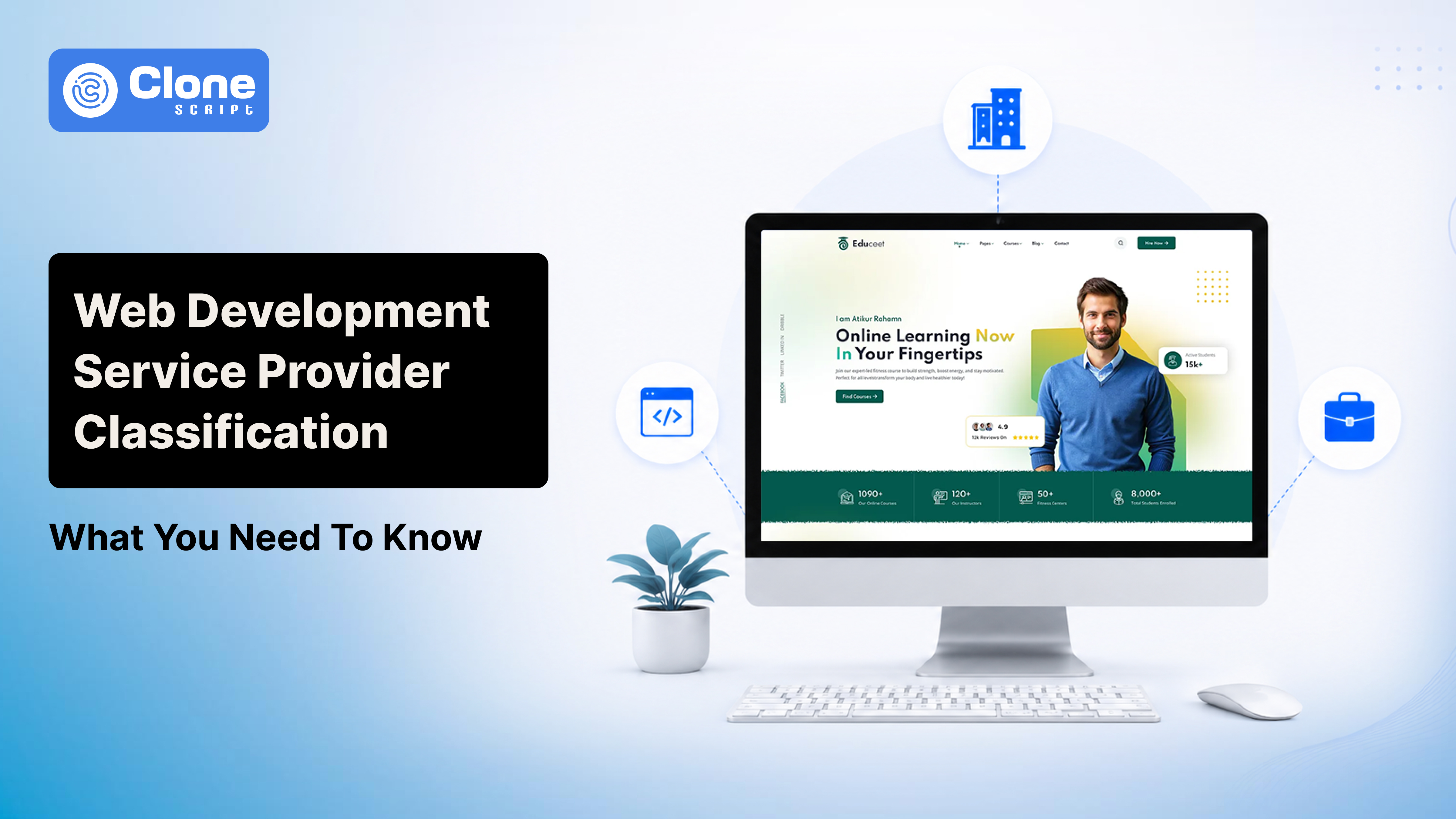
Web Development Service Provider Classification: Types, Technical Expertise, Trends
A website is a revenue-generating asset for a business, whether it’s a startup or an established brand.
Why?
Because research indicates that over 90% of consumers research businesses online before making a purchase. 60% of small and medium businesses face the fact that their websites fail to convert visitors effectively.
That means if a website is poor, then it affects the overall business. Like, there is no such revenue you can generate, the leads are missing, and the opportunities are not available.
Here, a professional web development service provider becomes helpful. The expertise they bring to website UI design, coding, and deployment makes a scalable platform for business.
On the other hand, choosing the wrong development partner can lead to delays in launch, expanded budgets, and a website that fails to meet your business needs.
This comprehensive guide will explain how these providers are classified and explore the different types of web development companies with technical expertise. Also, we examine industry-specific specialization and provide actionable insights to help entrepreneurs make informed decisions for their digital growth.
Does it Matter to Hire Professional Web Developers?
Yes.
Your customers will first see your website and judge the brand, regardless of how premium quality products and services you carry. So, hiring web developers for a business website is important, as investing in the correct path that influences brand performance and long-term ROI.
The question is, what do professional developers do with my website?
They help and support everything, covering these:
-
Optimize so that a website loads quickly and performs reliably across devices. This is required to reduce bounce rates and keep potential clients engaged.
-
They ensure the website has a top-quality user experience that guides visitors toward conversion.
-
They provide a scalable architecture to accommodate business growth and new features without costly web redesigns.
-
They design a website to reflect brand credibility, increasing trust and loyalty from first-time visitors.
You can consider the stats below to know how important it is to onboard a web developer service provider.
-
Up to 32% of conversion rates increase when a company invests in professional web development.
-
Almost 40% of bounce rates are reduced with page performance optimization.
The provider you choose can either unlock these benefits or affect your growth.
Provider Type and Scale Web Development
Web development providers vary widely in scale, capabilities, and cost. Understanding these differences helps entrepreneurs match the right development partner with their business goals.
-
Freelancers and Solo Developers
This is the most common choice for entrepreneurs: freelance web developers. They are independent professionals who specialize in one or two technologies such as WordPress, Shopify, or React. They are ideal for small-scale projects where cost and flexibility are priorities.
Advantages:
Freelancers are highly adaptable and can deliver a website quickly. They are ideal for MVPs, landing page designs, or portfolio sites, and typically cost less than agency teams.
Limitations:
Their capacity is limited. Large or ongoing projects may require additional support. Entrepreneurs relying solely on a freelancer may face delays if the developer is unavailable or overbooked.
Example:
A startup developing a landing page for early user acquisition hired a web developer freelancer for $6,000, completing the site in three weeks and enabling early market testing.
-
Boutique Agencies
Boutique agencies are small teams, typically 3–15 people, specializing in custom, brand-driven websites. They are a middle ground between freelancers and full-service agencies.
Advantages:
Boutique web development agencies provide both creative design and technical execution, ensuring a polished, professional site. Direct communication with the team allows fast iterations based on feedback.
Limitations:
In this type of web development, projects can cost between $10,000–$30,000, higher than freelance options. The capacity for multiple large-scale projects simultaneously is limited.
Example:
A mid-sized consultancy hired a boutique agency to redesign its client portal. The agency’s design and usability improvements led to a 30% increase in client engagement over six months.
-
Full-Service Digital Agencies
Full-service agencies handle UI and UX design, development, content strategy, SEO, and analytics in one package. They are ideal for complex websites requiring multiple integrated systems, such as e-commerce platforms or SaaS products.
Advantages:
They offer comprehensive service offerings, structured project management, and post-launch support. Full-service agencies ensure that design, functionality, and digital marketing are aligned with business objectives.
Limitations:
There is a high cost, typically $20,000–$100,000+. Larger teams can slow decision-making processes, making communication less direct.
Example:
An e-commerce brand asked a full-service agency to launch an integrated website with CRM and analytics tracking, resulting in a 42% increase in online sales within six months.
-
Enterprise Software Companies
Enterprise-level providers are equipped to handle highly complex, large-scale websites or SaaS platforms. They employ multiple specialized teams and follow strict development, QA, and compliance processes.
Advantages:
High reliability, scalability, and experience with regulatory and integration challenges have to be faced in an enterprise web development. These providers are best suited for corporations and businesses requiring complex systems.
Limitations:
Enterprise software companies have premium pricing, often exceeding $100,000, and less personalized service due to structured workflows.
Example:
A multinational financial firm partnered with an enterprise web development provider for a secure client portal. The result was 99.9% uptime and 30% faster onboarding of new features, improving client satisfaction and operational efficiency.
Technical Expertise: Web Development
The technical skills of your web development provider directly affect site functionality, performance, and long-term maintainability.
-
Front-End Development Service
Front-end developers focus on user-facing interfaces. This includes design, responsiveness, and interactivity. High-quality front-end development services ensure that users can navigate your site intuitively, boosting engagement and conversion rates.
Websites with well-designed front-end interfaces experience 25% longer session durations. That means it helps to keep users engaged with your content or products.
-
Back-End Development Service
Back-end developers handle server logic, databases, and API integrations. In back-end development services, they optimize server-side systems to increase site speed, security, and reliability.
Strong back-end architecture in an e-commerce app, for example, can reduce page load times by up to 40%. This is important for providing a smoother experience for high-volume transactions or enterprise-level platforms.
-
Full-Stack Development Service
Full-stack developers combine front-end and back-end expertise, delivering cohesive solutions. For startups or projects with limited teams, full-stack developers can speed up development while ensuring integration between design and functionality.
MVPs developed by a full-stack development company launch 2–3 times faster, accelerating time-to-market and early revenue generation.
Industry-Specific Web Development Service
There are different types of web development company providers its service, focusing on industry-specific solutions. It is important to consider compliance, usability, and optimized performance.
-
E-Commerce Platforms
Online shopping store developers have specialized in e-commerce platforms like Shopify, WooCommerce, or Magento. They optimize the website for conversion, checkout flow, and scalability.
Professional e-commerce websites can increase sales by 20–30% through better e-commerce UX and secure payment integration.
-
Custom Web Applications
Custom web application development is designed for SaaS platforms, internal business tools, or complex workflows. Here, you cannot depend on niche developers, but you have to prioritize the expertise the website needs to fulfill.
Tailored applications improve operational efficiency by 50–60%. For streamlining internal processes and enhancing customer experience, this efficiency is required.
-
CMS Websites
Content management system (CMS) website development usually happens on WordPress, Drupal, or Joomla. This allows businesses to update content easily and manage pages efficiently. WordPress developers have the skills to make a professional content site that the brand wants to be in customers’ preferences.
Proper CMS implementation saves businesses 15 hours per month managing content and ensures consistent content delivery.
-
Finance and Investment Websites
Finance websites require high security, regulatory compliance, and accurate data handling. For finance-related website development, both front-end and back-end developers have to be coordinated to make a trustworthy platform for investment.
Professional design and compliance reduce transaction errors and increase retention by 10–15%.
-
Healthcare Websites
HIPAA-compliant healthcare websites enhance patient experience and support secure communication. To make a website, the developers know about the priorities and ease of use at any time and from anywhere.
Optimized health portals can increase online appointment bookings by 25%, improving patient retention and satisfaction.
-
Service-Based Websites
Service-based websites for consultants, agencies, or local businesses focus on showcasing services and generating inquiries. Web developers have to design a website that offers a user-friendly experience and minimal effort to get such information.
Well-structured service pages can increase inquiries by 15–20%, improving lead generation and conversion.
Emerging Web Development Trends in 2026
Entrepreneurs need to be aware of evolving web design trends for 2026:
-
AI-Powered Personalization: 70% of high-performing websites integrate AI-driven content personalization to improve user engagement.
-
Progressive Web Apps (PWAs): PWAs provide mobile-first experiences and offline functionality, increasing retention by 35%.
-
Headless CMS: In headless CMS platforms, decoupled content delivery systems reduce development time by 20–30% and enable cross-platform deployment.
-
Security-First Development: Strong security reduces the risk of breaches; the average data breach costs $4.35M.
-
Sustainable Development: Efficient code and eco-friendly hosting reduce operational costs by up to 15% annually.
Before you hire a web developer for a business website development from freelancing or an agency-based one, consider these trends to add on (if applicable to your product and service).
Collaboration and Project Management in Web Development
A website’s success depends not just on code but also on team collaboration:
-
Defined milestones and project timelines.
-
Iterative feedback cycles for design and functionality.
-
Transparent communication through Slack, Trello, or Asana.
-
Post-launch support for updates and scaling.
Effective collaboration ensures the website aligns with business goals and minimizes costly mistakes. This ensures the web development ROI is in good standing.
Decision-Making Framework for Entrepreneurs
Choosing a provider requires considering scale, expertise, industry experience, and future growth:
-
Freelancers: They are ideal for low-cost MVPs and quick launches, but have limited scalability.
-
Boutique Agencies: They offer creative and personalized solutions for mid-sized projects with brand differentiation.
-
Full-Service Agencies: These web developers are comprehensive platforms with marketing and development integration.
-
Enterprise Providers: They are scalable, reliable, and suitable for highly complex or regulated environments.
Entrepreneurs should evaluate potential providers based on team structure, communication, portfolio, and scalability potential, ensuring their website becomes a growth-driving asset rather than a liability.
Conclusion
For entrepreneurs, a website is a strategic asset for growth. Choosing the right web development service provider, whether a freelancer, boutique agency, full-service team, or enterprise company, directly affects scalability, security, and long-term ROI.
From e-commerce website development to a niche-specific booking platform, the web development partner has to be knowledgeable. But where to find it?
Visit the web development company website or portfolio (apply to freelance developers also), then, if possible, ask them for a 1-on-1 meeting on a video call and chat. Once you know the developer is professional and genuine, then hand over the requirements you have.
All Clone Script: A Full-Stack Web Development Company Suitable for You
Searching for the best web development service for your business? All Clone Script has the solution.
-
Custom Web Development: We build scalable websites tailored to your business model.
-
Clone Script Solutions: We have ready-to-launch clone scripts for taxi apps, food delivery, finance platforms, and more.
-
Mobile & Web App Development: We offer end-to-end development for iOS, Android, and responsive web apps.
-
E-Commerce Solutions: Secure, feature-rich online stores with payment integrations and inventory management.
-
UI/UX Design Services: Engaging interfaces and smooth user experiences to boost conversions.
-
Maintenance & Support: Ongoing updates, bug fixes, and technical support to keep your platform running.
Ready to launch your website? Talk to us today and transform your idea into a live platform that creates leads and generates revenue for your business.