BTC - Bitcoin
 USDTERC20 - USDT ERC20
 ETH - Ethereum
 BNB - Binance
 BCH - Bitcoin Cash
 DOGE - Dogecoin
 TRX - TRON
 USDTTRC20 - USD TRC20
 LTC - LiteCoin

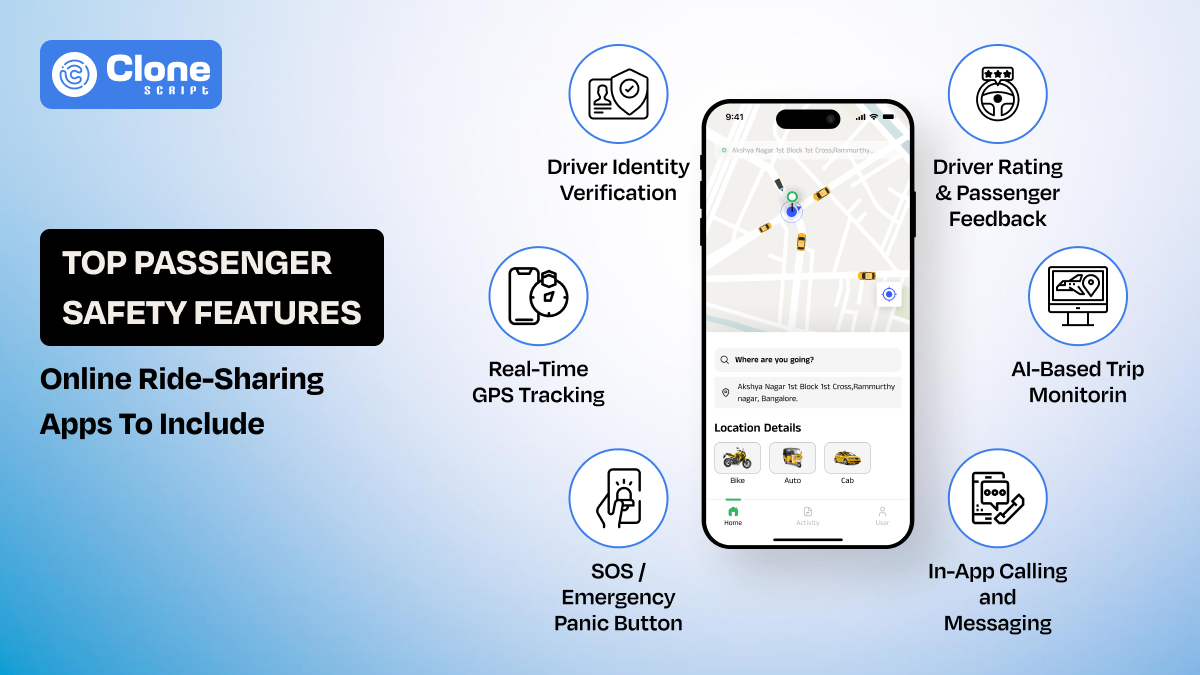
Top 10 Passenger Safety Features in Online Ride-Sharing Apps to Include
Convenience is what attracts users to ride-sharing platforms. But safety is what keeps them coming back. When a passenger books a ride through a mobile app, they are getting into a vehicle driven by someone they may never have met. This is why ride-sharing app safety features have become a critical priority for mobility platforms.
Features such as real-time GPS tracking in ride-sharing apps, SOS emergency alerts, driver identity verification, and secure communication tools are quickly becoming standard expectations rather than optional add-ons.
A smooth booking experience or competitive pricing may bring downloads, but strong passenger protection systems determine whether users continue to trust the service.
This article explains the top safety features for ride-hailing apps that every modern ride-sharing platform should implement to protect passengers and build a trusted transportation ecosystem.
Why Safety Features Are Critical for Ride-Hailing Platforms
Ride-sharing platforms operate in a highly trust-dependent environment. Safety features to focus on in ride-booking app development are trust mechanisms that influence user decisions. Also, it complies with regulations and maintains long-term platform credibility.
According to data from Statista, the global ride-hailing market is expected to generate about $188.06 billion in revenue by 2026, with the number of users projected to reach over 2.34 billion worldwide by 2030.
Here are the reasons why these features are important.
-
Trust Drives User Adoption
Riders want reassurance that the platform can protect them during the trip and provide support if anything goes wrong. With billions of rides occurring each year, users naturally prefer platforms that clearly demonstrate how they ensure passenger safety. Features such as driver identity verification, GPS tracking, and SOS emergency alerts help build confidence and encourage repeat usage.
-
Safety Helps Platforms Meet Regulatory Expectations
As ride-sharing services expand globally, governments and transport authorities are introducing stricter policies to protect passengers. Many cities now require ride-hailing platforms to implement features such as:
-
Driver background verification
-
Ride tracking systems
-
Digital ride records
-
Emergency support mechanisms
These requirements ensure that every ride remains traceable and accountable.
-
Strong Safety Systems Protect Brand Reputation
Reputation is one of the most valuable assets for ride-sharing platforms. Safety incidents can quickly spread through social media and news platforms, affecting public perception of the service.
For example, Uber publishes periodic safety transparency reports detailing incident data and improvements to passenger protection systems.
-
Safety Infrastructure Reduces Operational Risks
For startups entering this industry, safety systems also help reduce operational challenges. Issues such as fake drivers, route manipulation, or ride disputes can quickly escalate without proper safeguards.
When platforms invest in passenger safety in taxi booking apps, they not only protect users but also build a stronger foundation for sustainable growth in a competitive mobility market.
How Ride-Sharing Apps Ensure Passenger Safety
Mobility platforms follow a multi-layered safety workflow designed around the entire ride lifecycle.
When a user requests a ride, the system matches them with a verified driver and displays key details such as the driver's profile, vehicle number, and ratings.
Once the trip begins, the platform continuously monitors the route using live location tracking and trip monitoring systems.
If unusual activity occurs, safety systems can trigger alerts or allow passengers to contact support instantly.
After the ride ends, the platform records trip data and collects feedback, helping operators review issues, improve safety policies, and maintain reliable service standards for future rides.
Top 10 Passenger Safety Features Every Ride-Sharing App Must Include
Passenger safety in ride-sharing apps depends on multiple protection layers working together throughout the ride. When building a ride-hailing app, the following safety systems are essential to create a trusted mobility service.
-
Driver Identity Verification and Background Checks
Every safe ride-sharing platform begins with proper driver verification.
Before drivers can accept ride requests, the platform should validate their identity using government documents, driving licenses, and vehicle registration details.
Many platforms also perform background checks to identify criminal records or serious traffic violations. This process helps ensure that only verified drivers are allowed on the platform. For passengers, seeing a verified driver profile with ratings and vehicle details builds confidence before the ride even begins.
-
Real-Time GPS Ride Tracking
Real-time GPS tracking allows the entire trip to be monitored from start to finish.
Once a ride begins, the app continuously updates the vehicle’s location, route, and estimated arrival time. Passengers can see exactly where they are going and how long the journey will take.
This transparency is important because it reassures riders that the trip is being tracked by the platform. If any issue occurs during the ride, administrators can quickly review the route data and respond accordingly.
-
SOS Emergency Assistance Button
The SOS or emergency button is one of the most important safety features in a ride-booking app. If a passenger feels unsafe at any moment during the trip, they can press the emergency button to request help immediately.
The app can then send an alert containing the rider’s location and trip information to emergency contacts or platform support teams.
In some cases, the alert can also be connected to local authorities. This feature gives passengers a quick and reliable way to seek help.
-
Trip Sharing with Trusted Contacts
Trip sharing is a simple but powerful safety feature. It allows passengers to send their ride details to friends or family members before or during the trip. The shared information usually includes the driver’s name, vehicle number, route, and estimated arrival time.
Trusted contacts can track the trip in real time and ensure everything is progressing normally. Knowing that someone else can see their journey makes passengers feel more comfortable while traveling.
-
In-App Communication with Privacy Protection
Communication between passengers and drivers should always remain secure. Most ride booking platforms provide in-app calling and messaging features that allow both parties to communicate without revealing personal phone numbers. These systems use temporary numbers or encrypted communication channels.
This can result in passengers being able to easily coordinate pickup points or clarify directions without sharing private contact information. This protects user privacy and prevents misuse of personal details after the ride is completed.
-
AI-Based Trip Monitoring
Modern platforms are beginning to use artificial intelligence to monitor rides in real time. AI systems analyze trip data and detect unusual patterns such as unexpected route changes, long stops, or abnormal driving behavior.
If the system notices something unusual, it can send alerts to the platform’s safety team or initiate a quick safety check with the passenger. This proactive approach allows platforms to identify potential problems early and respond before they become serious issues.
-
Driver Rating and Passenger Feedback System
A transparent rating system helps maintain quality and safety across the platform. After every ride, passengers can rate the driver and provide feedback about their experience. This feedback may include comments on driving behavior, professionalism, or vehicle condition.
Platforms use these ratings to monitor driver performance and identify drivers who consistently receive negative reviews. Drivers who fail to maintain acceptable ratings may receive warnings or be removed from the platform.
-
Secure In-App Payment System
Secure payment systems also contribute to passenger safety. Most apps process payments through encrypted digital gateways or in-app wallets. This eliminates the need for cash transactions and reduces the chances of payment disputes.
Passengers can review fare details before confirming the ride, and all payments are recorded digitally. Having a transparent payment system integration makes the overall experience safer and more convenient for both riders and drivers.
-
Trip History and Ride Transparency
Trip history allows passengers to access records of their past rides whenever they need them. These records typically include the route taken, the driver’s details, trip duration, and payment receipts.
Having this information available helps passengers review their travel activity and report issues if something goes wrong. For the platform, maintaining accurate trip records also helps safety teams investigate incidents more efficiently.
-
24/7 Customer Support and Incident Reporting
Even with strong safety features, passengers may sometimes need immediate assistance. This is why reliable customer support is essential for ride-sharing platforms. Users should be able to report safety concerns, lost items, or ride disputes directly through the app.
Many platforms provide live chat, help centers, or emergency contact options. Quick responses from support teams reassure passengers that their concerns are taken seriously and handled promptly.
Advanced Safety Features Future Mobility Apps Should Add
As ride-sharing platforms evolve, basic safety features are not enough to stand out in the market. Modern mobility services are beginning to adopt advanced technologies that proactively prevent risks rather than only responding to them.
Below are some new ride-sharing app safety features that future platforms should consider.
-
Audio Recording for Safety Monitoring
Some ride-sharing platforms are introducing optional in-ride audio recording features. When enabled, the app records audio during the trip to create a safety log. This recording is securely stored and can only be accessed if a safety complaint or incident is reported.
The presence of audio monitoring discourages inappropriate behavior from both drivers and passengers. It also provides reliable evidence when disputes arise, helping platforms investigate incidents more effectively.
-
Driver Behavior Monitoring
Driver behavior monitoring systems analyze how a driver operates the vehicle during a ride. Using mobile sensors and telematics data, the platform can detect risky driving patterns such as:
-
Speeding
-
Harsh braking
-
Aggressive acceleration
-
Sudden lane changes
If unsafe driving is detected repeatedly, the platform can send warnings to the driver or temporarily restrict their access. Monitoring driving behavior helps maintain consistent safety standards across the platform.
-
Facial Recognition Driver Login
Driver accounts are sometimes shared between multiple individuals, which can create serious safety risks. Facial recognition verification helps prevent this problem.
Before starting a shift, drivers are asked to take a quick selfie within the app. The system compares the image with the verified profile photo stored during onboarding. If the match fails, the driver cannot access ride requests.
This ensures that the verified driver profile always matches the person actually providing the ride.
-
Ride Check-In Notifications
Ride check-in systems are designed to monitor trips that may show unusual patterns. If a ride takes longer than expected or the route deviates significantly from the planned path, the platform can automatically send a check-in notification to the passenger.
The passenger may be asked a simple question such as: “Are you safe during this ride?”
If the passenger indicates a problem, the safety team can immediately review the trip and assist. This proactive monitoring improves response time during potential safety incidents.
-
AI Fraud and Risk Detection
Artificial intelligence can also help detect suspicious activities within online ride booking apps. By analyzing ride patterns and user behavior, AI systems can identify potential risks such as:
-
Fake ride requests
-
Location spoofing
-
Driver account misuse
-
Frequent ride cancellations
When these patterns are detected, the platform can flag the account for manual review or temporarily suspend suspicious activity. Implementing AI-based customer experience monitoring strengthens overall app security features and protects both passengers and drivers.
How the AllClone Script Can Help to Integrate Safety Features in Ride-Hailing Apps?
Integrating reliable safety systems into a ride-hailing platform requires proper planning, development expertise, and secure technology architecture. AllClone Script helps businesses implement passenger safety features in ride-sharing apps by providing technical support and integration services for mobility platforms. Our team assists in building a safer ride experience through several key capabilities:
-
Real-time GPS ride tracking integration to monitor trips and improve ride transparency
-
Driver verification and onboarding systems to ensure only authorized drivers join the platform
-
Emergency alert and SOS functionality that allows passengers to quickly request help
-
Secure in-app communication systems that protect passenger and driver privacy.
-
Ride monitoring and reporting tools to help administrators manage safety incidents effectively
By integrating these systems properly, businesses can launch ride-hailing platforms that prioritize passenger safety and build long-term user trust.
Conclusion
Passenger safety is essential for the success of any ride-sharing platform. By integrating features like driver verification, real-time tracking, emergency alerts, and secure communication, businesses can build user trust and reliability. Platforms that prioritize safety not only protect riders but also strengthen their reputation and long-term growth in the competitive ride-hailing market.
FAQs
-
What safety features should a ride-sharing app include to protect passengers?
A ride-sharing app should include driver verification, real-time GPS tracking, SOS emergency alerts, trip sharing with contacts, secure in-app communication, driver ratings, and ride history to ensure passenger safety.
-
What happens if a ride-sharing driver suddenly cancels a trip?
If a driver cancels a trip unexpectedly, the platform usually reassigns another nearby driver automatically. Passengers are notified immediately, and the app updates the new driver's details and estimated arrival time.
-
How do ride-sharing apps handle lost items during a ride?
Passengers can report lost items through the app’s support section. The platform connects the passenger with the driver or support team to help recover the item.
-
What role does AI play in ride-sharing safety?
Artificial intelligence helps detect unusual ride behavior such as route deviations, abnormal stops, or suspicious activity. These alerts allow platforms to respond quickly to potential safety risks.
-
Why is real-time location sharing important in ride-sharing apps?
Real-time location sharing allows friends or family members to track the passenger’s journey. This increases transparency and provides additional safety during the trip.