BTC - Bitcoin
 USDTERC20 - USDT ERC20
 ETH - Ethereum
 BNB - Binance
 BCH - Bitcoin Cash
 DOGE - Dogecoin
 TRX - TRON
 USDTTRC20 - USD TRC20
 LTC - LiteCoin

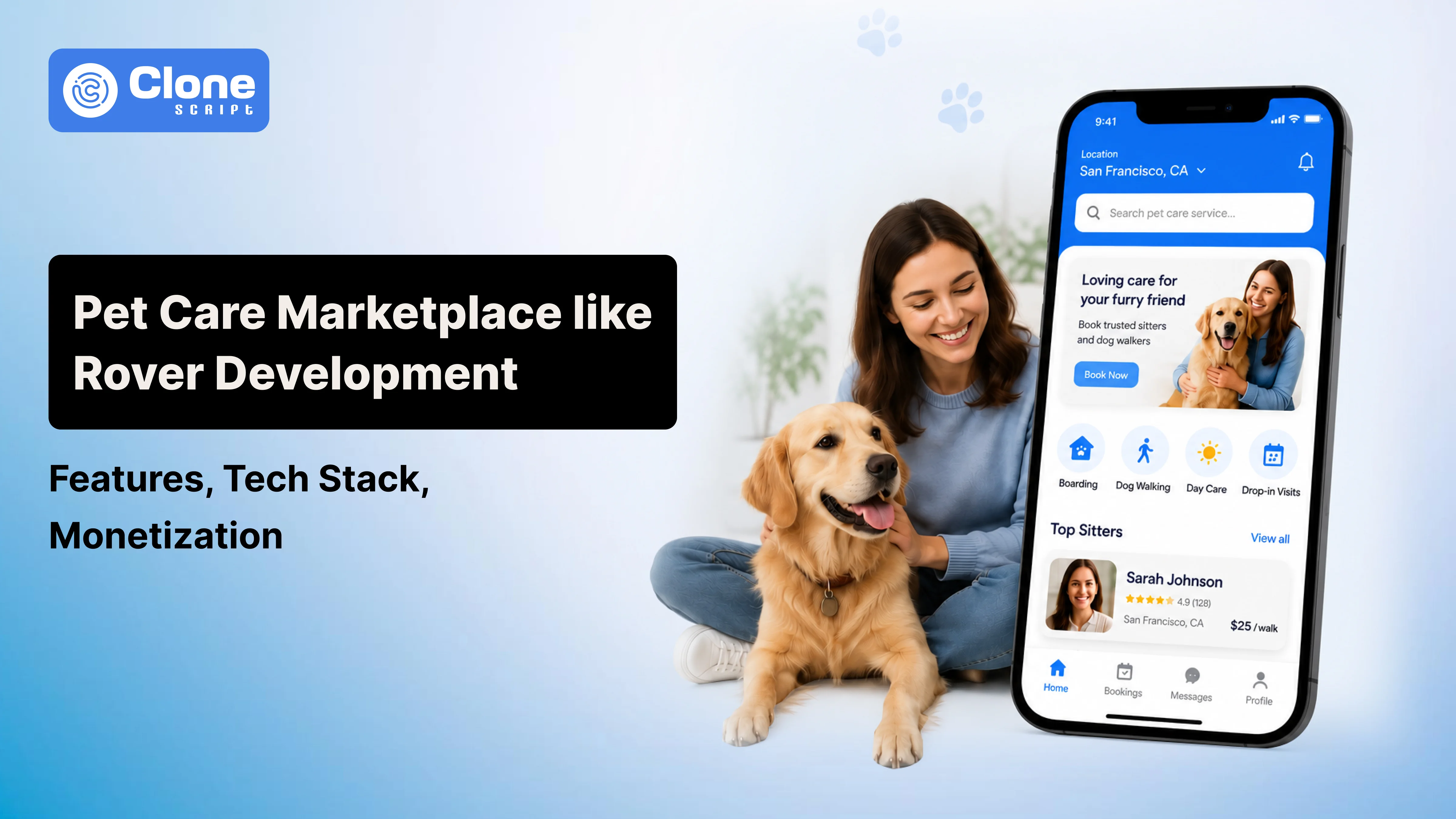
How to Build a Pet Care Marketplace Like Rover: Features, Tech Stack, Monetization
When you want to find a reliable pet sitter, you trust your friend’s recommendations, local Facebook groups, and nearby boarding facilities. This is the traditional way. Now, pet owners expect something simpler: They search online, compare verified caregivers, check reviews, book a service, and pay securely. This creates an opportunity for a business to launch the faster-growing marketplaces for pet care.
That's exactly why platforms like Rover have gained so much attention. This platform connects pet owners with independent caregivers through a mobile app and website. They handle everything from provider discovery and bookings to payments and reviews. This creates a convenient experience for both sides.
If a client asks you to develop an app like Rover or is looking to build the platform as their own, the work is complex but manageable. That means you have to make a complete system that manages the entire pet care booking journey, even when the number of users and transactions reach thousands to millions.
In this guide, you can learn how to build a pet care marketplace like Rover, covering the features users actually need and the technology stack behind a scalable platform. We also discussed monetization models and the development decisions that can shape your product's success from day one.
Rover Business Model: A Digital Pet Care Marketplace
Rover doesn’t provide pet services directly. They connect pet owners with skilled and trained independent caregivers, including services like dog walking, pet onboarding, daycare, grooming, and pet sitting. This model employs caregivers and earns revenue from every successful booking. Here is an overview of how the system works together:
-
Pet Owners
Pet owners use the platform to search for nearby caregivers, compare profiles, read reviews, book services, and make secure online payments, all from one place.
-
Service Providers
Caregivers create professional profiles, define their services, set availability and pricing, accept booking requests, and manage client communication through the platform.
-
Marketplace Administrator
The admin manages the entire ecosystem by verifying providers, handling disputes, processing payouts, monitoring transactions, and ensuring the marketplace runs smoothly.
Why This Business Model Works
Because it builds trust through verified profiles, secure payments, transparent reviews, and communication for repeat bookings. That's why every development decision should focus on strengthening the marketplace, not just adding features.
Types of Pet Services to Include in Your Marketplace
The Rover business model has been defined, but to generate revenue, service categories should also be disclosed throughout the website and app. By limiting the marketplace to dog walking or pet sitting, you may restrict the revenue chances. Multiple services attract a broader customer base.
-
Dog Walking
This service allows users to book one-time or recurring walks through real-time GPS tracking, scheduled time slots, and post-walk updates.
-
Pet Boarding and Daycare
In pet boarding and daycare services, caregivers host pets for overnight stays. It typically covers calendar-based availability, extended bookings, and customized pricing.
-
House Sitting
When travelling too much, pet owners need home supervision for their pets. This service offers multi-day bookings and detailed care instructions.
-
Grooming and Training
Professional grooming and pet training can be offered as standalone or add-on services. The range of services keeps the trust alive in the platform.
-
Additional On-Demand Services
You can introduce services like pet taxi, veterinary home visits, medication administration, etc as your website and app bookings increase. Adding multiple types of services helps users use more time platforms.
Rover Pet Care Marketplace Features to Include in Your App
The connecting marketplace for pet care services has to be optimized for features for everyone, like pet owners, pet care givers, and admins.
-
Features for Pet Owners
Pet owners are looking for the following:
-
Search caregivers by location
-
Service expertise
-
Price
-
Availability
-
Ratings
There are additional features that also have to be added, like detailed provider profiles, secure payments, booking history, in-app messaging, and verified reviews. It helps to make the booking process more convenient and trustworthy.
-
Features for Service Providers
Caregivers require other features:
-
Dashboard to manage profiles
-
Services
-
Pricing
-
Availability
-
Booking requests
-
Earnings
-
Calendar management
-
Instant notifications
-
Customer communication
-
Payout tracking
This can help pet caregivers make their services more efficient and smooth.
-
Features for Marketplace Administrators
This feature set is very important for managing the services:
-
User and provider management
-
Booking oversight
-
Commission settings
-
Payment monitoring
-
Dispute resolution
-
Review moderation
-
Analytics
-
Reporting
These tools help maintain platform quality and manage smooth day-to-day operations.
Together, these features create a balanced marketplace where every stakeholder can complete tasks efficiently, contributing to higher customer satisfaction and long-term platform growth.
Core Technology Stack for Building a Pet Care Marketplace
The model for pet care service is decided. The features also need to be managed; technology plays an important role. The exact technology stack depends on your project requirements; the following technologies are widely used for modern marketplace development.
-
Front-end Development
For a fast and SEO-friendly web application with a responsive user experience, use Next.js or React. Mobile application development can be done with React Native or Flutter for cross-platform development. This can reduce the mobile app development timeline.
-
Back-end Development
In a Rover-like pet grooming platform, the back-end should be optimized properly. For that, Node.js with NestJS or Express.js is a complete stack for handling user authentication, bookings, messaging, payments, and third-party integrations through RESTful APIs.
-
Database and Cloud Infrastructure
Database and cloud architecture also need to be of high quality. PostgreSQL is a dependable choice for managing structured marketplace data, and Redis improves performance by caching frequently accessed information. Application deployment on AWS, Google Cloud, or Microsoft Azure provides scalability as platforms get new users.
-
Third-Party Integrations
Third-party integration is very important. Integrate a payment gateway like Stripe Connect for marketplace payments, Google Maps for location-based search, Firebase for push notifications, and cloud storage solutions like Amazon S3 for profile images and documents. Together, these technologies create a strong foundation for a secure and scalable pet care marketplace.
How Does the Booking Workflow Work in a Rover-like App?
It is the core part of the pet care marketplace. A well-designed process minimizes booking conflicts, improves the user experience, and ensures both pet owners and caregivers have complete visibility throughout the service lifecycle.
-
Search and Service Selection
The journey begins when a pet owner searches for a caregiver based on location, service type, availability, pricing, and ratings. Advanced filters make it easier to find the right match.
-
Booking and Payment
After selecting a provider, the user chooses a suitable date and time, submits the booking request, and completes the payment through a secure payment gateway. The booking is confirmed once the caregiver accepts the request.
-
Service Delivery
During the scheduled service, both caregivers and pet owners can communicate through in-app messaging. Depending on the service, the platform may also support GPS tracking, status updates, or photo sharing.
-
Completion and Review
Once the service is completed, the platform releases the payment to the caregiver after deducting its commission. Finally, the pet owner is encouraged to leave a rating and review. This helps future users make informed booking decisions and strengthens trust across the marketplace.
Monetization Strategies for a Pet Care Marketplace
A sustainable monetization model is essential for the long-term success of a pet care marketplace. Depending on a single revenue stream, businesses combine multiple strategies to maximize profitability. At the same time, they deliver value to both pet owners and service providers.
-
Commission on Bookings
The most common revenue model is charging a percentage or fixed fee for every successful booking completed through the platform. This ensures revenue grows as booking volume increases.
-
Subscription Plans
In this revenue strategy, the platform offers premium membership plans for caregivers with benefits such as higher profile visibility, advanced analytics, priority support, or access to exclusive features.
-
Featured Listings
In this monetization type, the platform charges a fee from the service providers to promote their profiles in search results with priority. Sponsored listings increase visibility and create an additional source of recurring revenue.
-
Value-Added Services
The additional services include pet insurance, grooming packages, training programs, advertising opportunities, or partnerships with veterinary clinics and pet product brands. This adds more chances for monetization.
Common Challenges in Pet Care Marketplace Development
Creating the user interfaces and integrating APIs does not complete the development. During the scale stage, technical and operational challenges become essential to address.
-
Building Trust Between Users
The first thing is trust building, and for a new app, it is tough to win the confidence of pet owners who are ready to leave their pets with a caregiver. The way is to add features of identity verification, background checks, verified reviews, and secure payments for retention.
-
Managing Bookings Efficiently
In pet care service booking websites, many things happen at a time. This includes handling recurring bookings, provider availability, cancellations, and last-minute schedule changes, which can become complex. A robust booking engine is essential to prevent double bookings and scheduling conflicts.
-
Scaling the Platform
As more users and transactions happen daily on the marketplace, the performance must not be compromised. For that, a scalable cloud infrastructure, database query optimization, and caching mechanism implementations support future growth.
-
Ensuring Data Security
Storing and managing personal information on the platform creates liability. There’s a strong security measures are required. Start by implementing encrypted data storage, secure authentication, role-based access control, and compliance with data protection standards to safeguard user information and maintain customer trust.
Why Choose Custom Development Over a Rover Clone Script?
A ready-made Rover clone script may seem like a cost-effective solution, but it limits your ability to scale, customize workflows, and integrate new features. For businesses planning long-term growth, custom website and app development offers greater flexibility and a stronger competitive advantage.
-
Tailored Features and Workflows
Your pet care business requirements are unique, yet the operational model is the same as Rover. Here, a custom solution helps build new features, booking flows, pricing models, and user experiences aligned with the business goals. The pre-built pet grooming script has some limitations.
-
Better Scalability
Advanced capabilities like AI-powered recommendations, real-time tracking, subscription plans, or third-party integrations make the functionality alive. A custom-built pet grooming website introduces these features without rebuilding the application.
-
Greater Security and Performance
Custom development helps developers to implement modern security practices, optimize application performance, and maintain complete control over the codebase. This results in a more reliable platform that can handle increasing user traffic and transaction volumes.
The problem of clone scripts has been solved through custom development, including branding, codebase, security, and ownership.
For businesses aiming to build a long-term digital product rather than a temporary solution, custom development provides the flexibility needed to evolve with changing market demands.
Speed Up Your Pet Care Marketplace App Development: All Clone Script Solutions
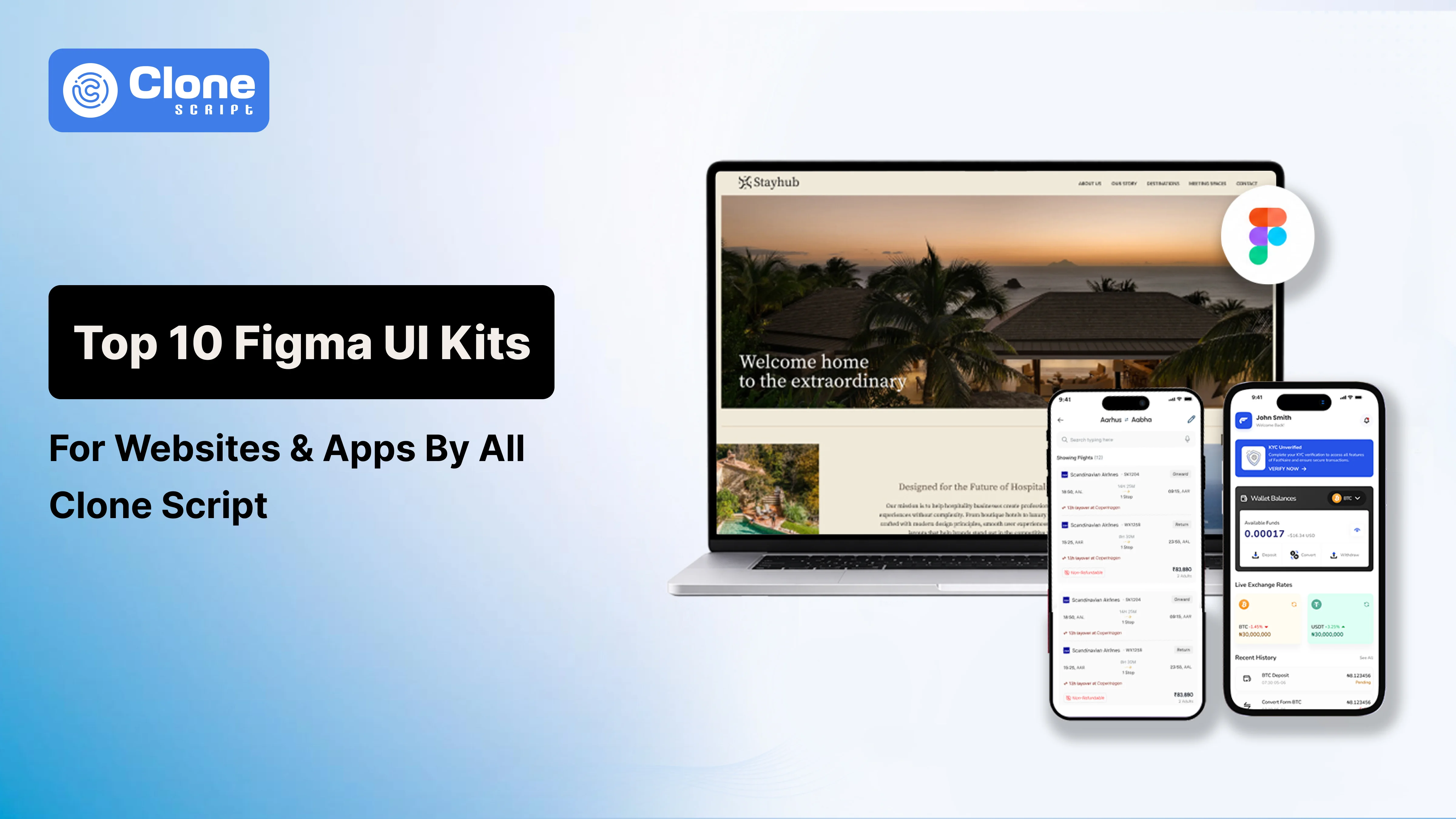
The UI design is the foundation of your pet care marketplace, and it’s good to have a ready-made design. By customizing it, you can prototype and send the final approval to a client before starting the development. That means the hours of UI and UX design can be saved and invested in a product improvement.
Here is the Pet Grooming Service App UI kit designed in Figma.

This design covers the entire flow that can help designers and developers to understand what the actual product looks like. Starting with front-end app development, then back-end and QA & testing, before it goes live being easy.
If you want a pet grooming service website template with the source code, it's also available. That means complete platform development becomes more prominent with the pre-built solutions.
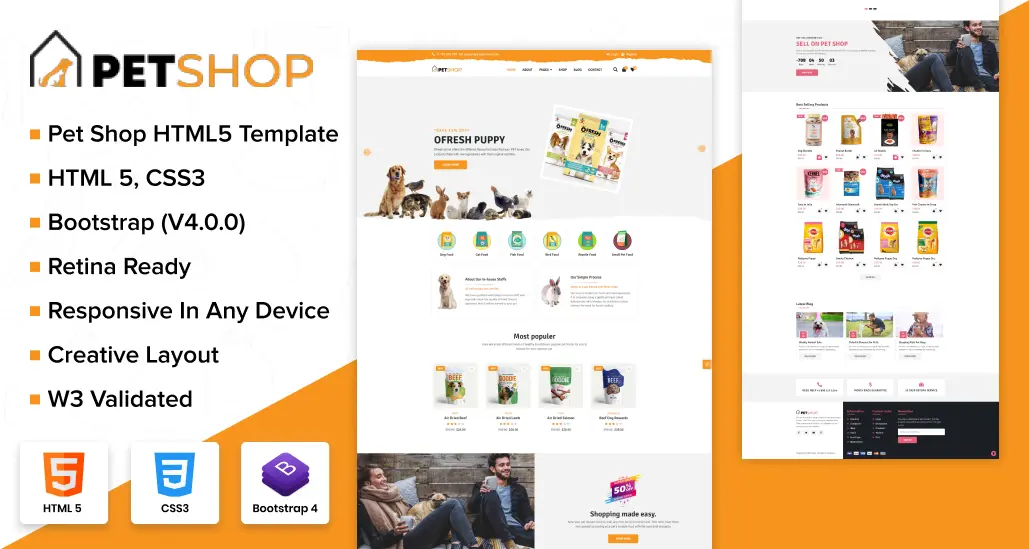
We also offer custom website and app development services to both development agencies and business owners. Make your marketplace for pet care services with us. All Clone Script developers will be in touch with you.