BTC - Bitcoin
 USDTERC20 - USDT ERC20
 ETH - Ethereum
 BNB - Binance
 BCH - Bitcoin Cash
 DOGE - Dogecoin
 TRX - TRON
 USDTTRC20 - USD TRC20
 LTC - LiteCoin

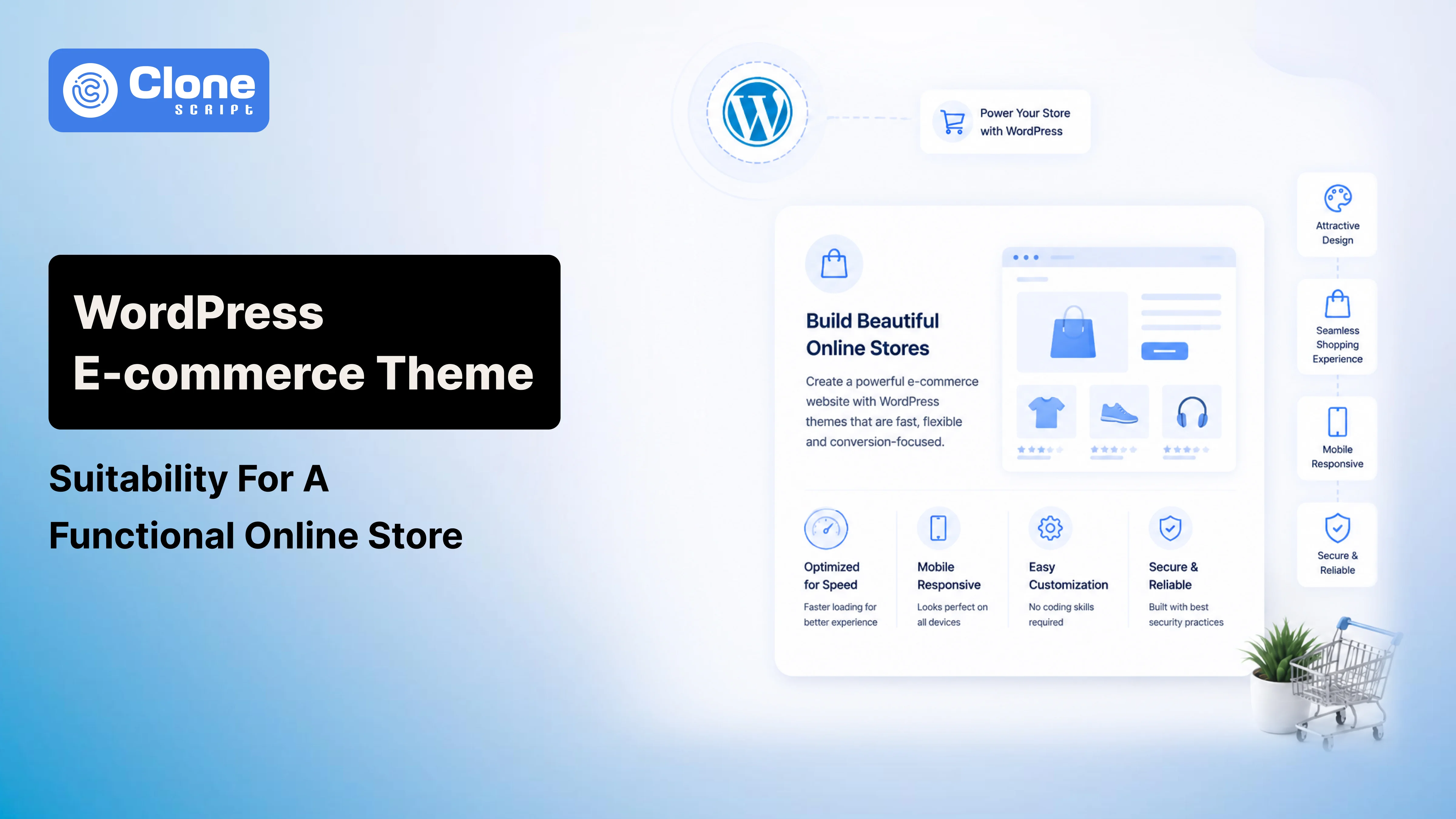
Does Using a WordPress Theme for E-commerce Suit a Functional Website
Launching an online store today is easier than ever. Within a few hours, a business can install WordPress, activate a theme, add products, and start selling. That convenience is exactly why millions of e-commerce websites rely on WordPress themes. But an important question often gets overlooked: does a theme actually create a functional e-commerce website, or does it simply make a store look attractive?
Many store owners discover the answer only after facing slow-loading pages, poor checkout experiences, limited customization options, or performance issues as traffic grows. A beautiful storefront may attract visitors, but functionality determines whether those visitors become paying customers.
Before choosing a theme for your online business, it is worth understanding where WordPress themes excel, where they struggle, and whether they can support the type of e-commerce experience your customers expect. The answer is not as simple as yes or no, and that's exactly what this guide explores.
What Makes an E-commerce Website Truly Functional?
A functional e-commerce website is built around the customer journey. Every page, button, and feature should help visitors move smoothly from product discovery to checkout. The goal is not simply to attract traffic but to convert that traffic into sales while creating an experience that encourages repeat purchases.
A surprising number of online stores fail for reasons that have nothing to do with products or pricing. The real problem is functionality. Customers may like what they see, but if the website creates friction during the buying process, they leave before completing a purchase.
Today's online shoppers have high expectations. They want websites that load instantly, work perfectly on mobile devices, offer secure payments, and make finding products effortless. Even small usability issues can impact conversions.
Research shows that nearly 70% of online shopping carts are abandoned, with complicated checkout experiences being one of the leading reasons.
A well-functioning e-commerce website typically includes:
-
Fast-loading pages across all devices
-
Mobile-responsive design
-
Clear navigation and product categories
-
Secure and trusted payment options
-
Simple checkout processes
-
Product search and filtering capabilities
-
SEO-friendly structure for organic visibility
-
Reliable integrations with shipping and inventory systems
-
Scalability to support future business growth
These requirements create an important benchmark when evaluating a WordPress e-commerce theme. The real question is not whether a theme looks professional but whether it can support the functionality that modern online shoppers expect.
Know E-commerce WordPress Themes
Many people think a WordPress theme only changes how an e-commerce website looks. In reality, an e-commerce theme influences how customers browse products, navigate categories, and move through the buying process.
When paired with WooCommerce, a theme provides the structure for your online store. It controls product layouts, category pages, mobile responsiveness, navigation menus, and other elements that shape the shopping experience.
This is why WordPress themes have become a popular choice for businesses launching online stores. Instead of investing in custom development from day one, companies can use a pre-built solution that includes many essential e-commerce features.
Most modern e-commerce themes offer:
-
WooCommerce compatibility
-
Mobile-responsive layouts
-
Pre-designed product and category pages
-
Product search and filtering features
-
Shopping cart and checkout templates
-
Basic SEO-friendly structure
-
Customization options without coding
The biggest advantage is speed. A business can launch an online store in days rather than spending weeks or months building one from scratch.
However, choosing a theme is not simply about appearance or convenience. The quality of the theme affects website performance, user experience, and future scalability. A theme that works perfectly for a store with 50 products may struggle when that catalog grows to 5,000 products.
That is why businesses should evaluate e-commerce themes based on functionality first and design second.
Key Advantages of Using a WordPress Theme for E-commerce
A WordPress e-commerce theme works best as a pre-structured system for building and running an online store, not just a design layer. Its real strength is that it reduces the amount of technical groundwork required to make an e-commerce site functional from day one.
Instead of designing every shopping element from scratch, businesses get a ready framework that already follows standard e-commerce behavior. This directly improves how quickly a store can become operational and how consistently it performs across devices.
Key functional advantages include:
-
Defined shopping flow structure that reduces friction in browsing and checkout
-
Pre-built product layouts that organize listings in a consistent way
-
Responsive design behavior is already optimized for mobile and desktop users
-
Compatibility with WooCommerce tools like payments, carts, and order management
-
Faster content updates without requiring developer intervention
-
Established UX patterns that guide users toward purchase decisions
A less obvious benefit is operational stability. Since themes are built around common WooCommerce standards, businesses spend less time fixing basic e-commerce functionality and more time managing products and marketing.
However, this efficiency comes from standardization. The same structure that makes a theme easy to use can also limit flexibility as the business grows, which becomes important when evaluating long-term suitability.
Where E-commerce Themes Often Fall Short
While e-commerce themes provide speed and structure, they are not without constraints. These limitations become more visible as a store grows in traffic, product range, and operational complexity.
-
Website performance is affected.
The most common issue is performance pressure. Many themes are built to support multiple features by default: sliders, page builders, animations, and bundled plugins. Over time, this can increase page load time, which directly affects conversions.
-
Outdated features cause UX problems.
Another limitation is feature rigidity. Themes follow predefined layouts and workflows. When a business needs a unique checkout process, advanced filtering logic, or custom product configuration, the theme structure can slow down implementation or require heavy customization.
Key challenges include:
-
Slower performance under feature-heavy setups
-
Limited flexibility for custom workflows
-
Dependency on theme updates for compatibility fixes
-
Code bloat from bundled design elements and plugins
-
Scalability constraints for large product catalogs
Security can also become a concern when themes rely on multiple third-party plugins. Each additional dependency increases maintenance overhead and potential vulnerability points.
In practical terms, themes work best within defined boundaries. Once a store starts pushing beyond those boundaries, whether in scale, complexity, or performance expectations, the limitations become more noticeable and can affect both user experience and operational efficiency.
Does a WordPress Theme Suit Different Types of E-commerce Businesses?
WordPress e-commerce themes work best when the business model is simple, predictable, and focused on standard buying journeys. As complexity increases, their suitability decreases because most themes are built for general use cases rather than highly specific workflows.
-
Small Online Stores
These are the strongest use cases. Limited products, simple checkout flow, and basic marketing needs align well with theme-based setups.
-
Growing E-commerce Brands
Themes still work, but only if performance and integrations are managed carefully. Scaling requires additional plugins or partial customization.
-
Large or High-Traffic Stores
At this level, themes usually become a baseline rather than a complete solution. Performance tuning and custom development become necessary.
-
Niche or Complex Product Businesses
Stores with subscriptions, product customization, or advanced filtering may find standard themes restrictive without significant modifications.
Don’t Purchase an E-commerce Theme Until Found These Features
Choosing a WordPress e-commerce theme is less about visual appeal and more about how well it supports real store operations. A theme can look modern in a demo but still fail under actual business conditions if key functional elements are missing.
The evaluation process should focus on how the theme performs under load, how it handles product data, and how easily it integrates with essential e-commerce tools.
-
Performance and Speed Optimization
A theme should load quickly, even with multiple products and plugins active. Poorly optimized themes often rely on heavy scripts that slow down the entire store.
-
WooCommerce Compatibility
Deep integration with WooCommerce is essential. This includes proper handling of product variations, cart behavior, and checkout flow.
-
Mobile Responsiveness
A large share of e-commerce traffic comes from mobile devices. The theme must maintain usability and clarity across screen sizes.
-
Customization Flexibility
A good theme should allow layout and design changes without requiring code-level modifications for every update.
-
SEO Structure
Clean HTML structure, proper heading hierarchy, and schema support help improve visibility in search engines.
-
Plugin and Tool Integration
The theme should work smoothly with payment gateways, analytics tools, and marketing plugins without conflicts.
A careful review of these factors helps prevent choosing a theme that looks strong initially but becomes limiting as the business scales.
Theme vs Custom Development: Which Delivers Better Long-Term Value?
A theme-based store is built on predefined structures. It prioritizes speed, cost efficiency, and ease of deployment. This makes it suitable for businesses that need to launch quickly and validate demand without heavy technical investment.
Custom development, on the other hand, is built around specific business logic. Every component, checkout flow, product structure, and filtering system is designed from the ground up. This allows for precise control over performance, scalability, and user experience.
From a growth perspective, themes can support early-stage operations effectively, but they often require workarounds as complexity increases. Custom development reduces these constraints but demands more resources and technical ownership.
The real decision comes down to trajectory. If the business expects rapid scaling, complex workflows, or high customization needs, custom development delivers stronger long-term stability. If the goal is speed-to-market with controlled requirements, themes remain a practical option.
How to Make a WordPress Theme Work Like a High-Performing E-commerce Platform
A WordPress e-commerce theme can only deliver strong results when it is treated as a base system, not a finished product. Most performance issues in theme-based stores come from unoptimized setups rather than the theme itself.
The objective is to reduce unnecessary load and align the website structure with real user behavior. This improves both speed and conversion efficiency.
-
Keep the setup lightweight
Avoid activating every built-in feature. Many themes include sliders, animations, and extra modules that look good but slow down performance. A lean configuration usually performs better than a feature-heavy one.
-
Use only essential plugins
Every WordPress plugin adds processing overhead. Keep only tools that directly support critical functions like payments, SEO, analytics, and security. Remove everything that does not contribute to conversions or operations.
-
Structure product content properly
Consistent naming, clean categories, and well-defined product attributes improve searchability and filtering. Poor structure leads to confusion and slower navigation, especially in larger catalogs.
-
Optimize checkout flow
Reduce steps, limit form fields, and remove distractions. Even small friction points in checkout can impact conversions significantly.
-
Maintain performance monitoring
Track speed, bounce rate, and conversion metrics regularly. This helps identify issues early before they affect sales.
When configured correctly, a WordPress theme can perform efficiently for many e-commerce use cases. However, its true effectiveness depends on how well it is optimized and maintained within its structural limits.
Final Verdict: Is a WordPress Theme Enough for a Functional E-commerce Website?
A WordPress e-commerce theme can absolutely support a functional online store, but only within certain boundaries. Its effectiveness depends less on the theme itself and more on how well it aligns with the store’s complexity, traffic expectations, and long-term goals.
The decision ultimately comes down to one question: whether the business prioritizes speed and simplicity today, or full architectural control for future complexity.