BTC - Bitcoin
 USDTERC20 - USDT ERC20
 ETH - Ethereum
 BNB - Binance
 BCH - Bitcoin Cash
 DOGE - Dogecoin
 TRX - TRON
 USDTTRC20 - USD TRC20
 LTC - LiteCoin

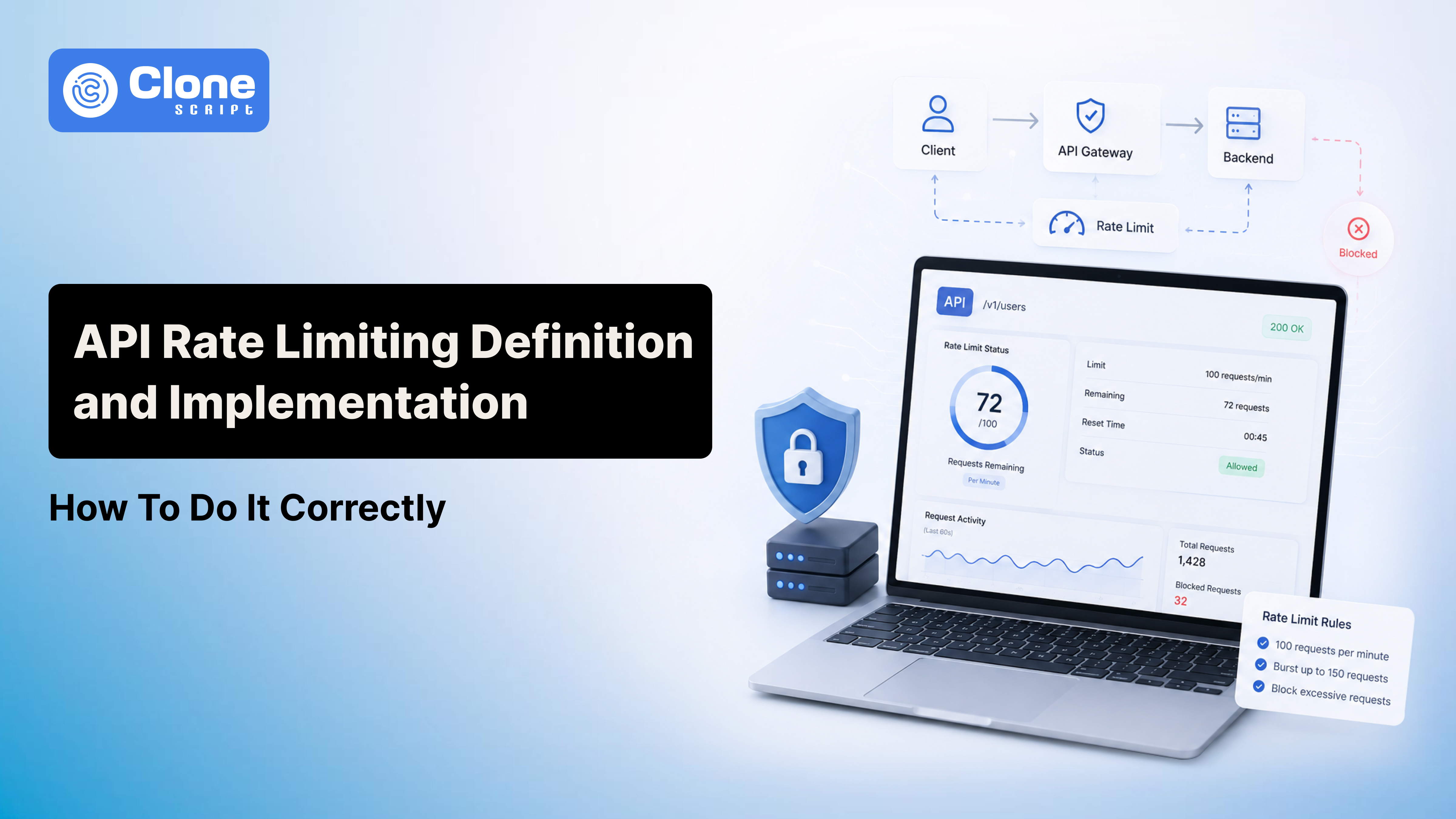
What Is API Rate Limiting and How to Implement It Successfully
Why You Must Implement API Rate Limiting to Protect Your Systems and Users
Every day, APIs handle billions of requests powering apps, SaaS platforms, and web services.
Without proper controls, a sudden traffic spike, malicious requests, or automation can bring your servers down, compromise data, and frustrate paying customers. If you’ve ever seen a 500 Internal Server Error during peak usage, you know exactly why rate limiting isn’t optional. It’s essential.
API rate limiting lets you control how many requests a client can make in a given time frame. This protects your infrastructure while keeping legitimate traffic flowing smoothly.
The stakes are real: studies show that 85% of organizations experience API-related outages or security incidents, many of which could have been avoided with proper rate limiting.
In this guide, we won’t just define rate limiting. You’ll learn how to implement it successfully in real-world systems.
We’ll cover:
-
The most effective algorithms and strategies
-
Practical implementation methods
-
Monitoring practices to track usage
-
Tips to avoid frustrating legitimate users
By the end, you’ll have a clear, step-by-step plan to safeguard your APIs, optimize performance, and scale confidently.
How API Rate Limiting Works to Keep Your Systems Reliable
If you want your APIs to stay fast, secure, and available, understanding how API rate limiting works is the first step. Rate limiting is the mechanism that controls how many requests a client or user can send to your API in a defined time period. This prevents overload, protects your infrastructure, and ensures fair access for all users.
Many developers confuse API throttling vs rate limiting, but the distinction matters. While throttling slows down excessive requests to protect the server, rate limiting completely blocks requests that exceed the limit, returning an HTTP 429 Too Many Requests error. Knowing the difference helps you choose the right strategy for your system and avoid unnecessary service disruptions.
API rate limiting implementation can be approached in several ways, depending on your architecture. Common strategies include fixed windows, sliding windows, token bucket, and leaky bucket algorithms. Each has its own advantages:
-
Fixed Window: Simple, time-based limit. Great for basic usage but may spike at window boundaries.
-
Sliding Window: More precise control over request rates. Reduces sudden bursts while still allowing legitimate traffic.
-
Token Bucket vs Sliding Window Rate Limiting: Token bucket handles bursts efficiently, while sliding window ensures smooth rolling limits.
-
Leaky Bucket: Maintains constant outflow for smooth request handling.
Using these rate limiting algorithms effectively can prevent downtime, reduce server costs, and improve user experience. Real-world API rate limit examples include public APIs like GitHub or Twitter, which enforce limits such as 60 requests per minute or tiered limits for paid plans.
The benefits of API rate limiting are clear: you reduce the risk of server overload, prevent abuse, improve response times, and maintain system reliability. For API rate limiting for microservices, distributed counters or centralized gateways often handle the enforcement to maintain consistency across services.
How to Choose the Right API Rate Limiting Algorithm to Prevent API Failures
Choosing the wrong API rate limiting algorithm can result in server overload, frustrated users, and lost revenue. To avoid these pitfalls, follow this actionable guide to pick the strategy that fits your traffic, user base, and system architecture.
-
Start with Traffic Analysis
Before selecting an algorithm, map your different kinds of API usage patterns. Are your users making steady requests, or do you see bursts during peak hours?
-
Action step: Use logs or analytics to track requests per second, peak load, and client behavior.
-
Why it matters: This informs whether a fixed window or sliding window algorithm will handle traffic effectively.
-
Match Algorithm to Use Case
| Algorithm | When to Use | Key Action |
|---|---|---|
| Fixed Window | Predictable, low-burst traffic | Set a simple cap per minute/hour |
| Sliding Window | Rolling traffic or uneven request patterns | Use for accurate rolling limits |
| Token Bucket | Burst-heavy traffic (mobile apps, SaaS clients) | Allow bursts while maintaining overall limit |
| Leaky Bucket | Smooth, consistent traffic needed | Prevent sudden spikes without rejecting legitimate requests |
Pro tip: For microservices or distributed APIs, use centralized counters or Redis-backed rate limiting to maintain consistency across nodes.
-
Combine Algorithms for Maximum Control
Many top-tier platforms don’t rely on a single strategy. For example:
-
Use a token bucket for burst control + a sliding window for rolling accuracy.
This ensures clients can handle sudden spikes without overwhelming your servers.
-
Test, Monitor, and Adjust
-
Action step: Implement monitoring dashboards (Grafana, CloudWatch, Prometheus).
-
Track HTTP 429 errors, rejected requests, and request latencies.
-
Iterate: Adjust your rate limits based on actual usage, not just assumptions.
By following this approach, you’ll choose the algorithm that fits your real-world traffic, protect your APIs from overload, and deliver reliable service to every user, exactly what API rate limiting is supposed to achieve.
Practical Ways to Implement API Rate Limiting in Your System
Understanding API rate limiting is one thing, but implementing it successfully requires practical steps that fit your infrastructure, user base, and traffic patterns. Follow these proven strategies to protect your APIs and improve reliability.
-
Use an API Gateway
API gateways like NGINX, Kong, or AWS API Gateway handle rate limiting centrally, making it easier to enforce limits across multiple services.
-
Action step: Configure the gateway to define limits per client, IP, or user tier.
-
Example: Limit free-tier users to 60 requests per minute, paid users to 1000 requests per minute.
-
Benefits: Centralized control, logging, and easy monitoring of API usage.
-
Implement Application Layer Rate Limiting
If you prefer custom control, implement rate limiting directly in your API code using frameworks or middleware.
-
Node.js / Express: Use libraries like rate-limiter-flexible.
-
Spring Boot (Java): Use Bucket4j or Resilience4j.
-
Django / Python: Use django-ratelimit for per-user or per-IP limits.
-
Action step: Set rules based on endpoints, user roles, or client type.
-
Use Distributed Counters for Microservices
For microservices or distributed systems, rely on centralized storage like Redis to track requests across nodes.
-
Why: Prevents inconsistencies when multiple instances handle requests.
-
Action step: Store counters with TTL (time-to-live) to automatically reset limits.
-
Pro tip: Combine token bucket or sliding window with Redis for accurate burst handling.
-
Implement Retry and Backoff Strategies
When users hit limits, handle responses gracefully.
-
Return HTTP 429 Too Many Requests with a Retry-After header.
-
Encourage exponential backoff in client applications.
-
Benefit: Users don’t overwhelm the API, and legitimate traffic resumes smoothly.
-
Monitor and Iterate
-
Track metrics: requests per second, 429 errors, and latency.
-
Use dashboards (Prometheus + Grafana, AWS CloudWatch).
-
Adjust limits based on real traffic patterns, not assumptions.
By combining gateways, middleware, distributed counters, and monitoring, you can implement API rate limiting that’s robust, scalable, and tailored to your users’ needs.
Best Practices to Ensure Your API Rate Limiting is Effective
Implementing API rate limiting is not enough. You need a system that works reliably, scales with traffic, and doesn’t frustrate legitimate users. Follow these best practices to maximize the benefits and avoid common pitfalls.
-
Define Limits Based on Real Usage
-
Analyze traffic patterns before setting limits.
-
Differentiate between free-tier users, paid clients, and internal services.
-
Action step: Use logs or analytics to determine realistic per-minute or per-hour limits.
-
Use Tiered Rate Limits
-
Offer different thresholds for different users.
-
Example: 60 requests/min for free users, 1000 requests/min for paid plans.
-
Benefit: Fair access while monetizing high-volume clients.
-
Communicate Limits Clearly
-
Include API documentation explaining limits and error codes.
-
Return HTTP 429 Too Many Requests with a Retry-After header.
-
Action step: Provide sample client handling code for exponential backoff.
-
Benefit: Reduces frustrated users and support tickets.
-
Monitor Metrics Continuously
-
Track: requests per second, rejected requests, HTTP 429 errors, and latency.
-
Use tools like Prometheus, Grafana, and AWS CloudWatch.
-
Action step: Set alerts for spikes or unusual patterns to adjust limits proactively.
-
Iterate and Adjust
-
Don’t set limits once and forget.
-
Adjust based on seasonal traffic, growth, or abuse patterns.
-
Pro tip: Implement automated scaling or dynamic limits for high-demand endpoints.
-
Combine With Security and Load Balancing
-
Rate limiting complements authentication, firewalls, and API gateways.
-
Helps prevent DoS/DDoS attacks and ensures consistent server performance.
Following these practices ensures that your API rate limiting delivers maximum benefits, including system reliability, fair user access, and cost control, while maintaining a positive user experience.
Monitoring and Metrics: Track Your API Rate Limits Effectively
API rate limiting settings are only half the battle. To ensure your system remains reliable and responsive, you must monitor traffic and track key metrics. This lets you detect issues early, fine-tune limits, and prevent user frustration.
-
Track Key Metrics
Focus on metrics that give insight into both system performance and user behavior:
-
Requests per second (RPS): Measures traffic intensity.
-
HTTP 429 Too Many Requests: Indicates how often clients hit rate limits.
-
Rejected requests: Shows potential abuse or misconfigured clients.
-
Average latency: Helps identify whether limits are preventing server overload.
-
Burst patterns: Detect sudden spikes in traffic that may require algorithm adjustments.
-
Use the Right Tools
-
Prometheus + Grafana: Track real-time metrics and visualize trends.
-
AWS CloudWatch: Monitor API Gateway, serverless functions, and back-end metrics.
-
ELK Stack: Analyze logs to detect patterns, repeated offenders, and API abuse.
-
Implement Alerts
-
Set thresholds for critical metrics.
-
Example: Trigger an alert if HTTP 429 errors exceed 5% of requests in 10 minutes.
-
Action step: Respond quickly to traffic spikes, malicious requests, or misbehaving clients.
-
Iterate Limits Based on Metrics
-
Metrics guide data-driven adjustments to your API rate limits.
-
Example: Increase limits for stable, trusted clients or reduce limits for suspicious traffic.
-
Pro tip: Combine metrics with rate limiting algorithms (token bucket, sliding window) for dynamic enforcement.
-
Benefit From Continuous Monitoring
-
Protects your servers from overload and downtime.
-
Improves user experience by preventing unnecessary request blocking.
-
Helps you justify limit decisions with data, not guesswork.
By actively monitoring your APIs and analyzing metrics, you can ensure your API rate limiting is effective, fair, and scalable. It continuously optimizes for performance and reliability.
Common Challenges and How to Solve Them in API Rate Limiting
Even with API rate limiting best practices, real-world systems face challenges that can undermine your strategy. Understanding and addressing these issues ensures your limits are effective without frustrating users.
-
Handling Traffic Spikes
Sudden bursts of requests from clients or bots can overwhelm your servers.
-
Solution: Use token bucket or sliding window algorithms to allow short bursts while keeping overall limits intact.
-
Action step: Configure dynamic thresholds for endpoints with variable traffic, and monitor usage closely with dashboards.
-
Dealing with Shared IPs
Many users behind the same NAT or proxy may appear as a single client.
-
Solution: Implement per-user or per-token limits instead of relying solely on IP addresses.
-
Benefit: Prevents legitimate users from being blocked due to other clients’ activity.
-
Distributed Systems Consistency
In microservices or multi-node architectures, rate limit counters can become inconsistent.
-
Solution: Use centralized storage like Redis or distributed counters to synchronize rate limiting across nodes.
-
Pro tip: Combine with sliding window or token bucket algorithms for accurate, burst-tolerant enforcement.
-
Preventing Abuse Without Blocking Legitimate Traffic
Bots, scrapers, and malicious actors can attempt to bypass limits.
-
Solution: Integrate rate limiting with authentication, API keys, and monitoring to identify suspicious patterns.
-
Action step: Flag or throttle high-risk clients dynamically rather than applying blunt limits.
-
Communicating Limits Effectively
Users need to know when they are approaching limits.
-
Solution: Return HTTP 429 Too Many Requests with Retry-After headers and clear documentation.
-
Benefit: Reduces frustration, support tickets, and failed requests.
By proactively addressing these challenges, you ensure that API rate limiting protects your system, improves reliability, and maintains user trust, all while staying scalable as your traffic grows.
Choose the Right Tools and Platforms to Enforce API Rate Limiting Effectively
To protect your APIs from overload and abuse, selecting the right tools and platforms is crucial. The right solution ensures consistent enforcement of limits, easy monitoring, and scalability across microservices or distributed systems.
-
API Gateways
API gateways centralize rate limiting for multiple services.
-
NGINX: Lightweight, configurable, supports token bucket and fixed window strategies.
-
Kong: Provides advanced traffic control, plugins for throttling, logging, and monitoring.
-
AWS API Gateway: Built-in rate limiting with usage plans and API keys.
-
Action step: Define per-client or per-user tier limits and enable real-time logging.
-
Reverse Proxies
Reverse proxies handle traffic before it reaches your back-end, offering another layer of protection.
-
Traefik: Dynamic routing and rate limiting with middleware support.
-
Envoy: High-performance proxy with advanced rate limiting capabilities.
-
Benefit: Prevents sudden spikes from reaching your servers, maintaining system stability.
-
Rate Limiting Libraries
For application-level enforcement, libraries offer flexibility and customization:
-
Node.js: rate-limiter-flexible for token bucket or sliding window implementations.
-
Java / Spring Boot: Bucket4j or Resilience4j for microservices or distributed setups.
-
Python / Django: django-ratelimit supports per-user or per-IP limits.
-
Action step: Integrate with your API framework to enforce rules consistently across endpoints.
-
Cloud & Monitoring Tools
-
Combine enforcement with monitoring platforms like Prometheus, Grafana, or AWS CloudWatch.
-
Action step: Track requests per second, 429 errors, latency, and adjust limits dynamically.
Using the right tools and platforms ensures that API rate limiting is not just theoretical, but actively protects your infrastructure, enforces fairness, and supports scalable growth.
Real-World Case Studies: How Companies Successfully Implement API Rate Limiting
Seeing API rate limiting in action helps you understand its real-world impact. These examples show how top platforms prevent overload, protect users, and maintain performance.
-
GitHub API
-
Challenge: Millions of requests daily from developers and integrations.
-
Solution: Implements tiered API rate limits with tokens for authenticated users. Free users get lower limits, while enterprise clients have higher allowances.
-
Outcome: Protects GitHub’s servers, ensures fair access, and prevents abuse.
-
Takeaway: Use tiered rate limits and authentication to balance performance and accessibility.
-
Twitter API
-
Challenge: Heavy traffic, bots, and automated scripts threatening stability.
-
Solution: Uses sliding window and token bucket algorithms to control bursts and rolling traffic. Returns HTTP 429 Too Many Requests with guidance on retries.
-
Outcome: Maintains uptime and fair use even during viral events.
-
Takeaway: Combining algorithms with clear communication improves user compliance and reduces support tickets.
-
Stripe API
-
Challenge: High-volume payment requests that must remain reliable.
-
Solution: Implements centralized counters across microservices with token bucket enforcement. Real-time monitoring identifies spikes and adjusts limits dynamically.
-
Outcome: High reliability during peak traffic, minimal failed transactions.
-
Takeaway: Use centralized enforcement + monitoring for distributed systems.
Actionable Insights from Case Studies
-
Use tiered limits for different user groups.
-
Combine algorithms (token bucket + sliding window) for accuracy and burst handling.
-
Provide clear 429 responses with Retry-After to guide users.
-
Monitor metrics continuously to adjust limits dynamically.
By applying these lessons, you can design API rate limiting that scales with traffic, prevents abuse, and improves reliability, just like the industry leaders.
Metrics & Monitoring: Optimize Your API Limits for Maximum Efficiency
To make API rate limiting truly effective, monitoring and analyzing metrics is essential. Without data, limits may be too strict, too loose, or misaligned with actual usage patterns. By tracking the right metrics, you can optimize limits, prevent outages, and improve user experience.
-
Track Core Metrics
Focus on key indicators that reveal both system performance and user behavior:
-
Requests per second (RPS): Understand traffic intensity and peak usage.
-
HTTP 429 Too Many Requests: Identify clients hitting limits and potential bottlenecks.
-
Rejected requests: Detect abuse or misconfigured clients.
-
Latency and response times: Assess the impact of limits on performance.
-
Burst patterns: Spot sudden spikes and adjust enforcement strategies.
-
Leverage Monitoring Tools
Use tools to collect, visualize, and analyze metrics:
-
Prometheus + Grafana: Real-time monitoring and custom dashboards.
-
AWS CloudWatch: Integrated with API Gateway and serverless architectures.
-
ELK Stack (Elasticsearch, Logstash, Kibana): Log analysis for detecting abuse patterns.
-
Set Alerts and Automate Responses
-
Configure alerts when key thresholds are exceeded, e.g., 429 errors exceed 5% of requests.
-
Automate temporary throttling or notifications to admins for unusual spikes.
-
Action step: Pair with dynamic algorithms like token bucket or sliding window to adjust limits automatically.
-
Iterate Based on Data
-
Analyze metrics regularly to fine-tune limits, reducing unnecessary blocks while maintaining protection.
-
Adjust for seasonal traffic patterns, peak events, or new user types.
-
Pro tip: Use historical data to predict spikes and preemptively adjust rate limits.
By tracking, analyzing, and acting on API metrics, you ensure that your rate limiting is adaptive, fair, and scalable, protecting infrastructure while delivering a smooth experience for all users.
Conclusion
Implementing API rate limiting protects servers, prevents abuse, and ensures fair user access. By choosing the right algorithms, monitoring metrics, and following best practices, you can optimize performance, reduce downtime, and scale confidently. Take action today to make your APIs reliable, secure, and future-ready.