BTC - Bitcoin
 USDTERC20 - USDT ERC20
 ETH - Ethereum
 BNB - Binance
 BCH - Bitcoin Cash
 DOGE - Dogecoin
 TRX - TRON
 USDTTRC20 - USD TRC20
 LTC - LiteCoin

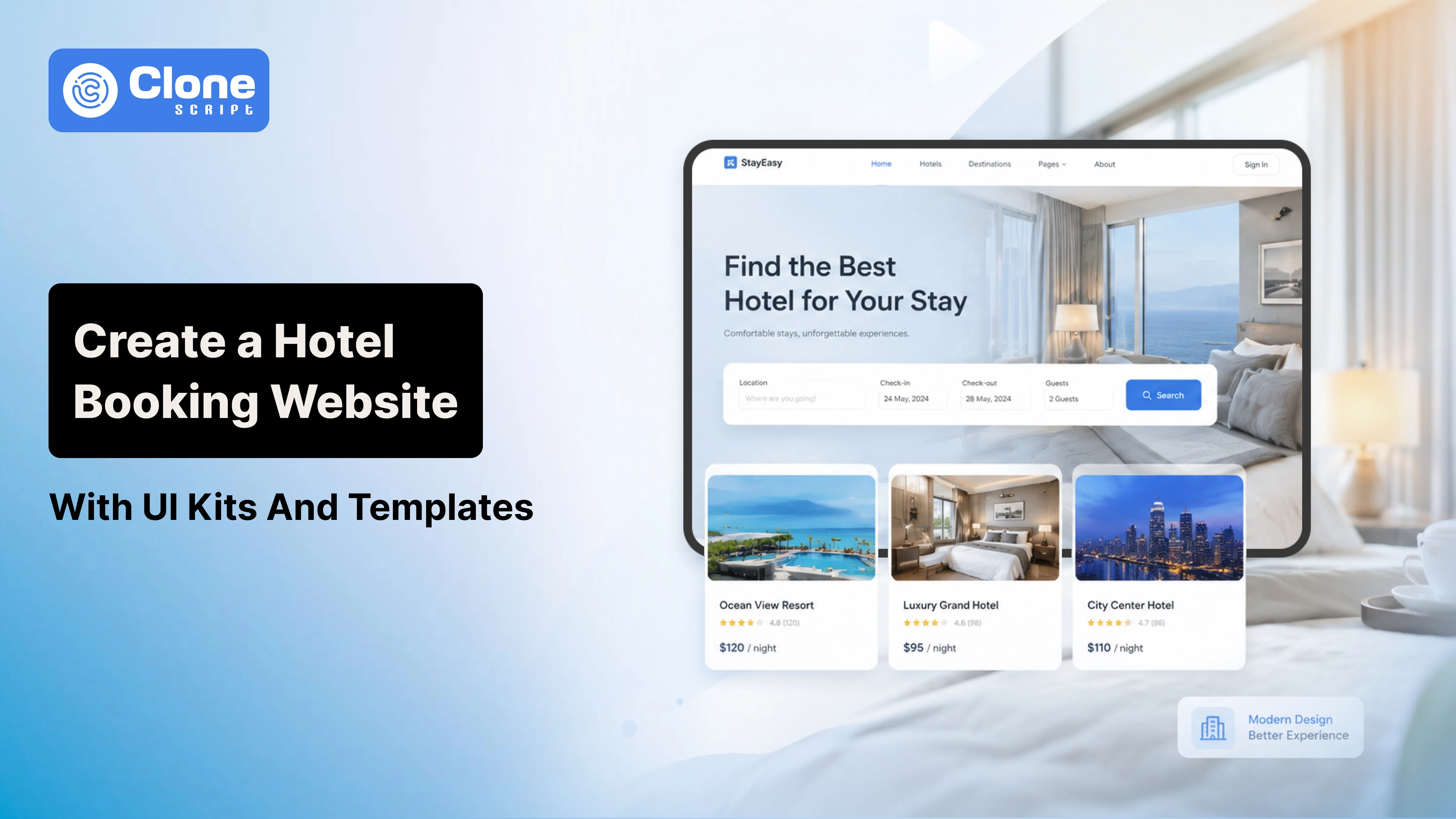
How to Create a Hotel Booking Website Using UI Kits and Templates
Hotel booking website development is not as simple as selecting an attractive template and publishing it online. Clients expect fast turnaround with custom branding, smooth reservation system features, and flow integration with booking or property management software. They also need new features and flexibility for business development. For web development agencies, balancing these expectations within the project's budget and timeline is one of the biggest challenges.
To save more of the design and development time, UI kits and website templates work as a starting point rather than a finished product. The design decisions become faster, and a web template offers a solid front-end foundation that can be managed with custom functionality. This can make it easier to rebuild common interface elements to solve problems and make each hotel business unique.
This guide will talk about how to choose the right UI kit and template, then planning integrations to customize the booking experience. All must be done without compromising scalability or maintainability.
Why Start with a UI Kit or Template?
Speed Up Development Without Limiting Customization
In hotel booking website projects, the goal is to deliver a reliable booking platform within the client’s budget and timeline. Web development agencies begin with a UI kit and website template that can add custom functionality.
-
A hotel booking UI kit includes reusable components such as booking forms, room cards, calendars, navigation, and pricing sections.
-
A website template extends this by offering ready-made page layouts and front-end code in HTML, React, Next.js, or Vue that developers can customize. Together, they accelerate project delivery without restricting branding or business-specific requirements.
What has been changed?
Development teams focus on booking engine integration, payment gateways, property management software systems (PMS), performance optimization, and user experience. This approach allows faster delivery, easier maintenance, and a scalable hotel booking website.
How to Choose the Right Hotel Booking UI Kit?
-
Evaluate Beyond Design Quality.
Comparing visual styles is important when choosing the hotel booking website UI kit because a polished interface is valuable. But agencies need to know the kit supports real-world development and future customization. Before making a decision, consider:
-
Review its component library
-
Responsive layouts
-
Design consistency
-
Documentation
A well-organized UI kit reduces implementation time and makes collaboration between designers and developers much smoother.
-
Prioritize the Design Components.
In web development, components are a key factor. You should look for specific components for hospitality websites:
-
Room listing cards
-
Availability calendars
-
Booking forms
-
Guest review sections
-
Pricing tables
-
Special offer banners
These elements reflect common hotel booking workflows and reduce the need to design new components from scratch.
-
The UI Kit has to be Future-Proof.
It's equally important to verify that the UI kit can scale with the project. Support for design tokens, Auto Layout, reusable variants, accessibility standards, and mobile-first design ensures the interface remains easy to maintain as new features are introduced.
Selecting the right foundation at the start helps agencies deliver a hotel booking website that is consistent, scalable, and ready for custom integrations.
Essential Features Every Hotel Booking Website Should Include
-
Build Around the Complete Booking Journey.
Just displaying attractive rooms doesn’t define a successful hotel booking platform. However, it should guide visitors from discovery to reservation with as few obstacles as possible. If you prefer a UI kit or a website template, it should support the features that hotels and guests look for every day.
-
Add Required Features.
At a minimum, the website should include the following:
-
Advanced room search
-
Real-time availability
-
Detailed room pages
-
Secure online payments
-
Guest reviews
-
Streamlined checkout process
Additional features such as interactive maps, multilingual support, multiple currencies, promotional offers, and a guest account dashboard improve the booking experience for international travelers and returning customers.
From a development perspective, these features should be easily integrated with:
-
Booking engines for a smooth experience
-
Payment gateways to complete the transactions
-
Property management systems through APIs
This makes updates easier, supports future enhancements, and allows hotel staff to manage pricing, availability, and reservations efficiently without requiring frequent development changes.
Customize Templates to Match Client Requirements
-
Adapt the Foundation to the Hotel's Business Model.
We know hotels operating in Europe and in the Asian region have different business models and goals. When choosing the hotel booking website template with the static layouts, you should treat it as a foundational point. Do not make it final until the customization has been done.
For example, boutique hotels in France emphasize beauty, luxury hotels in Bangkok highlight ambiance, hotel chains in the USA showcase the premium appearance, and vacation rentals in India present calmness.
-
Customization Should Be Completed Efficiently.
We know every hospitality business has different goals, so the website should reflect it in every aspect, like booking workflows, branding guidelines, and operational needs. Customization ensures the website reflects these differences while maintaining a consistent user experience.
By changing only colors and typography, web development agencies tailor room layouts, booking forms, navigation, promotional sections, and user flows to align with the client’s goals.
For example, a resort may prioritize package deals and activity bookings, while a business hotel may focus on corporate reservations and meeting facilities.
-
Third-party Integrations are a Must-have Choice.
Adding hardcoded business logic into the front-end makes things messy. You should prioritize room availability, pricing, taxes, and content that can be connected to APIs or a content management system (CMS). This approach makes the hotel booking website easier to maintain, supports future feature additions, and reduces development effort when business requirements change.
Integrate the Right Tools and Third-Party Services
-
Build a Connected Hotel Booking Platform.
A hotel booking website is only as effective as the systems working behind it. While UI kits and templates provide the visual foundation, the real functionality comes from third-party integrations that automate real-time reservations, payments, and property management.
-
The Functionality Has to Be Optimized.
Booking engine integration, payment platforms, PMS, CRM, and email notification services are important in hotel websites. First, understand the client’s business, then ask the development team to connect the system where channel managers, analytics platforms, live chat, loyalty programs, or marketing automation tools will be managed.
These integrations reduce manual work, improve operational accuracy, and create a seamless experience for both guests and hotel staff.
-
APIs are Key of Hotel Booking Website.
Just integrating third-party tools is not enough; the APIs of those platforms decide how the platform will work. Always prioritize the APIs that are well-documented, secure, and scalable. Adding new features, synchronizing reservation data in real time, and supporting future business growth without rebuilding the website can happen. A connected architecture also simplifies long-term maintenance and enhances the overall reliability of the hotel booking platform.
Optimize Performance, SEO, and Accessibility
-
Deliver a Website That Performs as Well as It Looks.
Thinking that your website will generate bookings for rooms is not done until the site is slow, difficult to navigate, or tough to find in Google search results or even in online travel applications (OTAs). Website performance, search engine optimization, and accessibility should be considered from the beginning of the development process. Extending it to post-launch improvements affects the site.
-
Apply These Tips for Hotel Booking Website Performance.
Use compressed images without affecting the quality. Then, implement lazy loading, minimize JavaScript, and use caching strategies. These practices improve Core Web Vitals, reduce page load times, and create a smoother booking experience across desktop and mobile devices.
-
Implement SEO Best Practices.
Use descriptive URLs, structured heading hierarchies, schema markup, metadata, and internal linking to help search engines understand your content. At the same time, follow accessibility standards by ensuring keyboard navigation, sufficient color contrast, alt text for images, and properly labeled forms. Together, these improvements increase search visibility, enhance usability, and help create a hotel booking website that reaches a wider audience and delivers a better user experience.
UI Kit and Template vs. Custom Design: Why Clients Ask for the Same Quality
Clients Pay for Business Outcomes, Not the Design Process
One question almost every web development agency encounters is:
"If we're using a UI kit or template, why should the final website look any less premium than a custom design?"
The short answer is. It shouldn't.
Today's clients understand that UI kits and templates are productivity tools, not shortcuts. They expect the same polished user experience, consistent branding, responsive layouts, and seamless booking journey they would receive from a fully custom website. The difference is that they want these results delivered more efficiently.
-
UI Kits and Templates Save Time on Repetitive Work.
A hotel booking UI kit already includes components such as:
-
Booking forms
-
Room listing cards
-
Navigation menus
-
Pricing sections
-
Review blocks
-
CTA buttons
Similarly, a website template provides pre-built page layouts and front-end code that developers can customize. To save time in recreating these standard elements, teams can invest their time in solving business-specific challenges.
-
Where Custom Design Still Matters
Even with the best template, every hotel has unique requirements. Agencies still need to customize:
-
Brand identity and visual style
-
Booking workflows
-
Room types and pricing logic
-
Third-party integrations
-
Guest experience
-
Mobile interactions
-
Performance optimization
These elements define the quality of the final product. Not whether the project started with a template.
The Best Projects Combine Both Approaches
The most successful hotel booking websites rarely follow an all-or-nothing strategy. They combine a professionally designed UI kit with custom development to balance speed, flexibility, and scalability.
For agencies, this approach reduces design and development time without compromising quality. For clients, it means launching a high-performing hotel booking website that looks custom-built, supports future growth, and delivers a booking experience that meets modern user expectations.
Here are the top three website UI kits for hospitality booking platforms.
If you need more support from our design and development team, we will help you with that. You can also explore our ready-made white-label web development solutions.