BTC - Bitcoin
 USDTERC20 - USDT ERC20
 ETH - Ethereum
 BNB - Binance
 BCH - Bitcoin Cash
 DOGE - Dogecoin
 TRX - TRON
 USDTTRC20 - USD TRC20
 LTC - LiteCoin

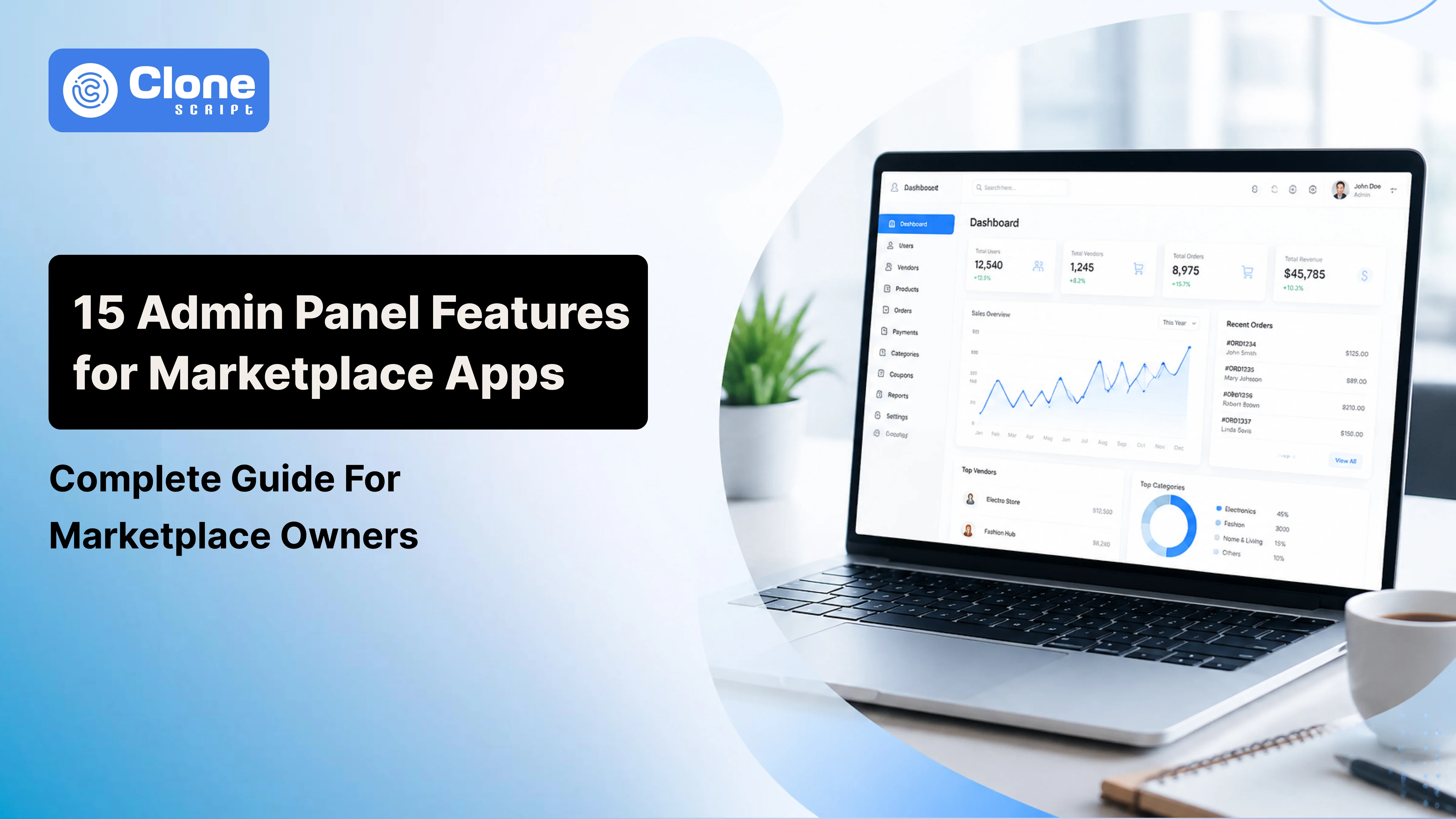
15 Admin Panel Features for Marketplace Apps to Keep a Business Successful
A marketplace app connects buyers and sellers in one place for buying products, booking services, and renting items online. However, the success of any marketplace app depends on more than just an attractive user interface. Behind every efficient marketplace is a powerful admin panel that helps business owners manage daily operations, monitor performance, and ensure a smooth experience for both vendors and customers.
Whether you run a multi-vendor eCommerce marketplace, a food delivery platform, a service booking app, or a rental marketplace, the admin panel serves as the central control hub. It gives administrators complete visibility into every aspect of the platform, from user registrations and vendor approvals to payments, reports, and security.
As your marketplace grows, manually handling these tasks becomes nearly impossible. A feature-rich admin dashboard automates repetitive processes, reduces errors, and provides valuable insights to help you make informed business decisions.
In this guide, we'll explore the 15 essential admin panel features for marketplace apps, explain why each feature matters, and show how they contribute to building a secure, scalable, and successful marketplace.
Why Is an Admin Panel Important for Marketplace Apps?
An admin panel is the backbone of every marketplace application. While customers and vendors interact with the front-end interface, administrators rely on the back-end dashboard to oversee the entire platform.
Without an efficient admin panel, managing thousands of users, hundreds of vendors, and daily transactions can quickly become confusing. An advanced admin dashboard helps automate operations, maintain platform quality, and improve customer satisfaction.
Some of the biggest advantages include:
-
Centralized platform management
-
Better user and vendor control
-
Faster order processing
-
Improved security and fraud prevention
-
Real-time business insights
-
Simplified payment management
-
Enhanced customer support
-
Easy content updates
Let's dive into the must-have features every marketplace admin panel should offer.
1. User Management
User management is one of the most important features of a marketplace admin panel. Every buyer and seller who joins your platform becomes part of your marketplace ecosystem, which means it is essential to keep user information organized and secure.
An effective user management system allows administrators to:
-
View all registered users
-
Edit user information
-
Suspend or deactivate accounts
-
Verify customer identities
-
Reset passwords
-
Assign different user roles
-
Track user activity
For example, if suspicious activity is detected, administrators can immediately restrict account access and investigate the issue. Likewise, verified users can receive trusted badges that improve marketplace credibility.
Proper user management improves security and offers a better experience for genuine customers.
2. Vendor Management
Unlike traditional online stores, marketplace apps rely on multiple vendors. Managing sellers efficiently is essential for maintaining product quality and customer trust.
A vendor management system should allow administrators to:
-
Approve new vendor registrations
-
Verify business documents
-
Review licenses and certifications
-
Monitor seller performance
-
Suspend fraudulent vendors
-
Track vendor earnings
-
Manage subscription plans
Many successful marketplaces manually review vendor applications before allowing them to sell. This screening process helps reduce fake sellers and protects customers from scams.
Vendor performance metrics, such as customer ratings, return rates, and delivery performance, also help administrators identify top-performing sellers and vendors who may require improvement.
3. Product and Listing Approval
Marketplace platforms often receive hundreds or even thousands of new listings every day. Without moderation, inappropriate or misleading listings can negatively impact customer trust.
The admin panel should include tools that enable administrators to:
-
Approve new products
-
Reject prohibited items
-
Edit listing details
-
Remove duplicate products
-
Review product images
-
Flag policy violations
For example, marketplaces selling electronics can ensure listings include accurate specifications, while fashion marketplaces can verify image quality before publishing products.
A proper listing approval process improves the overall shopping experience and protects the marketplace's reputation.
4. Order Management
Order management ensures every purchase moves smoothly from checkout to delivery.
The admin dashboard should provide administrators with complete visibility into each order, including:
-
Pending orders
-
Confirmed orders
-
Processing status
-
Shipped orders
-
Delivered orders
-
Cancelled orders
-
Refund requests
Having all order information in one place allows administrators to quickly resolve issues, respond to customer inquiries, and monitor delivery performance.
For marketplaces handling thousands of daily transactions, automated order tracking significantly reduces operational workload.
5. Payment and Commission Management
Payments are the financial backbone of every marketplace. The back-end service has to support it.
Since marketplace businesses earn revenue through commissions, subscription fees, or service charges, administrators need complete control over financial transactions.
A robust payment management system should support:
-
Multiple payment gateways
-
Automatic commission calculation
-
Vendor payouts
-
Refund processing
-
Payment history
-
Tax calculations
-
Transaction monitoring
Automated commission distribution eliminates manual calculations, and vendors receive accurate payouts on time.
The admin dashboard should also generate payment reports that simplify accounting and financial planning.
6. Dashboard Analytics
Business growth depends on data-driven decisions, making analytics one of the most valuable admin panel features.
A comprehensive analytics dashboard provides insights into marketplace performance through charts, graphs, and real-time reports.
Important metrics include:
-
Total revenue
-
Daily sales
-
Active users
-
New registrations
-
Vendor growth
-
Best-selling products
-
Conversion rates
-
Customer retention
-
Average order value
For example, if sales decline during a specific period, administrators can quickly identify the cause and launch targeted promotional campaigns.
Real-time analytics help marketplace owners respond faster to market trends and customer behavior.
7. Inventory Monitoring
Inventory management is essential for marketplaces selling physical products.
Without accurate inventory tracking, customers may purchase products that are already out of stock. This results in order cancellations and negative reviews.
The admin panel should provide:
-
Stock availability monitoring
-
Low inventory alerts
-
Out-of-stock notifications
-
Vendor inventory tracking
-
Product availability updates
-
Inventory history
Automated stock synchronization helps vendors maintain accurate product availability across multiple sales channels.
This reduces overselling and improves customer satisfaction.
8. Review and Rating Management
Customer reviews directly influence purchasing decisions. Positive reviews build trust. A fake or abusive review can damage marketplace credibility.
An effective review management system enables administrators to:
-
Moderate customer reviews
-
Remove spam comments
-
Detect fake ratings
-
Respond to complaints
-
Highlight verified reviews
-
Monitor seller ratings
Transparent review moderation creates a healthier marketplace environment where customers can make informed purchasing decisions.
9. Customer Support Management
Excellent customer support plays a major role in customer retention.
Marketplace administrators need tools that simplify communication between buyers, sellers, and support teams.
Useful customer support features include:
-
Ticket management
-
Complaint tracking
-
Live chat integration
-
Internal notes
-
Support history
-
Automated responses
-
Escalation management
When issues arise, administrators can quickly review previous conversations and resolve customer concerns more efficiently.
Fast support responses increase customer confidence and encourage repeat business.
10. Notification Management
Keeping users informed improves engagement and reduces confusion throughout the buying journey.
The admin panel should support automated notifications for:
-
Order confirmations
-
Shipping updates
-
Payment receipts
-
Vendor approvals
-
Promotional offers
-
Password resets
-
Delivery notifications
Modern marketplaces use multiple communication channels, including:
-
Push notifications
-
Email
-
SMS
-
In-app messages
Automated notifications reduce customer inquiries and improve the overall user experience.
11. Security and Access Control
Marketplace apps store sensitive customer information, payment details, and business data. Protecting this information should be a top priority.
Essential security features include:
-
Two-factor authentication (2FA)
-
Role-based access control
-
Login monitoring
-
IP restrictions
-
Device management
-
Session timeout
-
Password policies
-
Activity logs
Different team members should only access the information necessary for their responsibilities.
For example, finance staff may access payment reports, and customer support representatives only view support tickets.
Strong security measures reduce fraud, unauthorized access, and data breaches.
12. Reports and Business Insights
Reports provide detailed information about marketplace performance over a specific timeframe.
Unlike live dashboards, reports allow administrators to analyze long-term trends and compare business growth.
Useful reports include:
-
Revenue reports
-
Vendor earnings
-
Sales performance
-
Customer acquisition
-
Refund statistics
-
Tax summaries
-
Inventory reports
-
Marketing campaign performance
These reports help business owners identify strengths, discover improvement opportunities, and plan future growth strategies.
Most modern admin panels also allow reports to be exported in PDF, Excel, or CSV formats for accounting and management purposes.
13. Marketing and Promotion Tools
An integrated marketing module helps marketplace owners attract new customers and increase sales from existing users.
Useful promotional features include:
-
Coupon code creation
-
Flash sales
-
Referral programs
-
Loyalty rewards
-
Banner management
-
Featured listings
-
Email campaigns
-
Seasonal discounts
For example, administrators can launch limited-time discounts during festivals or holidays without requiring developer assistance.
Having marketing tools inside the admin panel saves time and enables faster campaign management.
14. Dispute Resolution System
Disagreements between buyers and sellers are common in marketplace businesses.
A structured dispute resolution system can manage problems fairly and efficiently.
The admin panel should support:
-
Complaint submission
-
Evidence uploads
-
Chat history
-
Order references
-
Refund approvals
-
Mediation workflow
-
Resolution tracking
For example, if a customer claims a product arrived damaged, administrators can review order details, uploaded photos, and communication history before making a decision.
A transparent dispute process strengthens trust among both buyers and vendors.
15. Content Management System (CMS)
A built-in Content Management System (CMS) enables administrators to update website content without technical knowledge.
Instead of relying on developers for every small change, admins can easily manage:
-
Homepage banners
-
Landing pages
-
Blog articles
-
FAQs
-
Terms and Conditions
-
Privacy Policy
-
Help Center
-
Promotional pages
Regularly updating content also supports SEO by keeping the marketplace fresh and informative.
A CMS allows businesses to quickly publish announcements, promotional campaigns, or important policy updates whenever needed.
Best Practices for Building a Marketplace Admin Panel
Having the right features is important, but how those features are implemented also matters. A well-designed admin panel should be intuitive, fast, and scalable.
Here are some best practices:
-
Use a clean and user-friendly dashboard layout.
-
Enable role-based permissions for different team members.
-
Provide customizable reports and analytics.
-
Support integration with payment gateways and third-party tools.
-
Optimize dashboard performance for large datasets.
-
Include advanced search and filtering options.
-
Ensure the panel is mobile-responsive.
-
Schedule automatic backups for critical business data.
-
Use strong encryption and regular security updates.
Following these practices for your admin panel continues to perform well as your marketplace grows.
Conclusion
A marketplace app's front-end may attract users, but its admin panel is what keeps the business running efficiently. From managing users and vendors to processing payments, resolving disputes, and analyzing business performance, the admin dashboard plays a crucial role in every aspect of marketplace management.
The 15 admin panel features for marketplace apps discussed in this guide provide a strong foundation for building a scalable and secure platform. Features such as user management, vendor approval, payment processing, analytics, inventory monitoring, customer support, and content management help automate operations and improve the experience for both buyers and sellers.