BTC - Bitcoin
 USDTERC20 - USDT ERC20
 ETH - Ethereum
 BNB - Binance
 BCH - Bitcoin Cash
 DOGE - Dogecoin
 TRX - TRON
 USDTTRC20 - USD TRC20
 LTC - LiteCoin

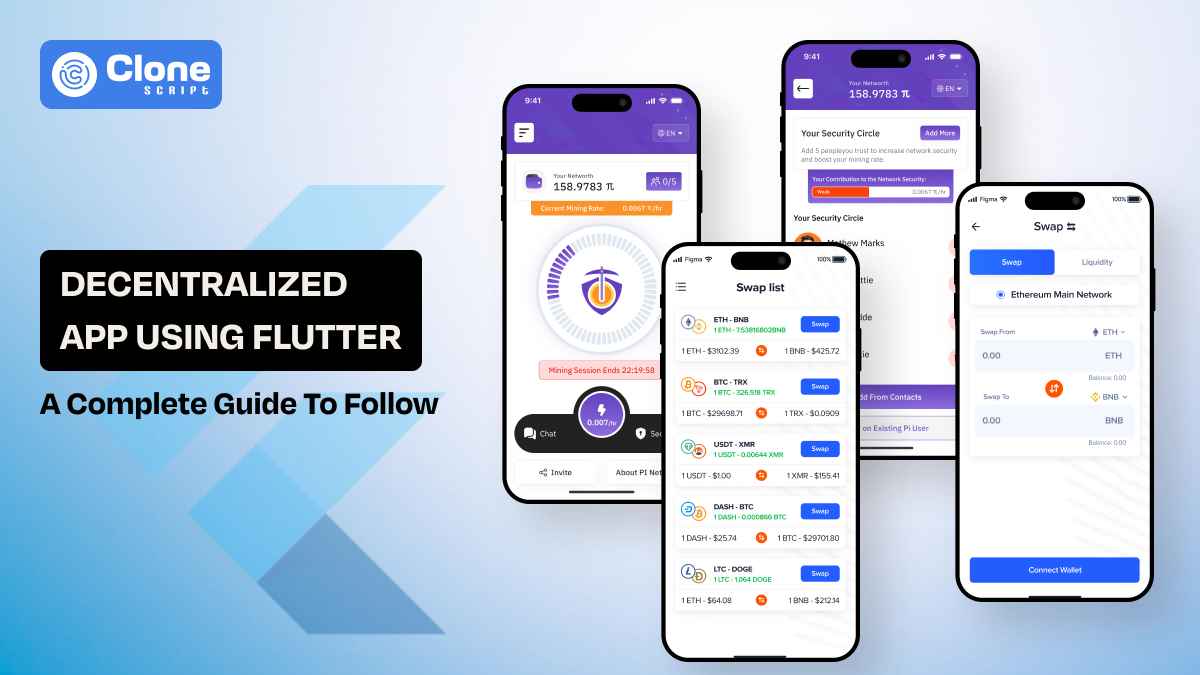
How to Make a Decentralized App Using Flutter and Deploy it Successfully
Decentralized applications are transforming how digital platforms operate by removing reliance on centralized servers. Instead of storing data and executing logic on a single back-end system, these applications run on distributed blockchain networks. The result is a system that prioritizes transparency, security, and trustless interactions between users.
For developers building mobile-first Web3 platforms, Flutter has become a practical framework. It allows teams to create cross-platform applications for Android and iOS while maintaining a single codebase. When combined with blockchain networks such as Ethereum or Polygon, Flutter can serve as the interface layer for decentralized platforms, including DeFi apps, NFT marketplaces, and blockchain-based marketplaces.
Understanding how these technologies work together is essential for building secure and scalable decentralized applications.
What Is a Decentralized Application (DApp)?
A decentralized application, commonly known as a DApp, is software that runs on a blockchain network rather than on centralized servers. Unlike traditional apps, where a company controls the back-end infrastructure, DApps rely on distributed nodes to maintain data and execute logic.
The core component of a DApp is the smart contract. Smart contracts are self-executing programs deployed on a blockchain that automatically perform operations when predefined conditions are met.

Typical characteristics of decentralized applications include:
-
Distributed infrastructure where data is stored across multiple nodes
-
Smart contract logic that replaces centralized back-end services
-
Cryptographic authentication using digital wallets
-
Transparent transaction history recorded on public ledgers
Because blockchain networks maintain immutable records, DApps offer a higher level of transparency compared to traditional web applications.
Why Flutter Is a Strong Framework for Blockchain Apps
Flutter has gained significant popularity among developers who build cross-platform mobile applications. Created by Google, the framework uses the Dart programming language and allows developers to build interfaces that run on multiple platforms from a single codebase.
Using Flutter templates for blockchain products can be a proper choice to make it live and optimized for security.
For decentralized applications, Flutter provides several advantages.
-
Cross-Platform Development
Flutter applications can run on Android and iOS without maintaining separate native projects. This reduces development time while ensuring a consistent user experience across devices.
-
High Performance UI
Flutter compiles directly to native code, which improves performance for mobile interfaces. Web3 applications often include dashboards, transaction feeds, and real-time asset tracking, making efficient rendering important.
-
Flexible Integration
Flutter supports integration with back-end systems, Web3 libraries, and blockchain APIs. Developers can connect the mobile interface to smart contracts, wallet providers, and blockchain RPC nodes.
Because of these capabilities, Flutter is well-suited for building Web3 applications that require secure blockchain interaction and a responsive mobile experience.
Architecture of a Flutter-Based DApp
A decentralized mobile application built with Flutter follows a layered architecture that separates the user interface from blockchain infrastructure.

-
Flutter Front-end Layer
The front-end of the app is responsible for rendering the user interface and handling user input. Flutter widgets manage screens such as wallet connection pages, asset dashboards, and transaction confirmation dialogs.
This layer communicates with blockchain networks through Web3 libraries.
-
Blockchain Network Layer
The blockchain acts as the decentralized back-end of the application. Networks like Ethereum maintain distributed ledgers where transactions and smart contracts are stored.
Every node in the network validates transactions and ensures data integrity across the system.
-
Smart Contract Layer
Smart contracts implement the business logic of the decentralized platform. They define operations such as token transfers, asset ownership, staking rules, and marketplace transactions.
These contracts are deployed to the blockchain and can be accessed using their contract addresses.
-
Wallet Layer
Wallets handle authentication and transaction signing. Instead of traditional login systems, users connect their wallets to interact with decentralized applications.
The wallet securely stores private keys and authorizes transactions initiated by the mobile app.
Development Environment Setup in Flutter
Before building a decentralized Flutter application, developers must prepare both mobile development tools and blockchain frameworks.
-
Install Flutter SDK
The Flutter SDK includes all necessary components for building mobile applications using Dart.
A typical Flutter setup includes:
-
Flutter command-line tools
-
Dart SDK
-
Android Studio or Visual Studio Code
-
Mobile device emulators
These tools enable developers to compile and test Flutter apps locally.
-
Install Node.js
Blockchain development frameworks depend on Node.js for package management and development tooling.
Node.js allows developers to install libraries required for:
-
Compiling smart contracts
-
Running testing environments
-
Deploying contracts to blockchain networks
-
Install Smart Contract Frameworks
Frameworks such as Truffle and Hardhat simplify smart contract development.
These tools help developers:
-
Write Solidity contracts
-
Compile code into blockchain-compatible bytecode
-
Deploy contracts to development networks
-
Local Blockchain Environment
For early testing, developers often run a local blockchain simulator. Tools such as Ganache provide a testing environment where transactions can be executed instantly without network costs.
This setup allows developers to validate smart contract logic before deploying it to public networks.
Writing Smart Contracts for the DApp
Smart contracts form the operational backbone of decentralized applications. They define how the platform behaves and automate interactions between users.

-
Define Contract Logic
Developers first design the contract structure and specify functions that handle application logic. These functions may include operations such as transferring tokens, managing staking mechanisms, or executing governance proposals.
The contract also defines access permissions, ensuring that only authorized accounts can perform certain actions.
-
Compile Smart Contracts
After writing the Solidity code, developers compile the contract using frameworks like Hardhat or Truffle. The compilation process converts the code into bytecode that blockchain networks can execute.
The compiler also generates an ABI (Application Binary Interface) file, which describes how external applications interact with the contract.
-
Deploy Contracts
Once compiled, the contract is deployed to a blockchain network. Deployment assigns the contract a unique address that serves as its identifier on the blockchain.
The Flutter application later uses this address and ABI file to communicate with the smart contract.
Connecting Flutter to Blockchain Network
To interact with blockchain networks, Flutter applications rely on Web3 integration libraries.
One commonly used package is web3dart, which allows Dart applications to communicate with Ethereum-compatible networks.
-
Reading Blockchain Data
Flutter apps can query blockchain information through RPC nodes. This allows the application to retrieve data such as wallet balances, smart contract variables, and historical transaction records.
-
Sending Transactions
The mobile application can also initiate blockchain transactions by calling smart contract functions. These transactions might include token transfers, NFT minting, or marketplace purchases.
-
Listening to Blockchain Events
Smart contracts emit events whenever certain actions occur. Flutter applications can subscribe to these events to update the interface when transactions are confirmed or when state changes happen on the blockchain.
This capability helps maintain real-time synchronization between the user interface and decentralized infrastructure.
Wallet Integration with the Flutter App
Wallet integration is essential for enabling secure user authentication in decentralized applications.
Instead of storing user credentials on a server, DApps rely on cryptographic wallets that manage private keys.

-
Secure Transaction Signing
When users initiate a blockchain transaction, the wallet signs it using the private key stored locally on the device. The application never directly accesses the private key.
-
User Identity
In Web3 systems, a wallet address functions as the user’s identity. This approach removes the need for traditional username and password systems.
-
WalletConnect Integration
Protocols such as WalletConnect allow Flutter applications to connect with popular wallets like MetaMask. The wallet handles transaction approval while the application interacts with blockchain smart contracts.
This model significantly improves security because sensitive cryptographic keys remain outside the application environment.
Security Best Practices for Flutter DApps
Security plays a critical role in decentralized application development because blockchain transactions are irreversible.
Developers must implement multiple security measures to protect users and smart contract assets.
-
Avoid Storing Private Keys
Private keys should never be stored inside the mobile application or servers during back-end development. Always rely on external wallet providers for secure transaction signing.
-
Use Secure RPC Providers
Public RPC endpoints may expose applications to performance issues or potential attacks. Production systems should use managed RPC services with authentication and monitoring.
-
Smart Contract Auditing
Smart contract vulnerabilities can lead to significant financial losses. Developers should conduct internal code reviews, automated testing, and professional third-party audits before deploying contracts to production networks.
-
Validate User Transactions
Applications should validate user inputs before submitting transactions to the blockchain. Incorrect parameters may cause failed transactions or unexpected behavior.
-
Protect Off-Chain Services
If the decentralized application includes APIs or external services, developers should implement HTTPS encryption, authentication mechanisms, and rate limiting to prevent abuse.
Testing and Deployment for DApp
A comprehensive testing process ensures that decentralized applications function correctly before interacting with real blockchain assets.

-
Local Testing
During development, engineers test smart contracts in local blockchain environments using tools like Ganache. These simulated networks allow developers to experiment with contract execution, token transfers, and wallet interactions without network fees.
Local testing also speeds up debugging because transactions confirm immediately.
-
Testnet Deployment
After validating the system locally, developers deploy smart contracts to public blockchain test networks such as Goerli or Sepolia. These networks replicate Ethereum behavior but use test tokens instead of real cryptocurrency.
Running the application on a testnet allows developers to evaluate transaction flows and verify contract functionality in a distributed environment.
-
Production Deployment
Once the application passes all testing stages, the smart contracts are deployed to the main blockchain network. The Flutter application then connects to production RPC nodes and becomes accessible to real users.
At this stage, the decentralized platform operates on the live blockchain infrastructure.
Real-World Use Cases of Flutter DApps
Flutter-based decentralized applications are being adopted across several Web3 sectors where transparency and trustless transactions are important.
-
DeFi Platforms
Decentralized finance applications allow users to access financial services without centralized institutions. Mobile interfaces built with Flutter enable users to monitor balances, perform token swaps, and participate in lending protocols.
-
NFT Marketplaces
NFT platforms require intuitive mobile interfaces for browsing and managing digital assets. Flutter applications can support NFT minting, marketplace listings, and digital asset ownership management.
-
Blockchain Voting Systems
Decentralized voting platforms use blockchain to create transparent and tamper-resistant voting processes. Flutter apps provide mobile interfaces that allow participants to cast votes securely while maintaining immutable records.
-
Web3 Marketplaces
Decentralized marketplaces facilitate peer-to-peer transactions without intermediaries. These platforms allow users to buy and sell digital assets while maintaining ownership records on blockchain networks.
Conclusion
Building decentralized applications with Flutter allows developers to combine modern mobile UI development with blockchain infrastructure. Flutter’s cross-platform capabilities make it possible to deliver Web3 experiences on both Android and iOS devices while maintaining a unified codebase.
By integrating smart contracts, wallet authentication, and secure blockchain communication, developers can create applications that operate without centralized control. Proper testing, security practices, and reliable deployment strategies are essential to ensure that these systems function safely in production environments.
As blockchain technology continues to evolve, frameworks that simplify mobile development, such as Flutter, will play a key role in expanding the accessibility of decentralized applications.