BTC - Bitcoin
 USDTERC20 - USDT ERC20
 ETH - Ethereum
 BNB - Binance
 BCH - Bitcoin Cash
 DOGE - Dogecoin
 TRX - TRON
 USDTTRC20 - USD TRC20
 LTC - LiteCoin

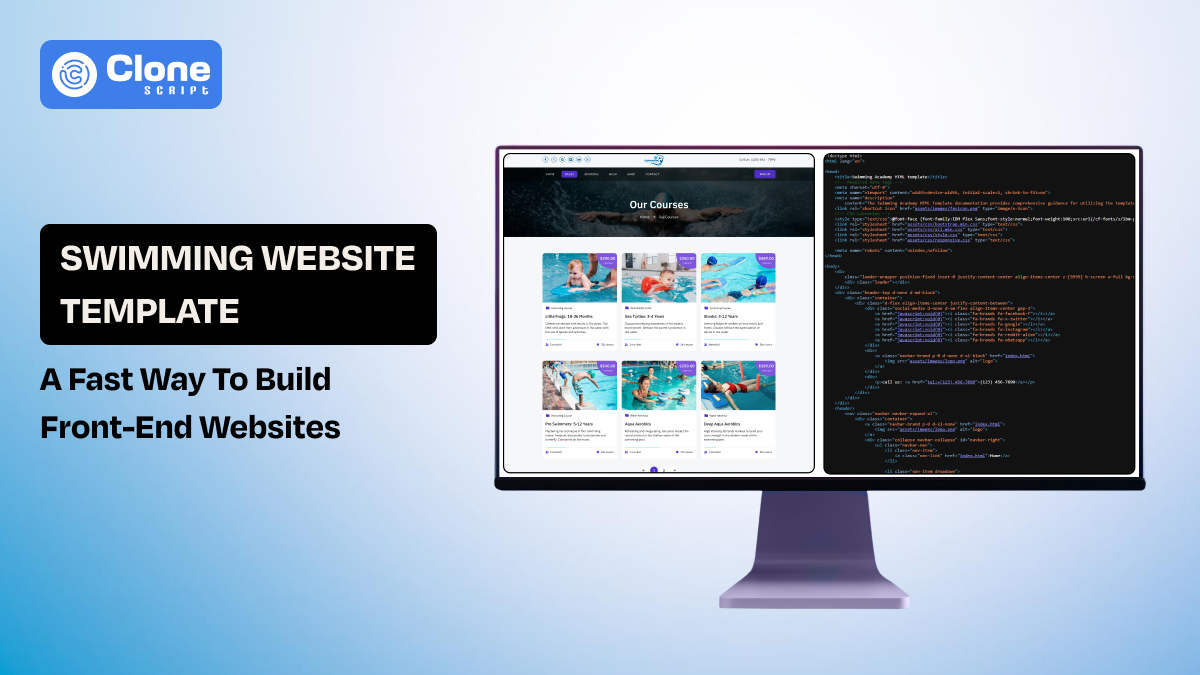
Swimming Website Template: Useful for Front-end Websites Development
For front-end website developers working with sports institutions, building a structured website for a swimming academy can take considerable time, around 5-10 weeks. These websites require multiple sections such as training programs, coach profiles, schedules, facilities, and enrollment forms. Designing and coding these components repeatedly for each project can slow development cycles.
Many developers initially consider creating custom UI and UX designs for these projects. However, investing $3,000 to $5,000 in interface design alone may not always be practical, especially for smaller academy websites or fast client delivery timelines.
This is where a swimming website template becomes a practical solution. A well-designed template already includes the essential layout sections and responsive design patterns required for academy websites. Instead of building page structures from scratch, developers can focus on branding, customization, and client-specific content.
In this guide, we will explore what makes a good swimming website template, the essential layouts required, and how developers can use templates to deliver client projects faster while maintaining a professional design structure.
Why Swimming Pool Academies Need a Professional Website
A professional website functions as both an information hub and a trust-building platform. It allows academies to present their services in a structured, accessible format. It also improves visibility for people actively searching for swimming training programs.
Here are key reasons why having a website is beneficial.
-
Improved online visibility
Parents frequently search for beginner swimming lessons, kids’ swim training, or professional coaching programs. A website helps academies to appear in search results and attract new students who may not discover them through offline channels.
-
Clear presentation of training programs
Swimming institutes offer multiple programs such as beginner classes, intermediate training, advanced coaching, and competitive swim preparation. A professional website organizes these options in a structured layout so visitors can quickly understand available programs.
-
Instructor credibility and transparency
Parents want to know who will train their children. Dedicated coach profile sections can present instructor qualifications, certifications, and coaching experience. It helps build trust before enrollment.
-
Facility and environment showcase
Potential students often evaluate training environments before joining an academy. A website can display pool facilities, safety equipment, locker rooms, and training sessions through images and structured content.
-
Simplified inquiries and enrollment
Contact forms, inquiry sections, and program schedules allow prospective students to ask questions or request enrollment information without needing to call or visit the academy first.
For developers building websites for sports institutes, recreating these sections from scratch for every project can be repetitive. A Swimming Website Template built with HTML5 and Tailwind CSS already includes these structural components, enabling faster development while maintaining a professional website structure tailored for swimming academies.
Swimming Website Layouts That Must Present
A swimming academy website needs a clear structure so visitors can quickly understand what the academy offers. Unlike general business websites, sports training platforms must highlight programs, facilities, and coaching expertise in a logical order.
Here are essential layout sections for websites:
-
Hero Section With Clear Academy Positioning
The top hero section for the website should immediately communicate the academy’s purpose. A headline, background image of swimming training, and a call-to-action, such as “Join Swimming Classes,” help capture attention.
-
Swimming Programs and Training Levels
This section should present beginner, intermediate, and advanced courses. Each program needs short descriptions explaining age groups, duration, and training goals.
-
Instructor Profiles With Certifications
Visitors often want to know the qualifications of coaches. Display instructor photos, experience, and relevant swimming certifications. It increases trust and improves conversions to join the courses.
-
Facilities and Pool Infrastructure Gallery
Visual content showing the swimming pool, safety equipment, and training sessions builds credibility for the academy. It makes the decision easy for visitors.
-
Contact and Enrollment Section
A clear inquiry form, phone number, and location details allow potential students to quickly request information or register for classes.
Key Features to Look for in a Swimming Website Template
For developers working on sports academy projects, the right template acts as a pre-built UI framework. Instead of designing every UI component from scratch, developers can use an existing structure and concentrate on branding, content arrangement, and performance optimization. This approach shortens development timelines while maintaining a consistent user experience across pages.
-
Responsive design for multiple devices
Most users search for training programs through smartphones or tablets. A responsive template ensures layouts adapt automatically to different screen sizes. That means visitors can browse swimming programs, schedules, and contact details comfortably on any device.
-
Structured program presentation layouts
Swimming academies usually run several training levels. A well-designed template should include organized sections where developers can present beginner classes, kids’ training programs, competitive coaching, and seasonal courses in a clear hierarchy.
-
Instructor profile components
Coach credibility plays a major role in enrollment decisions. Website templates should provide profile blocks where instructor photos, qualifications, certifications, and coaching experience can be displayed in a professional format.
-
Facility and pool showcase galleries
Visual representation of the academy environment helps visitors understand the quality of infrastructure. Gallery components should support images of swimming pools, safety equipment, and training sessions to give users a realistic preview of the facility.
-
Flexible front-end structure for customization
Templates built with clean and modular front-end code are easier to customize. Developers should look for organized HTML structures and scalable CSS frameworks that allow quick adjustments to colors, layouts, and typography.
-
Integrated contact and inquiry modules
A swimming academy website must simplify communication with potential students. Website templates should include contact forms, inquiry sections, and clear call-to-action buttons that encourage visitors to request information or begin the enrollment process.
Why HTML5 and Tailwind CSS Are Practical for Swimming Website Templates
When developers build websites for sports academies, the underlying front-end technology plays an important role in how easily the site can be customized and maintained. Using a template built with modern front-end technologies simplifies this process and improves long-term scalability.
HTML5 provides a clear structural foundation for organizing page elements such as navigation, content sections, and media. Combined with Tailwind CSS, developers can design flexible layouts without writing large amounts of custom CSS.
Key advantages of using this technology stack include:
-
Utility-based styling for faster UI customization
Tailwind CSS uses a utility-first approach that lets developers control spacing, typography, and layout directly in HTML markup. This reduces the need for custom CSS files and allows faster interface adjustments when building or modifying the swimming academy website layouts.
-
Responsive layout control
Tailwind provides responsive utility classes that help developers adjust layouts for mobile, tablet, and desktop screens easily. This simplifies device optimization and ensures visitors can comfortably browse swimming programs, schedules, and academy details across different devices.
-
Clean semantic structure with HTML5
HTML5 elements such as section, article, nav, and header create a clear and organized page structure. This improves code readability, supports accessibility standards, and helps search engines better understand the content hierarchy of a swimming academy website.
-
Reduced front-end development time
Prebuilt utility classes in Tailwind allow developers to assemble page components quickly without writing repetitive CSS. This speeds up the front-end development process and enables faster delivery of swimming academy websites for client projects.
-
Better maintainability for future updates
A structured combination of HTML5 and Tailwind CSS keeps the codebase organized. Developers can update layouts, modify sections, or integrate additional features more easily, making long-term maintenance simpler for swimming academy websites.
How a Swimming Website Template Speeds Up Client Projects
A swimming website template reduces development tasks by providing a ready-to-use layout structure. Instead of building interface components repeatedly, developers can directly integrate client content and branding into an existing framework.
Here is the explanation to know.
-
Pre-built page structures
Templates usually include essential sections such as training programs, instructor profiles, facility galleries, and contact pages. Developers do not need to design these structural elements repeatedly, allowing them to focus on customization and branding while maintaining a consistent layout for swimming academy websites.
-
Ready responsive layouts
Most templates are already optimized for mobile, tablet, and desktop screens. This eliminates the need for developers to manually build responsive frameworks. Ensuring visitors can easily browse swimming classes, schedules, and academy information on any device.
-
Reduced UI design workload
Creating interface layouts from scratch for every project requires time for wireframing and design validation. A swimming website template removes much of this effort because the page structure and visual hierarchy are already established.
-
Faster prototype development
Templates allow developers to quickly assemble a functional website prototype. This helps clients review the structure, provide feedback early, and finalize design adjustments before the full development process begins.
-
Simplified content integration
Developers can replace placeholder text and images with the academy’s real programs, schedules, and facilities. This speeds up the content integration process and allows projects to move faster toward launch.
Example Structure of a Modern Swimming Academy Website
A well-organized structure helps visitors quickly understand what a swimming academy offers. When users land on the website, they should immediately see programs, facilities, and enrollment options without confusion. A structured layout improves usability and supports higher inquiry or registration rates.
-
Homepage with academy introduction
The homepage introduces the swimming academy with a strong headline, a short overview, and a visible call-to-action. The hero section on the website does the job very smartly. It should quickly explain the academy’s training focus, highlight key programs, and guide visitors toward exploring courses or contacting the academy.
-
Training programs overview
This section explains the different swimming courses available, such as beginner training, children’s swimming classes, intermediate skill development, and competitive coaching. Clear program descriptions help visitors understand eligibility, learning objectives, and the progression path offered by the academy.
-
Instructor and coaching profiles
Visitors evaluate the expertise of instructors before enrolling. This section presents coach profiles, including experience, swimming certifications, training background, and achievements. Displaying instructor credibility helps build confidence among parents and individuals considering professional swimming training.
-
Swimming pool and facility gallery
A gallery section highlights the swimming environment, including pool infrastructure, safety equipment, and training sessions. Visual content allows visitors to see the learning atmosphere, understand the quality of facilities, and gain confidence in the academy’s training standards.
-
Schedule and class timing section
Swimming academies usually offer multiple training slots for different age groups and skill levels. A schedule section allows visitors to review class timings, available batches, and training frequency before contacting the academy for enrollment information.
-
Contact and enrollment section
The final section allows visitors to request information or start the registration process. It typically includes inquiry forms, phone numbers, email details, and location maps so potential students or parents can easily connect with the swimming academy.
Recommended Swimming Website Template for Developers
A dedicated swimming website template designed for training institutes provides the required sections and interface patterns needed for this niche.
One practical option is the Swimming Academy Bootstrap and Tailwind CSS Template, which is built specifically for swimming schools, training centers, and pool academies.
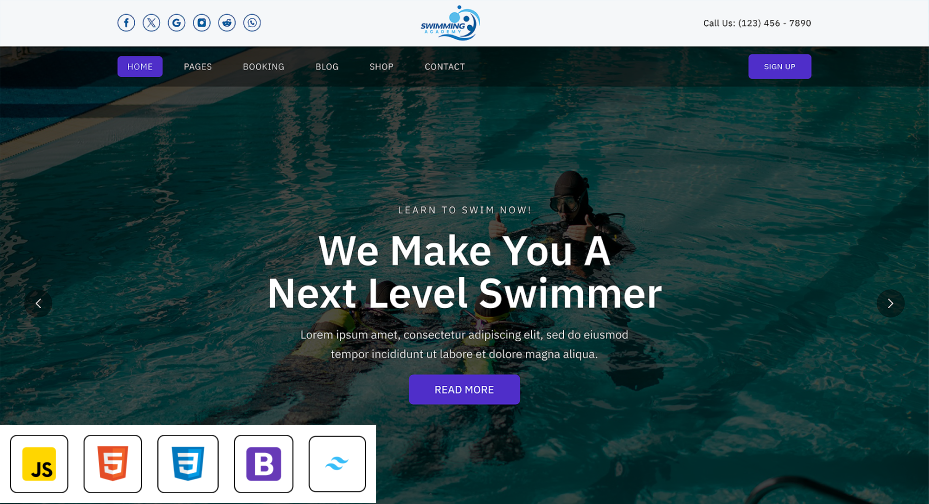
These characteristics make this template useful for developers.
-
Modern responsive layout structure
The template includes a fully responsive layout that adapts to mobile phones, tablets, and desktop screens. This ensures visitors can browse swimming programs, facilities, and enrollment information comfortably across different devices without layout issues.
-
Built with Bootstrap and Tailwind CSS
Using a combination of Bootstrap components and Tailwind utility classes allows developers to customize design elements efficiently. Layout spacing, typography, and section styling can be adjusted quickly without rewriting large CSS files.
-
Pre-designed sections for academy websites
The template includes ready-made sections such as program listings, instructor profiles, facilities gallery, testimonials, and contact forms. These components match the typical content structure required for swimming academy websites.
-
Clean and organized front-end code
Well-structured HTML and CSS files make the template easier to maintain and modify. Developers can integrate client branding, add new pages, or modify layouts without restructuring the entire front-end architecture.
-
Faster deployment for client projects
Because the template already includes essential UI components, developers can quickly assemble a functional swimming academy website. This helps reduce development timelines and allows faster delivery of client projects.
Developers interested in using this structure can explore the template here:
How to Customize a Swimming Website Template for Client Projects
Important customization in the website template is necessary to align the design with a client’s brand and operational needs. Developers typically adapt templates by modifying visual elements, content sections, and navigation structure.
-
Branding Customization
Customization often begins with branding adjustments. This includes updating color schemes, typography, and logos so the website reflects the academy’s identity. Consistent branding improves recognition and creates a more professional appearance for visitors exploring the academy online.
-
Replacing Template Content With Academy Information
Content updates are another key step. Developers replace placeholder sections with actual program descriptions, instructor profiles, training schedules, and facility images. This ensures the website accurately represents the academy’s services and provides meaningful information for potential students.
-
Refining Navigation and Page Structure
Navigation and layout refinement may also be required. Website developers can reorganize sections, add new pages such as competition training programs, or integrate testimonial and gallery components to improve user navigation and strengthen the academy’s credibility.
-
Performance Optimization and Responsive Testing
Finally, performance optimization and responsive testing help ensure the customized website loads efficiently and functions smoothly across mobile, tablet, and desktop devices before deployment.
Conclusion
A swimming website template helps developers build structured academy websites without repeating design and layout work for every project. With prebuilt sections, responsive layouts, and customizable front-end frameworks, front-end developers can deliver professional swimming academy websites faster while focusing on branding, content organization, and required client-specific functionality.