BTC - Bitcoin
 USDTERC20 - USDT ERC20
 ETH - Ethereum
 BNB - Binance
 BCH - Bitcoin Cash
 DOGE - Dogecoin
 TRX - TRON
 USDTTRC20 - USD TRC20
 LTC - LiteCoin

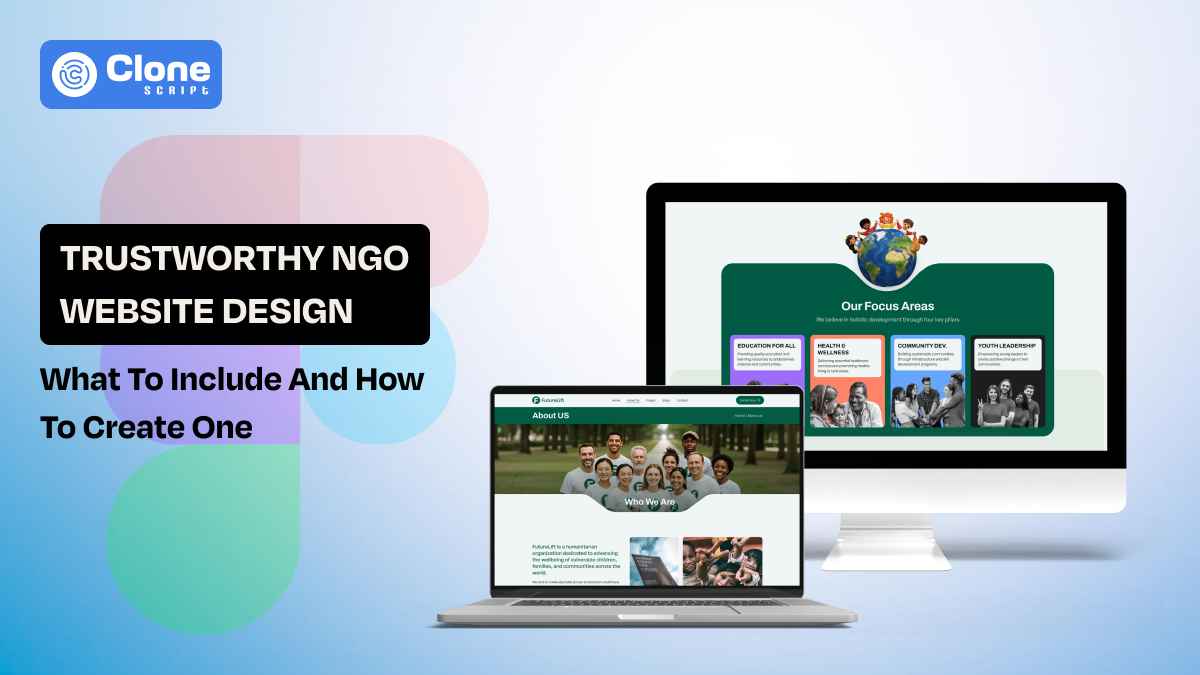
NGO Website Design: What Every Nonprofit Website Should Include and How to Create One
Trust is the element that every charity collecting website prefers, and after all, a user who is making the donation online likes to know the credibility. The UI design of the NGO website has become important. Doing only a marketing campaign is not enough. Every element from website color and navigation to sections and payment security is essential.
Creating a trustworthy nonprofit website requires more time and resources. But following the UI design principles, along with using the ready-made Figma UI launching the NGO website is managed properly.
What Defines an NGO Website as a Trustworthy Platform (The Role of UI Design)
When someone visits a nonprofit website, the first thought is: “Can I trust this organization?” If not, they instantly click the back button on the browser.
Donation-collecting websites are not commercial sites. These websites clarify their trustworthiness through transparency. And it comes from a professional user interface design, clear communication with meaningful content.
-
Communicate your mission clearly.
Visitors who want to make a donation to a charity platform do not like to read 5-10 paragraphs. They want to evaluate the website in seconds. Here, the role of the hero section of the website becomes important.
For example, an education-focused nonprofit might open with: “Providing education for underserved children” paired with a program image. This instantly tells visitors: “This is who we are and what we do.”
-
Visual structure builds credibility.
Cluttered websites appear unprofessional. That creates doubt in donors.
Try to include clean layouts, readable fonts, and well-spaced content to signal reliability. Many NGOs place core sections, mission, programs, and ways to help directly below the hero banner, each with a brief description and a “learn more” link. It guides visitors naturally without confusion.
-
Visual storytelling builds emotional connection.
Ask: Are your visuals authentic, or just generic stock photos? Because authenticity builds trust.
Words alone rarely convey impact. Authentic images, videos, and stories make work tangible.
For example, showing volunteers installing water pumps or classrooms filled with students brings the mission to life.
-
Transparency increases credibility.
On any of the NGO websites, transparency at every interaction matters. After all, donors who make the help like to know how their contributions are used. There’s such a way to let them know. Share the results of the charity campaigns, like 150 schools got the renovation completed, and training of 2,000 volunteers in the region has been completed.
-
UI design work is an aspect of trust.
The website user interface is as important as the functionality. When a first-time visitor lands on the website, he/she has to understand the mission of the nonprofit organization through the content of web pages and explore the website through structured UX optimized navigation.
Effective and Credible Nonprofit Website: Useful Elements to Know
A nonprofit website must do more than look nice. It must convert interest into action. Research shows that 94% of visitors form their first impression based on design quality. That means a poorly designed site can turn away supporters before they even explore your charity's mission.

-
Clear mission and credibility signals have to be present.
Visitors decide within seconds whether to trust your organization. Presenting a clear mission statement, visible impact metrics, and trust badges (like Charity Navigator or Guidestar) increases confidence. It also encourages deeper engagement.
-
Mobile‑first and fast experience required.
Do you know that over 50% of nonprofit website visitors use mobile devices, yet many sites still struggle with usability. Furthermore, around 25% of users will abandon a page that takes more than four seconds to load. Optimizing website speed performance and mobile responsiveness is essential for retention and conversion.
-
Prioritize donation paths that convert.
The fact is that only about 1% of all nonprofit website visitors donate. Do not disappoint.
If the donation page has been designed with the landing page psychology, it converts at expected rates with optimization. Prominent donation CTAs for payments, simplified giving forms, and contextual placement throughout your content can improve outcomes with increasing organic traffic.
-
Structured navigation and content useful.
None of the website visitors likes to scroll 5-10 times to get information about the “Mission” statement of the NGO. That’s why a navigation and content hierarchy is important.
Include core website sections like About, Programs, Impact, Ways to Give, and Contact that must be easy to locate. Keeping content updated with news, success stories, and progress reports shows activity and relevance, which increases trust and encourages return visits.
-
Visual storytelling and social proof must be available.
Compelling imagery and stories influence donor behavior. Why? Research shows that 85% of donors say strong visuals affect their decision to give. The best way to present it is to pair testimonials, real‑world photos, and impact statistics with your narrative to make your NGO's mission tangible.
-
Performance and accessibility have to be optimized.
Fast load times, accessibility compliance (for users with disabilities), and intuitive interfaces reduce bounce rates and improve engagement. These are important factors in terms of a website’s search engine optimization. Combined with clear CTAs and trust signals, these elements turn casual visitors into supporters, volunteers, and recurring donors.
5 NGO Website Design Inspiration Ideas to Consider
Looking for nonprofit website design inspiration? Here’s a list of practical approaches that high-performing NGOs adopt to engage visitors, communicate impact, and build trust.

-
Impact-First Homepage Layout
-
Project-Centered Website Structure
-
Campaign-Focused Landing Pages
-
Volunteer Experience Highlight
-
Timeline-Based Storytelling
The following design ideas showcase practical approaches that many high-performing nonprofit websites adopt to engage visitors and build trust.
-
Impact-First Homepage Layout
An impact-first homepage immediately showcases measurable results and outcomes. So, visitors can understand the organization’s work while building trust, credibility, and motivation to explore programs or contribute.
Suitable for NGOs:
-
Community development organizations serving local populations
-
Education-focused nonprofits tracking student or school impact
-
Healthcare initiatives reporting on treatments or outreach programs.
-
Disaster relief NGOs are showing tangible aid delivered.
-
Any nonprofit with measurable, visible results
Design Elements to Consider:
-
Hero sections with clear metrics and statistics
-
Powerful images or videos from projects or beneficiaries
-
High-impact statements summarizing mission and outcomes
-
Prominent call-to-action buttons for donations or involvement
-
Clean layout emphasizing results without clutter
-
Project-Centered Website Structure
Project-centered websites organize content around individual initiatives. In this kind of NGO, visitors can explore each program as a complete story with context, progress updates, visuals, and outcomes.
Suitable for NGOs:
-
Organizations managing multiple programs or services
-
Regional or community-focused initiatives
-
NGOs with varied projects such as food security, education, or health
-
Groups needing clear storytelling for each effort
-
Programs requiring detailed updates for donors and volunteers
Design Elements to Consider:
-
Dedicated pages for each project or initiative
-
Navigation linking all programs for easy access
-
Photos, videos, or infographics for each project
-
Short updates showing milestones and progress
-
Clear descriptions highlighting goals, achievements, and volunteer involvement
-
Campaign-Focused Landing Pages
Landing pages for campaigns focus visitor attention on specific initiatives, such as fundraising or disaster relief, highlighting objectives, timelines, and progress to drive immediate action. The landing page design becomes important here.
Suitable for NGOs:
-
Seasonal or limited-time fundraising campaigns
-
Disaster relief and emergency response efforts
-
Awareness or advocacy initiatives
-
Short-term volunteer recruitment drives
-
Any campaign requiring urgent attention and contributions
Design Elements to Consider:
-
Prominent call-to-action buttons for donations or sign-ups
-
Progress bars showing campaign status and goals
-
Visuals emphasizing campaign purpose
-
Concise, impactful statements of objectives
-
Minimal distractions to focus on visitor engagement
-
Volunteer Experience Highlight
Highlighting volunteer contributions humanizes the nonprofit, showing real participation, inspiring potential volunteers, and applying credibility through authentic stories and visible impact from community engagement.
Suitable for NGOs:
-
Community-based and grassroots organizations
-
Environmental or conservation projects
-
Educational nonprofits with volunteer-driven programs
-
NGOs rely heavily on volunteers for execution.
-
Programs seeking broader community involvement
Design Elements to Consider:
-
Volunteer testimonials and interviews
-
Photographs capturing volunteer activities
-
Short stories highlighting individual impact
-
Clear links to volunteer sign-ups or programs
-
Consistent branding for trust and professionalism
-
Timeline-Based Storytelling
A chronological timeline visually presents an NGO’s milestones, achievements, and evolution, helping visitors understand organizational growth, consistency, and long-term impact while reinforcing credibility.
Suitable for NGOs:
-
Established organizations with multiple years of operation
-
NGOs with sequential program expansions
-
Groups wanting to demonstrate historical impact.
-
Organizations emphasizing credibility through proven outcomes
-
Any nonprofit with a structured history of achievements
Design Elements to Consider:
-
Key dates and milestone descriptions
-
Photos or icons representing achievements
-
Chronological organization for clarity and narrative flow
-
Scrollable design balancing visuals and text
-
Highlight consistent progress and long-term results.
What Is the Workflow for the Nonprofit Website Design and Development
Building a nonprofit website isn’t just about visuals. It’s about creating a platform that communicates your mission, builds trust, and inspires action. Every step of the process matters to make visitors feel confident and engaged.

1. Understanding the Organization’s Objectives
-
Collaborate with stakeholders to clarify goals: Is the focus on fundraising, volunteer recruitment, or raising awareness?
-
Define the audience and what matters most to them.
-
Decide which sections of the site should capture attention first, because first impressions matter.
2. Content Planning and Information Structure
-
Plan essential pages: homepage, program details, impact reports, donation guides, and volunteer information.
-
Include photos, statistics, testimonials, and infographics to make content tangible.
-
Ask yourself: Does every page tell a story and answer “Why should I care?”
3. Visual Interface Design
-
Choose colors, fonts, and layouts that feel authentic to your mission.
-
Use imagery that resonates: classrooms for education NGOs, community projects for social programs.
-
Keep navigation intuitive. Visitors should never feel lost.
4. Technical Development and Testing
-
Build responsive, fast-loading, and secure websites with CMS, forms, and donation tools.
-
Test functionality, accessibility, and readability across devices through QA and testing.
-
Think like a visitor: Can someone complete a donation or find info in under a minute?
5. Launch and Ongoing Improvement
-
Launch is just the beginning. Regularly update stories, projects, and campaigns.
-
Continuous updates keep the site dynamic and encourage repeat visits.
Following this workflow ensures your nonprofit website is credible, engaging, and capable of turning visitors into supporters who care about your mission.
How the FutureLift Figma UI Template Simplifies NGO Website Design
Creating a nonprofit website with custom UI and UX design from scratch can be time-consuming and challenging, but the FutureLift NGO & Charity Figma UI Template provides a ready-made solution that speeds up design with professionalism, clarity, and engagement. It is specifically built for NGOs, charities, and social initiatives to showcase mission, impact, and opportunities for community participation.

What the FutureLift Template Includes:
-
Impact-focused homepage layout designed for storytelling and immediate credibility.
-
About, Programs, and Mission pages to clearly communicate the charity trust organization’s purpose and values.
-
The donation and Support sections are structured to encourage contributions with clear CTAs.
-
Volunteer and Campaign pages for engaging the community and promoting initiatives.
-
Reusable UI components such as buttons, navigation bars, and content cards for design consistency.
-
Organized typography and branded color styles for a cohesive visual identity.
-
Payment page design that increases the trust element of the charity website.
-
Developer-friendly design files with grids, spacing, and exportable assets to manage website development.
By using FutureLift, NGOs can save time, maintain a professional look across all pages, and focus on sharing their mission rather than building layouts. This template ensures that websites are not only visually appealing but also optimized for front-end development.
Conclusion
A well-designed nonprofit website is more than just an information portal. It is a trust-building platform that inspires action, engages supporters, and showcases real-world impact. With clear mission communication, structured programs, authentic storytelling, and user-friendly design, NGOs can turn visitors into donors, volunteers, and long-term advocates for their cause.