BTC - Bitcoin
 USDTERC20 - USDT ERC20
 ETH - Ethereum
 BNB - Binance
 BCH - Bitcoin Cash
 DOGE - Dogecoin
 TRX - TRON
 USDTTRC20 - USD TRC20
 LTC - LiteCoin

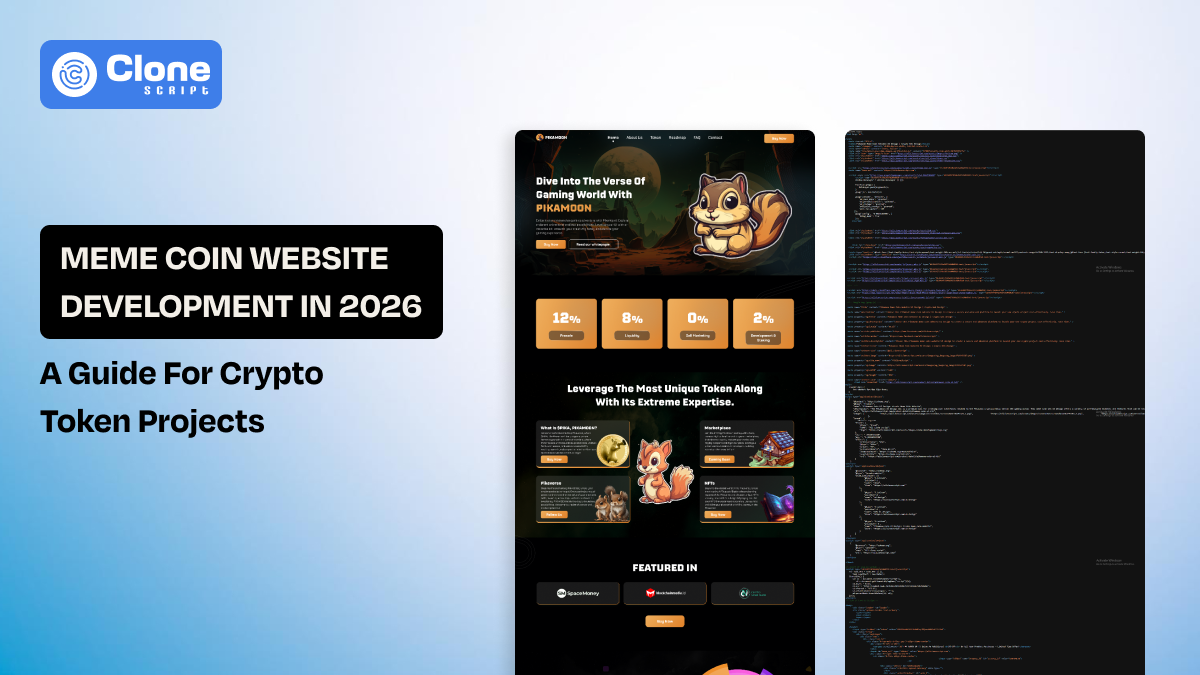
Meme Coin Website Development in 2026: A Complete Guide for Crypto Token Projects
Meme coins are not launched with a basic landing page and a Telegram link. In 2026, projects treat meme coin website development as full-scale web 3.0 product engineering. Investors expect real-time data, seamless wallet connectivity, transparent tokenomics, and visible security proof.
If your website looks rushed or technically shallow, users assume the token is the same. The intention for investment couldn’t be accomplished.
This guide explains how to build a meme coin website that is technically sound, conversion-focused, and aligned with modern blockchain standards. After all, in a decentralized world the trust and anonymity are everything that a website has to reflect.
Why Meme Coin Website Development Is Now Web 3.0 Product Engineering
A meme coin website now functions as a decentralized interaction interface, a token purchase gateway, a live analytics dashboard, and a trust validation hub.
Unlike traditional marketing sites, a meme coin platform must interact directly with smart contracts to perform Web 3.0 transactions. That means development teams must think about blockchain communication, wallet states, gas handling, transaction confirmations, and front-end security.
Crypto projects that ignore these factors experience low wallet connection rates, failed transactions, and reduced buyer confidence.
In short, the website is no longer marketing collateral. It is an operational infrastructure.
Proper Architecture Behind Professional Meme Coin Website.
Building a scalable meme coin website requires a structured technology stack. The architecture generally includes front-end, back-end (optional but strategic), and blockchain integration.
-
Front-end Layer
Modern meme coin websites are built using React-based frameworks such as Next.js. These frameworks allow server-side rendering, which improves SEO performance and page speed. Given that Web 3.0 scripts increase load times, SSR plays an important role in maintaining performance.
Web 3.0 integration typically uses libraries such as Ethers.js, Wagmi, or Viem. These libraries enable wallet connections, transaction signing, and real-time blockchain data retrieval.
A strong front-end setup ensures fast initial load, smooth wallet interaction, responsive mobile performance, and optimized search indexing, useful for crypto SEO.
-
Back-end Layer (When Required)
Not every meme coin website needs a back-end. However, advanced projects often include one for token presale widget dashboards, referral tracking, or whitelist management.
A back-end development may be built using Node.js, FastAPI, and Firebase or Supabase.
Back-end systems become important when you want structured user analytics, transaction logging, or admin management panels.
-
Blockchain Layer
The blockchain you choose directly impacts fees, liquidity, and investor accessibility.
Popular networks include Ethereum, Solana, and BNB Smart Chain.
Each network has trade-offs. Ethereum provides deep liquidity and credibility but has higher gas fees. Solana offers faster transactions and lower fees. BNB Smart Chain balances affordability with ecosystem strength.
Your website must detect and support the correct network automatically to avoid user friction.
Must-Have Features in Modern Meme Coin Project Website.
Modern meme coin websites share common functional UI components. These features are important if the goal is credibility and conversion.
-
Wallet Integration
Wallet connectivity is foundational. Users expect to connect their wallet instantly and see their token balance without refreshing the page.
Most projects integrate a wallet, for example, MetaMask and Phantom.
A professional implementation includes network auto-detection, error handling for wrong chains, and clean transaction confirmation messages. Poor wallet integration leads to transaction failures and lost buyers.
-
One-Click Buy and DEX Integration
The easier you make token purchasing, the higher your conversion rate.
Crypto projects commonly integrate decentralized exchanges such as Uniswap and PancakeSwap.
Instead of redirecting users, modern meme coin website development embeds swap widgets or pre-fills contract addresses. This reduces user confusion and eliminates contract copy-paste errors.
Frictionless buying significantly increases first-time holder acquisition.
-
Tokenomics Dashboard
Static pie charts are outdated on meme coin websites. Investors now expect dynamic dashboards.
A proper tokenomics section should display total supply, circulating supply, burn events, liquidity lock status, and holder distribution.
Live data can be pulled directly from smart contracts or blockchain indexers. Transparency reduces skepticism, especially in a market where scams are common.
-
Real-Time Market Data
Displaying real-time pricing and volume data increases legitimacy for the crypto project website.
Many of the sites integrate APIs from CoinGecko or CoinMarketCap to get the data.
Displaying 24-hour volume, market cap, and liquidity pool value helps users make informed decisions. When visitors must leave your site to verify data, trust weakens.
-
Smart Contract Verification Links
Transparency is critical. Always provide direct links to blockchain explorers such as Etherscan
and Solscan.
Make sure the contract is verified and clearly labeled. If users cannot confirm the contract's authenticity, they will not invest.
Security Requirements in Crypto Token Website Development
Security failures destroy meme coin credibility instantly. Your website can prevent this prevent to happen.
-
Smart Contract Audit Visibility
If your smart contract is audited, display the audit report prominently. Include the auditing firm’s name and provide a downloadable PDF. Even a basic audit significantly improves investor confidence.
-
Front-end Protection
Your front-end website for crypto must protect users from common Web 3.0 threats. Implement HTTPS, SSL certificates, bot mitigation via Cloudflare, and transaction validation checks.
Users are increasingly aware of phishing risks. A secure interface reassures them.
-
Trust Signals
Beyond technical security, perception matters. Like liquidity lock confirmation, clear token allocation details, transparent roadmap, and risk disclaimers.
Meme coins rely heavily on community trust. Your website must reflect an operational list.
UI/UX Trends in Meme Coin Website Development
UI/UX trends directly influence engagement and token conversion in meme coin website development. In 2026, branding is applied to color schemes and typography; it functions as a growth mechanism that drives shareability, community participation, and viral momentum.
-
Animated Mascots and Visual Identity
Successful crypto projects use animated mascots to strengthen brand recall and emotional connection. A recognizable character builds familiarity and encourages community-driven promotion across social platforms.
-
Interactive Roadmap Sections
Static timelines are being replaced with interactive roadmap components that allow users to explore milestones dynamically. This improves transparency while increasing session duration.
-
Gamified Scroll Experiences
Gamified scrolling and micro-interactions keep users engaged longer and create a more immersive browsing experience, which can positively influence conversion behavior.
-
Dark-Mode-First Design
Dark-mode-first interfaces align with crypto-native preferences and reduce visual strain, especially for users monitoring charts or dashboards for extended periods.
However, performance must remain a priority. Excessive animations can slow wallet initialization scripts, delay transactions, increase bounce rates, and ultimately weaken usability and conversion efficiency. Design should enhance functionality, not compromise it.
Performance Optimization Strategies for a New Web 3.0 Project Website.
Performance optimization is a critical component of meme coin website development because Web 3.0 libraries significantly increase JavaScript bundle sizes and can slow initial rendering if not managed correctly. Slow-loading interfaces reduce wallet connection success rates, interrupt transaction flows, and weaken user trust during high-intent moments such as token purchases.
-
Optimized Script Loading
Developers should lazy-load wallet libraries so they initialize only when users trigger wallet actions, and split JavaScript bundles to minimize render-blocking resources. This ensures the core interface loads first while Web 3.0 functionality activates when required.
-
Asset and Infrastructure Optimization
CDN caching for static assets improves global delivery speed, while image compression and next-generation formats reduce overall payload size. Additionally, minifying contract ABIs eliminates unnecessary script weight that can delay execution.
The performance benchmark should target load times under 2.5 seconds, since speed directly impacts SEO rankings, bounce rates, and successful on-chain transaction completion.
Meme Coin Website Development Cost Breakdown for 2026
Understanding the cost structure of meme coin website development in 2026 requires evaluating technical depth, blockchain integration complexity, and security implementation standards. Budgets vary widely depending on whether the project is a simple promotional site or a fully functional web 3.0 platform.
-
Basic Informational Website
A standard landing page featuring branding, token overview, roadmap, and social integrations typically ranges between $2,000 and $5,000. This level focuses primarily on meme coin website design and static content without advanced blockchain functionality.
-
Wallet and DEX Integration
When wallet connectivity and decentralized exchange integration are added, costs usually increase to $5,000–$12,000. This includes Web 3.0 scripting, smart contract interaction, transaction handling, and testing across different wallet environments.
-
Presale and Advanced Infrastructure
Projects incorporating presale dashboards, analytics panels, whitelist systems, and back-end infrastructure frequently exceed $15,000. Fully developed web 3.0 ecosystems with staking modules, automation systems, custom dashboards, and enhanced security layers can surpass $40,000.
Choosing the lowest-cost option often results in compromised scalability, performance optimization, and insufficient security architecture, which can ultimately affect investor confidence.
Build vs Hire: Choosing the Right Approach for Meme Coin Website Development
Selecting between in-house development and hiring an agency is a strategic decision that directly impacts launch speed, security posture, and long-term scalability. The right choice depends on your internal technical capabilities, available resources, and how quickly you need to enter the market.
-
Building In-House
Founders with experienced Web 3.0 engineers can manage meme coin website development internally, particularly when token mechanics are simple and the infrastructure requirements are limited.
Internal teams offer greater control over code quality, feature prioritization, and long-term product evolution. However, this approach requires strong blockchain expertise, security awareness, and rigorous testing processes.
-
Hiring a Specialized Web Development Agency
Non-technical founders and early-stage teams often benefit from partnering with website agencies that specialize in blockchain development. An experienced agency provides security-first architecture, production-tested wallet integrations, performance optimization frameworks, and compliance awareness aligned with crypto regulations.
This reduces technical risk, avoids costly implementation errors, and significantly accelerates time-to-market while maintaining professional standards.
Legal and Compliance Considerations in Meme Coin Website Development
Regulations around digital assets continue to intensify across major markets, including the U.S. Securities and Exchange Commission, European Securities and Markets Authority, and Financial Conduct Authority. As a result, legal structuring is foundational in meme coin website development.
-
Include Clear Risk Disclaimers
Your website must clearly communicate high volatility risks, lack of guaranteed returns, market uncertainty, liquidity risks, and regulatory uncertainty across jurisdictions.
Avoid vague language. Disclaimers should be visible (not hidden in the footer) and written in plain, accessible language.
-
Avoid Profit Guarantees and Financial Claims
Overpromising returns or implying investment certainty can trigger advertising restrictions, exchange listing rejection, hosting suspension, and regulatory investigation.
Any language suggesting “guaranteed growth,” “risk-free investment,” or “certain returns” significantly increases legal exposure. Position the token as a utility or community asset, not an investment product.
-
Ensure Token Transparency
Transparency builds credibility and reduces regulatory risk. Your website should clearly outline the token distribution breakdown, vesting schedules, team allocations, liquidity structure, and smart contract audit status.
Incomplete tokenomics often raises red flags with both regulators and exchanges.
-
Structure Compliance Before Launch
Consulting legal experts during the planning phase allows you to align messaging with regional regulations, review token classification risk, structure disclosures correctly, and prepare compliant crypto project marketing language.
Correcting compliance issues after public scrutiny is significantly more expensive and reputation-damaging than building it correctly from day one.
Conclusion
Meme coin website development in 2026 demands a disciplined balance between the aspects. This includes technical precision, seamless blockchain integration, visible security assurance, performance optimization, and structured conversion engineering.
Viral attention alone is insufficient. A meme coin may gain rapid attention on social platforms, but weak infrastructure, broken wallet flows, or missing trust signals can lose credibility and stall momentum.
Successful projects prioritize back-end logic, smart contract verification, and performance stability before investing heavily in visual design. Infrastructure must lead the process, because design should enhance a stable architecture, not compensate. A well-built website strengthens growth potential, and a poorly built one affects it.