BTC - Bitcoin
 USDTERC20 - USDT ERC20
 ETH - Ethereum
 BNB - Binance
 BCH - Bitcoin Cash
 DOGE - Dogecoin
 TRX - TRON
 USDTTRC20 - USD TRC20
 LTC - LiteCoin

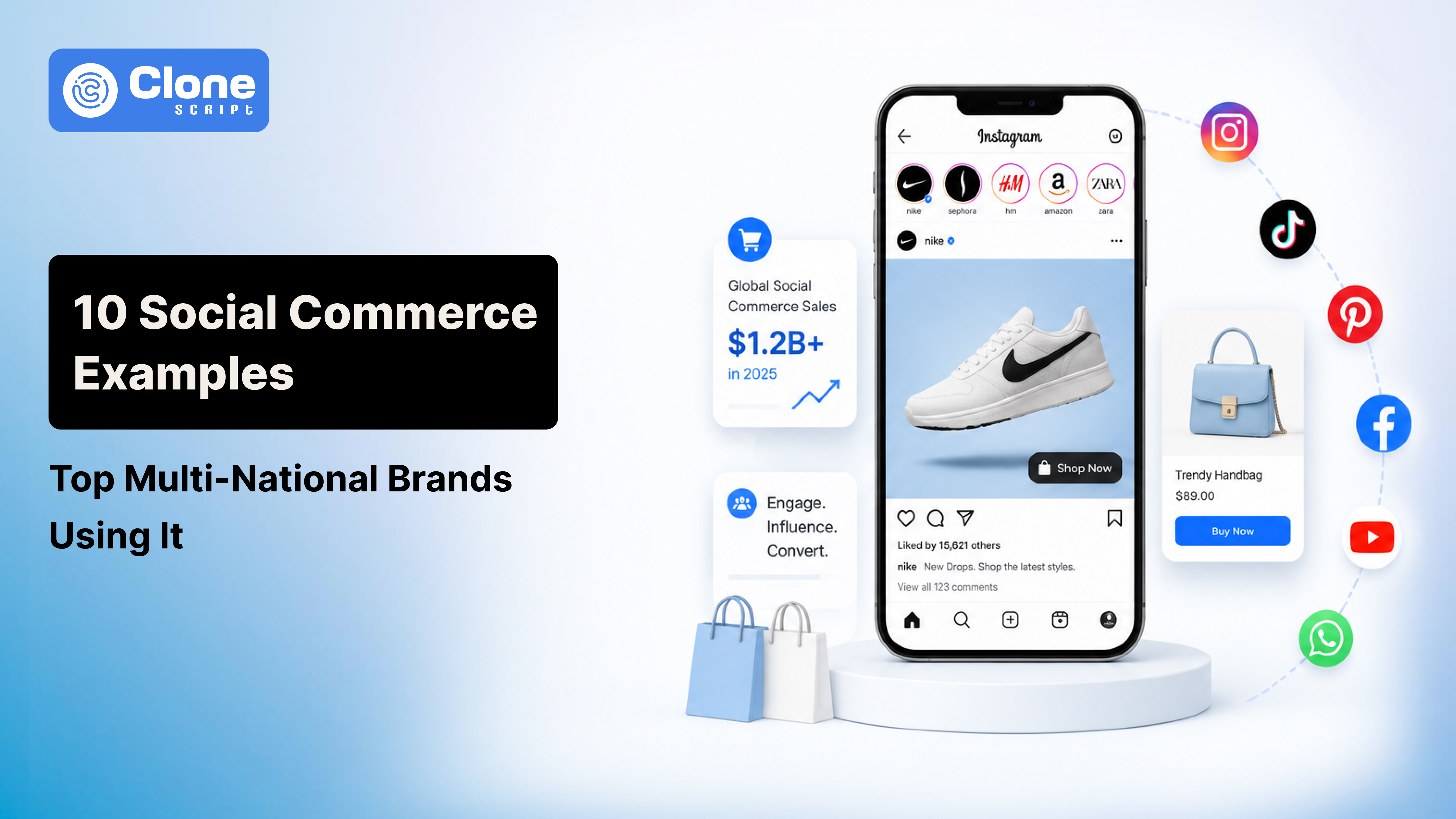
10 Social Commerce Examples That Exist in Top Multi-national Brands
Social commerce is changing how people buy products online. Those days are gone when customers had to visit a separate website and app to discover products and read reviews. Now, they can buy directly inside platforms like Instagram, TikTok, Pinterest, Facebook, YouTube, and WhatsApp.
This shift is happening fast.
-
In 2025, global social commerce sales will go beyond $1.2 billion.
The reason is simple: people spend a significant portion of their time on social platforms, and brands are adapting their selling strategies around consumer behavior.
But social commerce is not just about posting product photos with purchase links.
The most successful brands focus on creating experiences. They use storytelling, influencers, communities, livestreams, personalized recommendations, and user-generated content to make shopping feel natural instead of promotional.
For entrepreneurs, this creates enormous opportunities.
Small businesses can now compete with larger brands by building engaged communities and creating authentic content rather than relying only on large advertising budgets.
In this article, we will explore 10 major brands using social commerce effectively and examine the strategies entrepreneurs can apply to their own businesses.
What Is Social Commerce?
Before looking at the examples, it is important to understand what social commerce actually means.
Social commerce refers to the process of selling products directly through social media platforms. Unlike a traditional eCommerce website, where customers are redirected to external websites, social commerce keeps the entire customer journey inside the social platform.
That journey often includes:
-
Product discovery
-
Customer engagement
-
Reviews and recommendations
-
Live demonstrations
-
In-app checkout
Platforms like Instagram Shops, TikTok Shop, Pinterest Product Pins, Facebook Marketplace, and YouTube Shopping have made this possible.
The biggest advantage is convenience. Customers can move from interest to purchase within minutes without leaving the app they already use daily.
Why Social Commerce Matters for Entrepreneurs?
Traditional online advertising has become expensive and highly competitive. Social commerce offers an alternative approach that focuses more on engagement and community-building.
Some major benefits include:
-
There are lower customer acquisition costs
-
Higher engagement rates keep growth going
-
Better trust through social proof
-
Faster product discovery can happen
-
Improved mobile shopping experience
-
Higher conversion from visual content
Consumers increasingly trust recommendations from creators, communities, and real users more than traditional advertisements.
That is why brands investing in authentic social experiences often see stronger customer loyalty and repeat purchases.
10 Examples of Social Commerce Used in Famous Brands
These brands are generating millions in revenue and customers using the social commerce benefits.
-
Nike - Community-Driven Social Commerce
Nike is one of the strongest examples of community-led social commerce.
Instead of focusing only on products, Nike builds content around fitness culture, athlete motivation, sports communities, and personal achievement. That suits their business products.
Their Instagram strategy combines:
-
Product-tagged posts
-
Athlete collaborations
-
User-generated content
-
Community storytelling
-
Fitness-focused short videos
Nike understands that customers are not simply buying shoes. They are buying identity, motivation, and belonging.
The company regularly encourages customers to share workout routines, running achievements, and sports content while tagging Nike products. This creates organic visibility and strengthens emotional connection with the brand.
What Entrepreneurs Can Learn
-
Build products into lifestyle content
-
Encourage customers to create content
-
Focus on community instead of direct selling
-
Use emotional storytelling
People connect with stories more than advertisements.
-
Sephora - Personalized Shopping Experiences
Sephora transformed beauty shopping through personalization and interactive technology.
One of the brand’s biggest innovations is augmented reality product testing. Users can virtually try makeup products using Instagram and Snapchat filters before making a purchase.
This solves a major customer problem: uncertainty and exchange after product purchase.
Customers often hesitate to buy beauty products online because they cannot test them physically. Sephora removes that hesitation with interactive shopping experiences.
The brand also produces educational content, including:
-
Makeup tutorials
-
Skincare guides
-
Product reviews
-
Beauty tips
-
Influencer demonstrations
Instead of aggressively selling products, Sephora educates customers first. This is their winning strategy.
What Entrepreneurs Can Learn
-
Educational content builds trust
-
Interactive tools improve conversion rates
-
Personalized experiences reduce buying hesitation
-
Product demonstrations increase engagement
Even startups can use short-form videos and tutorials to create stronger customer confidence.
-
Adidas - Live Shopping and Influencer Commerce
Adidas uses live commerce to generate excitement around product launches.
The company frequently collaborates with influencers during TikTok LIVE and Instagram Live sessions where creators showcase products, answer audience questions, and encourage immediate purchases.
This creates urgency and real-time interaction that customers want to experience.
Limited-edition sneaker drops and exclusive product launches perform particularly well during livestream events because audiences feel part of a shared experience.
Live commerce is especially effective because it combines:
-
Entertainment
-
Product education
-
Social proof
-
Real-time engagement
-
Instant purchasing
What Entrepreneurs Can Learn
-
Live selling creates urgency, as we know
-
Influencers increase audience trust because they know who speaks
-
Interactive shopping improves engagement by being a part of the community
-
Exclusive launches encourage faster purchases to make revenue
Micro-influencers often deliver higher engagement rates than celebrity partnerships for smaller brands.
-
IKEA - Visual Discovery Through Inspiration
IKEA uses visual storytelling exceptionally well.
Instead of displaying standalone furniture products, IKEA creates complete room setups that inspire customers. After all, customers want to see how the furniture will look in their space before physical products are placed.
Their Pinterest boards and Instagram content show:
-
Bedroom designs
-
Kitchen setups
-
Workspace ideas
-
Small apartment solutions
-
Storage inspiration
Every visual includes direct shopping paths that allow users to purchase featured products instantly.
IKEA succeeds because it sells ideas, not just furniture.
What Entrepreneurs Can Learn
-
Lifestyle visuals outperform standard product photos; it's a fact.
-
Inspiration drives emotional buying decisions and is important for conversion.
-
Pinterest remains powerful for product discovery compared to other platforms.
-
Customers respond strongly to visual storytelling in physical goods.
Show customers how products fit into real-life situations.
-
Samsung - Multi-Platform Commerce Funnel
Samsung uses multiple social platforms together to guide customers through the buying process. They understand the behavior and manage the marketing strategy.
For example:
-
Instagram creates awareness
-
YouTube provides detailed demonstrations
-
Facebook Messenger supports customer communication
-
Product pages complete the purchase
Samsung understands that customers rarely buy expensive products after a single interaction.
Consumers often research products across multiple platforms before making a decision.
What Entrepreneurs Can Learn
-
Different platforms serve different purposes
-
Customer journeys are rarely linear
-
Consistent branding improves trust
-
Connected experiences reduce purchase friction
Businesses should build connected ecosystems rather than isolated campaigns.
-
Coca-Cola - Event-Based Social Commerce
Coca-Cola connects social commerce with real-world events and entertainment experiences.
The company frequently uses QR codes on products, event sponsorships, sports campaigns, and limited-edition promotions.
Consumers scanning these codes gain access to:
-
Exclusive products
-
Interactive experiences
-
Social filters
-
Promotions
-
Limited campaigns
This approach blends physical and digital experiences.
What Entrepreneurs Can Learn
-
Events naturally increase engagement
-
QR codes simplify customer journeys
-
Limited campaigns create urgency
-
Cultural relevance improves visibility
Brands can align campaigns with festivals, concerts, sporting events, or seasonal trends.
-
LEGO - Community-Powered Commerce
LEGO has built a powerful social commerce ecosystem through community participation. After all, being a pioneer in the toy industry, along with movies, games, retail stores, and Legoland theme parks, they still maintain their reputation.
Fans regularly share:
-
Custom LEGO creations
-
Tutorials
-
Reviews
-
Build videos
-
Creative challenges
LEGO increases user-generated content across its official social channels, making customers feel recognized and involved.
The company also uses YouTube tutorials with direct product links, turning educational content into commerce opportunities.
What Entrepreneurs Can Learn
-
Communities create long-term loyalty
-
User-generated content increases credibility
-
Tutorials support product discovery
-
Audience participation boosts organic reach
Customers become stronger advocates when they feel part of the brand.
-
Toyota - Social Commerce for High-Value Products
Toyota uses social commerce differently from consumer brands. The operation is in the automobile sector, and it has to be.
Instead of focusing on direct purchases, Toyota uses social platforms for lead generation.
Their campaigns encourage users to:
-
Book test drives
-
Request pricing
-
Explore financing
-
Contact dealerships
-
Compare vehicle models
For expensive products, trust-building matters more than instant transactions.
What Entrepreneurs Can Learn
-
High-ticket products require longer funnels
-
Lead nurturing is essential
-
Educational content reduces hesitation
-
Consultation-based selling improves conversion
Not every business needs immediate checkout-based commerce.
-
L’Oréal - Data-Driven Paid Social Commerce
L'Oréal focuses heavily on performance marketing and retargeting. The cosmetic business segment is very vulnerable to conversion, so the attention has to be spot on.
They are using Dynamic Product Ads and tracking tools, and the company reconnects with users who previously interacted with products.
Instead of generic advertisements, customers see personalized product recommendations based on browsing behavior and engagement history on Instagram, Facebook, YouTube, etc.
What Entrepreneurs Can Learn
-
Retargeting improves ad efficiency
-
Personalized social media ads increase conversions
-
Data-driven decisions reduce wasted spending
-
Analytics help optimize campaigns
Tracking customer behavior is essential for scaling social commerce profitably.
-
Starbucks - Loyalty-Based Social Commerce
Starbucks combines loyalty programs with social engagement to improve customer retention. To prove their reputation and maintain it can do so through such an initiative.
Their campaigns encourage customers to:
-
Use the Starbucks app
-
Redeem rewards
-
Collect loyalty points
-
Participate in seasonal promotions
-
Unlock exclusive offers
This strategy keeps customers engaged beyond a single purchase.
What Entrepreneurs Can Learn
-
Loyalty programs improve repeat purchases
-
Rewards increase customer retention
-
Exclusive offers strengthen engagement
-
Returning customers increase profitability
Retention is often more valuable than constant customer acquisition.
Emerging Social Commerce Trends in 2026
Social commerce continues to evolve rapidly. Several major trends are expected to shape the industry in 2026.
-
Augmented Reality Shopping
AR shopping experiences are becoming mainstream. Customers increasingly expect to test products virtually before purchasing.
This trend is growing across fashion, beauty, furniture, eyewear, and automotive accessories.
-
Livestream Commerce Expansion
Livestream shopping is moving beyond beauty and fashion into electronics, home decor, technology, automotive, and gaming. So, if you’re looking to start a business in the segment, you can integrate it.
-
AI-Powered Personalization
Brands are using AI in customer experience for personalized recommendations, smart shopping feeds, predictive product suggestions, and automated customer support to enhance the brand.
-
Creator-Led Commerce
Creators are becoming commerce partners instead of traditional influencers. Many now operate their own storefronts and branded collaborations.
Important Social Commerce Metrics Entrepreneurs Should Track
Successful social commerce strategies rely heavily on analytics.
Businesses should monitor:
-
Conversion rate
-
Engagement-to-sale ratio
-
Customer Lifetime Value (CLV)
-
Return on Ad Spend (ROAS)
-
Cost-per-click (CPC)
-
Repeat purchase rate
-
Average order value
Tools like Google Analytics and Meta Ads Manager help businesses measure performance accurately.
Without data tracking, it becomes difficult to scale campaigns efficiently.
Social Commerce Do’s and Don’ts for Startups
Follow these social commerce startups do’s and don’t for avoiding a miscommunication:
Do
-
Create authentic content
-
Encourage customer participation
-
Use customer reviews and testimonials
-
Respond quickly to messages and comments
-
Invest in visual storytelling
Don’t
-
Depend only on aggressive advertising
-
Ignore customer service on social platforms
-
Overcomplicate the purchase process
-
Publish low-quality product visuals
Consumers expect brands to feel human and interactive on social platforms.
Conclusion
Social commerce is a future trend, and it is already transforming how businesses sell products online.
The brands succeeding today understand that modern consumers want more than advertisements. They want entertainment, personalization, community, and convenience.