BTC - Bitcoin
 USDTERC20 - USDT ERC20
 ETH - Ethereum
 BNB - Binance
 BCH - Bitcoin Cash
 DOGE - Dogecoin
 TRX - TRON
 USDTTRC20 - USD TRC20
 LTC - LiteCoin

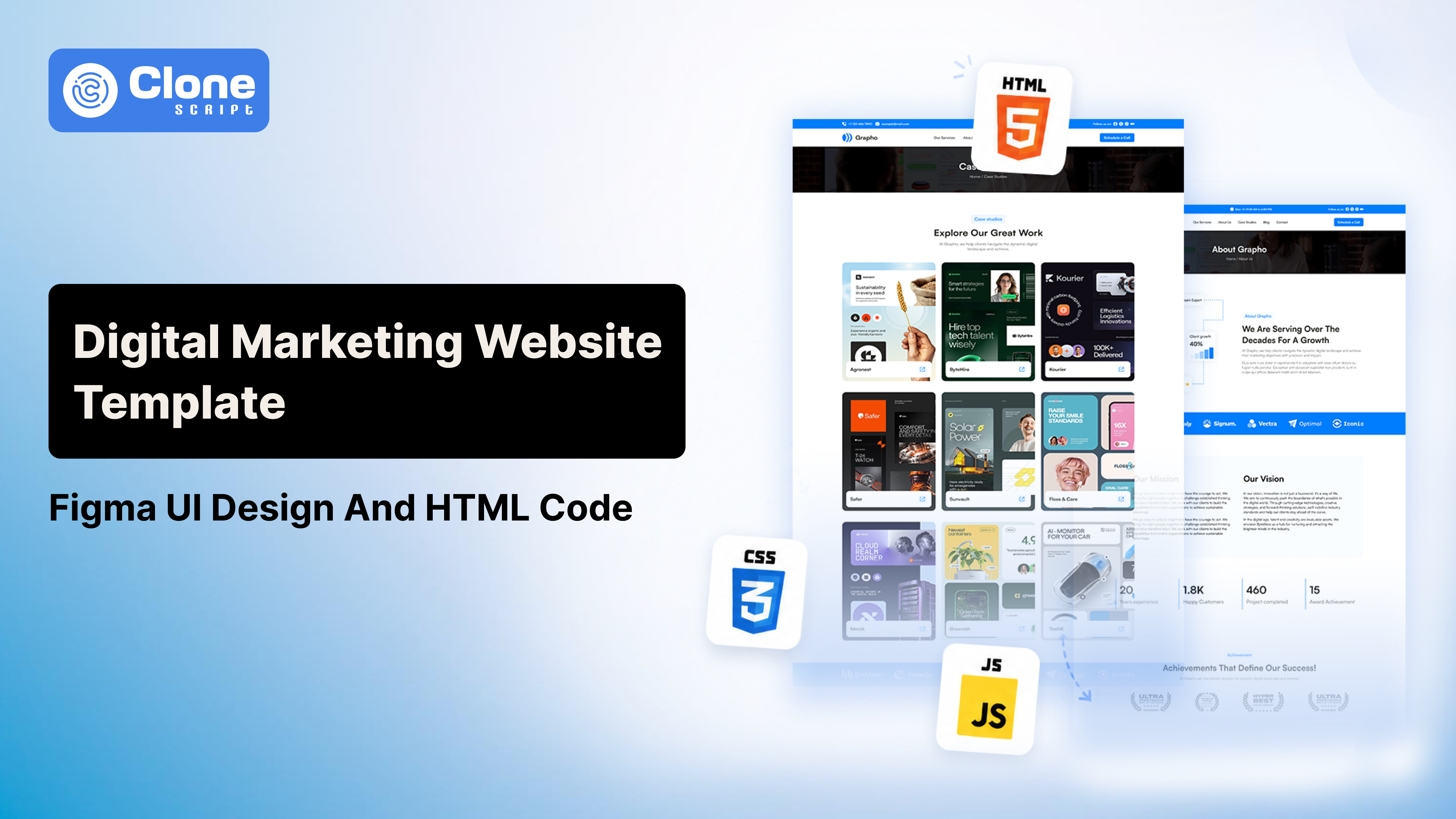
Digital Marketing Website Template: Figma UI Design and Responsive HTML Code
Building a digital marketing agency website from scratch sounds exciting, until the project enters its third month, costs start increasing, and the website still isn't generating leads.
This is why many agencies, freelancers, and marketing consultants now choose a digital marketing website template with Figma design and HTML code instead of starting with a blank canvas.
The goal isn't simply to save development time.
The goal is to launch a website that looks professional, communicates expertise, ranks in search engines, and converts visitors into clients.
Considering that 94% of first impressions are design-related and 75% of users judge a company's credibility based on website design, your website has a direct impact on whether prospects trust your business.
The question is no longer whether your agency needs a modern website.
The question is whether your current website is helping or hurting your growth.
Why Most Digital Marketing Agency Websites Fail
Many agencies assume they need more traffic.
In reality, they often need a better website experience.
Imagine a business owner searching for SEO services.
They click your website and immediately see:
-
A generic headline
-
Stock images
-
A list of services
-
No proof of results
Within seconds, they're gone.
The problem isn't always traffic.
The problem is communication.
Many agency websites fail because they don't answer the questions prospects care about most:
-
Can you solve my problem?
-
Have you done this before?
-
Why should I trust you?
-
How do I get started?
A high-performing digital marketing website template is designed to answer those questions before visitors leave.
Why Businesses Are Choosing Website Templates Over Custom Development
Ten years ago, custom website development was the default approach.
Today, the conversation is different.
Businesses want speed.
Marketing agencies need to launch campaigns quickly, test offers faster, and update content regularly.
Building everything from scratch can create unnecessary delays.
A modern digital marketing website template with front-end-ready code in HTML, CSS, and JavaScript offers several advantages:
-
Faster Launch Times
Instead of spending weeks designing layouts, navigation systems, and landing pages, businesses start with a proven framework.
They already have a UI design in Figma and HTML-ready pages to start working on with client-side interface development. It means there is no more wasted time to be spent on.
-
Lower Development Costs
Custom design and development projects can become expensive quickly.
Premium website templates reduce the amount of design and front-end development work required.
That means if you’re allocating a $5,000 budget for a digital marketing agency website development, it justifies the custom work. For a template, you already have the design and foundational code. Those costs can be cut by 50-60%.
-
Proven User Experience
Most professional website templates are built using design patterns users already understand. This reduces friction and improves navigation. After all, to improve the conversion rate of the agency website, the user experience has to be top quality.
Otherwise, the leads will go to competitors, and even after adding advanced functionality can;t generate the results as expected.
-
Easier Future Updates
When templates include organized Figma files and clean HTML code, future modifications become significantly easier. For example, a team of designers and developers is working on a project, and the client asks to add another functionality; then it can be done without any issues.
For growing agencies, flexibility matters just as much as appearance.
What Is Included in a Digital Marketing Website Template With Figma Design and HTML Code?
Many buyers focus only on visual design. The 5 pages with videos, icons, logo, and fluent text are enough, they think.
That's a mistake.
The real value comes from the complete design system behind the website.
A professional digital marketing template typically includes much more than a homepage design.
-
Homepage Layout
The homepage serves as the primary conversion page.
It should include:
-
Value proposition
-
Service overview
-
Trust signals
-
Testimonials
-
Call-to-action sections
If these things are not available on the homepage, the chances are high to notice there are no such leads in the dashboard you’re getting.
-
Service Pages
Marketing agencies rarely sell one service.
Templates should support pages for:
-
SEO
-
PPC
-
Content Marketing
-
Social Media Marketing
-
Email Marketing
-
Web Design
Dedicated pages improve both SEO and conversion performance.
Because when a client is genuinely looking for professional marketing services, they want to know whether it is reliable or not. Designing a landing page for services will give them an idea.
-
Case Study Pages
Case studies are often the most persuasive content on agency websites.
They demonstrate three things:
-
Challenges
-
Strategies
-
Results
Without case studies, agencies rely heavily on claims instead of proof. You can say that the case study page is your gold key to unlock the massive opportunities that have the most successful percentage for CRO in a digital marketing agency.
-
Blog Architecture
A blog is essential for long-term organic growth.
Many successful agencies generate leads through educational content before prospects ever contact them.
The HTML and CSS template has to include a blog card with a professional approach, helping a business website owner to manage their content easily. Having an image placeholder, link adding/editing, bold text, and bullet points features has to be present.
-
Contact and Lead Generation Forms
Every marketing website needs a clear path toward conversion.
The easier it is to contact your business, the higher the likelihood of generating inquiries.
The contact form has to be designed to encourage clients to click the submit request button instead of just navigating it.
The best practice is to not leave the space blank. Add the accordion and drop-down menu like industry, budget, timeline, and additional request. That’s enough to get back to them with a strategy.
Why Figma Design Matters Before Development Begins
Thinking buying a website template for an online marketing service provider will bring the finished website. But it’s not.
Yes, it helps in reducing the time of development with a Figma UI design and HTML code.
However, the Figma file is often one of the most valuable assets.
Figma acts as the blueprint.
Before front-end developers write a single line of code, designers create a complete visual system.
This includes:
-
Typography
-
Colors
-
Buttons
-
Navigation
-
Cards
-
Forms
-
Landing page sections
The result is consistency.
Instead of creating new elements every time a page is added, teams reuse approved user interface components.
Benefits of Figma for Marketing Agencies
Take a look at how Figma has been helping with marketing website development.
-
Faster Collaboration: Designers, marketers, developers, and stakeholders can review the same design file. They can suggest the change and accordingly has to be set.
-
Easier Brand Customization: Changing colors, fonts, or layouts becomes much simpler rather than arranging manually.
-
Improved Design Consistency: Every page follows the same visual standards that sign a branded website presence.
-
Faster Campaign Launches: Need a new landing page? The design system already exists.
For agencies managing multiple marketing campaigns, this efficiency becomes a significant advantage.
Why HTML Code Still Matters in 2026
Many website buyers focus entirely on appearance.
Search engines don't.
Google evaluates website structure, performance, accessibility, and usability.
This is where HTML code becomes important.
Clean HTML provides the foundation for:
-
Better SEO
-
Faster page speed
-
Easier maintenance
-
Improved accessibility
Poorly structured code often creates long-term problems that aren't visible during a website demo.
-
SEO Benefits of Clean HTML Code
Search engines use page structure to understand content.
A properly developed website template should support:
-
Semantic HTML
-
Logical heading hierarchy
-
Structured content sections
-
Crawlable navigation
These elements help search engines understand what each page is about.
-
Performance Benefits
Visitors expect websites to load quickly.
Research consistently shows that poor website experiences reduce engagement and trust.
Clean HTML helps developers optimize performance without rebuilding the entire website.
What Features Should You Look for in a Marketing Agency Website Template?
Not every template is built for marketing businesses.
Some are designed for restaurants.
Others target SaaS companies or eCommerce stores.
A digital marketing website template should include agency-specific functionality.
Look for:
-
Conversion-Focused Homepage: Visitors should immediately understand what you do, who you help, and why you're different.
-
Service Landing Pages: Each service should have its own dedicated page.
-
Case Study Integration: Real results build trust faster than marketing claims.
-
Blog Support: Content marketing remains one of the most effective lead-generation strategies.
-
Mobile Responsiveness: Modern users browse on Phones, Tablets, Laptops, Desktops. The experience must remain consistent.
-
Clear Call-to-Action Sections: Every page should encourage visitors to take the next step.
These features make the job easier for a development team to write the code as per the required functionality.
Common Problems With Generic Website Templates
Generic and free templates often look attractive during demonstrations.
The problems appear later.
-
They Aren't Built for Agencies
A restaurant website and a marketing website have different goals.
Agency websites need:
-
Service pages
-
Case studies
-
Portfolio sections
-
Lead forms
Many generic templates don't prioritize these elements.
-
Weak SEO Structure
Some templates focus heavily on visual effects while ignoring content architecture.
This creates SEO challenges later.
-
Limited Customization
Businesses often discover that major modifications require extensive development work. Website template customization is important to support.
-
Missing Trust-Building Sections
Testimonials and case studies are sometimes treated as optional.
For agencies, they're essential.
Why Grapho Digital Marketing Website Template Is Worth Considering
If you're specifically looking for a digital marketing website template with Figma design and HTML code, one option worth evaluating is the Grapho template from All Clone Script.
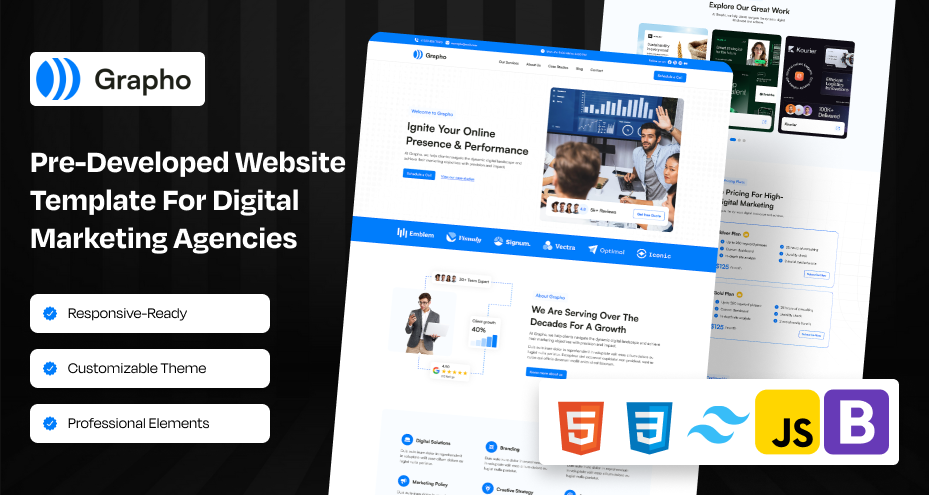
Unlike generic business templates, Grapho is built specifically for:
-
Digital marketing agencies
-
SEO companies
-
Advertising firms
-
Marketing consultants
-
Growth-focused service businesses
The template includes features designed for showcasing services, portfolios, and client engagement while maintaining responsive performance across devices.
What makes this approach valuable is that agencies don't need to redesign common website sections from scratch.
Instead, they can focus on:
-
Refining their offer
-
Improving messaging
-
Publishing content
-
Acquiring clients
The website framework is already in place.
Who Should Use a Digital Marketing Website Template?
These templates are particularly useful for:
-
Startup Agencies: Launch quickly without a large development budget.
-
Freelance Developers: Build an authority portfolio for web development with a professional online presence.
-
SEO Consultants: Showcase services, case studies, and client results.
-
Established Agencies: Reduce redesign costs while modernizing the user experience.
If your current website looks outdated or fails to generate inquiries, a specialized template can provide a much faster path to improvement.
Final Thoughts
Choosing a digital marketing website template with Figma design and HTML code isn't simply about finding a better-looking website for business.
It's about creating a stronger business asset.
A well-designed template helps agencies, and most importantly, it allows marketing teams to focus on what actually drives growth: serving clients and generating results.
When first impressions are heavily influenced by design and credibility is often judged within seconds, investing in the right website framework becomes a strategic business decision rather than a design preference.