BTC - Bitcoin
 USDTERC20 - USDT ERC20
 ETH - Ethereum
 BNB - Binance
 BCH - Bitcoin Cash
 DOGE - Dogecoin
 TRX - TRON
 USDTTRC20 - USD TRC20
 LTC - LiteCoin

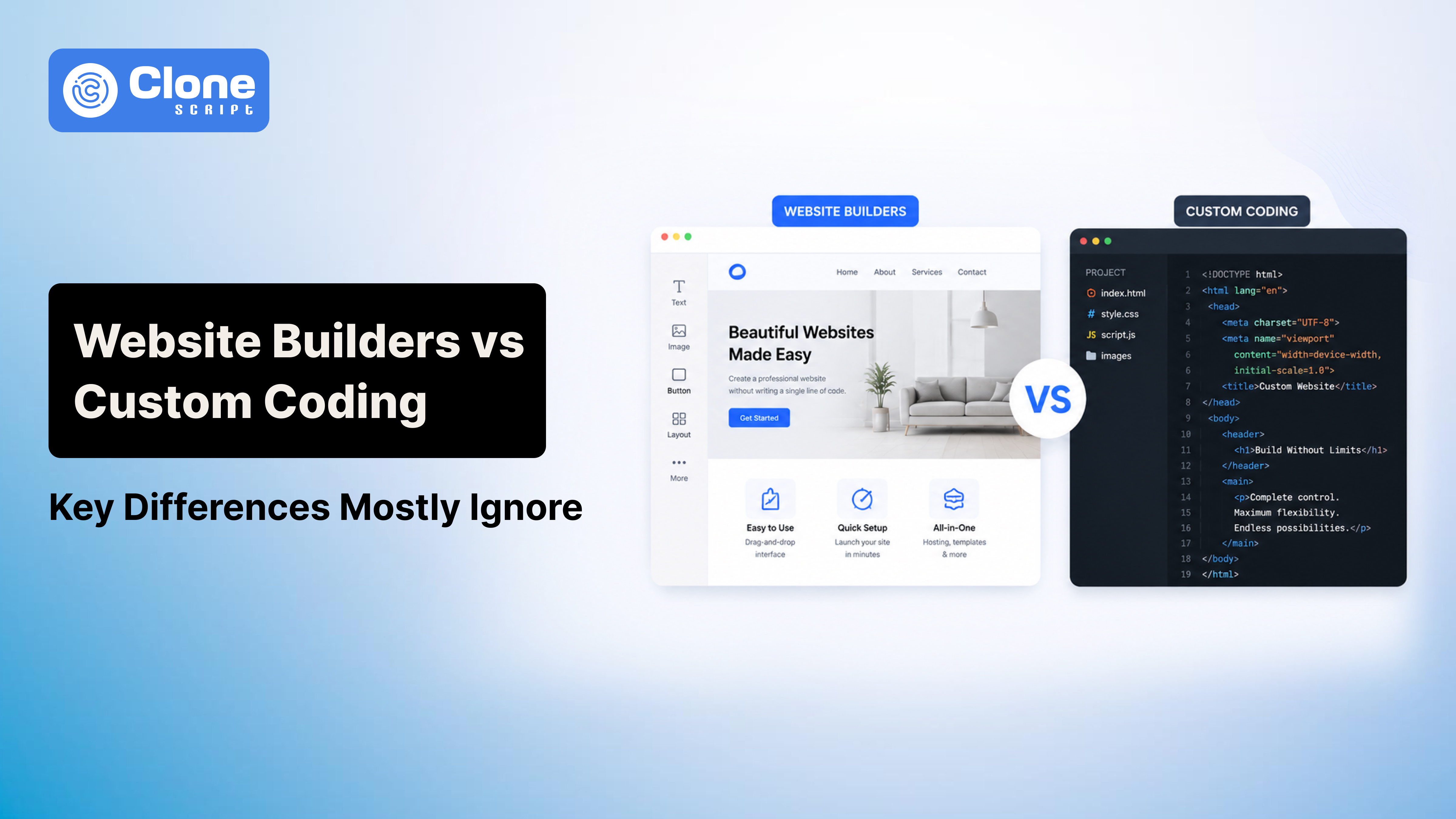
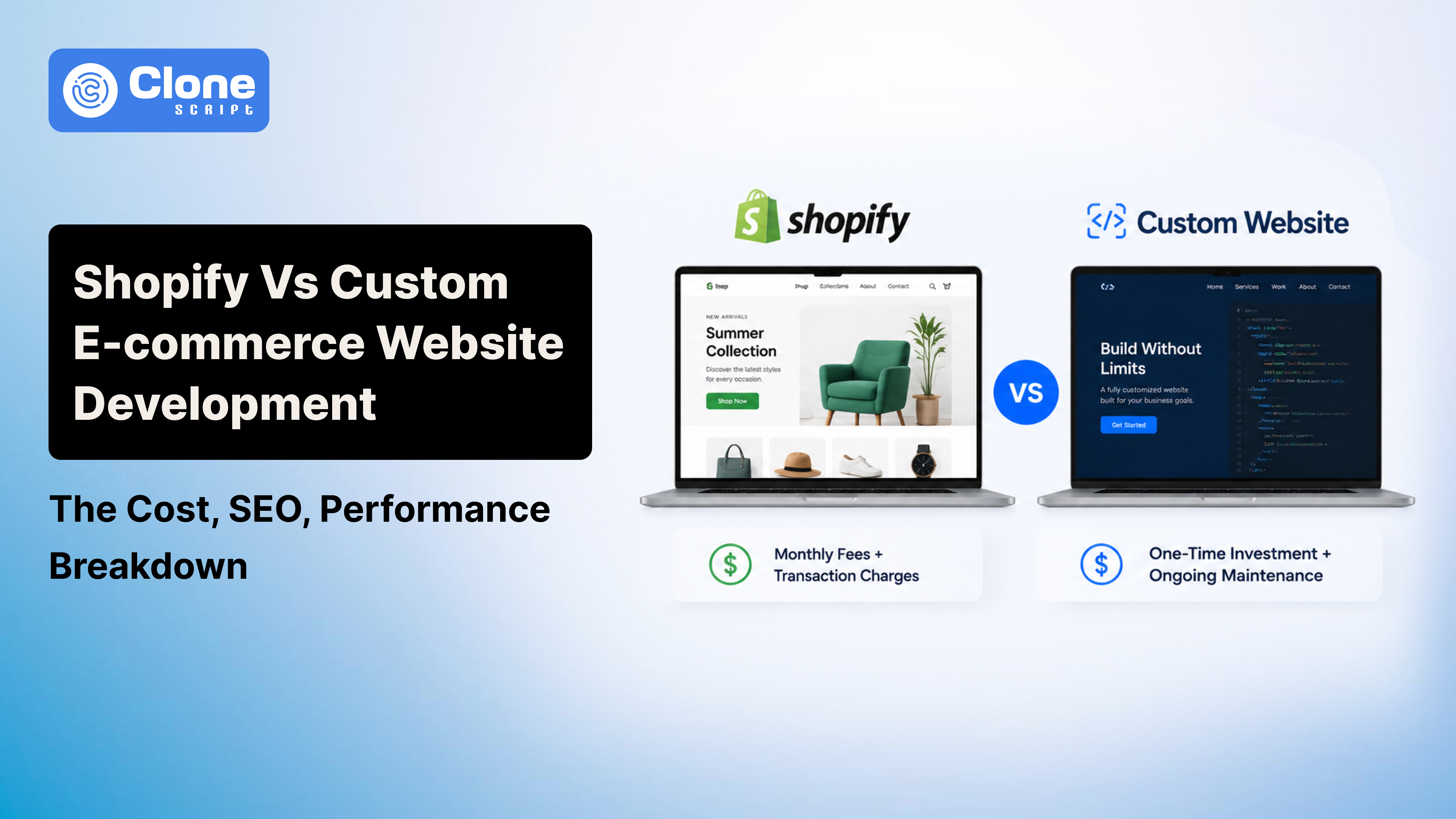
5 Key Differences Between Website Builders vs Custom Coding Nobody Talks About
A lot of companies rebuild their websites within three years of launching them.
-
Not because the design looks outdated.
-
Not because the branding changed.
-
Not because the business suddenly wanted something “more modern.”
The real reason is usually operational failure.
The original website was built for launch speed, not long-term growth.
At the start, that decision often feels smart. A visual website builder gets the business online quickly. The monthly pricing seems affordable. The templates look polished. The drag-and-drop editor removes the need for a technical team.
For a new business owner, that convenience is hard to ignore.
But the conversation changes once the website becomes tied to revenue.
The moment a company starts spending serious money on SEO, Google Ads, automation tools, CRM systems, or customer acquisition, the website stops being a design project. It becomes part of the company’s operational infrastructure.
That is where many businesses hit a wall and prefer custom website development.
-
Pages become slower.
-
Integrations become unreliable.
-
Marketing costs increase.
-
Developers start recommending a rebuild.
-
Suddenly, the “budget-friendly” website becomes one of the company’s most expensive long-term decisions.
The reality is that most discussions around website builders vs custom coding are incomplete. They focus heavily on design flexibility, setup, and long-term website cost while ignoring the business consequences that appear later.
For business owners, the more important questions are different:
-
Will this website still support operations two years from now?
-
Can the infrastructure scale without constant workarounds?
-
Will performance affect customer acquisition costs?
-
Does the business actually own the platform it is investing in?
-
How expensive will maintenance become over time?
Businesses investing in custom website development today are focusing less on launch speed and more on website scalability, operational flexibility, and long-term ROI.
Why Website Infrastructure Has Become a Business-Level Decision
Five years ago, many companies treated websites like digital brochures.
Today, websites are tied directly to scalable business operations.
A company website now manages far more than content and design. It often connects with:
-
Sales pipelines
-
Customer databases
-
Marketing automation systems
-
Appointment scheduling tools
-
Inventory platforms
-
Analytics dashboards
-
AI-powered workflows
At the same time, competition online has become significantly more aggressive.
Search rankings depend heavily on technical performance. Paid advertising costs continue rising every year. Mobile users expect websites to load instantly. Customers abandon pages quickly when the experience feels slow or unstable.
That means website architecture affects far more than aesthetics.
It affects:
-
Revenue generation
-
Marketing efficiency
-
SEO visibility
-
Customer trust
-
Operational speed
-
Scalability
This is exactly why many businesses that started with simple website builders eventually migrate toward custom-coding platforms later.
The issue is not that website builders are “bad.” The issue is that they are often chosen without understanding the operational trade-offs.
1. Website Builders Prioritize Convenience, Not Ownership.
One of the least discussed issues with website builders is platform dependency.
Most business owners assume they fully own the website they are paying for. In practice, ownership inside visual platforms is often limited.
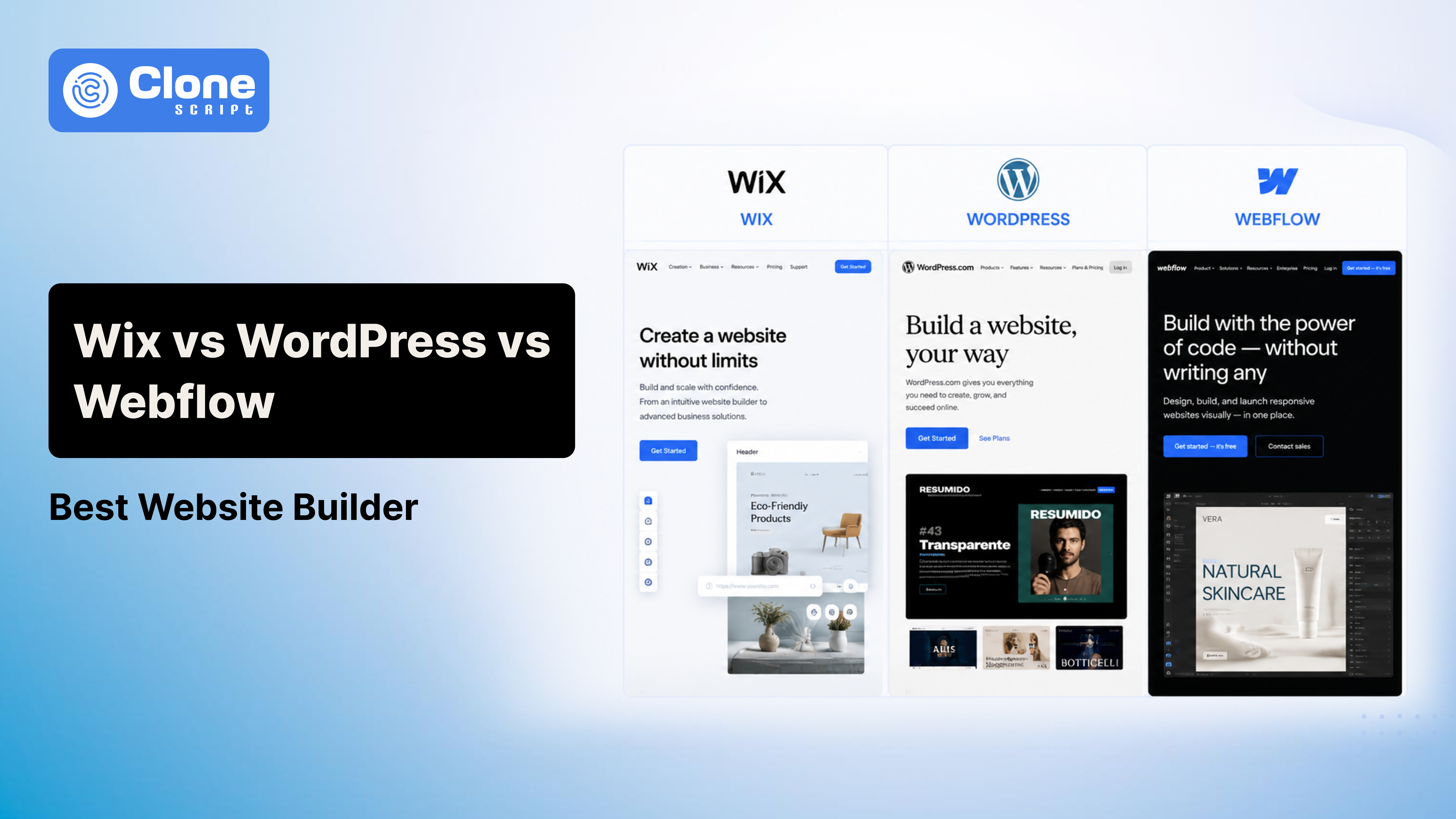
Services like Wix, Squarespace, and Webflow simplify web development by controlling the entire ecosystem themselves.
That convenience comes with restrictions.
The business can control the branding and content, but the infrastructure remains tied to the platform.
That means the company usually cannot fully control:
-
Server environments
-
Core application logic
-
Infrastructure deployment
-
Database portability
In simple terms, business scalability is operating inside rented digital real estate.
This is rarely a problem for small informational websites. But it becomes more serious when the website starts functioning as a critical business system.
For example, if the platform changes pricing structures or introduces feature restrictions, the company has limited flexibility. If the platform experiences downtime, the business cannot simply migrate infrastructure instantly.
The dependency becomes even more expensive during migration.
Many businesses discover that leaving a visual builder requires rebuilding large parts of the website entirely. SEO structures, integrations, workflows, and layouts often need to be recreated from scratch.
That process consumes both time and money.
Custom-coding platforms operate differently.
With custom web development, businesses own the underlying client-side technology stack and back-end itself. The source code, cloud hosting environment, APIs, and infrastructure configurations belong to the company.
That changes the website from a subscription-based tool into a transferable business asset.
The infrastructure can move between cloud providers, dedicated servers, or containerized systems without being trapped inside one ecosystem.
For businesses planning long-term growth, that flexibility becomes valuable much earlier than expected.
2. The “Easy Plugin” Model Often Creates Long-Term Instability.
Website builders are marketed around simplicity.
The idea sounds attractive:
Install plugins, activate features, and scale functionality without professional website development work.
Initially, that model works well.
But business websites rarely stay simple for long.
As operations grow, companies usually need additional functionality such as:
-
CRM integrations
-
Booking systems
-
Multi-step forms
-
Inventory synchronization
-
Marketing automation
-
Custom analytics
-
Membership systems
-
Localization features
Instead of building these systems directly, most visual platforms depend on third-party plugins or marketplace applications.
This creates an ecosystem where multiple independent tools must work together continuously.
That is where problems start appearing.
One plugin update may break another integration. A payment system may stop syncing correctly after a background update. Form submissions may silently fail because two extensions conflict with each other.
What makes these issues dangerous is that businesses often do not detect them immediately.
A company may lose leads for days before noticing that a contact form stopped working.
An eCommerce store may experience checkout issues only on specific devices.
Analytics can collect inaccurate conversion data without obvious warning signs.
Over time, the operational cost increases quietly.
The business scalability begins paying for itself:
-
Premium plugin subscriptions
-
Emergency developer fixes
-
Compatibility troubleshooting
-
Security patches
-
Downtime recovery
Eventually, the website becomes harder to maintain despite originally being sold as “easy.”
Custom-coding platforms avoid much of this instability because developers control the architecture directly.
Instead of stacking disconnected third-party tools together, integrations are built intentionally through APIs and structured development frameworks.
Updates are tested before deployment. Systems are isolated more carefully. Operational risks become easier to predict.
That does not mean custom software requires zero maintenance. It means the maintenance process is controlled rather than being restructured.
For businesses relying heavily on online revenue, that difference matters.
3. Slow Websites Quietly Increase Marketing Costs.
Many business owners still treat website speed like a technical detail instead of a financial metric.
In reality, page speed directly affects revenue.
Modern businesses spend heavily to acquire traffic through:
-
SEO campaigns
-
Google Ads
-
Email funnels
-
Influencer partnerships
Every visitor arriving on the website already represents a marketing investment.
If the website loads slowly, part of that investment gets wasted immediately.
This issue is especially common with present website builders because they prioritize editing convenience over performance efficiency.
To support drag-and-drop editing systems, builders load large amounts of background code. Even simple pages often contain excessive JavaScript, nested HTML structures, styling engines, and rendering scripts.
The user sees a clean homepage.
But the browser processes far more than necessary behind the scenes.
This creates slower page rendering, particularly on mobile devices.
That matters because most internet traffic now comes from smartphones operating on inconsistent mobile networks.
When websites load slowly:
-
Bounce rates increase
-
Ad conversions decrease
-
User engagement drops
-
SEO performance weakens
Google’s Core Web Vitals updates have made mobile page speed and technical SEO critical ranking factors for business websites. Faster websites generally create stronger user experiences, which influences conversions simultaneously.
Custom-coded websites' benefits are usually more efficient because developers build only the functionality required for the specific project.
Instead of loading generic frameworks for every possible feature, custom systems can optimize:
-
Asset delivery
-
Image handling
-
Script execution
-
Cache management
-
Server responses
The result is leaner performance.
For businesses scaling digital advertising campaigns, even small improvements in speed can produce meaningful increases in conversion rates over time.
4. Business Scalability and Growth Eventually Exposes Data Limitations
Many no-coding website builders work well for 12 months because the operational structure remains relatively simple.
However, complexity increases quickly as businesses expand.
A growing company eventually needs to manage far more than pages and blog posts.
The website may become connected to:
-
Customer accounts
-
Subscription systems
-
Sales territories
-
Product databases
-
Inventory workflows
-
User permissions
This is where simplified website ecosystems begin showing limitations.
Most visual platforms are designed around straightforward content structures. They handle basic websites efficiently, but complex operational workflows require deeper database flexibility.
For example, a B2B company may need:
-
Customer-specific pricing
-
Multi-user company accounts
-
Contract-based product access
-
Approval hierarchies
-
CRM-linked sales permissions
These requirements become difficult to manage inside rigid builder ecosystems.
Businesses often compensate with temporary workarounds, additional plugins, or manual processes.
Over time, those workarounds slow operations and create inefficiencies.
You can say custom website advantages as it provides significantly more flexibility because the database architecture is designed around the company’s operational needs.
Developers can structure systems using platforms like:
-
PostgreSQL
-
MongoDB
-
MySQL
These scalable databases support more advanced relational logic, larger datasets, and scalable workflows.
This becomes increasingly important as businesses adopt AI tools, automation systems, and personalized customer experiences.
Data flexibility is becoming a competitive advantage, not just a technical feature.
5. Integration Restrictions Become a Scaling Bottleneck
No modern business operates with isolated lean MVP software anymore.
A website usually needs to communicate with multiple operational systems simultaneously.
This might include:
-
Accounting software
-
CRM platforms
-
Inventory systems
-
ERP tools
-
Shipping providers
-
Customer support software
-
AI platforms
Website builders' limitation is that they typically depend on app marketplaces for integrations.
If the required software exists inside the ecosystem, setup is relatively easy.
The problem starts when businesses need specialized workflows or custom integrations.
At that point, companies are forced to rely on temporary middleware tools like Zapier connections, spreadsheet exports, or third-party synchronization services.
These systems often work initially, but they introduce additional operational risk.
Every extra integration layer creates another point of failure.
-
A broken automation can interrupt customer onboarding.
-
A failed sync can create inventory errors.
-
A disconnected API can affect reporting accuracy.
Custom-coding systems provide direct access to application-level integrations.
Developers can develop secure API integrations tailored specifically to the company’s operational workflows.
This becomes especially valuable for businesses expanding internationally or managing more complex operations.
A company scaling into multiple regions may eventually require:
-
Multi-currency systems
-
Regional tax handling
-
Local logistics integrations
-
Distributor portals
-
Warehouse synchronization
Handling these requirements inside restrictive ecosystems becomes increasingly difficult.
Custom infrastructure provides far more operational flexibility as business complexity grows.
Final Thoughts
The biggest mistake businesses make when choosing a website platform is evaluating only short-term convenience.
A website can launch quickly today, but create expensive operational limitations later.
That is why the debate between website builders and custom coding is not really about design anymore.
It is about scalability.
Should I use a website builder? Why not. Consider the following:
-
Startup validation
-
MVP launches
-
Simple business websites
-
Short-term projects
-
Low-complexity operations
They prioritize speed and accessibility.
The question is whether custom coding is worth it? Yes, it offers:
-
Ownership
-
Performance
-
Scalability
-
Operational flexibility
-
Integration control
-
Long-term infrastructure stability
For businesses planning serious digital growth, those factors eventually become more important than launch speed.
The smartest decision is not necessarily the cheapest option at the beginning.
It is the option that prevents expensive rebuilds, operational slowdowns, and scaling limitations later.