BTC - Bitcoin
 USDTERC20 - USDT ERC20
 ETH - Ethereum
 BNB - Binance
 BCH - Bitcoin Cash
 DOGE - Dogecoin
 TRX - TRON
 USDTTRC20 - USD TRC20
 LTC - LiteCoin

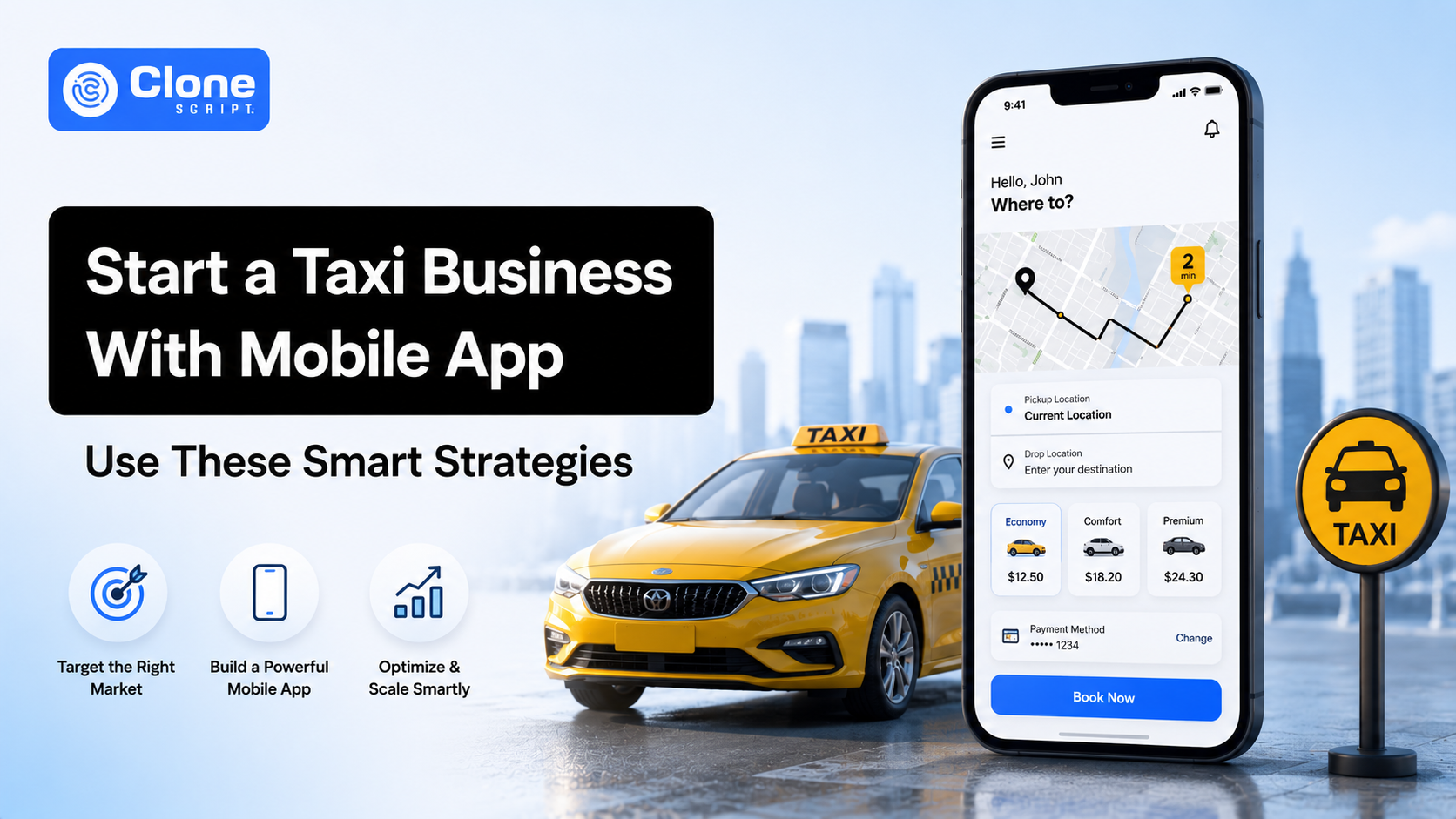
How to Start a Taxi Business With a Mobile App Using Smart Strategies
You have 20+ cars and need to start a taxi business. You think it will bring the bookings from other riders, other than your knowing people. But the reality is different. No one will notice the premium and affordable taxi service you’re operating until you reach them.
Today, the mobility business runs on coordination, drivers, demand, pricing, and availability, to work together in real time. A taxi booking mobile app is what keeps that system running smoothly, not just a tool for customers to book rides.
Why? Because Uber and OLA taxi apps have such issues, common last-minute cancellations, long wait times during peak hours, and pricing that feels fluctuates. These gaps are where new businesses can actually compete by running something more reliable and predictable at a local level.
The problem with most entrepreneurs is that they start straight into building a taxi app, expecting users to download and use it. That rarely works. When the operations are strong, the app becomes an advantage. Without that, it becomes an expense.
In this blog, we’re talking about the best strategies to manage the taxi business, with strategies to execute.
Step 1 – Define Your Taxi Business Model Before You Invest in Technology.
Starting without a clear business model is where most taxi startups lose direction early. Before thinking about features or development, decide how your business will run on the ground. Because your model directly impacts cost, driver management, pricing, and scalability.
-
Choose the Right Model.
These models are designed specifically for mobility businesses:
-
Fleet-Owned Model: In this model, you own vehicles and hire drivers that giving better service control but require a higher investment.
-
Marketplace Model: You onboard independent drivers along with the riders, making it easier to scale, but dependent on driver availability.
-
Hybrid Model: This model combines both approaches, offering flexibility and balanced control to test the market requirement.
Note that every taxi business model has trade-offs, so align your choice with budget and local demand.
-
The Fact is: Start with One Service, Not Everything at Once.
Launching multiple services in the taxi platform at once leads to poor execution. It’s more practical to focus on one service, build reliability, and expand later. Here are the choices to try on:
-
Daily city rides
-
Airport transfers
-
Corporate transport
A focused approach improves consistency and driver management for your startup.
-
Define Your Target Users Clearly.
You don’t need to serve everyone initially. Define your core users to guide decisions. You can offer the service to office commuters, business travelers, and local riders.
Clear targeting helps you build a service that works well for a specific group, creating early traction.
Step 2 – Identify a Real Market Gap Before You Build Anything.
Starting a taxi business without a clear gap is where most efforts fail. You’re entering an existing one with visible problems. The opportunity remains in solving what others are not fixing properly, not in building a similar app as Uber, OLA, Rapido, etc.
-
Understand What’s Broken in Your Local Market.
Before planning features, spend time understanding real user and driver issues. These problems are consistent across most cities, especially in India, like Bengaluru, Hyderabad, Mumbai, Delhi, Chennai, Ahmedabad, etc.
-
Long wait times during peak hours
-
Frequent driver cancellations
-
Unpredictable or high surge pricing
-
Poor ride experience or driver behavior
These are not small gaps. They directly affect user trust and repeat usage.
-
Pick One Problem and Solve It Better.
Trying to fix everything at once weakens execution. Professional taxi businesses operate by focusing on one core problem and solving it consistently.
-
Faster pickups in high-demand areas
-
Stable and transparent pricing
-
Reliable availability during office hours
When users see consistency in one area, they start trusting your service.
-
Turn Your Gap into Positioning.
Your market gap should clearly reflect in how you present your business. This is what sets you apart. Consider that you do not try to make false claims to increase the risks. Here are some examples of getting users on board:
-
“No cancellation rides”
-
“Fixed pricing, no surprises”
-
“Always available for office commute.”
This is a promise backed by operations. When your positioning matches real experience, it becomes your strongest growth driver.
Step 3 – Build a Revenue Model That Works from Day One.
A taxi business that focuses only on rides but ignores revenue structure struggles to stay profitable. Before scaling, you need clarity on how money flows in and how margins are protected, because high bookings don’t always mean high profits.
-
Understand Core Revenue Streams.
Most taxi businesses rely on a mix of models rather than a single source:
-
Commission per ride: In this revenue model, you can charge a percentage from each trip, but it depends heavily on ride volume.
-
Driver subscription plans: For getting a predictable income, fixed weekly or monthly fees for platform access.
-
Surge or peak pricing: Here, you can increase the fares during demand spikes to balance supply and demand.
-
Corporate contracts: This is a B2B deal and related to bulk ride agreements with companies for steady, recurring revenue.
-
Avoid Depending on One Revenue Source.
Depending only on commission can create pressure when demand fluctuates or driver supply drops. A hybrid revenue approach helps stabilize income and reduces risk. Check the following:
-
Combine commission with subscription.
-
Offer premium services (priority rides, business class)
-
Lock in corporate clients for consistent cash flow
-
Balance Profit with Driver Satisfaction.
Higher commissions may increase short-term revenue but can push drivers away. The goal is to find a balance where both the platform and drivers earn sustainably.
When drivers earn well, they stay active. When they stay active, your service improves, and that directly impacts long-term revenue.
Step 4 – Build the Mobile App as Your Operational Functionality.
The app is not your business. It’s what keeps your business running smoothly. Many founders overinvest in app UI design and UX for features. But, miss the core purpose: managing rides, drivers, and decisions in real time.
-
Focus on What Actually Matters in the App.
You don’t need a complex app to start. You need a system that works reliably every day:
-
Real-time booking and ride tracking
-
Quick driver-passenger matching
-
Multiple payment options
-
Simple driver and rider interfaces
If these basics fail, nothing else matters.
-
Build the Systems Behind the Interface
What users see is only one part. The real strength of your app is in the back-end systems development.
-
A dispatch system that assigns rides efficiently.
-
Pricing logic handles fares and demand changes.
-
Driver management tracks activity and performance.
-
Admin dashboard gives full control over operations
These systems decide how well your business performs daily.
-
Choose the Right Development Approach
Building from scratch takes time and capital, which slows down market entry. Many businesses now prefer faster options to test and launch quickly.
-
Custom taxi app development with full control and a higher cost.
-
Ready-made or white-label solutions, compared to custom development, offer faster launch and lower risk.
The goal is simple: launch early, fix fast, and improve based on real usage, not assumptions.
Step 5 – Driver Acquisition Comes Before Customer Growth
You can market your app all you want, but without drivers, nothing moves. In the taxi business, drivers are your first supply layer, and without a stable supply, customer acquisition becomes a wasted expense.
-
Start by Building Driver Supply.
Before launch, focus on onboarding enough drivers to handle initial demand. A small but active driver base is far better than a large inactive one. The approach has to be:
-
Target local drivers already working with aggregators
-
Onboard independent drivers looking for better earnings
-
Focus on specific zones instead of covering the whole city
This helps you create density where it actually matters.
-
Use Practical Incentives to Onboard Drivers.
Drivers switch platforms based on earnings and consistency. Your early strategy should reduce their risk accordingly:
-
Low or zero commission for the first phase
-
Guaranteed minimum earnings
-
Referral bonuses for bringing other drivers
-
Flexible working hours without strict penalties
These incentives help you build initial trust quickly in your new taxi business.
-
Retention Matters More Than Acquisition.
Getting drivers on board is one part. Keeping them active is what sustains your business. Implement these things:
-
Fast and transparent payouts
-
Clear earning structure without hidden deductions
-
Consistent ride flow in active areas
When drivers see steady income, they stay. When they stay, your service improves, and that directly impacts customer experience and growth.
Step 6 – Launch Small, Then Build Density Before Expanding.
Launching across an entire city may look ambitious, but it usually leads to weak service and poor first impressions. A smarter approach is to start small, control the experience, and build density where it matters.
-
Begin with a Focused Area.
Instead of spreading resources thin, choose a specific zone where demand is already consistent for taxi booking. These places are mostly as usual:
-
Business districts
-
Airport routes
-
High-density residential areas
Operating in these areas helps you maintain shorter wait times and better ride availability.
-
Control Your Initial Launch.
Early-stage execution decides how your brand is perceived. Keep the launch controlled so you can fix issues quickly. Consider this aspect:
-
Limited number of drivers
-
Controlled user onboarding
-
Close monitoring of daily operations
This allows you to improve the system before scaling.
-
Track the Right Metrics from Day One.
Growth without measurement leads to operational gaps. Focus on metrics that reflect real performance mentioned:
-
Ride acceptance rate
-
Average wait time
-
Ride completion rate
These numbers tell you whether your system is working. Once they are stable, expansion becomes easier and less risky.
Step 7 – Customer Acquisition That Brings Real Bookings, Not Just Downloads
Getting app installs is easy. Getting consistent bookings is the real challenge. In the taxi business, growth comes from repeat usage and reliability, not from one-time downloads driven by discounts.
-
Focus on Channels That Drive Actual Rides.
Instead of spending heavily on broad advertising, such as search and social media paid ads, use channels that connect directly with your target users:
-
Referral programs (users bring users)
-
Local partnerships (hotels, offices, event venues)
-
Google Maps and local search visibility with local SEO strategies
-
On-ground branding through vehicles
These methods bring users who are more likely to book, not just install.
-
Make the First Ride Experience Count.
Your first impression decides whether a user comes back or not. A smooth first ride builds trust faster than any marketing campaign:
-
Quick booking process
-
Minimal wait time
-
Clean vehicles and professional drivers
-
Transparent pricing
When the first experience is reliable, users don’t need convincing to return.
-
Retention is Your Real Growth Engine.
Acquiring users repeatedly is expensive. Retaining them is what makes the business sustainable. Apply these strategies:
-
Loyalty rewards or ride credits
-
Subscription-based ride plans
-
Consistent service quality
The approach you follow, as mentioned above, will prevent the app uninstallation rate. And it’s a kind of success you can celebrate because people still consider your taxi service.
When users trust your service, they stop comparing options, and that’s when your growth becomes stable.
Step 8 – Optimize Operations Using Data, Not Assumptions.
Your taxi bookings are running smoothly, but now it’s time to achieve growth. It depends on how well you read and act on operational data, because small inefficiencies in dispatch, pricing, or driver allocation can quickly reduce margins and service quality.
-
Track Metrics That Reflect Real Performance.
Don’t rely on vanity numbers like app installs. Focus on metrics that show how your system performs daily:
-
Driver utilization rate
-
Average rides per driver
-
Cancellation and rejection rates
-
Peak-hour demand patterns
These numbers help you identify where operations are breaking down.
-
Use Data to Improve Efficiency.
Data is only useful when it leads to action. Even small adjustments can improve performance significantly:
-
Adjust driver allocation based on demand zones
-
Optimize routes to reduce idle time
-
Fine-tune pricing during peak hours
These changes increase ride completion and reduce delays.
-
Automate Where It Matters.
Manual operations slow down growth. As your business scales, automation becomes necessary:
-
Smart taxi dispatching for faster ride matching
-
Demand prediction for better driver placement
-
Automated alerts for driver inactivity
When your system starts making decisions faster than manual processes, operations become smoother, and scaling becomes more controlled. The Artificial Intelligence in customer experience is helpful to manage the business properly.
Step 9 – Compliance, Safety, and Trust: Decide Long-Term Growth
You can attract users and drivers early, but without compliance and trust, the business doesn’t sustain. In the taxi industry, credibility is what keeps both riders and drivers active over time.
-
Get the Legal Basics Right from the Start.
Ignoring regulations may seem faster, but it creates bigger problems later. Set up a compliant structure early:
-
Transport permits and local approvals
-
Commercial vehicle documentation
-
Insurance coverage for vehicles and passengers
This protects your business from operational disruptions.
-
Build Safety into the Experience.
Safety is not a feature. It’s an expectation. Both riders and drivers need to feel secure using your platform.
-
Driver background verification
-
SOS or emergency support option
-
Live ride tracking
When safety measures are visible, trust builds faster.
-
Create Trust Through Transparency.
Users stay when they feel the service is fair and predictable:
-
Clear pricing without hidden charges
-
Ratings and feedback system
-
Responsive customer support
Trust reduces churn. When users and drivers feel confident using your platform, retention improves, and that directly impacts long-term growth.
Step 10 – Scaling Strategy: From Local Startup to Mobility Brand.
Scaling too early is where many taxi businesses lose control. Growth should come after your operations are stable, not before. The goal is to replicate what works locally into new areas, not experiment while expanding.
When to Expand
Expansion makes sense only when your current operations are predictable and consistent.
-
Stable driver supply across active zones
-
Consistent ride demand without heavy discounts
If these are not in place, expansion will only multiply existing problems.
Expansion Models
Once your base is strong, you can grow using models that reduce operational pressure.
-
Multi-city expansion: Launch in similar demand markets using the same proven model.
-
Franchise model: Local partners handle operations while you provide the platform.
-
Corporate tie-ups: Expand through business contracts for steady ride volume.
Each approach helps you scale without losing control of daily operations.
Future Growth Trends
The taxi business is evolving beyond simple ride-hailing. Long-term growth depends on adapting to changing mobility needs.
-
Multi-modal transport integration (cars, bikes, rentals in one platform)
-
AI-driven automation for dispatch and pricing
-
Mobility-as-a-Service (MaaS) ecosystems
Businesses that adapt early to these shifts position themselves as mobility platforms, not just taxi services.
Why All Clone Scripts Can Be a Practical Development Partner
At the early stage, the priority is simple: get a working system live and validate your business model. Spending months on custom development delays learning and increases risk. Solutions like All Clone Scripts are used by many startups to shorten the gap between idea and execution.
-
Launch Without Operational Delays
Instead of building the entire app manually, you start with a ready setup that covers the essentials:
-
Rider and driver apps are already structured
-
Admin panel to manage rides and users
-
Core booking and tracking features in place
This helps you move directly into real operations.
-
Keep Early Investment Under Control
In the beginning, your budget is better spent on drivers and demand, not prolonged development cycles:
-
Reduced initial tech cost
-
No dependency on large dev teams
-
Faster time to start generating revenue
It keeps your focus on running the business, not building it endlessly.
-
Adapt as You Learn from the Market
What works in theory changes once users start booking rides. You need flexibility to adjust properly:
-
Modify features based on real usage
-
Add functionality when needed
-
Scale without rebuilding the system
The advantage is straightforward: you test faster, adjust faster, and grow based on actual market response.