BTC - Bitcoin
 USDTERC20 - USDT ERC20
 ETH - Ethereum
 BNB - Binance
 BCH - Bitcoin Cash
 DOGE - Dogecoin
 TRX - TRON
 USDTTRC20 - USD TRC20
 LTC - LiteCoin

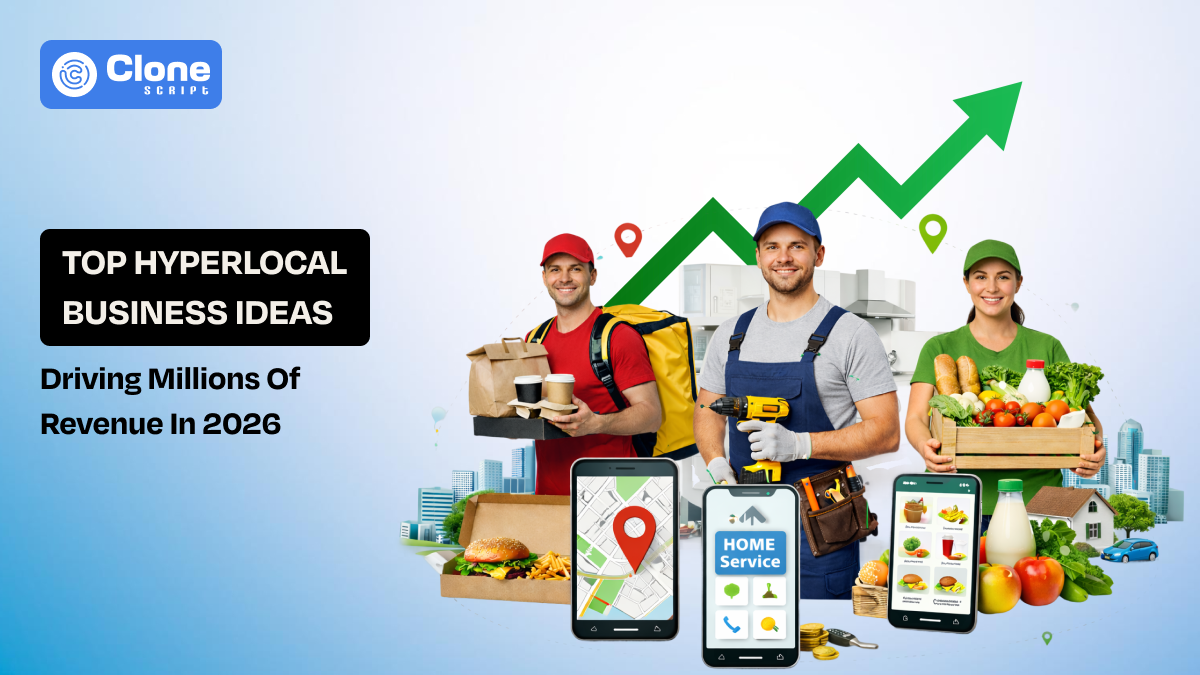
Top 10 Hyperlocal Business Ideas Driving Millions of Revenue in 2026
Hyperlocal business is one of the fastest-growing segments that every entrepreneur starts with. Why? Because there are no requirements to invest millions of capital and ask for funds from investors and VCs. However, what kind of hyperlocal business has to be started is a confusing question. For that, you have to see the ideas that help these kinds of businesses.
The global hyperlocal services market was valued at over $4 trillion in 2025 and is projected to expand rapidly over the next decade, fueled by on-demand platforms and smartphone adoption.
But the real opportunity is not limited to global tech companies.
Across cities, smaller startups are building profitable platforms that serve one neighborhood at a time. If you are looking for hyperlocal business ideas with strong revenue potential in 2026, the following opportunities are among the most promising.
What Is a Hyperlocal Business Model?
A hyperlocal business focuses on serving customers within a very specific geographic area, often a neighborhood or district. Instead of targeting a national audience, these businesses solve local problems that require immediate solutions.
For example:
-
Food delivery platforms connect nearby restaurants with residents.
-
Home service marketplaces link technicians with homeowners.
-
Local grocery apps deliver essentials from nearby stores.
The advantage of this model is simple: proximity increases speed and convenience.
Interestingly, many of the most successful hyperlocal platforms launch their business with a small launch area before expanding city by city.
This approach reduces operational risk while helping businesses understand local consumer behavior before scaling.
Top 10 Hyperlocal Business Ideas Driving Millions of Revenue in 2026
Here is an overview of the hyperlocal business ideas.
1. AI-Powered Delivery Networks
Fast delivery has become an expectation in many cities. Nowadays, customers no longer want to wait days for everyday items such as groceries, electronics, or medicines.
Here, hyperlocal delivery networks solve this problem by connecting nearby stores with customers and independent delivery partners through a single mobile platform.
Refer to the platforms like Uber and DoorDash that demonstrated how local delivery services can scale into a billion-dollar operation.
Now, let’s talk about the statistics.
-
In 2023, a $175 billion valuation was done for the global last-mile delivery market. By 2030, it will reach $400 billion. This can happen due to e-commerce growth and on-demand consumer behavior.
Why AI-powered delivery networks are profitable
-
They have a strong demand for same-day and instant delivery.
-
They help retailers need digital channels to reach local buyers.
-
AI route optimization reduces operational costs.
Revenue streams for these business models
-
Delivery service fees
-
Merchant commissions
-
Subscription-based priority delivery
Many startups begin with 10–20 local retailers and expand neighborhood by neighborhood once logistics become efficient.
2. Home Services Marketplace
Homeowners frequently need services such as plumbing, electrical repairs, cleaning, or appliance maintenance. Yet finding reliable professionals nearby can still be frustrating.
A hyperlocal home services marketplace solves this problem by connecting residents with verified technicians in their area through a simple booking platform.
In India, Urban Company has already shown how organizing local service providers into a digital marketplace can create a scalable and profitable business model.
-
This service segment is estimated to exceed $14.7 billion by 2030 and continue to grow.
Why hyperlocal home service platforms are profitable
-
To fulfill the regular demand for household maintenance.
-
A growing number of urban apartments and homes has increased.
-
Customer preference for verified professionals is growing daily.
Home service marketplace Revenue streams
-
Commission on each service booking
-
Professional membership subscriptions
-
Featured listings for service providers
Start with onboarding 20–30 trusted local technicians before expanding service categories and coverage areas.
3. Cloud Kitchen Networks
Opening a traditional restaurant usually means paying high rent, investing in interior design, and employing front-of-house staff.
Cloud kitchens take a different route. These kitchens focus only on preparing food for delivery, removing the need for dining space and reducing overhead costs.
The hyperlocal food delivery model expanded rapidly with the rise of delivery platforms such as Swiggy and Zomato in India and DoorDash in the U.S., which connect restaurants directly with online customers.
-
Industry reports estimate the global cloud kitchen market reached about $56 billion in 2023 and could exceed $149 billion by 2030, reflecting strong demand for delivery-focused food businesses.
Why cloud kitchens are profitable
-
It required lower setup and rental costs compared with restaurants.
-
Its ability to launch several cuisine brands from one kitchen.
-
Increasing consumer dependence on developed food delivery apps speeds up the growth.
Revenue streams for a cloud kitchen hyperlocal business
-
Orders through delivery platforms
-
In-house virtual restaurant brands
-
Small event or corporate catering
Many operators manage three to five digital food brands from one kitchen, using shared staff and equipment to increase profit margins.
4. Hyperlocal Grocery Delivery
Urban consumers increasingly prefer ordering groceries online instead of visiting crowded supermarkets. Hyperlocal grocery delivery services address this need by sourcing products from nearby stores and delivering them within minutes or hours.
Platforms like BigBasket and Blinkit have accelerated this trend by offering fast delivery of daily essentials such as vegetables, dairy products, and packaged foods.
-
The global online grocery market was valued at around $285 billion in 2023 and is projected to exceed around $1 trillion by 2030. This is driven by digital payments, mobile commerce, and urban lifestyle changes.
Faster delivery expectations are pushing retailers to adopt hyperlocal fulfillment models.
Why hyperlocal grocery delivery is profitable
-
Daily recurring demand for essential items is growing.
-
High-order frequency from regular customers makes this model successful.
-
Retail stores gain digital sales channels.
Revenue streams for grocery delivery platforms
-
Delivery charges per order
-
Commission from partner grocery stores
-
Monthly subscription for free or faster delivery
Use local dark stores or partner supermarkets to fulfill orders quickly within a limited delivery radius.
5. Local Health and Wellness Platforms
Health awareness has grown significantly in recent years, and many people now prefer personalized wellness services close to home.
Hyperlocal health platforms connect residents with nearby professionals such as fitness trainers, yoga instructors, nutritionists, and therapists through a digital booking system. This model makes it easier for individuals to discover trusted experts within their neighborhood.
Platforms like ClassPass have demonstrated how aggregating local wellness services can attract large user bases.
-
The global wellness economy was valued at about $6.8 trillion in 2024 and continues expanding as consumers invest more in preventive health and lifestyle improvements.
Localized platforms benefit from this trend by offering convenient access to nearby services.
Why local wellness platforms are profitable
-
Growing demand for fitness and preventive healthcare.
-
Personalized services increase customer loyalty.
-
Flexible online and offline consultation options.
Revenue streams for wellness coaching platforms
-
Commission on session bookings
-
Monthly wellness memberships
-
Featured listings for trainers and experts
Many platforms begin by partnering with local gyms, yoga studios, and independent trainers to build a strong community-driven network.
6. Education and Skill Learning Platforms
Many students and parents still prefer tutors who live nearby. Local teachers are easier to reach, scheduling becomes flexible, and trust builds faster.
Education platforms take advantage of this demand by connecting students with tutors in the same neighborhood. These platforms can offer classes for school subjects, languages, or practical skills such as coding and digital marketing.
Platforms like Udemy and Byju's show how digital learning demand has grown globally.
-
The global online education market was valued at about $399 billion in 2022 and is expected to reach nearly $1 trillion by 2032, reflecting a major shift toward flexible learning options.
Why hyperlocal learning platforms are profitable
-
Rising demand for personalized learning.
-
Parents prefer trusted local tutors.
-
Hybrid learning (online + offline) increases reach.
Learning platforms revenue streams
-
Commission from each tutoring session
-
Monthly course subscriptions
-
Tutor membership plans
Start by onboarding local teachers and coaching centers, gradually expanding to specialized skills and exam preparation programs.
7. On-Demand Local Repair Services
Electronic devices and home appliances are essential in daily life, but repairs often become frustrating when reliable technicians are difficult to find quickly.
Hyperlocal platforms address this issue by connecting customers with nearby professionals who can fix appliances, smartphones, or electronics at home. The convenience of quick booking and doorstep service has made this model increasingly popular in urban areas.
Platforms like TaskRabbit demonstrate how digital marketplaces can organize local service providers efficiently.
-
By 2030, over $150 billion value estimated of global consumer electronics repair and maintenance.
Why on-demand repair services are profitable
-
Increasing cost of electronic devices
-
Growing preference for repair over replacement
-
Urgent need for quick technical support
On-demand repair service platform revenue streams
-
Service booking charges
-
Commission from repair technicians
-
Annual maintenance subscriptions
You can begin by partnering with local technicians and small repair shops, ensuring faster service within a limited neighborhood radius.
8. Pet Care Services
Pet ownership is increasing in cities, and many owners struggle to manage grooming, walking, and daily care because of busy schedules.
Hyperlocal pet care services solve this problem by offering nearby support such as pet grooming, walking, boarding, and basic training. These services operate within a small geographic area, making them convenient for pet owners who prefer trusted caregivers close to home.
Platforms like Rover have shown how connecting pet owners with local caregivers can create a scalable service marketplace.
-
In 2022, $261 billion was valued for global pet care services and estimated to exceed to $350 billion by 2027. This reflects growing spending on pet wellness and services.
Why hyperlocal pet care services are profitable
-
Increasing pet adoption in urban areas
-
Recurring services such as grooming and walking
-
Premium services for pet health and training
Pet care service platform revenue streams
-
Grooming and pet care bookings
-
Monthly pet service subscriptions
-
Training or boarding packages
Many providers start with basic grooming and walking services, then expand into training and boarding as demand grows.
9. Neighborhood Micro-Warehousing and Logistics
Fast delivery has become a major advantage for e-commerce businesses. To achieve this speed, many companies are turning to micro-warehouses located within cities. These small storage hubs allow online sellers to keep products closer to customers, reducing delivery time and transportation costs.
Logistics companies such as DHL and FedEx have increasingly invested in urban distribution centers to support faster last-mile delivery.
-
The global warehouse automation and logistics market continues to expand, with the warehousing sector expected to exceed $500 billion by 2030. It is driven by e-commerce growth and rising delivery expectations.
Why neighborhood micro-warehousing is profitable
-
Faster delivery improves customer satisfaction.
-
Local sellers need affordable storage space.
-
Increasing demand for quick e-commerce fulfillment
Micro-warehousing and logistics business revenue streams
-
Storage rental subscriptions
-
Order fulfillment services
-
Delivery and logistics partnerships
Begin with small urban warehouses serving local online sellers, then expand capacity as e-commerce demand increases.
10. Hyperlocal Marketplace for Local Creators
Many consumers today prefer buying unique products directly from local creators rather than mass-produced items.
A hyperlocal marketplace makes this easier by connecting neighborhood artisans, bakers, and small product makers with nearby buyers. These platforms allow sellers to showcase handmade goods, customized clothing, home decor, or specialty food products while keeping delivery distances short.
Marketplaces such as Etsy demonstrate the growing demand for handcrafted and locally produced products.
-
An over $1 trillion valuation for the handmade goods market will be reached by 2030. It is happening due to consumer interest in unique and personalized items.
Why hyperlocal creator marketplaces are profitable
-
Growing demand for handmade and personalized products
-
Strong community support for local businesses
-
Lower delivery and logistics costs for nearby buyers
Local creators marketplace revenue streams
-
Commission on product sales
-
Vendor subscription plans
-
Featured product promotions
Many platforms also organize local pop-up markets and community events.
Key Factors Behind Hyperlocal Business Success
These factors work to make success for a hyperlocal business:
-
A real problem must exist in the neighborhood.
Hyperlocal businesses grow when they solve small but frequent problems. Think about late-night medicine delivery or quick plumbing repairs. If people face the same issue regularly, they are willing to pay for a faster solution.
-
Convenience matters more than price.
Customers often choose the option that saves time. A service that arrives quickly or is easier to book usually wins, even if it costs slightly more.
-
Technology makes operations smoother.
Simple tools like mobile booking systems, GPS tracking, and digital payments help manage orders efficiently and reduce operational mistakes.
-
Local relationships build reliability.
Working with nearby shops, technicians, or service providers ensures faster service and stronger community support.
-
Trust keeps customers coming back.
When people find a service that works consistently, they like to use it again and recommend it to neighbors. This increases the chances for platform adoption, and you can find a revenue opportunity to capitalize on many times and become well-known in the industry.
How to Launch a Hyperlocal Business in 2026
Here is an overview to make a hyperlocal business live.
-
Start by observing everyday problems.
Walk around your area or talk with residents. The best business ideas come from small frustrations, slow deliveries, unavailable services, or inconvenient booking systems.
-
Check if people are willing to pay.
Before building anything, speak with potential customers or local businesses. Their feedback will confirm whether the idea has real demand.
-
Keep the first version simple.
You do not need a complex platform initially. A basic website development, WhatsApp booking system, or simple mobile app can work for early operations.
-
Build a small network of partners.
Collaborate with nearby vendors or service professionals. This helps create supply without large upfront investments.
-
Expand only after the system works.
Once the service runs smoothly in one neighborhood, it becomes easier to replicate the model in nearby areas with proper marketing plans.
Conclusion
Hyperlocal businesses are gaining momentum because they solve everyday problems within a specific community. From delivery services to local marketplaces, these models focus on speed, convenience, and trust. Entrepreneurs who understand neighborhood needs and build efficient local networks can turn small service ideas into scalable and profitable businesses over time.