BTC - Bitcoin
 USDTERC20 - USDT ERC20
 ETH - Ethereum
 BNB - Binance
 BCH - Bitcoin Cash
 DOGE - Dogecoin
 TRX - TRON
 USDTTRC20 - USD TRC20
 LTC - LiteCoin

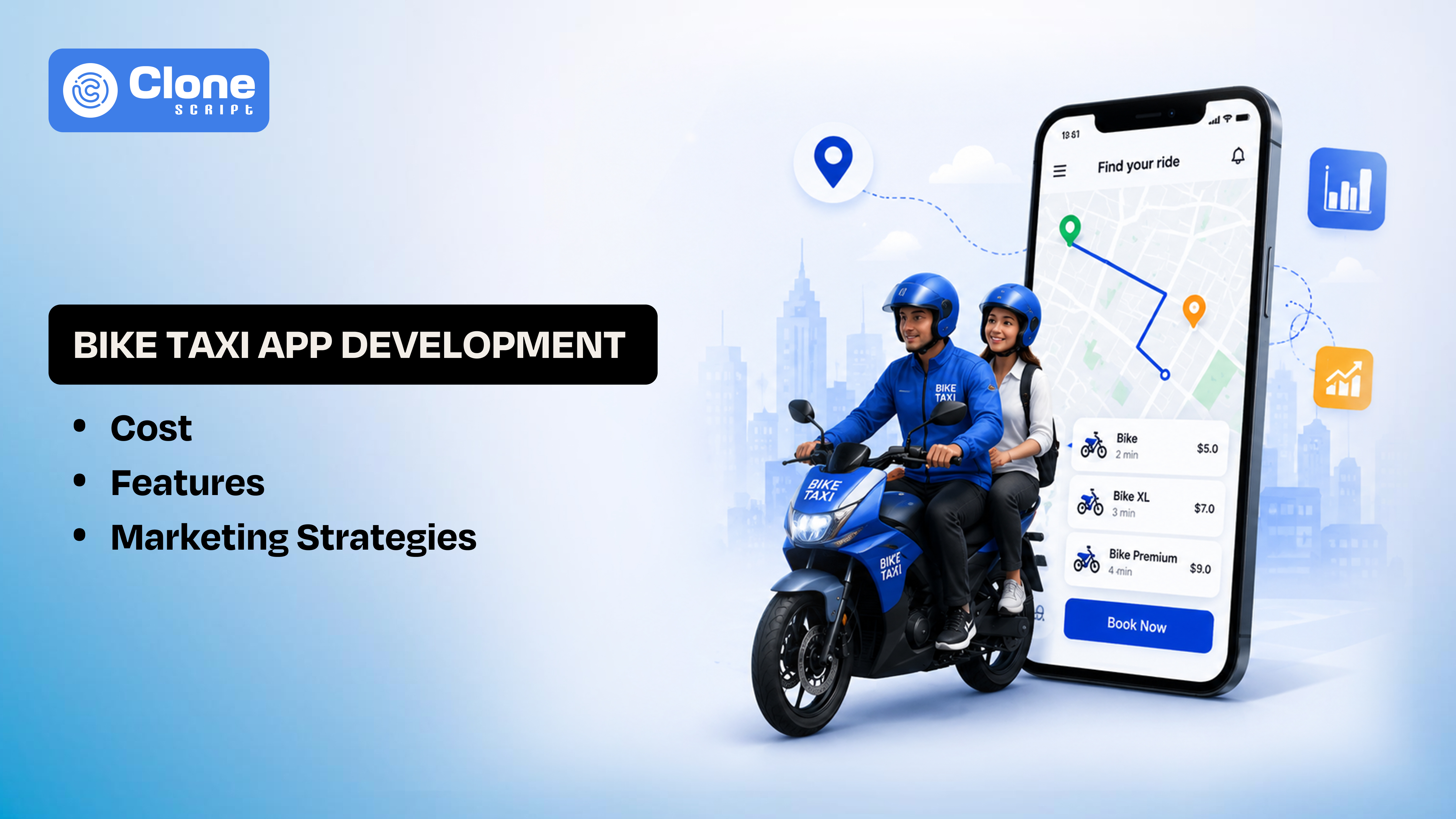
How Much Does it Cost to Build a Secure Bike Taxi Mobile App in 2026?
Urban mobility is changing faster than most business owners expected. Traffic congestion, rising fuel costs, and the demand for faster point-to-point travel have pushed bike taxi apps into the spotlight, especially in densely populated markets.
But here’s the real question: How much does it actually cost to build a secure bike taxi mobile app in 2026?
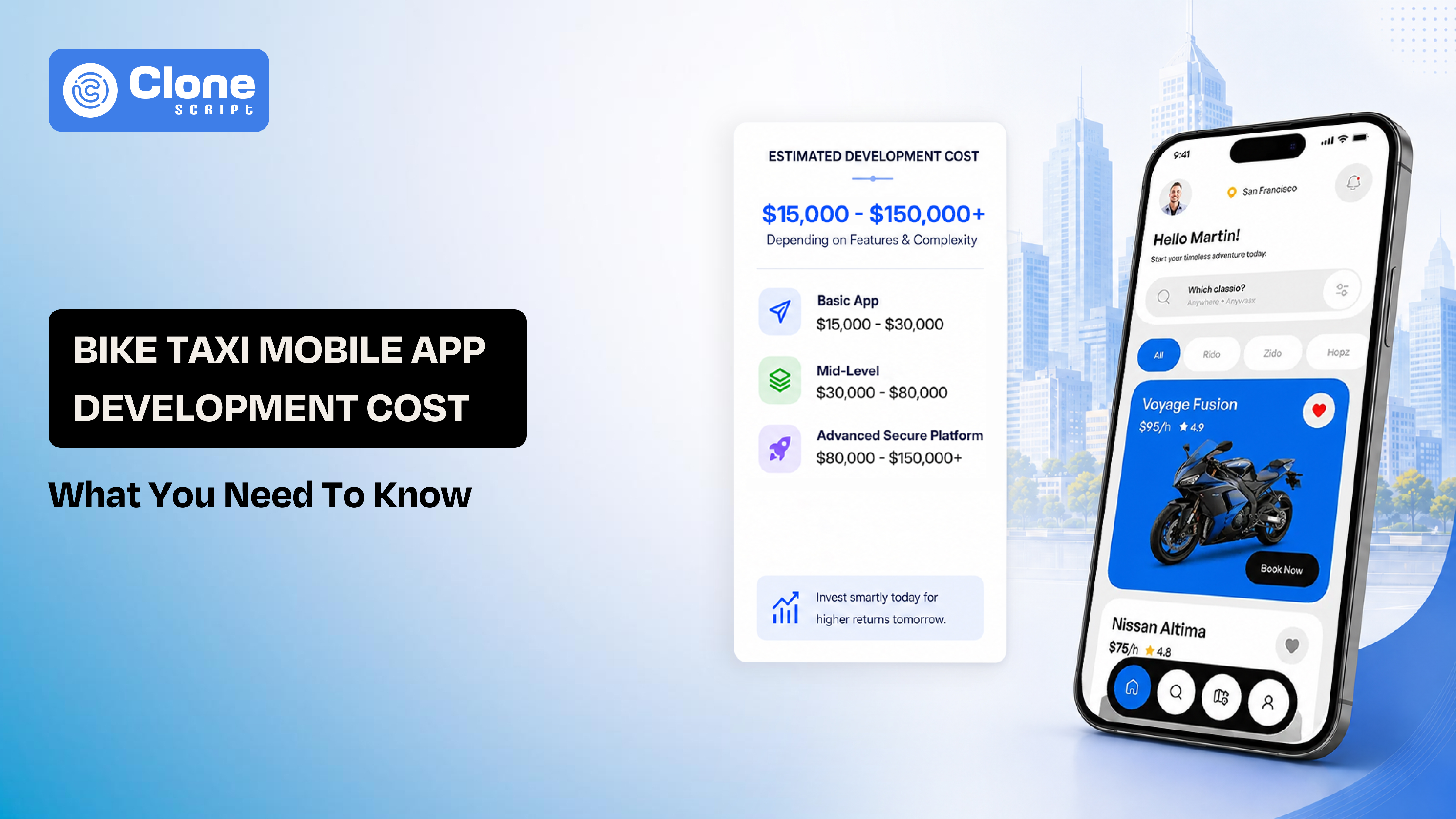
The short answer: anywhere between $15,000 to $150,000+, depending on your approach.
The long answer? It depends on multiple variables, security architecture, development model, geography, scalability, and how fast you want to enter the market.
This guide describes actual cost components, compares custom vs. white-label development, and reveals a practical budget strategy you may overlook, especially if you're building for long-term profitability, not just a launch.
What Bike Taxi Mobile App Development Cost Includes? A 2026 Perspective
Most cost breakdowns stop at features. That’s outdated. In 2026, the real cost of a bike taxi app is shaped by how efficiently your system handles real-world demand, trust, and scalability. Not just what screens you build.

1. Rider App Development (Conversion-Focused Layer)
This is no longer just a booking interface. It’s your revenue gateway. The difference between a basic and high-performing rider app is how smoothly it converts intent into completed rides.
The app typically covers:
-
Ride booking with smart location detection
-
Real-time driver tracking with accurate ETAs
-
Seamless payments (UPI-first in Asian markets)
-
Ratings, reviews, and ride history
What’s new in 2026: Users expect instant response and zero friction. Even slight delays or confusing flows significantly reduce conversions.
For rider app development, the estimated cost range is around $5,000 – $20,000.
2. Driver App Development (Supply Retention Layer)
Earlier, this was treated as a basic utility. Now, it’s a driver retention tool.
Bike taxi driver app core features include:
-
One-tap ride accept/reject system
-
Smart navigation with live traffic updates
-
Earnings clarity (daily + incentives)
-
Flexible availability controls
The better your driver experience, the less you spend on driver acquisition and bonuses later.
This app's estimated cost is $4,000 – $15,000.
3. Admin Panel (Decision Intelligence Layer)
In 2026, an admin panel for a bike taxi platform is not just operational. It’s strategic and helps you respond to demand shifts in real time.
It typically includes:
-
User and driver lifecycle management
-
Dynamic pricing and commission control
-
Real-time analytics dashboards
-
Dispute handling and fraud monitoring
A weak back-end increases hidden costs through manual work and slow decision-making.
To make a secure admin system, the estimated cost is $5,000 – $25,000.
4. Security Infrastructure (Trust Economy Layer)
Security is a business differentiator for mobility apps because users and the bike driver always prefer a safe platform.
The app must-have components:
-
End-to-end encryption for all communications
-
Secure, tokenized payment processing
-
OTP and multi-factor authentication
-
Compliance with evolving data privacy laws
-
Real-time fraud detection systems
In competitive markets, users don’t compare features. They compare which platform feels safer.
Adding security to the app estimated cost is $3,000 – $15,000.
5. Real-Time Features & Integrations (Performance Backbone)
This layer determines whether your app works well in theory or survives real-world usage.
Key integrations with the app are required:
-
GPS tracking with route optimization
-
Push notifications for instant updates
-
Payment gateways adapted to local markets
-
Cloud infrastructure for scaling
Costs here are increasingly usage-based, meaning your expenses grow with your success.
To add these features, the estimated cost is $3,000 – $12,000.
6. Maintenance & Scaling (Growth Sustainability Layer)
Most founders plan for launch, not for growth. That’s where budgets break.
Ongoing requirements in the bike taxi booking app have to be fulfilled:
-
Server scaling as user demand increases
-
Continuous bug fixes and performance tuning
-
Feature upgrades based on real usage data
-
Security updates to prevent vulnerabilities
Your app will evolve every quarter. Static apps lose users quickly.
Annual cost for maintenance can be 15–25% of the total development cost.
Total Cost Overview
| Level | Cost | Best for |
|---|---|---|
| Minimum Viable Product | $15,000 - $30,000 | Lean Market Entry |
| Mid-Level | $30,000 - $80,000 | Growth |
| Advanced Secure Platform | $80,000 - $150,000+ | Pioneer Brand |
Key Insight
The real cost is in building the right system at the right stage.
-
Overspend early → capital gets locked
-
Underspend on core layers (security, back-end) → growth collapses later
The winning strategy in 2026 is clear:
Start lean, prioritize trust and performance, and scale based on actual demand. Not assumptions.
Is Custom Bike Taxi Development Beneficial for My Business? 2026 Reality Check
Custom development sounds like the “ideal” path. But in 2026, the smarter question is not can you build it, but should you build it from scratch at your current stage?
For business owners, this decision directly impacts time-to-market, capital risk, and scalability.

When Custom Development Actually Makes Sense
This option is beneficial only under specific conditions. It works best when you’re planning for long-term differentiation, not just market entry.
You should consider it if:
-
You want to build unique features (AI-based pricing, predictive demand, fleet automation)
-
You are targeting highly competitive or regulated markets
-
You have a clear product-market fit already validated
-
You can afford a longer development cycle (6–12 months)
In these cases, bike taxi mobile app development with a custom way gives you full control over architecture, features, and scalability.
What Most Businesses Underestimate
The challenge isn’t development. It’s everything that comes with it.
Custom app development typically involves:
-
Multiple development phases (design → build → testing → iteration)
-
Continuous involvement in decision-making
-
Dependency on a technical team for updates and fixes
-
Higher pre-launch investment without guaranteed returns
Hidden reality: You don’t just build once. You keep rebuilding as the market evolves.
The Truth: Cost vs Time Trade-Off
Let’s break it down from a business lens:
-
It involves a higher upfront cost of between $50,000 – $150,000+.
-
You have to wait a longer time to launch for 6–12 months.
-
You may face delayed revenue generation.
-
There is a higher risk if the idea is not validated.
This creates a critical gap: You’re investing heavily before you even know if your model works in your target market.
Where Custom Development Becomes a Risk
Custom app development can slow you down if:
-
You’re entering a new or untested market
-
You don’t have existing user data to guide features
-
You need to launch quickly to capture demand
In these scenarios, building from scratch leads to:
-
Overbuilt features that users don’t need
-
Budget exhaustion before scaling
-
Missed market timing
The 2026 Shift: Build After Validation, Not Before
Modern mobility startups are changing their approach.
Instead of starting with custom development, they:
-
Launch with a lean, ready-made solution
-
Validate demand and user behavior
-
Identify what actually needs customization
-
Then invest in custom features strategically
Why White-Label Clone Software Makes More Sense for Bike Taxi Apps
Not every business needs to build from zero. In fact, in 2026, many successful mobility startups are avoiding custom development in the early stage and choosing white-label solutions instead.
The reason is simple: speed, lower risk, and faster revenue entry.

What White-Label Actually Means for Your Business
A white-label bike taxi solution is a pre-built, ready-to-launch platform that you can brand as your own.
Instead of spending months building features, you start with a system that already includes:
-
Rider and driver apps
-
Admin dashboard
-
Payment gateway integrations
-
Basic security framework
You focus on running the business, not managing development.
Why It’s Becoming the Preferred Approach
The shift toward white-label solutions is launching smarter. Saving the cost is not the primary goal.
Here’s what makes it practical:
-
Faster go-to-market: You can launch within days or weeks instead of waiting 6–12 months. That means the app development timeline will be reduced by 50-80%.
-
Lower initial investment: Typical cost ranges between $5,000 – $20,000, making it accessible for most business owners.
-
Pre-tested system: In the bike taxi clone script, core features are already validated, reducing technical risks.
Where It Gives You a Real Business Advantage
The biggest advantage is strategic flexibility.
With a white-label solution, you can:
-
Test different pricing models quickly
-
Enter specific cities or regions without heavy investment
-
Adjust operations based on real user behavior
-
Scale gradually instead of overcommitting early
What Most Entrepreneurs Don’t Realize
White-label is often misunderstood as a “basic” solution. In reality, it works as a market validation tool.
Instead of investing heavily upfront, you can do:
-
Launch early
-
Start generating revenue
-
Understand your customers
-
Then decide where to invest in customization
This reduces one of the biggest startup risks: building something users don’t actually need
Limitations You Should Be Aware Of
To make an informed decision, you should also consider the trade-offs of the bike taxi app white-label app:
-
Limited flexibility compared to fully custom apps
-
Dependency on the provider for updates
-
Some features may not match your long-term vision
However, these are usually acceptable at the early stage, where speed matters more than perfection.
Best Use Case for White-Label Solutions
This approach works best if:
-
You want to enter the market quickly
-
You’re testing a new location or business model
-
You prefer low-risk investments before scaling
If your goal is to start efficiently and grow with clarity, white-label is the smarter first move.
Does Your Geography Change How You Should Build a Bike Taxi Mobile App? (Asia vs Western Markets)
Where you launch matters more than most founders expect. Geography doesn’t just influence pricing. It shapes product decisions, compliance requirements, and overall cost structure.
1. Asian Markets (India, Vietnam, Indonesia)
These markets are driven by high demand and price sensitivity. Bike taxis solve real problems here: traffic congestion, affordability, and last-mile connectivity.
What typically works:
-
Low-cost ride models to attract mass users
-
Lightweight apps optimized for mid-range devices and slower networks
-
Faster onboarding for drivers to scale supply quickly
Operational reality:
-
Users prioritize price and speed over premium features
-
High ride volume compensates for lower margins
Cost impact:
-
Lower development complexity initially
-
Faster adoption cycles
-
Reduced compliance burden compared to Western markets
2. Western Markets (USA, UK, Europe)
Here, the environment is very different. Demand exists, but expectations are higher, and regulations are stricter.
What typically works:
-
Safety-first features (ride tracking, emergency alerts, insurance integration)
-
Premium user experience with high reliability and support
-
Strong branding and trust signals
Operational reality:
-
Users expect consistency, safety, and transparency
-
Competition with established players increases entry barriers
Cost impact:
-
Development costs increase by 30–50% due to added features
-
Legal, insurance, and compliance costs become significant
-
Longer time to launch
Key Differences at a Glance
| Factor | Asian Markets | Western Markets |
|---|---|---|
| User Priority | Price & Speed | Safety & Experience |
| App Complexity | Moderate | High |
| Compliance | Basic to Moderate | Strict |
| Cost of Entry | Lower | Higher |
What Most Businesses Overlook
Many founders copy a model from one region and apply it to another without adapting.
That leads to:
-
Overbuilding features in price-sensitive markets
-
Underinvesting in safety where it’s mandatory
-
Misaligned pricing strategies
Strategic Insight
Your business operating location should define:
-
What features do you build first
-
How much do you invest initially
-
How you position your service
Align your development approach with your geography, and your budget will naturally become more efficient.
Budget Planning for Bike Taxi App Development to Allocate Smartly in 2026
Most founders face problems because they allocate the budget incorrectly. In a bike taxi business, your goal is not to spend less, but to spend in the right sequence.

Start With a Stage-Based Budget Approach
Instead of investing everything up front on app UI design and UX or marketing, break your budget into phases aligned with business growth.
Phase 1: Market Entry (Lean Setup)
Focus on launching quickly with essential features.
-
Use a white-label or MVP solution
-
Keep features minimal but functional
-
Enter a specific city or niche
For this, allocate a budget range of around $5,000 – $20,000.
Phase 2: Validation & Traction
Now the focus shifts from building to learning.
-
Invest in user acquisition and marketing
-
Analyze rider and driver behavior
-
Optimize pricing and operations
Key point: This phase requires more spending on marketing than on app development.
Phase 3: Scaling & Customization
Once you see consistent demand, then you build deeper.
-
Add custom features based on real usage
-
Improve infrastructure and performance
-
Expand to multiple locations
Budget Focus: Higher investment, but now it’s data-driven, not assumption-driven
How to Distribute Your Budget
A practical allocation model most successful operators follow:
-
Development: 35–40%
-
Marketing & Acquisition: 30–35%
-
Operations (drivers, support): 20–25%
-
Contingency buffer: 10%
Where Most Budgets Go Wrong
Common mistakes that increase risk for bike taxi app development budget:
-
Spending heavily on features before validating demand
-
Ignoring marketing costs in the early stages
-
Underestimating ongoing operational expenses
-
Skipping security or backend investment to save cost
A More Practical Way to Think About Budget
Instead of asking: “How much does it cost to build an app?”
Ask: “How much does it cost to reach stable revenue?”
Because a well-built app without users is related to no business. At the same time, a simple app with strong demand balances a scalable opportunity.
This approach reduces risk while giving you the flexibility to adapt as your bike taxi business grows.
There are risks in bike taxi app development, and the marketing strategy has to be prepared to solve those issues. Otherwise, even a custom app can’t get utilization from users and drivers.
Why Choose AllClone Script as Your Bike Taxi App Development Partner
Choosing a development partner is a business decision that directly impacts your speed, cost efficiency, and long-term scalability. In the bike taxi business, delays and misalignment can cost more than development itself.
What You Should Expect From a Development Partner
Before selecting any provider, your expectations should go beyond coding.
A reliable partner should help you:
-
Launch quickly without unnecessary delays
-
Align the product with your business model, not just features
-
Provide a system that can scale as demand grows
-
Reduce technical complexity so you can focus on operations
This is where many generic development agencies fall short. They build apps, but not business-ready platforms.
Where AllClone Script Fits In
AllClone Script positions itself as a ready-to-deploy solution provider rather than a traditional development company.
Instead of starting from scratch, you get:
-
Pre-built rider and driver applications
-
A functional admin dashboard
-
Integrated payment systems
-
Core security features already in place
This reduces both development time and initial investment pressure.
Get Speed as a Competitive Advantage
In mobility businesses, timing matters more than perfection.
With a ready-made solution:
-
You can launch within days instead of months
-
Start onboarding drivers and users early
-
Capture local demand before competitors enter
This early entry often becomes your strongest market advantage.
Experience Scalability Without Rebuilding
One of the practical benefits is flexibility.
You can do the following:
-
Start with a basic setup
-
Add features as your business grows
-
Expand into new locations without rebuilding the entire system
This approach aligns with how modern startups scale, incrementally, not all at once.
Cost Efficiency Without Cutting Corners
Instead of investing heavily upfront, you:
-
Reduce initial development costs
-
Allocate more budget to marketing and operations
-
Generate revenue earlier
This improves your cash flow cycle, which is critical in the early stages.
Important Consideration
Like any white-label solution, it’s important to:
-
Evaluate customization limits
-
Understand support and update policies
-
Ensure the solution aligns with your long-term vision
A good decision here is about fit, not just price.