BTC - Bitcoin
 USDTERC20 - USDT ERC20
 ETH - Ethereum
 BNB - Binance
 BCH - Bitcoin Cash
 DOGE - Dogecoin
 TRX - TRON
 USDTTRC20 - USD TRC20
 LTC - LiteCoin

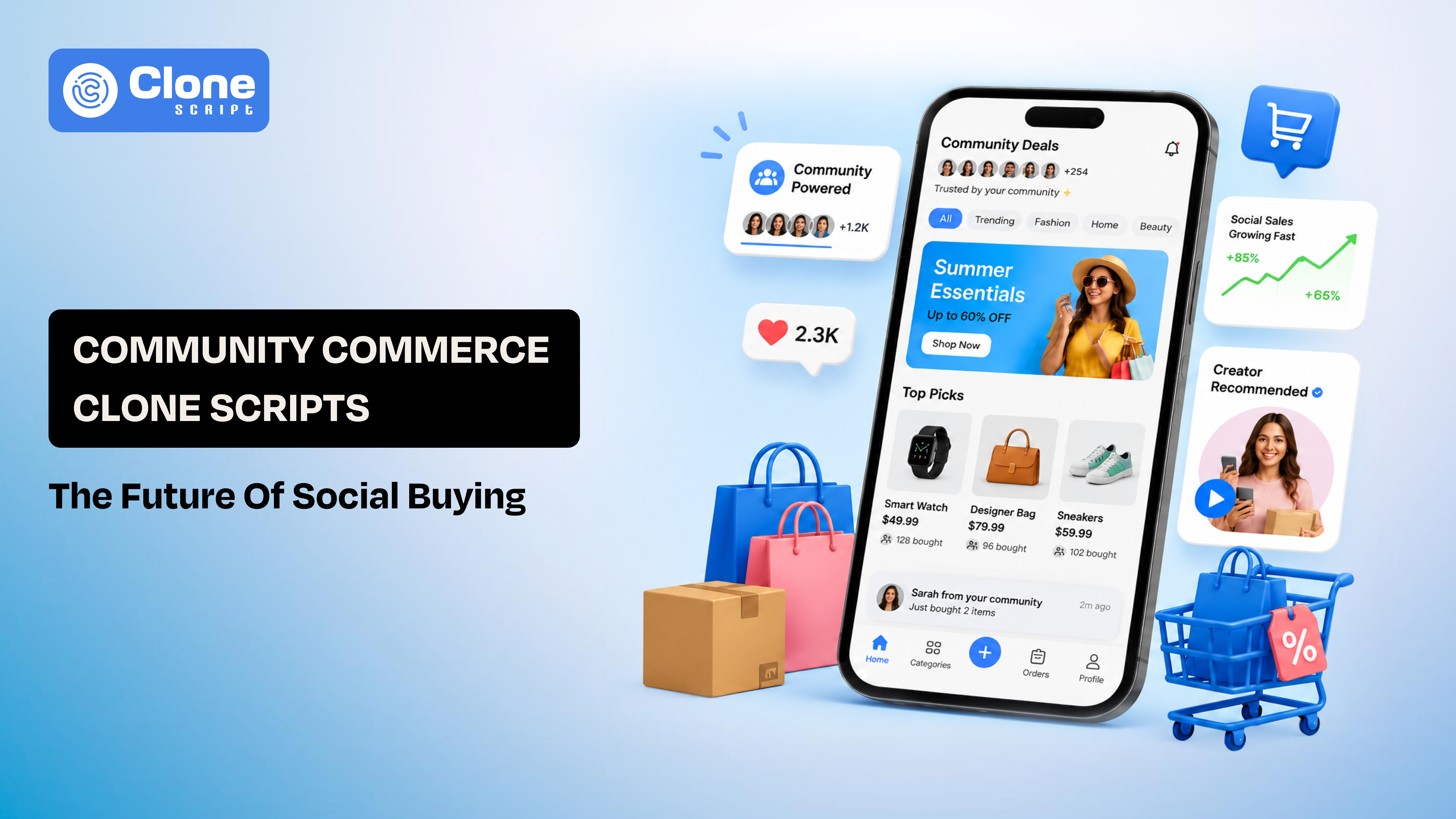
Community Commerce Website and App Clone Scripts and the Future of Social Buying
A stranger recommends a product to you feel like background noise. But today, it can trigger thousands of purchases within minutes, especially when it comes from a creator, a niche community, or a trusted peer group. That shift explains why digital buying behavior is being rewritten in real time.
The fact is: Commerce no longer starts with a search bar. It starts with social trust.
This is the foundation of community commerce: a model where people buy through interaction, influence, and belonging rather than through traditional storefront discovery. Consumers are no longer moving through rigid funnels built around ads and product pages. They are discovering products inside conversations, livestreams, communities, and creator-led ecosystems.
So, what is there for business? That changes the rules entirely. Winning in this environment requires more than an e-commerce site. It requires infrastructure built for engagement-driven selling. That is where community commerce clone scripts are becoming essential. Instead of spending months building complex systems from the ground up, companies can launch faster with ready-made frameworks designed for social buying behaviors.
As the future of social buying shifts toward community-led decision-making, the businesses that adapt early will be the ones shaping the next phase of digital commerce.
What Is Community Commerce?
First of all, community commerce is different from traditional e-commerce. Here, the transactions happen within the social relationships and shared interests. In community commerce, buyers don’t have to visit a standalone store, but they find products through trusted creators, communities, and group-driven discussions.
This model differs from both e-commerce and social commerce:
-
E-commerce focuses on direct product transactions.
-
Social commerce enables purchases through social media channels.
-
Community commerce builds purchasing ecosystems around engagement, trust, and collective influence.
In practical terms, community commerce solutions allow users to interact, review, recommend, and buy within a connected environment. The commerce engine is powered not just by products, but by relationships.
This approach reflects how consumer behavior has evolved. Buyers no longer rely only on search intent; they rely on communities that validate purchasing decisions. For businesses, this creates stronger loyalty and higher lifetime value.
Why Social Buying Is Becoming the Default Consumer Behavior
The future of social buying is tied directly to digital behavior patterns. Consumers increasingly discover products while scrolling social feeds, watching creators, joining live sessions, or participating in online groups.
This transition has changed the customer journey from a linear process into a socially influenced ecosystem.
The traditional journey flow is: Search → Compare → Purchase
Modern social buying journey: Discover → Trust → Engage → Purchase
The difference lies in emotional influence. Social buying thrives on authenticity, peer validation, and creator credibility.
Several factors are accelerating this shift:
-
Creator-Led Influence
Paid advertising is still an effective option, but fewer consumers like to connect. In community commerce, they trust creators, consider the recommendations from influencers, niche experts, and leaders.
-
Real-Time Engagement
The on-moment answer is the key to success in this business model. Livestream shopping, live Q&A sessions, and social comments allow immediate interaction between sellers and buyers.
-
Community Validation
Ratings, discussions, and peer recommendations reduce uncertainty and increase conversion confidence. That means winning trust is becoming unified for consumers to take an interest in the product.
This is why social buying platforms are becoming central to digital commerce strategies. Businesses that understand this shift are investing in infrastructure that supports social-first experiences.
The Rise of Community Commerce Platforms in 2026
As digital ecosystems mature, community commerce platforms are becoming more sophisticated. The year 2026 is expected to further strengthen this trend through platform-native innovations.
Several developments define the rise of these platforms:
-
Integrated Shopping Experiences
In these platforms, consumers no longer want to leave their preferred apps to complete purchases. Seamless in-platform checkout improves convenience and reduces friction.
-
Creator Storefronts
Independent creators now operate personalized shops directly connected to their audiences. They can carry the branding, USP, and engagement to consumers in their own way to make such a great business.
-
AI-Driven Recommendations
Artificial Intelligence in customer experience is reaching new heights every day, and in it, machine learning becomes a key differentiator. It enables product suggestions based on engagement behavior, interests, and community activity.
-
Affiliate Ecosystems
Referral-driven selling models incentivize community members to promote products. This can be a more important part of growing the newly launched community commerce platform than depending on the paid social media ads for consumer acquisition.
These shifts create demand for agile infrastructure. Businesses entering this space need scalable systems that support evolving buying habits.
This is where community commerce clone scripts become strategically important.
What Are Community Commerce Clone Scripts?
Community commerce clone scripts are pre-built software solutions designed to replicate the functionality of successful social buying and marketplace platforms.
Unlike generic e-commerce software, these scripts are tailored for interaction-driven commerce models.

A strong clone script typically includes:
-
Multi-vendor marketplace support
-
Social feeds and community engagement tools
-
Creator dashboards
-
Live shopping modules
-
Referral and commission systems
-
Analytics and user behavior tracking
These systems allow startups to launch quickly without the long development cycles associated with custom software builds.
For founders exploring how to build a community commerce platform, clone scripts offer a ready-made foundation that can be customized based on business goals.
They reduce technical barriers while preserving flexibility.
Why Businesses Are Choosing Clone Scripts Over Custom Development
“It saves 40-60% of the total development cost.” You say this. But the reality is not that.
Look, when you launch a new social commerce software, there are multiple factors included:
-
Planning the entire workflow
-
Assembling the development resources (UI designing, full-stack development, deployment, testing, etc.)
-
Regulation compliance in the operating region
Clone scripts offer an alternative path that prioritizes speed, affordability, and operational efficiency.
-
Faster Time-to-Market
In competitive sectors, delayed launches can mean lost opportunities. Clone scripts shorten development timelines, which means you have a live product to go on and start the business.
-
Lower Initial Costs
The custom software development for community commerce, the agency quotes you $30k with MVP and basic functionality. At the same time, a clone script with limited functionality is available at $50-60% less cost.
-
Proven Functionality
Pre-built systems often include features already validated by successful platforms. The risks can be minimal because consumers and creators are familiar with the functionalities they’re now using.
-
Scalable MVP Launches
Startups can release a minimum viable product quickly, gather feedback, and iterate. This option will save them to prevent to burn the resources and wasted efforts in the software development life cycle.
For companies researching the best clone scripts for social commerce startups, the key value lies in balancing cost efficiency with growth potential.
Custom development may still be suitable for highly specialized needs, but for most early-stage ventures, clone scripts provide stronger market agility.
Essential Features of a Future-Ready Social Buying Platform
To succeed in the future trends in social buying apps, businesses need more than storefront functionality.

A future-ready platform should include:
-
AI Personalization
Personalized recommendations improve product relevance and increase conversion rates. With the help of AI systems integration, consumers can see only those products they have been exploring before.
-
Community Interaction Tools
Discussion boards, reviews, polls, and chat systems create engagement loops in the community commerce app. That’s why these functionalities not just make a recommendation and purchase platform but real engaging business.
-
Creator Monetization Dashboards
Creators need transparent analytics, earnings tracking, and audience insights within a single dashboard. Don’t make clutter here. We recommend implementing the dashboard UI design and UX principles for accurate presentation and solving doubts.
-
Livestream Selling
Live commerce combines entertainment with purchasing intent, and it should be reflected on the website. Otherwise, consumers will start to doubt the platform and will not complete the purchase.
-
Social Proof Systems
Badges, testimonials, and verified reviews strengthen trust that is presented on every website, and community commerce websites are not excluded from it. To believe consumers, the purchase and personal information remain hidden encourage the buying.
-
Flexible Payment Infrastructure
Embedded wallets, installment options, and regional gateways expand accessibility. Offering flexible payment options will increase both audience trust: 1. Creators can easily withdraw their earnings, and 2. Consumers complete the payment with a tap.
These capabilities define modern social commerce development and separate scalable platforms from basic marketplaces.
How Community Commerce Clone Scripts Support New Revenue Models
The value of community commerce clone scripts extends beyond launch speed. They also enable diverse monetization strategies.

-
Commission-Based Marketplaces
Platforms earn revenue through transaction fees from sellers. This is the most common model that a new platform usually adopts. For example, a product listed at “$100” and the platform owns $5, with 5% fees charged.
-
Subscription Communities
This is a goldmine for sellers with exclusive membership benefits and creates recurring income. Here, they don’t have to pay a commission, but they can get the revenue that the customer pays. Sellers have to choose the subscription plan to access the features.
-
Creator Partnerships
Famous community commerce platform adopts this model because the collaboration with influencers and creators will bring the audience. Revenue-sharing agreements incentivize creators to drive sales.
-
Sponsored Product Placement
Brands pay for visibility inside engaged communities to get attention from consumers taking interests in the product. For that, sellers have to pay such a fee for placing the product.
-
Livestream Commerce Events
Event-based selling generates urgency and engagement. This model can be the right choice for products that have a specific use case for a certain time, winter, summer, monsoon, regions, or festivals.
Businesses exploring why businesses use community commerce software often prioritize these revenue streams when selecting a platform model.
A strong clone script supports flexible monetization without requiring redevelopment.
Challenges and Risks in Community Commerce Development
Despite its potential, community commerce development presents operational challenges.
-
User Retention
Keeping users engaged requires fresh content, active participation incentives, and meaningful interactions. Without ongoing engagement strategies, even strong communities can quickly lose momentum.
-
Trust Management
Fake reviews, misleading promotions, and unreliable sellers weaken platform credibility. Trust systems must be proactive, transparent, and consistently enforced.
-
Content Moderation
As communities expand, managing harmful, irrelevant, or spam content becomes critical. Scalable moderation tools protect both users and brand reputation.
-
Technical Scaling
Rapid user growth can confuse systems if the architecture is not optimized. Performance issues directly impact user satisfaction and retention.
Businesses must treat platform sustainability as seriously as launch execution.
Clone scripts reduce entry barriers, but long-term success depends on governance, user experience, and strategic iteration.
The Future of Social Buying: What Comes Next?
The future of social buying will be shaped by deeper integration between commerce, AI, and community behavior.
Several emerging trends are expected to dominate:
-
Conversational Commerce
AI-powered assistants are becoming shopping companions, helping users discover products, compare options, and make faster purchasing decisions through natural conversations.
-
Agentic Shopping
Autonomous systems will soon handle product recommendations, price negotiations, and purchase execution, creating seamless shopping experiences with minimal user effort.
-
Community-Owned Marketplaces
Decentralized ownership models can increase transparency, strengthen trust, and encourage deeper user loyalty by giving communities a stake in platform success.
-
Hyper-Niche Ecosystems
Smaller, specialized communities focused on shared interests often generate stronger engagement, higher trust, and better conversion than broad-market platforms.
For businesses researching social commerce platform development in 2026, these shifts indicate that adaptability will define long-term competitiveness.
Choosing the Right Clone Script for Your Business Model
Every solution is equal. This thinking has to be changed.
When evaluating clone scripts for social commerce, businesses should assess:
-
Customization flexibility
-
Mobile responsiveness
-
Scalability in high traffic
-
Integration capabilities
-
Monetization support
-
Security architecture
-
Vendor and creator management tools
The right script should align with both immediate launch goals and long-term expansion plans.
For companies looking to build a community commerce platform, selecting the right foundation is a strategic business decision. Not just a technical purchase.
All Clone Script will help you in development and make a complete platform as per your requirements. Contact our team.
Conclusion
Community-driven purchasing is redefining how digital commerce works. As consumers prioritize trust, creators, and peer influence, businesses must adapt to the new realities of social-first engagement.
Community commerce clone scripts provide a practical path into this evolving market, combining rapid deployment with scalable infrastructure. For startups and enterprises alike, they represent a competitive advantage in the expanding world of social buying platforms.