BTC - Bitcoin
 USDTERC20 - USDT ERC20
 ETH - Ethereum
 BNB - Binance
 BCH - Bitcoin Cash
 DOGE - Dogecoin
 TRX - TRON
 USDTTRC20 - USD TRC20
 LTC - LiteCoin

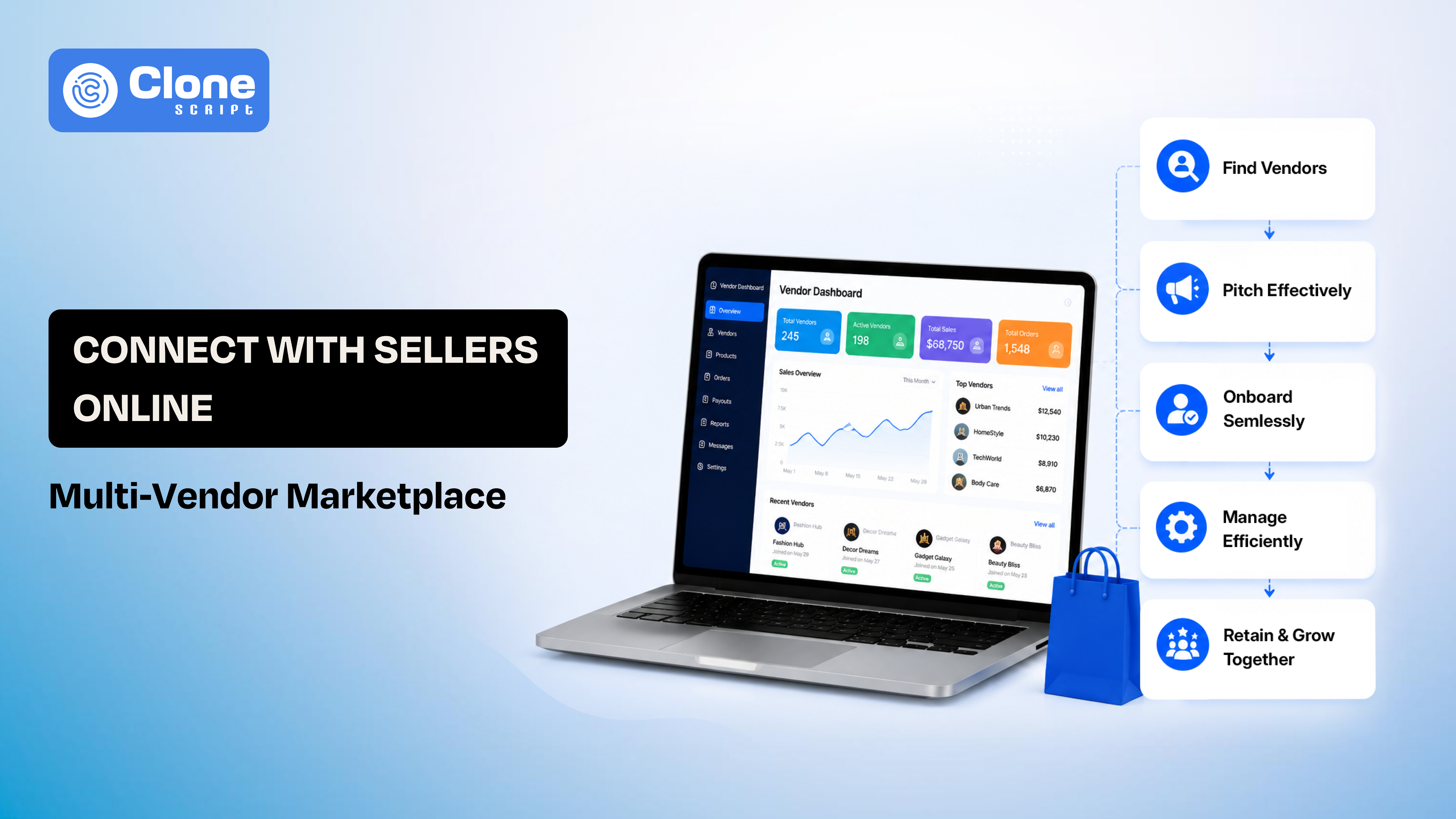
How to Connect With Sellers for Your Online Multi-Vendor Marketplace
Before you start a multi-vendor marketplace app and website development, one important aspect to consider is how to get on board with sellers. If they don’t see the platform as a profitable and reliable channel, everything goes in vain.
For that, winning vendor trust required depth, quality, and consistency of your marketplace offering. The challenge for you is to know that vendors already have multiple sales avenues, from large marketplaces to direct storefronts.
Why do they choose the platform: Outline a clear business advantage and a reason to invest effort.
Understanding how to connect with vendors strategically is what transforms a marketplace from a digital platform into a successful commercial ecosystem.
First, Know What Vendors Actually Want From a Marketplace.
By knowing what motivates sellers to join and stay active on a platform, efforts can be made more efficient. Vendors evaluate marketplaces based on business value, not platform claims. A vendor acquisition strategy includes the following:
-
Revenue Opportunities
Sellers prioritize platforms that can generate consistent sales. For that, access to niche buyers, underserved markets, or high-intent audiences can increase the perceived value of your marketplace.
-
Reduced Operational Burden
Vendors prefer systems that make their work easier. This includes simplifying inventory management, order fulfillment, and customer communication. A marketplace that saves time becomes instant to adopt and scale within.
-
Access to New Customers
One of the biggest reasons sellers join online marketplaces is customer expansion. Platforms that provide broader visibility create stronger incentives for participation. But for that, the marketplace has to be well-known across the specific region.
-
Faster Payments and Trust
Making such a large amount of sales, sellers want to cash in on the revenue. For that, reliable payouts and transparent policies build confidence. Another side, trust is a critical factor in marketplace seller recruitment, especially for vendors comparing multiple selling channels.
-
Visibility and Brand Growth
Many sellers seek more than transactions. They consider featured listings, marketing campaigns, and promotional opportunities to help strengthen their brand presence.
To attract sellers to marketplace platforms, businesses must focus on delivering measurable outcomes that align with vendor goals.
Define Your Ideal Vendor Profile Before Outreach.
Effective marketplace vendor recruitment begins long before the first email or phone call. The quality of your vendor network depends on how clearly you define who belongs on your platform.
-
Match Vendors to Your Marketplace Niche.
Every marketplace serves a specific audience. For a fashion e-commerce platform, you can’t onboard the handyman service provider. A mismatch weakens trust and reduces buyer satisfaction. Vendors should align with customer expectations, pricing standards, and product categories.
-
Evaluate Business Readiness.
Vendors have different operational strength and your marketplace have to be designed accordingly. This includes management for review fulfillment capacity, product consistency, response times, and digital capabilities before investing in outreach.
-
Balance Independent Sellers and Established Suppliers
Small businesses bring originality and niche appeal, while larger suppliers contribute scale and reliability. A professional marketplace benefits from both, but each requires different engagement strategies.
-
Consider Geographic Fit
Local vendors strengthen regional delivery and community trust. Global suppliers expand assortment and sourcing flexibility. Your target market should determine the right balance.
-
Build Vendor Personas
Create profiles based on seller goals, challenges, and preferred communication methods. This helps personalize your seller outreach strategy and improves conversion rates.
The strongest marketplaces grow by targeting vendors who can create long-term value, not just short-term inventory.
Where to Find Vendors for Your Marketplace?
Knowing how to find vendors for marketplace growth requires more than browsing random seller lists. Successful platforms build consistent sourcing channels that align with their niche and expansion goals.
-
Online Supplier Directories
Directories provide access to manufacturers, wholesalers, and verified sellers across multiple industries. They are useful for discovering potential vendors already prepared for digital commerce.
-
Industry Expos and Trade Fairs
Trade events offer direct interaction with suppliers and decision-makers. These environments help establish trust faster and provide insight into emerging product trends.
-
LinkedIn and B2B Communities
Professional networks are ideal for targeted B2B outreach. They allow marketplace founders to connect with sellers through industry groups, partnerships, and direct conversations.
-
Competitor Marketplaces
Established platforms reveal active vendors already succeeding in your category. Studying these sellers helps identify businesses that may benefit from additional sales channels.
-
Social Commerce Platforms
Independent brands on Instagram, Facebook Shops, and TikTok often seek broader distribution. These sellers are highly adaptable and open to new marketplace opportunities.
-
Referrals and Strategic Partnerships
Existing vendors, logistics partners, and trade associations can introduce qualified sellers with stronger trust levels than cold outreach.
A reliable sourcing engine creates a steady pipeline of vendors who fit your marketplace ecosystem.
How to Reach Out to Vendors Effectively?
A strong seller outreach strategy depends on relevance, timing, and credibility. Vendors respond when communication feels tailored to their business goals rather than generic recruitment.
-
Personalize Every First Contact
Reference the vendor’s products, market position, or recent growth signals. Personalized outreach demonstrates preparation and increases response rates.
-
Use the Right Communication Channel
Email works well for structured proposals, while LinkedIn supports professional networking. In many markets, direct messaging apps create faster engagement.
-
Lead With Business Value
Explain how your marketplace can expand reach, improve sales, or simplify operations. Vendors care about measurable outcomes, not platform features.
-
Build a Follow-Up System
Most partnerships are secured after multiple touchpoints. Consistent but respectful follow-up keeps conversations active without creating pressure.
-
Handle Objections Strategically
Concerns around commission fees, traffic volume, or operational demands should be addressed with clarity and evidence.
Effective outreach turns cold contacts into long-term vendor relationships through trust and relevance.
Build a Vendor Pitch That Converts.
A compelling pitch is central to attracting sellers to marketplace initiatives. They need clear proof that joining your platform creates business value beyond what they already have.
-
Present a Strong Value Proposition
Show how your marketplace solves a specific challenge, whether it is reaching niche customers, increasing visibility, or reducing selling costs.
-
Demonstrate Market Demand
Vendors are more likely to join when they see evidence of buyer interest. Share audience insights, traffic trends, or early customer engagement metrics.
-
Use Proof to Build Confidence
Case studies, pilot results, and seller success stories provide credibility. Even small examples help reduce uncertainty.
-
Explain the Revenue Model Clearly
Commission rates, subscription fees, and payout timelines should be transparent from the start. Hidden terms create hesitation.
-
Address Competitive Advantages
Highlight what makes your marketplace different from established alternatives. Sellers need a reason to prioritize your platform.
A successful pitch focuses on growth potential and operational clarity, making the decision easier for vendors.
Simplify Vendor Onboarding for Faster Conversion.
Strong onboarding vendors for e-commerce marketplace processes reduce confusion between interest and activation. A complicated setup can cause vendors to abandon the opportunity before listing their first product.
-
Create a Clear Registration Flow
Registration should be intuitive and require only essential information at the start. Avoid long forms to discourage participation.
-
Streamline Verification Processes
Document checks, tax details, and approvals must move quickly, and the status has to be displayed. Delays reduce momentum and weaken vendor confidence.
-
Support Product Listing Setup
Many sellers need guidance on descriptions, pricing, and catalog organization. This provides templates or hands-on assistance to improve listing quality.
-
Offer Training Resources
Tutorials, webinars, and FAQs help vendors understand platform tools and best practices without relying heavily on support teams.
-
Accelerate the First Sale
Early success increases retention. Promotional boosts, onboarding campaigns, or featured placements help vendors gain traction faster.
An efficient onboarding system improves conversion rates and strengthens the long-term vendor experience.
Focus on Solving the Marketplace Problem.
One of the biggest barriers in multi-vendor marketplace growth is marketplace liquidity. Sellers hesitate to join without customers, while customers expect product variety before engaging.
-
Build Buyer Demand Early
Start audience-building before scaling vendor supply. Content marketing, pre-launch social media ad campaigns, and community engagement create visible interest.
-
Validate Demand With Real Signals
Waitlists, newsletter subscriptions, and pre-orders provide evidence that customers are ready to buy. That means you have particular information on what the future strategy should be.
-
Use Manual Matchmaking
In the early stages, personally connect buyers with vendors to generate transactions and gather operational insights. This helps both sellers to get a sale and the buyer to make a perfect purchase.
-
Guarantee Visibility for Early Vendors
Offer homepage placements, promotional campaigns, or reduced commissions to those who join the platform within a certain time. This is a useful trick to onboard vendors on the platform.
-
Create Exclusive Launch Groups
Founding vendor cohorts encourage commitment through exclusivity and added incentives. Consider this option when you want to make a platform accessible to most sellers.
Liquidity challenges are solved by providing opportunity before expecting scale. Vendors join when they see traction, not promises.
Retain Vendors Through Long-Term Relationship Management.
Acquiring sellers is only the first step in vendor management on an e-commerce platform. Long-term marketplace success depends on keeping vendors engaged, profitable, and committed to your ecosystem.
-
Provide Performance Visibility
Dashboards with sales data, traffic sources, and customer insights help vendors understand what drives results and where to improve.
-
Deliver Ongoing Marketing Support
Seasonal promotions, featured campaigns, and collaborative advertising increase vendor sales while strengthening platform loyalty.
-
Assign Dedicated Support Channels
Fast issue resolution and direct communication improve trust, especially for high-performing sellers managing large inventories.
-
Reward Consistent Performance
Reduced commission rates, premium placement, or exclusive opportunities encourage long-term participation. Implement a marketplace revenue model from the possible options.
-
Create Vendor Feedback Loops
Regular surveys and advisory groups help identify pain points while making vendors feel invested in platform decisions.
Retention strategies reduce churn and turn sellers into long-term partners within your vendor ecosystem.
Metrics to Measure Vendor Acquisition Success.
Effective vendor management depends on measurable performance indicators. Without tracking outcomes, marketplace growth decisions rely on assumptions rather than evidence.
-
Vendor Signup Rate
This measures how many sellers enter your pipeline after outreach efforts. It reflects the effectiveness of your positioning and acquisition channels.
-
Activation Rate
A high signup volume means little if vendors do not complete onboarding or list products. Activation reveals operational efficiency.
-
Time to First Sale
The speed at which vendors achieve their first transaction indicates how quickly they experience value on your platform.
-
Vendor Churn Rate
This metric measures the tracking of how many sellers become inactive, helping identify issues in onboarding, support, or revenue generation.
-
Revenue per Seller
This metric highlights vendor quality and long-term profitability within your marketplace. It is important to know how the platform is working.
-
Retention and Growth Trends
Consistent performance over time shows whether your vendor acquisition strategy is building a sustainable ecosystem.
Strong marketplaces use data to refine outreach, improve seller experience, and scale intelligently.
Conclusion
A successful marketplace is not defined by the number of vendors it signs, but by the quality of relationships it builds. Strong seller partnerships create inventory depth, customer trust, and long-term commercial stability.
Vendor acquisition works best when it is structured, targeted, and aligned with marketplace goals. From sourcing and outreach to onboarding and retention, every stage contributes to stronger platform performance.
Sustainable multi-vendor marketplace growth comes from delivering value that vendors can measure, revenue potential, operational support, and market visibility.
When sellers view your platform as a business partner rather than just another sales channel, your marketplace becomes far more competitive and scalable.