BTC - Bitcoin
 USDTERC20 - USDT ERC20
 ETH - Ethereum
 BNB - Binance
 BCH - Bitcoin Cash
 DOGE - Dogecoin
 TRX - TRON
 USDTTRC20 - USD TRC20
 LTC - LiteCoin

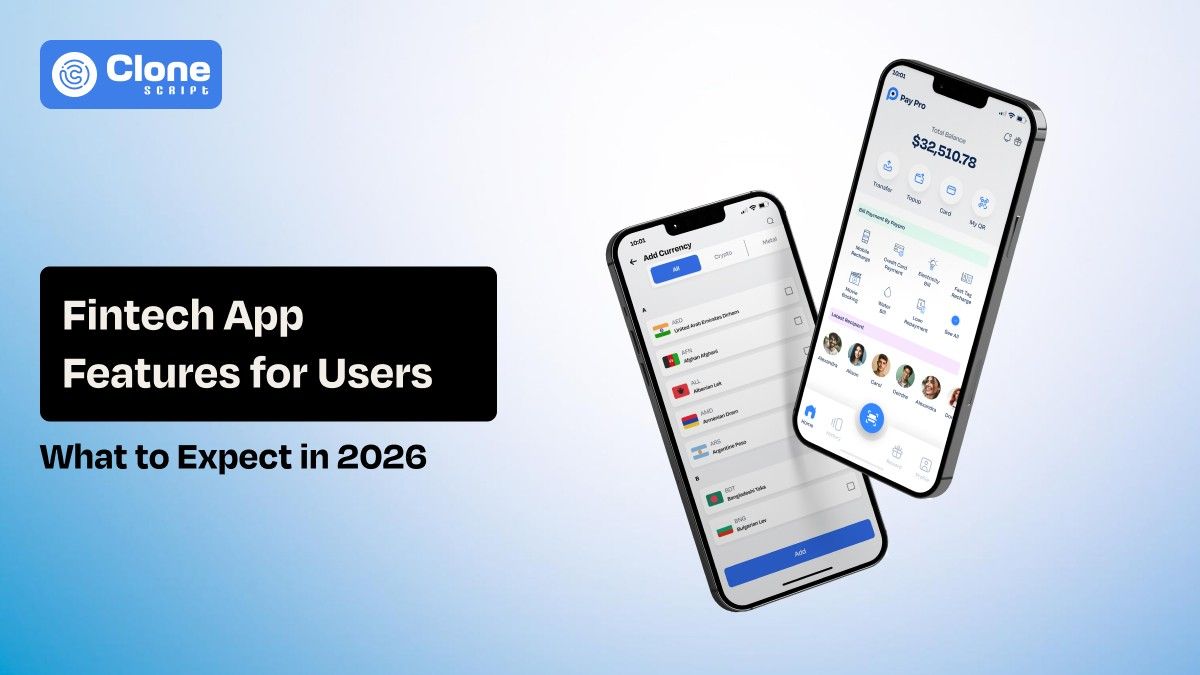
Fintech Web Application Features Users Expect in 2026 (Try to Get In Your App Too)
Fintech apps have evolved significantly beyond digital substitutes to more traditional banking products. Instead, users of fintech apps think not only of the alternatives but also of the best consumer applications out there, and as we move towards the year 2026, the standards have increased significantly.
Speed, clarity, intelligence, and trust are no longer nice-to-haves; they are expected. The fintech application needs to understand its user behavior, secure its user funds proactively, and remove friction points from every financial transaction. The UI design of the app is useful. But at the same time, regulators are increasing their expectations of compliance, speed of delivery needs to be increased without increasing risk.
What does this article cover?
In this article, we are going to focus on what users actually need from a fintech application in 2026. Subsequently, we are going to cover how users' expectations are being addressed and how one can achieve it most effectively.
How User Expectations in Fintech Are Changing in 2026?
Users are welcoming secure fintech apps and products, and investing less time to experience a traditional banking services. Leading consumer platforms, including super apps, eCommerce marketplaces, and AI-driven tools, have set a new watermark for pace, clarity, and responsiveness.
The result is that users compare them against the best digital experiences available across industries.
-
Immediate system feedback after each action, especially regarding any kind of payment, transfer, and adjustments to accounts keep them feeling secure.
-
Proactive and predictive insights that help drive anticipation of outcomes, rather than using static reports or historical summaries.
-
Operational transparency, giving explanations for transaction status, fees, or system decisions. This reduces worry.
Today, trust in fintech is no longer about the reputation of a brand. It's earned by the actual performance of reliable execution. Little problems in the experiences, like waiting in transactions, confusing pricing, or delayed notifications, can lead to a massive dent in user confidence.
By 2026, users take it for granted that fintech platforms:
-
Make near-continuous data available
-
Perform real-time or near-real-time transaction processing
-
Provide context-aware support that is available when and where issues arise
Applications that do not meet minimum user expectations are quickly abandoned. Being in a highly competitive fintech environment, users naturally seek applications that highlight reliability, transparency, and responsiveness as key product capabilities as opposed to nice-to-have functionality.
Core Fintech App Features Users Expect by Default in 2026
In 2026, most fintech features with a lot of promise will have become the new norms. With users expecting these features as part of their systems. If unavailable, users will begin to lose confidence in the application, despite how far it has come in specific fields.
-
Instant Account Setup with Zero Friction
Creating a fintech account should be as smooth as any other digital product, and it is a user expectation that it is quick, intuitive, and non-intrusive without halting or requiring any form of data input.
For instance, the presence of AI help within the KYC processes, alongside the biometric verification, has become instrumental in delivering this. The identification processes, which exist within the background, utilize the smart scanning processes, the recognition processes, and the risk processes.
When the onboarding is conducted properly, the end-user ought to be able to start using the app within minutes, rather than days, without compromising the security of the system in the process.
-
Real-Time Transactions and Settlement
By 2026, instant will not be a premium attribute. They know that money should move as fast as messages do.
Fintech applications are bound to:
-
Reflect transactions instantly
-
Update balances in real time
-
Clearly communicate what’s happening when delays occur
Here, visibility of transaction status is crucial. If a payment is pending, users want to know why and when it will be completed. Silence creates doubt, while clear status updates build confidence and reduce queries to the support team.
-
Multi-Currency and Global Payment Support
Most modern finance app users operate across borders, and whether it is for work, leisure, or business online, multi-currency support is the baseline, not a specialized feature.
Users are consistently looking for:
-
Smooth handling of multiple currencies
-
Seamless FX conversion without manual steps
-
Clear, upfront fee disclosures
Transparency in exchange rates and borderless payment experiences put users in control, no matter where they are transacting from.
AI-Powered Features Users Actively Look For
In the fintech industry by 2026, AI is more than just a trend. It is a tool that works in the background to help people manage their finances, keep things safe, and solve problems quickly. The benefit of AI is seen in its ability to explain finances clearly, improve safety, and solve problems quickly.
-
Smart Financial Insights and Spending Predictions
People expect fintech apps to offer more than just displaying balances and charts. They want the figures interpreted in simple terms.
AI insights highlight:
-
Explanations of spending behavior in simple terms
-
Notifying about unusual behavior or changes in habits
-
Future spending based on past behavior
Instead of generic monthly reports, users want relevant information that helps with planning and avoids financial surprises.
-
AI-Driven Fraud Detection and Risk Alerts
Security is one of the main reasons why people trust fintech apps. AI assists in identifying risks before they turn into problems.
Users expect the following:
-
Alerts for suspicious activity in real-time
-
Reasons for marking a transaction as suspicious
-
Convenient ways to accept or reject actions
A good fraud detection system should have a protective, not disruptive, feel. When users understand what is happening and why, trust in the system increases.
-
Conversational AI Support Inside the App
When users need help, they want answers immediately. Searching through FAQs or waiting for email responses feels outdated.
Conversational AI inside fintech apps allows users to:
-
Ask questions about transactions or balances
-
Get guidance while completing actions.
-
Resolve common issues without leaving the app.
The most effective in-app AI chatbot support is contextual. It understands what the user is doing and provides relevant assistance at the right moment.
Security and Privacy Features Users Demand in 2026
In 2026, consumers expect fintech apps to be secure by default. What they care about is how security is delivered. If it’s perceived as intrusive or opaque, trust will decline. If it’s perceived as considerate and open, consumers will feel secure without feeling constrained.
-
Advanced Authentication Beyond OTPs
One-time passwords have become insufficient for securing contemporary fintech accounts. Users demand more robust authentication solutions that do not impede their progress.
The common expectations now include:
-
Biometric authentication, for example, fingerprint or facial recognition
-
Device-based trust, where familiar devices require fewer checks
-
Adaptive authentication that raises security only when risk is identified
The aim is to ensure that financial accounts remain secure while making it easy to access them.
-
Transparent Data Usage and Consent Controls
Users are much more conscious about the collection and use of their personal and financial information. They demand transparency and honesty from fintech apps regarding this.
Consent regulation mechanisms enable users to:
-
See what data is being collected
-
Understand why it’s needed.
-
Manage or revoke permissions easily.
When users feel that they are in control of their data, they are more likely to trust the platform.
-
Proactive Security Notifications
Users do not want to learn about security problems after a negative experience. They want fintech apps to keep them updated in real-time.
Proactive notifications may include:
-
Alerts for new device logins
-
Warnings about unusual activity
-
Alerts about Notifications when security settings are modified
In essence, well-timed communication also helps to reassure users that the app is working to protect their account, as opposed to simply reacting to issues.
Personalization Features That Drive Daily Usage
In 2026, retention will depend on relevance as much as reliability. Consumers will demand that fintech apps adjust to their behavior, values, and objectives. Blanket dashboard designs or generic notifications will not be enough. Personalization will make every interaction feel significant, increase engagement, and foster long-term loyalty.
-
Customizable Dashboards and Financial Goals
Consumers want to be able to control what they see. Fixed dashboard templates have their limitations; flexibility is key. Fintech apps that enable consumers to create their own dashboards according to their values will enable them to prioritize what matters most to them. For instance:
Examples include:
-
Monitoring particular types of spending, such as groceries, subscriptions, or travel
-
Notifying consumers of pending payments and deadlines
-
Tracking investments side by side with regular spending
Moreover, consumers will want to create their own personalized financial objectives, whether it is saving up for a holiday or repaying debts. Fintech apps that monitor progress, offer actionable advice, and send reminders will empower consumers to take charge of their financial lives.
-
Hyper-Personalized Offers and Recommendations
Generic recommendations won’t do anything good. In 2026, consumers will demand contextually relevant suggestions that are driven by their behavior and financial profiles. These may include the following:
-
Credit card offers that are consistent with their spending patterns
-
Investment products that are prominent with their risk tolerance
-
Notifications of favorable exchange rates for particular international transactions
The secret to successful personalization is to be clear and transparent. Users need to understand the reasoning behind the recommendation and feel that it provides value. They do not want to be involved with a marketing ploy.
Embedded Finance and Ecosystem Integrations
Fintech apps in 2026 are platforms that are integrated within a broader financial ecosystem. Users want seamless interaction with other applications and in-app access to other financial services.
-
Seamless Integration with Other Apps and Services
Nowadays, users prefer to manage their financial assets online. So, the fintech app has to be integrated with the mentioned:
-
Accounting software for freelancers and small businesses
-
Payroll management software for employees
-
eCommerce and subscription management services
These integrations help users to manage multiple financial tasks. They do not have to switch between apps, making it easier to engage with the app and improve the user experience.
-
In-App Financial Products
To complete a financial transaction without leaving the app is a sign of a top-quality product ever designed. In-app products are a great example of it. From it, users can access these functionalities:
-
Check loan availability and credit lines
-
Explore insurance products, such as travel insurance or health insurance.
-
Understand investment products, such as stocks, ETFs, or cryptocurrencies
By integrating these products within the main app, fintech companies can improve the user experience and increase engagement and revenue opportunities. On the other hand, users appreciate the convenience and trust that comes with completing these tasks in one place rather than switching between multiple platforms.
Features Users Expect from Different Fintech App Roles
Fintech apps are complex ecosystems, and the functionality they provide changes depending on who is using them. Designing for roles helps ensure that everything runs smoothly, keeps an eye on things, and maintains strong compliance.
-
For Users
Users are the core persona to use the app for their financial tasks. The app should be natural, safe, and informative. Essential functionality includes:
-
Easy account management and settings with a few taps
-
Real-time transaction tracking and instant alerts, such as notifications
-
Customized home screens with useful financial information, like a credit score
-
Simple access to support and dispute resolution with possible options
Note that every interaction herein should be seamless to avoid confusion and build user confidence.
-
For Admins
To manage the fintech app, admin features are also needed. By using it, maintaining strong security, compliance, and efficient operations becomes easy. Foundational functionality includes:
-
A real-time dashboard to track transactions and user activity that works normally
-
Risk and fraud alerts with actionable advice to solve disputes
-
Analytics to view usage, performance, and engagement data for marketing decisions
-
Compliance reporting for regulatory reviews to prevent a ban
Effective admin functionality allows for proactive management without burdening the team.
-
For sub-admins and support teams
Support teams and sub-admins are important for user experience and system reliability. These features include:
-
Role-specific access to appropriate modules and information
-
Audit trails to track actions and changes
-
Dispute resolution and customer request management
-
Effective escalation for complex issues
Providing the right level of access and functionality keeps operations smooth while maintaining security and accountability.
How AllClone Script Flutter App Templates Are Useful for Fintech Development
Meeting all the requirements from scratch requires a significant amount of planning, designing, and actual implementation. This is where AllClone Script Flutter app templates truly add value.
These templates are specifically designed for fintech applications and provide you with a solid starting point that you can build upon without having to begin from scratch.
Understand the benefits of using Flutter templates:
-
Core functionality already implemented: Common fintech application functionality, such as wallet management, payment systems, and account monitoring, is already designed and tested.
-
Cross-platform compatibility: These Flutter app templates are designed to work seamlessly on both iOS and Android platforms using the same code.
-
Customizable architecture: You can always implement new functionality, integrate third-party APIs, or modify the UI without compromising the existing framework.
Here are the Flutter templates you can choose for scale development.
-
Pay Pro eWallet & Mobile Banking Flutter Template
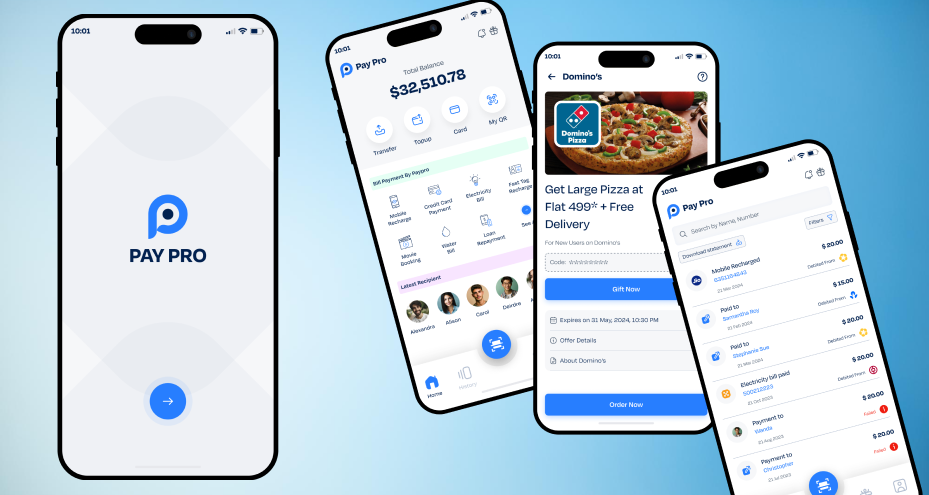
This Flutter App template is specifically designed for e-wallets, P2P payment systems, and mobile banking applications, with pre-designed user interfaces and transaction management systems. Optimized for cross-platform development, you can launch the secure app like Google Pay, Phonepe, Paytm, and MobiKwik.
-
Currency Converter Flutter App Template

This Flutter App provides a strong foundation for FX tools, remittance services, and multi-currency payment solutions, including automated exchange rate handling and user-friendly interfaces. Manage the entire app development process in a smart way using the front-end-ready template.
Using these templates as a starting point will enable fintech app development companies to focus on security, compliance, and unique value additions. They can save time and effort on common functionality. This will enable faster development and the launch of products that meet the expectations of users in 2026.
Conclusion
Using a fintech mobile application or web version, users always have to be informed of what they’re doing and what the results are. Just adding the features in the app is not enough. The execution matters here.
Developing such products needs a strong foundation. There are two ways: 1. Prefer a custom development that proves to be costly and time-consuming, but the impression is unmatched. 2. Using a ready-made Flutter template that comes with lower costs and faster time to market the app.
The success depends on understanding real user expectations and aligning technology accordingly.
Note that fintech apps that meet these standards will not just be downloaded. They will be trusted and used daily.