BTC - Bitcoin
 USDTERC20 - USDT ERC20
 ETH - Ethereum
 BNB - Binance
 BCH - Bitcoin Cash
 DOGE - Dogecoin
 TRX - TRON
 USDTTRC20 - USD TRC20
 LTC - LiteCoin

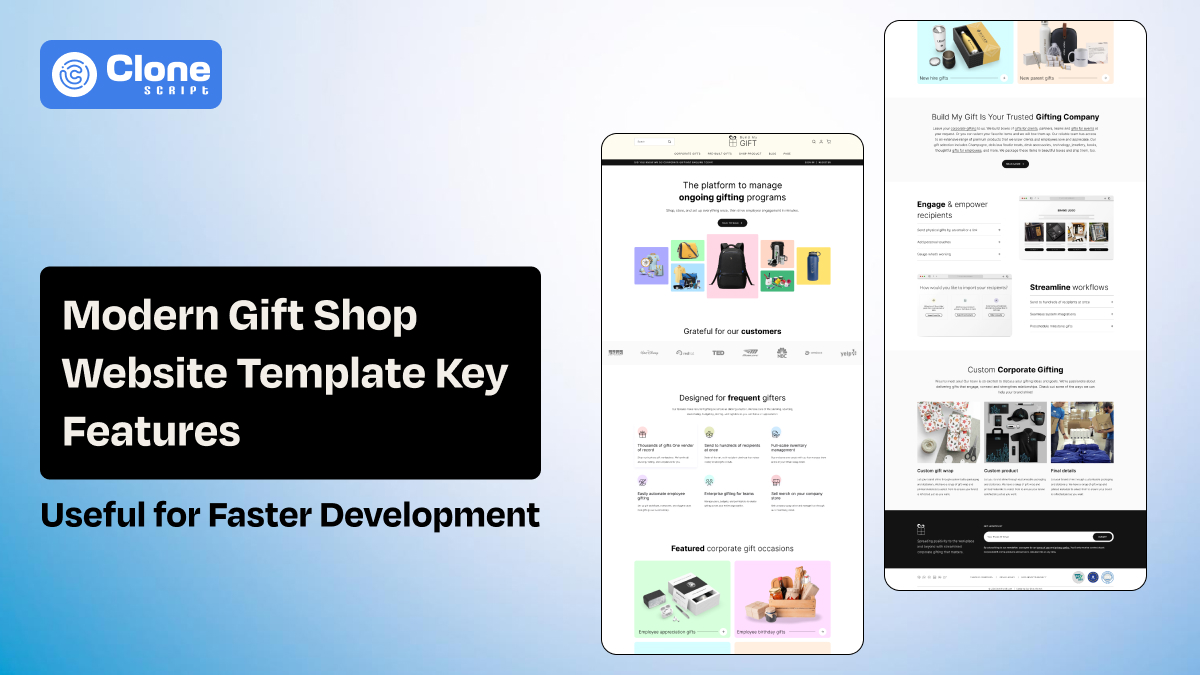
13 Key Features of a Modern Gift Shop Website Template for Faster Development
The gift shop website design and development cycle looks simple on the surface. A product grid, checkout flow, and a blog are enough. But, it’s not as straightforward as.
Gift shops behave differently from standard eCommerce sites. Traffic on these websites is often seasonal, buying decisions are emotional rather than purely functional, and product discovery matters as much as price. At the same time, clients want flexibility for campaigns, quick changes before holidays, and layouts that feel “designed” rather than generic.
Frankly speaking, from scratch, everything takes time, around 1-2 months for basic sites. You have to face the same problems like rushed layout decisions, duplicated components, inconsistent responsive behavior, and late-stage SEO or performance fixes.
Skip those issues by simply choosing the front-end ready website template. We recommend premium, not free ones, as you have to compromise on the functionality. In this blog, we will explain the best features of those templates and how you can take advantage of them.
Understanding the Needs of Web Developers & Agencies
Entrepreneurs start a personalized gift store to make revenue by showcasing the products to customers and making sales.
What really matters is whether the codebase can survive real-world use, custom features, changing requirements, team collaboration, and long-term maintenance after the site goes live.
Developers and agencies don’t just need a nice design; they need a reliable, maintainable codebase.
-
For gift e-commerce website developers
Website developers’ requirements include:
-
Clean HTML5 and CSS3 following best practices and standards
A professional template must use semantic HTML5 elements and standards-compliant CSS3. This improves accessibility, SEO, and readability. At the same time, it makes the code easier to extend, debug, and integrate into modern build pipelines or frameworks.
-
Modular components that can be reused, removed, or extended without breaking layouts
Developers need components that behave independently. When headers, product cards, or promotional sections are modular, teams can reuse them across pages or projects without unexpected layout issues or fragile dependencies.
-
Responsive grid system that behaves predictably on all devices
A reliable grid system optimizes layouts and scales smoothly from mobile to desktop. Predictable responsiveness reduces testing time and avoids last-minute fixes when content grows or when clients request layout adjustments late in development.
-
Performance-conscious structure with minimal bloat and easy asset optimization
Templates should avoid unnecessary libraries and oversized assets. A lean structure makes it easier to implement caching, image optimization, lazy loading, and modern performance strategies. The unused code has been removed.
-
Clear documentation so teams and freelancers can onboard quickly
Documentation should explain the structure, customization points, and common tasks. This reduces onboarding time for new developers, prevents misuse of components, and helps maintain consistency across projects and distributed teams.
-
Web development agencies:
Agencies also have additional constraints:
-
Tight deadlines across multiple projects
Agencies often manage overlapping timelines. A dependable gift shop website template reduces decision-making and setup time. From it, teams can deliver consistent results quickly without sacrificing quality or spending hours solving the same problems repeatedly.
-
Need to re-skin the same base gift shop template for different brands
E-commerce website development agencies depend on repeatable foundations. A flexible template must allow visual changes, colors, fonts, and spacing without touching core layout logic. This is required for fast rebranding while keeping the structure stable and maintainable.
-
Integration with existing stacks (WordPress, headless CMS, custom backends)
Templates should be backend-agnostic. Clean separation between markup and logic makes it easier to connect with CMSs, APIs, or custom systems. You can connect the back-end system without rewriting front-end code or fighting template limitations.
-
Smooth handoff from dev teams to clients or internal support teams
After launch, projects are maintained by different people. Clear structure, readable code, and predictable behavior make handoffs smoother and reduce future maintenance costs and support issues.
A modern gift shop website template must address these needs from the start, not as an afterthought.
13 Key Features of a Modern Gift Shop Website Template
Here is a list of those useful features that make your design and development tasks optimized:
1. Clean & Developer-Friendly HTML5 and CSS3 Code Structure
A solid gift shop website template begins with clear, readable code. Even the most polished design becomes difficult to maintain if the markup is messy or overly complex.
-
Semantic HTML5 elements like header, main, section, and footer make the structure easy to understand and maintain.
-
CSS-based styling keeps presentation separate from markup and simplifies global updates.
-
Shallow, logical markup allows developers to navigate and debug layouts efficiently.
-
Descriptive class names communicate purpose clearly as it requires to improve collaboration and long-term maintainability.
In essence, clean code leads to faster development and fewer problems when making changes.
2. Fully Responsive Design for All Devices
An online gift website needs to adapt seamlessly across every screen size. Shoppers might browse on a phone, tablet, or desktop, and a rigid layout can ruin the experience.
-
Fluid grids and flexible layouts ensure content flows naturally and adjusts to different screen widths.
-
Responsive images and typography scale intelligently without breaking design or readability.
-
Mobile-first approach prioritizes essential content and actions on smaller screens, with desktop enhancements layered on top.
-
Consistent usability across devices reduces debugging and improves accessibility for all users.
Responsive templates make development predictable, reduce last-minute fixes, and provide a smooth experience no matter how users access the site.
3. Pre-Built Gift Shop Page Layouts
Website templates provide ready-made structures that save hours of front-end work.
-
Home page layouts include hero banners, featured collections, and promotional sections designed to guide users toward purchases without overwhelming them.
-
Category and product listing pages come with flexible grid or list views, filtering options, and reusable product cards. This makes scaling catalogs easier.
-
Product detail pages focus on visuals, descriptions, variants, and related items. It is optimized for the buying process, intuitive, and reduces friction for shoppers.
-
Checkout and contact pages are structured for usability and easy integration with back-end systems. That reduces errors during order processing.
These pre-built layouts give developers a solid, consistent foundation to work with. They can focus on customization, client branding, and feature extensions rather than working with basic structures.
4. Easy Customization for Branding & Client Requirements
The two gifts shop never has to be the same, and clients expect a website that reflects their brand identity. A well-designed template separates structure from style that makes visual changes predictable and safe.
-
Color schemes and tokens can be updated globally without touching markup. This allows brands to switch palettes quickly.
-
Typography flexibility lets developers swap fonts for headings, body text, and buttons to align with brand personality.
-
Spacing and layout scales are consistent and adjustable. It supports compact designs or more spacious, luxury-oriented layouts.
-
Component adaptability enables you to tweak hero banners, product grids, or promotional sections without breaking the underlying structure.
By making customization simple and safe, developers save time and deliver client-specific branding. The template’s layout integrity and functionality have not been compromised.
5. Optimized UI/UX for Online Gift Stores
Gift shopping is emotional and goal-oriented. Customers browse under time pressure or shop for specific occasions, so the interface must guide them intuitively from discovery to checkout. A template that accounts for these behaviors reduces friction and increases conversions.
-
Clear product groupings help users quickly identify items by occasion, recipient, or theme.
-
Prominent calls-to-action (CTAs), such as “Add to Cart” or “Buy Now,” make the purchasing process straightforward and eliminate hesitation.
-
Highlighting seasonal or trending products makes sure important items capture attention without overpromoting the page.
-
Trust elements and visual hierarchy, reviews, secure checkout icons, and spacing improve confidence and reduce cognitive load for buyers.
An optimized UI/UX template for gift e-commerce allows developers to implement a design that’s both functional and engaging. The testing and redesigning of navigation, layouts, or interaction patterns are identified.
6. Product Showcase & Category Management Sections
Gift shops deal with a wide range of products, seasonal gifts, bundles, custom sets, and last-minute items. A template that doesn’t handle complex categorization will quickly become chaotic. It makes both the front-end and back-end harder to maintain.
-
Flexible category sections let developers organize products by occasion, recipient, price range, or theme without rewriting layouts.
-
Highlighting featured collections, like “Under $50” or “Corporate Gifts,” creates clear pathways for customers to explore with confidence.
-
Dynamic product grids adjust smoothly to different content sizes. It is helpful to add new items or seasonal promotions easily.
-
Landing page-ready sections allow marketers to run campaigns quickly, showing bundles, gift cards, or seasonal promotions with minimal coding.
By structuring categories and product showcases thoughtfully, developers can deliver a storefront that scales with content and client needs. It is important to make the shopping experience intuitive for users and manageable for teams behind the scenes.
7. SEO-Friendly Website Structure
A beautiful gift shop won’t matter if it can’t be found. SEO isn’t just about adding meta tags. It’s about building a site structure that search engines can understand, and users can navigate naturally. Templates that bake SEO into the markup save developers from work later.
-
Semantic headings and content hierarchy ensure that H1s, H2s, and H3s reflect the importance of sections and guide both users and crawlers.
-
Meaningful, clean HTML avoids unnecessary divs and clutter, making the content more readable for search engines.
-
Logical sectioning (articles, product categories, promotional blocks) helps search engines index the site correctly while keeping layouts easy to maintain.
-
Template-ready content areas let developers add category descriptions, gift guides, or blogs without worrying about breaking the hierarchy.
For developers, starting with a strong SEO foundation means fewer surprises when clients ask for optimization or when traffic spikes during holidays. It’s not a feature you add for how the site works from day one.
8. Fast Loading Performance Built for Real Content Growth
Performance issues rarely show up on day one. They appear later, after more products are added, images pile up, tracking scripts work in, and marketing pages expand. A personalized gift shopping template that starts heavy only gets worse over time.
-
Lightweight CSS and JavaScript keep the baseline fast, so performance doesn’t collapse as features are added.
-
Image-ready layouts anticipate large product photos and banners, making it easier to apply lazy loading and responsive image techniques.
-
Minimal dependency footprint reduces conflicts and keeps build tools, bundlers, or CMS integrations simple.
-
Predictable asset structure helps developers plug the template into caching, minification, or CDN workflows without rework.
When performance is treated as a starting condition, not an afterthought, developers spend less time solving slow pages and more time building features that actually move the project forward.
9. Cross-Browser Consistency Without Extra Fixes
Browser issues rarely show up in demos. They appear after launch, usually reported by a client who “just opened it on a different browser.” A website template that behaves differently across browsers quickly need into support and maintenance.
-
Standards-based CSS and HTML reduce reliance on browser-specific behavior that leads to inconsistent layouts.
-
Avoidance of fragile hacks keeps the codebase stable as browsers update and deprecate features.
-
Predictable rendering across modern browsers ensures product grids, forms, and navigation behave the same way everywhere.
-
A progressive enhancement mindset allows advanced features to improve the experience without breaking core functionality.
For developers, cross-browser reliability is about confidence. When layouts behave consistently, teams can ship updates faster without worrying about unexpected regressions in everyday browsing environments.
10. Ready-to-Use Contact and Inquiry Forms
Contact forms get treated as a small detail, but for online retail gift shops, they’re a key part of the business. Bulk orders, custom gifts, and corporate requests usually start with a form, and rebuilding that experience for every project wastes time.
-
Well-structured form layouts provide clear field grouping and readable markup. This is important for validation and accessibility, and easier to implement.
-
Flexible field sections allow developers to add or remove inputs for custom orders without redesigning the entire form.
-
Clean HTML form structure integrates smoothly with backend handlers, APIs, or third-party services.
-
User-friendly form flow reduces friction for customers submitting inquiries, especially on mobile devices.
When forms are treated as first-class components instead of afterthoughts, developers can focus on integrations and logic rather than rebuilding the same interfaces again and again.
11. Built-In Blog and Content Sections for Long-Term Growth
Gift e-commerce sites rarely stay static. Over time, clients want gift guides, seasonal posts, and landing pages that support campaigns and organic traffic. A template without content-ready layouts forces developers to improvise structures later.
-
Predefined blog layouts make it easy to publish articles without redesigning pages each time.
-
Clear content containers support long-form text, images, and internal links without breaking layout flow.
-
Consistent typography hierarchy keeps reading comfortable across posts and pages.
-
Expandable sections allow developers to introduce new content types as marketing needs evolve.
When content areas are planned early, developers avoid patchwork solutions later and give clients a site that can grow naturally without structural rework.
12. Reusable UI Components That Speed Up Everyday Development
Most development time isn’t spent building new ideas—it’s spent repeating the same patterns across pages. A gift shop template that treats UI elements as reusable parts instead of one-off designs immediately saves effort.
-
Consistent headers and footers create a stable frame that can be reused across pages and projects.
-
Standardized product cards and banners allow updates in one place instead of scattered edits.
-
Flexible call-to-action blocks can be repositioned or duplicated without layout issues.
-
A component-friendly structure makes it easier to convert sections into partials or framework components later.
Reusable components turn the template into a working system, not just a collection of pages, something developers can rely on as projects grow and evolve.
13. Clear Documentation That Reduces Back-and-Forth
Good documentation doesn’t impress clients, but it saves developers countless hours. When a gift shop template lacks guidance, teams waste time searching through files or asking the same questions repeatedly.
-
Straightforward file structure explanations help developers locate and modify sections quickly.
-
Notes on key layout and component areas reduce the risk of breaking core pages during edits.
-
Customization guidance makes branding changes easier without trial and error.
-
Shared understanding across teams improves collaboration between in-house developers, freelancers, and agencies.
Clear documentation turns a template into a dependable tool rather than a guessing game, especially when projects change hands or return months later.
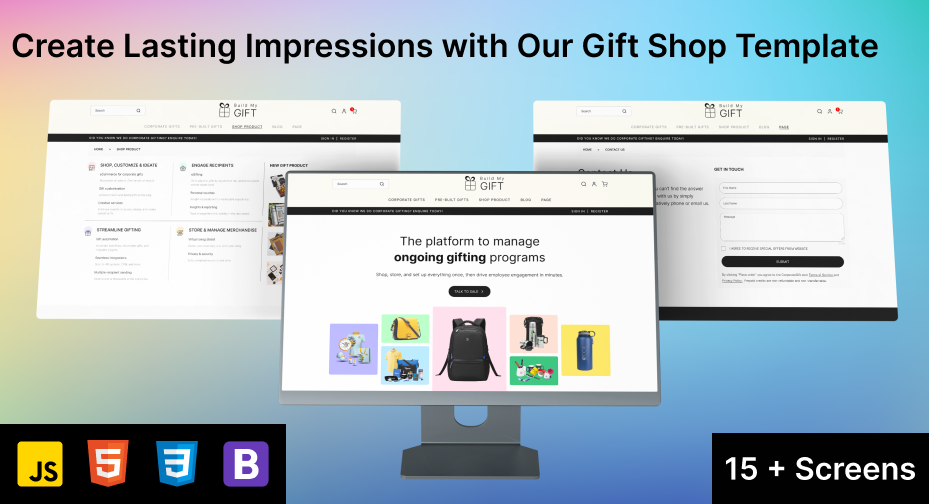
Build My Gift Web Template: An Online Gift Store Template
Build My Gift Web Template is a front-end–ready online gift store template designed for developers and agencies who want a clean, adaptable base for gift-related projects. It focuses on structure, flexibility, and real-world implementation rather than visual fluff. It is suitable for production use and long-term maintenance.
What the Template Contains
-
Pre-built pages for home, product listings, product details, blog, and contact
-
Modular HTML5 and CSS3 structure suitable for CMS or custom backend integration
-
Responsive layouts optimized for desktop, tablet, and mobile screens
-
Organized asset folders for styles, scripts, and images
Key Features
-
Developer-ready HTML5 structure: The markup is easy to read, extend, and refactor, allowing developers to integrate APIs, CMS platforms, or JavaScript frameworks without fighting rigid layouts.
-
Flexible design system: Colors, typography, and spacing can be adjusted quickly, enabling agencies to reuse the same template across multiple brands with minimal redesign effort.
-
Performance-conscious layout: Lightweight styling and clean structure help maintain fast loading times as product catalogs, images, and marketing content grow over time.
View Build My Gift Web Template
FAQs
-
Is this template suitable for client projects?
Yes, it provides a clean, maintainable structure suitable for production use, client delivery, and long-term project support.
-
Can developers customize it for multiple brands?
Yes, flexible styling and layout structure allow quick rebranding without redesigning core layouts or rewriting markup.
-
Does it support SEO and performance optimization?
Yes, it uses semantic HTML, logical structure, and lightweight assets that support search visibility and fast loading.
-
Is it scalable for future eCommerce features?
Yes, the template allows easy integration of payments, APIs, CMS platforms, and additional commerce functionality as needs grow.
-
Does it reduce overall development time?
Yes, it removes repetitive layout work, speeds up front-end implementation, and reduces debugging across devices and browsers.
-
Why choose a ready-made HTML5 gift shop template?
It offers a reliable starting point, faster delivery, cleaner code, and flexibility without building everything from scratch.