BTC - Bitcoin
 USDTERC20 - USDT ERC20
 ETH - Ethereum
 BNB - Binance
 BCH - Bitcoin Cash
 DOGE - Dogecoin
 TRX - TRON
 USDTTRC20 - USD TRC20
 LTC - LiteCoin

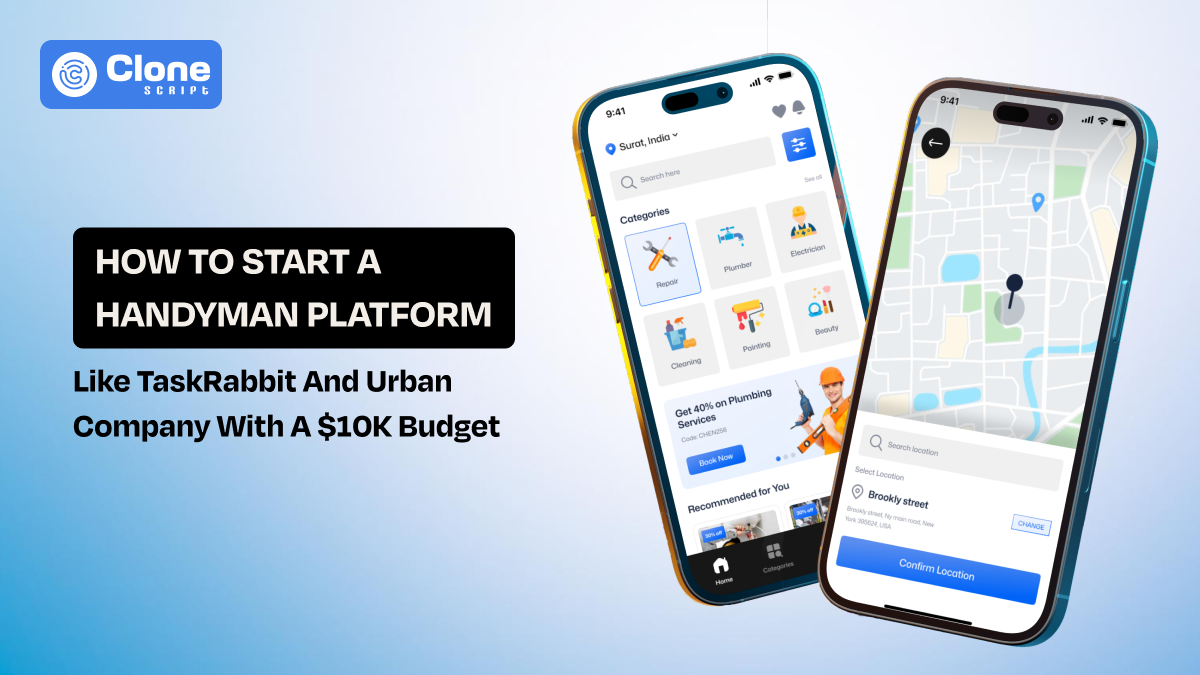
How to Start a Handyman Platform Like TaskRabbit and Urban Company with a $10K Budget
Web development agencies send quotes between $50,000 to $200,000 to build a handyman marketplace platform like TaskRabbit and Urban Company. Here, founders feel compelled to drop the idea and move to another concept.
But the reality that rarely gets discussed is this: most successful marketplaces did not start with complex, fully custom platforms. They began with a focused service offering, a small network of professionals, and a simple booking system to validate demand.
With a clear launch strategy and the right technology choices, a functional handyman marketplace can go live without massive upfront investment. In many cases, a $10K budget is enough to launch the platform, onboard providers, and start accepting bookings.
This guide explains how to do exactly that, covering demand validation, essential features, provider acquisition, and the steps required to launch a scalable handyman platform.
Understanding the Marketplace Model Behind TaskRabbit and Urban Company
Many founders assume the success of platforms like TaskRabbit or Urban Company comes from advanced technology, complex apps, or large engineering teams. In reality, their success is driven by something far simpler: a well-structured marketplace that efficiently connects service demand with reliable professionals.

There are primarily two models working.
-
The Three-Sided Marketplace Structure
According to Grand View Research, the global on-demand home services market is expected to exceed $14.7 billion by 2030, reflecting the shift toward online service booking.
A typical on-demand home services platform connects three participants.
-
Customers
These are homeowners or renters looking for help with everyday tasks such as plumbing repairs, electrical fixes, furniture assembly, appliance servicing, or home cleaning.
-
Service Professionals
They are the independent technicians, freelancers, or small service businesses that want consistent job opportunities without spending heavily on marketing.
-
Platform Operator
This is the company running the platform. It manages service listings, bookings, payments, reviews, and dispute handling so both sides can interact safely.
In simple terms, the platform works as a digital bridge between local demand and available professionals.
-
Revenue Models Used by Handyman Platforms
Once the marketplace begins processing bookings, revenue typically comes from a few proven models.
-
Commission Model
The platform takes a percentage from every completed service, usually 10%–30% per job. For example, a $100 repair with a 20% commission generates $20 in platform revenue.
-
Lead Generation Model
Some platforms charge professionals for customer inquiries instead of taking commissions. This option is useful when a platform needs to onboard maximum service providers without heavy marketing spend.
-
Subscription Model
In this model, professionals pay a monthly fee to appear in search results and receive bookings. It works fine for individual handyman service providers to get a job.
-
Hybrid Model
Many platforms combine commissions, booking fees, and provider subscriptions to create a more stable revenue stream as the marketplace grows.
Why Most Handyman Marketplace Startups Fail
Because they do not know how marketplace ecosystems scale on the top level. Usually, entrepreneurs think solving the technology challenge is done the job. Here are some common mistakes that frequently happen.
-
Supply and Demand Imbalance
Every marketplace faces the same early obstacle: the chicken-and-egg problem.
Customers will not use the platform if there are no service professionals available, which is called the egg problem. At the same time, technicians will not sign up if there are no job opportunities, which is called the chicken problem. This imbalance prevents new on-demand marketplaces from gaining early traction.
Research from different studies shows that nearly 70% of marketplace startups struggle to balance supply and demand during their early growth phase, which is one of the main reasons many platforms fail to scale.
-
Launching Too Many Services
Another common mistake is trying to offer too many services at once.
In the temptation of revenue generation, marketplaces allow listing categories such as plumbing, electrical repair, cleaning, moving, pest control, appliance repair, and beauty services on day one.
This approach spreads operations too thin.
Instead, successful marketplaces usually begin with three to five high-demand services. Focusing on a smaller set of services improves service quality and helps build trust faster.
-
Overbuilding Technology
Many startups also overspend on development before validating demand. Custom on-demand marketplace apps can cost anywhere from $50,000 to $200,000.
If the platform has not yet proven customer demand, that investment becomes risky. A smarter approach is to launch with a simple web platform first, validate real bookings, and expand the technology later.
Validating Demand Before Building the Platform: Reduce Marketplace Failure Rate.
Investing a multi-thousand-dollar amount in marketplace development, entrepreneurs have to make an analysis of whether their city or targeted area genuinely needs a platform or not.

-
Identify High-Demand Local Services
Local search behavior confirms this trend. According to Google, 76% of people who search for a nearby service on their smartphone visit a business within 24 hours, and 28% of those searches result in a purchase.
Start by analyzing what people frequently search for when they need urgent home help. Typical examples include:
-
Plumber near me
-
AC repair near me
-
Emergency electrician
-
Furniture assembly service
-
Appliance repair
These services generate steady demand because they solve immediate household problems.
-
Analyze Local Competition
Next, examine how customers currently hire service professionals in your area. In many cities, bookings still happen through:
-
Local classified websites
-
Facebook community groups
-
Independent contractor listings
-
Traditional service agencies
If customers struggle to find reliable and verified professionals quickly, that gap indicates a clear opportunity for a structured marketplace.
-
Talk to Local Professionals
Finally, speak directly with technicians and contractors. Ask questions such as:
-
How do you currently acquire customers?
-
How much do you spend on advertising or lead generation?
-
Would you accept a commission for consistent bookings?
Many independent professionals prefer platforms that provide predictable job opportunities without heavy marketing expenses, which makes early supply acquisition much easier.
How to Launch a Handyman Platform with a $10K Budget
After validating demand, the next step is planning how to launch the handyman marketplace platform without overspending. There’s an assumption that marketplace startups require large funding rounds, but early platforms usually begin with a lean operational budget.
In that case, North America becomes the largest market, and the Asia Pacific will be the fastest-growing market with a CAGR of 16.7% by 2030. This growth indicates strong demand for digital platforms that simplify booking home services.
Example Budget Allocation for a $10K Launch
Instead of spending heavily on development, early-stage founders should distribute their budget across essential areas.
| Category | Estimated Cost |
| Marketplace software or script | $2,500 |
| Website development and hosting | $800 |
| Provider onboarding incentives | $1,200 |
| Local marketing campaigns | $3,000 |
| Worker verification and onboarding | $700 |
| Legal and payment setup | $800 |
| Operational reserve | $1,000 |
| Total | Approximately $10,000 |
This budget structure prioritizes supply acquisition and customer demand, which are far more important than building complex features during the early stage.
The Smart Way to Build the Platform (Without Expensive Development)
Once demand is validated and the initial budget is planned, the next step is launching the marketplace platform itself. This is where many founders make a costly mistake: they start by building a complex mobile app instead of launching a simple system that can process real bookings.
-
Start with a Web-Based Marketplace
Launching with a web platform is usually the fastest and most cost-efficient option. A functional website can support the core operations of an on-demand home services marketplace, including:
-
Service listings
-
Provider profiles
-
Booking system
-
Customer reviews
-
Secure payments
This setup allows the platform to start accepting real service requests without large SaaS app development costs.
-
Validate Real Bookings First
Early traction matters more than advanced features. According to CB Insights, 29% of startups fail because there is no real market need for their product, making early demand validation critical. By launching a simplified platform first, founders can confirm that customers are actually booking services.
-
Build Mobile Apps After Traction
Once the platform begins generating consistent bookings and provider activity, investing in mobile apps becomes more practical. Mobile apps improve user convenience, repeat bookings, and notifications. But they should come after the marketplace model proves demand.
Solving the Biggest Challenge: Getting the First 100 Service Providers
A handyman marketplace cannot operate without a strong supply of professionals. Before focusing heavily on customer acquisition, prioritize onboarding skilled service providers who can complete jobs reliably. A small but dependable network of technicians is often enough to start generating bookings.
-
Start with Direct Local Outreach
The fastest way to onboard providers is by connecting with them directly. Many skilled technicians already operate independently but depend on word-of-mouth or small classified ads to find work.
You can find them in places such as:
-
Hardware and construction supply stores
-
Local contractor associations
-
Technician workshops
-
Facebook community groups
Approaching professionals directly helps explain the platform’s value: consistent job opportunities without spending heavily on advertising.
-
Offer Early Incentives
During the early stage, convincing professionals to join a new platform requires incentives. Some common approaches include:
-
Zero commission for the first few months
-
Priority listing in search results
-
Early adopter benefits
These incentives reduce risk for professionals who are trying the platform for the first time.
-
Focus on Trust and Verification
Customers are more likely to book services when they trust the professionals listed on the platform. Implement simple verification steps such as:
-
Identity verification
-
Skill or experience confirmation
-
Ratings and reviews
Trust systems significantly influence booking decisions. According to BrightLocal, 97% of consumers read online reviews for local businesses before choosing a service provider.
A verified network of professionals builds credibility and encourages the first wave of customers to try the platform.
How to Acquire the First 1,000 Customers?
Once a reliable group of professionals is onboarded, the next milestone is generating the first consistent stream of bookings. Early-stage marketplaces grow faster when they focus on high-intent acquisition channels and trust signals, rather than broad advertising campaigns.
-
Partner with Local Businesses
One effective way to acquire early customers is through partnerships with businesses that already interact with homeowners. These partners can refer customers who need repair or maintenance services.
Examples include:
-
Hardware stores
-
Appliance retailers
-
Furniture stores
-
Property management companies
-
Real estate agencies
These businesses frequently receive service requests from customers but do not perform the work themselves. Partnering with them can generate a steady flow of early bookings.
-
Use Limited-Time Launch Offers
New marketplaces need a strong reason for customers to try the platform for the first time. Launch offers can create that incentive.
Examples include:
-
Discounted first booking
-
Fixed-price repair packages
-
Free service inspection
These offers reduce hesitation and encourage customers to test the platform.
-
Track Early Customer Behavior
Understanding early users is critical for improving the platform. Monitor patterns such as:
-
Most requested services
-
Peak booking times
-
Repeat customer rate
According to McKinsey & Company, companies that leverage customer behavior data effectively can increase marketing efficiency by 15–20%.
Essential Features Your Handyman Platform Must Have
When launching a handyman marketplace, it is tempting to include dozens of advanced features. However, early-stage platforms succeed by focusing only on core functionality that enables service discovery, booking, and trust.

The goal is simple: allow customers to find a professional, book a service, and complete payment without friction.
-
Service Listings and Provider Profiles
Customers need clear information before booking a service. Each professional should have a detailed profile that includes:
-
Service offered
-
Experience and skills
-
Service pricing or estimates
-
Ratings and customer reviews
Transparent profiles help customers evaluate professionals and choose the right service provider.
-
Booking and Scheduling System
A reliable booking system is essential for any on-demand home services platform. Customers should be able to:
-
Select a service
-
Choose a preferred date and time
-
Confirm the booking instantly
Simple scheduling reduces communication delays and improves the overall experience.
-
Secure Payments
Integrated payment systems simplify transactions for both customers and professionals. Payments can be handled through:
-
Digital wallets
-
Credit or debit cards
-
Online payment gateways
According to Statista, global digital payment transactions are expected to exceed $36.09 trillion by 2030, showing how quickly online payments are becoming standard across service platforms.
-
Ratings and Reviews
Trust plays a critical role in service marketplaces. After each booking, customers should be able to rate their experience and leave feedback. Ratings help future customers make informed decisions and encourage professionals to maintain service quality.
When Does a Handyman Marketplace Become Profitable?
Launching a marketplace is only the first step. Long-term sustainability depends on how quickly the handyman platform reaches consistent booking volume and predictable revenue.
Most service marketplaces generate revenue through commissions on completed jobs. As the number of bookings increases, the platform begins to cover operational and marketing costs.
Understanding Basic Unit Economics
To evaluate profitability, founders should calculate the revenue generated from each completed service.
Example scenario:
-
Average service price: $60
-
Platform commission: 20%
In this case, the platform earns $12 per completed job.
If the marketplace processes 1,000 service bookings per month, the estimated revenue becomes:
| Metric | Value |
| Monthly bookings | $1,000 |
| Average commission per job | $12 |
| Monthly platform revenue | $12,000 |
This simplified model demonstrates how transaction volume directly impacts revenue growth.
Why Volume Matters
Service marketplaces scale through repeated transactions rather than high margins. The more professionals and customers actively using the platform, the more bookings it generates.
According to research, the global gig economy workforce is projected to exceed 1.6 billion people by 2025, increasing the availability of independent professionals across service platforms. This growth makes it easier for platforms to expand their supply network and process more service transactions, which directly improves profitability.
Scaling the Platform Beyond One City
Now, it’s a time for expansion. Most successful handyman marketplace platforms grow by replicating a proven local model rather than launching everywhere at once.
-
Dominate One Market First
Before expanding, the platform should achieve stability in its first operating area. This usually means:
-
A steady flow of customer bookings
-
A reliable network of service professionals
-
Consistent service quality and reviews
Expanding too early can create operational issues, especially when service providers are not properly managed across locations.
-
Replicate the Model in Similar Cities
The most practical growth strategy is to move into nearby cities with similar demand patterns. This reduces operational complexity and allows the platform to reuse proven processes such as:
-
Service pricing structure
-
Provider onboarding systems
-
Marketing strategies
Many large marketplaces expanded this way. For example, Urban Company started by focusing on a few major cities before expanding internationally.
-
Expand Service Categories Gradually
Once a platform builds trust in a region, it can introduce additional service categories such as:
-
Pest control
-
Home cleaning
-
Appliance installation
-
Beauty and wellness services
The global home services market continues to grow, creating strong expansion opportunities for digital marketplaces.
Future Trends in the Handyman Marketplace Industry
The handyman marketplace industry is evolving quickly as more consumers shift toward digital service booking. Platforms that adapt to changing customer expectations and new technology trends are more likely to scale successfully in the coming years.
-
Faster On-Demand Services
Customers increasingly expect services to be available quickly, sometimes within the same day. This trend is pushing platforms to optimize scheduling, technician availability, and response times.
According to PwC, 73% of consumers say customer experience is a key factor in their purchasing decisions, which includes convenience and speed of service.
Marketplaces that provide fast bookings and reliable service delivery often gain stronger customer loyalty.
-
Smarter Service Matching
Many platforms are improving how customers are matched with professionals. Instead of simply listing technicians, newer systems use factors such as:
-
location proximity
-
service specialization
-
past ratings and reviews
-
job completion history
This improves booking success rates and reduces service delays.
-
Subscription-Based Home Maintenance
Another growing trend is subscription-based home maintenance services. Instead of booking services occasionally, homeowners subscribe to regular maintenance plans for cleaning, repairs, or inspections.
These recurring services create predictable revenue for marketplaces and consistent work opportunities for professionals.
Platforms that combine on-demand services with long-term home maintenance plans may gain a competitive advantage as the market continues to expand.
Conclusion
Starting a handyman marketplace platform no longer requires a massive investment. With validated demand, a focused service offering, and a lean launch strategy, founders can build a working platform with a $10K budget. The real success lies in solving local service gaps, onboarding reliable professionals, and gradually scaling the marketplace.
FAQs
-
How do handyman apps attract customers?
Handyman apps attract customers through local SEO, Google Business listings, paid search ads, and referral programs. Ranking for searches like “plumber near me” or “AC repair near me” helps platforms generate consistent booking demand.
-
Do handyman marketplace platforms need a mobile app?
No. Many marketplaces launch with a web platform first to validate demand. Mobile apps are typically developed later once the platform reaches consistent bookings and active users.
-
How long does it take to build a handyman marketplace platform?
A basic handyman marketplace website can be launched within 3 to 6 weeks using pre-built marketplace software. Custom-built platforms with advanced features may take 3 to 6 months.
-
Is a clone script scalable for a growing marketplace?
A well-developed clone script can support thousands of users, service providers, and bookings. As the platform grows, businesses can add mobile apps, advanced analytics, and automation features to scale operations.
-
Is using a clone script a good idea for startups?
Yes. Many startups use clone scripts because they reduce development cost and launch time. Instead of spending months on custom development, founders can launch a working marketplace quickly and validate demand before investing in advanced features.