BTC - Bitcoin
 USDTERC20 - USDT ERC20
 ETH - Ethereum
 BNB - Binance
 BCH - Bitcoin Cash
 DOGE - Dogecoin
 TRX - TRON
 USDTTRC20 - USD TRC20
 LTC - LiteCoin

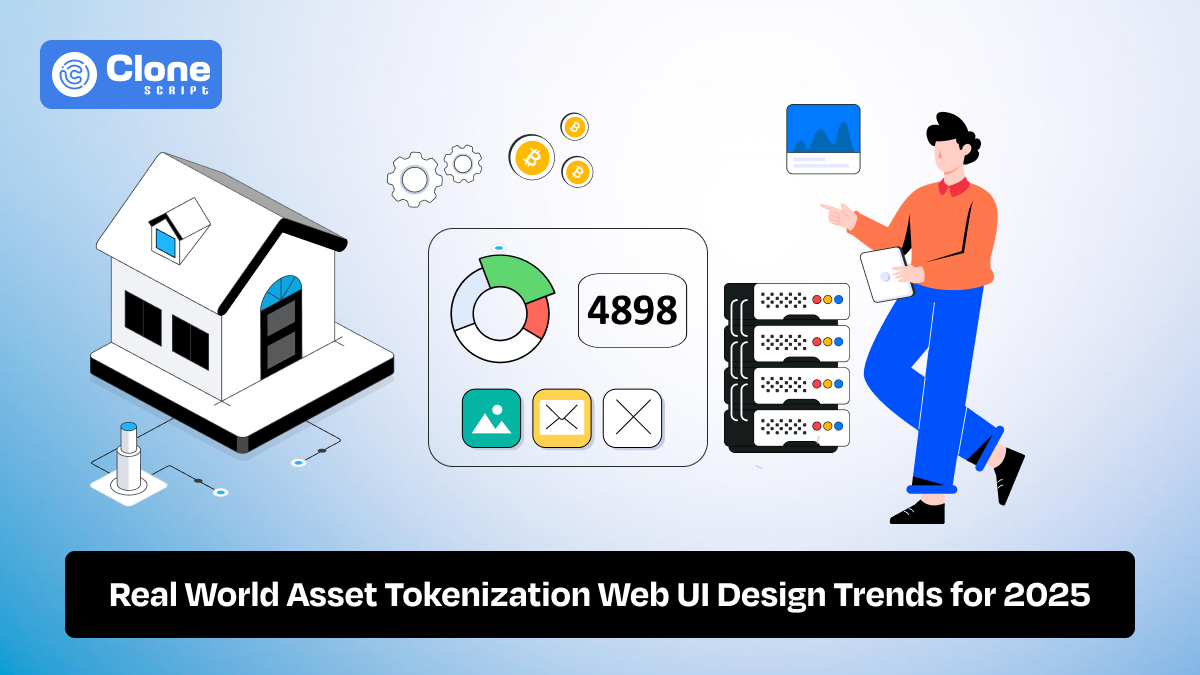
Real World Asset Tokenization Website: Essential UI/UX Design Trends for 2025
$5 Trillion project growth value estimated for Real World Asset (RWA) Tokenization by 2025. This revolutionary technology is transforming traditional asset ownership, offering exceptional liquidity, fractional ownership, and transparency.
To capitalize on this successive market, businesses must create visually stunning and user-friendly websites that resonate with investors and developers alike. This can be done with the best Asset Tokenization UI design.
In this article, we are going to explore the essential web UI design trends for 2025 that will elevate your RWA platform and attract a global audience. From intuitive navigation to immersive user experiences, we cover key elements that will set your platform apart.
First, let’s understand the key stakeholders your platform has to serve for an expanded reach.
Understanding Key StakeHolders Of RWA Platforms
Four key stakeholders exist and your asset tokenization website should be designed to fulfill their needs. Keep note: Each stakeholder has unique requirements.
-
Investors: They seek user-friendly interfaces that provide clear information about asset performance, risk factors, and investment opportunities.
-
Developers: With robust APIs and developer tools they can build innovative RWA applications on top of the platform.
-
Financial Institutions: Safety and Security compliance is mandatory for them to tokenize their assets and offer new financial products for investors.
-
Regulatory Bodies: To manage the credibility of asset tokenization they demand transparency, security, and adherence to regulatory standards.
Once you identify their needs and expectations you will get a better idea of what your website looks like and help them to achieve their goals. Here the trends of 2025 for the RWA website will help you to stand out and parallely work with the industry’s unique preferences.
Let’s explore the trends.
Top 7 Future Trends of Asset Tokenization Website UI Design 2025
Here’s the list of RWA website design trends for 2025.
-
Minimalist Design
-
Dark Mode
-
Immersive User Experiences
-
Voice and AI Integration
-
Blockchain Transparency
-
Mobile-First Design
-
Advanced Security Features in UI
It’s time to know why these trends should be available for your Real World Assent Tokenization Website Design.
-
Minimalist Design
Having a minimalist design on your RWA website is just like a clear roadmap for visitors on what they have to do without losing themselves in the sea of information.
Minimalism remains at the forefront of UI design principles because simplicity directly impacts user experience. Key aspects of minimalist design include:
-
Prioritizing core elements: Just focus on what matters most for users, including asset values, portfolio performance, or tokenized asset details. Cut off unrequired components.
-
Strategic use of whitespace: Whitespace isn’t empty—it’s purposeful. It helps direct attention, reduces cognitive load, and adds a polished, modern feel to the interface.
-
Flat design and neutral colors: Utilize flat design principles paired with neutral or calming color palettes to create an aesthetic look that feels both professional and approachable.
Example: A dashboard with easy-to-read performance graphs and straightforward navigation reduces user frustration while increasing engagement.
-
Dark Mode
Adding a dark mode to the website is not just only a trend to get its advantage. However, as people are becoming more tech-savvy they prefer dark mode fractional ownership platforms to reduce eye strain and increase comfort and accessibility.
Here’s what you have to know about it.
-
Enhanced focus: Dark mode shifts focus to critical elements like charts, graphs, or notifications by reducing visual distractions. This is important for RWA platforms.
-
Battery efficiency: Particularly important for mobile users, dark mode conserves battery life on OLED and AMOLED screens.
-
User customization: Offering a toggle for light and dark modes shows your platform values user choice and accessibility.
Example: Allow users to set dark mode as a default, ensuring the platform feels personal and intuitive. Add the button on the top-right side for desktop and mobile devices to create a toggle bar.
-
Immersive User Experiences
The most important trend to be focused on for RWA website design is “Immersive User Experience” where users are inspired to explore and interact with the platform.
-
AR/VR integration: With this, investors can analyze 3D asset modeling for better visualization of tokenized real-world properties.
-
Interactive tutorials: Use interactive walkthroughs for onboarding to familiarize users with features quickly and effectively.
-
Micro-animations: Subtle animations, such as button clicks or loading indicators, enhance the sense of responsiveness and user feedback.
-
Real-time insights: Offer live updates and insights, especially for asset value fluctuations, token sale progress, or transaction status.
Example: Platforms like Binance integrate live crypto price updates with seamless transitions for a dynamic yet clear user experience.
-
Voice and AI Integration
As IoT products such as Siri and Alexa are making life easier for humans integrating Voice-enabled search functionality to websites will attract millions of visitors who want to invest in asset tokenization.
Also, Artificial Intelligence (AI) does not need any introduction due to its daily usage in web search and trend analysis. In asset tokenization websites, AI integration makes the platform not just useful but interactive with powerful analysis skills.
Here is the overview of why it's essential.
-
Voice commands: Enable users to perform tasks like checking portfolio performance or accessing transaction histories with simple voice commands.
-
AI-powered chatbots: Implement smart chatbots to provide 24/7 support. These bots can answer FAQs, guide users through KYC processes, or help troubleshoot platform issues.
-
AI-personalized dashboards: Use AI to analyze user behavior and display relevant data, such as preferred assets or frequently accessed sections.
Example: Incorporate a voice-activated assistant that guides investors through newly launched real estate project token purchase processes while answering compliance-related questions.
-
Blockchain Robust Security and Transparency
Blockchain technology makes asset tokenization secure by using systems like Ethereum and Solana. These systems protect transactions with special codes and rules that prevent anyone from changing or faking data. This ensures that asset ownership and transfers are safe, transparent, and trustworthy for investors.
Your website design must highlight these aspects.
-
Transaction visualizers: Use graphical elements like timelines or flowcharts to showcase transaction histories, token ownership, and blockchain confirmations.
-
Smart contract information: Display essential smart contract security audit report details in layman’s terms. This ensures users understand the implications of their interactions.
-
Trust indicators: Integrate blockchain verification icons and provide details about security measures, such as audit reports or encryption standards.
Example: A transaction confirmation screen could include a blockchain explorer link, enabling users to independently verify their transactions.
-
Mobile-First Design
In fractional ownership platform design, keep mobile users in mind. As most users prefer mobile devices to surf the web, your website should be prepared accordingly. This is important to take a competitive advantage for digital assets tokenization.
Take a look at what you have to do.
-
Responsive design: Ensure the design adjusts automatically to various screen sizes, from smartphones to tablets.
-
Thumb-friendly navigation: Place actionable elements like buttons and menus within easy reach for users navigating on smaller screens.
-
Offline access: Offer features like offline portfolio viewing or transaction preparation, syncing with the network once a connection is re-established. This can be a unique feature.
Example: Platforms like Robinhood excel in mobile-first design, offering intuitive swipes, tap-friendly elements, and real-time alerts.
-
Advanced Security Features in UI
In today’s fractional ownership platform, security concerns declining the user’s trust. However, while designing the website focus on the best security features to keep the platform free from potential cyber-attacks.
Here are the important details to know.
-
Biometric authentication: Integrate fingerprint or facial recognition for seamless yet secure logins. So only authenticated people can access their accounts.
-
Two-factor authentication (2FA): Offer easy-to-enable 2FA options, guiding users through setup accounts with clear instructions.
-
Risk alerts: Use visual alerts to warn users of suspicious activity, such as logging in from a new location or unusual transaction patterns.
Example: Display a progress bar for setting up security measures, encouraging users to complete their profiles for enhanced protection.
What are common pitfalls to avoid while designing an RWA platform?
Here’s the total list of RWA website design mistakes to avoid.
-
Overcomplicated user interfaces: Prioritize simplicity and essential features as cluttered designs confuse users.
-
Inconsistent branding: This seems to be unprofessional and creates issues for gaining a user's trust.
-
Ignoring mobile optimization: Not optimizing the platform for mobile users and offering poor user experience.
-
Lack of blockchain transparency: Unclear smart contract details reduce trust in your DeFi website.
-
Neglecting security in UI design: Complex security setups frustrate users but do not balance protection with simplicity.
-
Poorly defined user segmentation: Not designing specific designs for investors, developers, and regulators.
-
Ineffective onboarding experiences: Confusing onboarding prevents users from your security token offering platform.
-
Underestimating compliance requirements: Non-compliance risks create legal issues. Try to integrate automated KYC and AML features.
-
Not prioritizing real-time updates: Delayed data frustrates users in making decisions on real estate and equity tokenization.
-
Overlooking accessibility standards: Ignoring accessibility in designing limits platform usability and restricts its reach.
-
Failing to plan for scalability: Not considering the scalability keeps the investors away as your RWA website fails to commence a better user experience in peak times.
Related Products
Here is the list of products and services to design a world-class, secure, and advanced fractional ownership website.
Conclusion
The Real World Asset (RWA) tokenization market is set to revolutionize industries, with a projected growth of $5 trillion by 2025. To seize this incredible opportunity, businesses must focus on creating user-friendly platforms that meet the needs of investors, developers, financial institutions, and regulators.
By adopting the latest UI/UX trends—like minimalist design, blockchain transparency, and AI-powered features—you can create a secure platform, engaging, and future-ready. Avoiding common mistakes such as poor mobile optimization or lack of clarity will ensure your platform stands out.
Ready to build a cutting-edge RWA platform? Contact us today to turn your RWA tokenization vision into reality!