BTC - Bitcoin
 USDTERC20 - USDT ERC20
 ETH - Ethereum
 BNB - Binance
 BCH - Bitcoin Cash
 DOGE - Dogecoin
 TRX - TRON
 USDTTRC20 - USD TRC20
 LTC - LiteCoin

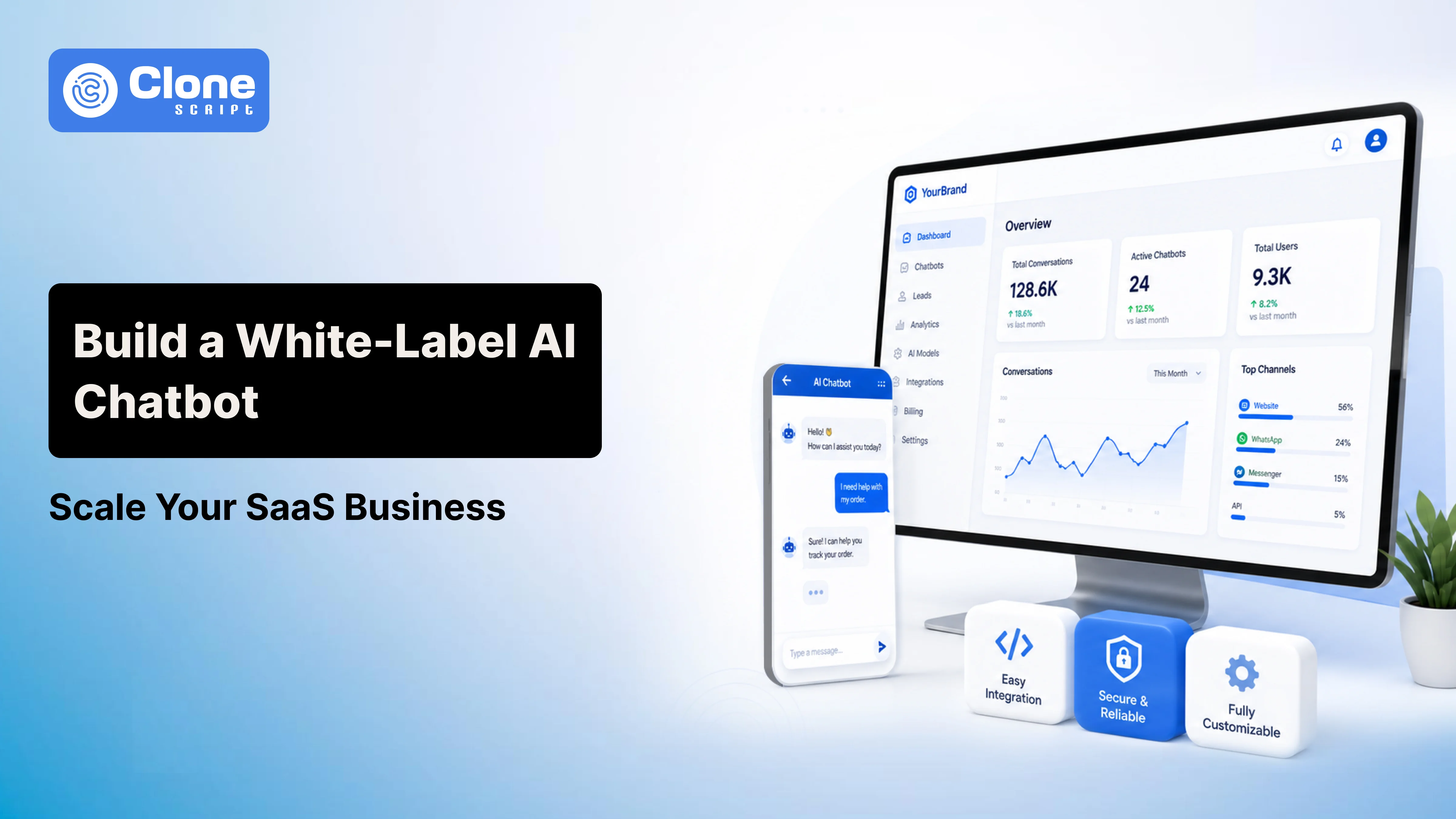
How to Build a White-Label AI Chatbot Platform for SaaS Business
Nowadays, AI chatbots are becoming not only a nice-to-have feature on the website. But by using these advanced systems, brands can answer customer questions in no time, convert leads, and provide instant support around the clock. The demand for reliable, secure, and affordable AI chatbot solutions is growing fast, and that’s why many agencies and SaaS providers are looking to offer such solutions.
White-Label AI chatbot platforms are useful in that case because once you build it correctly, you can offer it to many clients in different segments. In this guide, you will understand how to build a scalable, profitable, and useful AI chatbot for your business to create a long-term business.
What Is a White-Label AI Chatbot Platform?
It’s a kind of pre-built chatbot solution helping SaaS businesses to offer clients an advanced system in a single domain without involving custom development. Clients can rebrand the software, customize it, and then launch it under their own brand name. There is no requirement to develop separate chatbot software for every customer.
For example, a digital web development agency has three clients: 1. Online store, 2. Real estate company, and 3. Healthcare platform. Every business needs a chatbot integration to their website and app to reflect its brand. The agency can use one platform and configure it for each client.
This approach significantly reduces app development time and operational costs. Onboarding new customers, managing updates, and maintaining consistent performance across all chatbot deployments is easy.
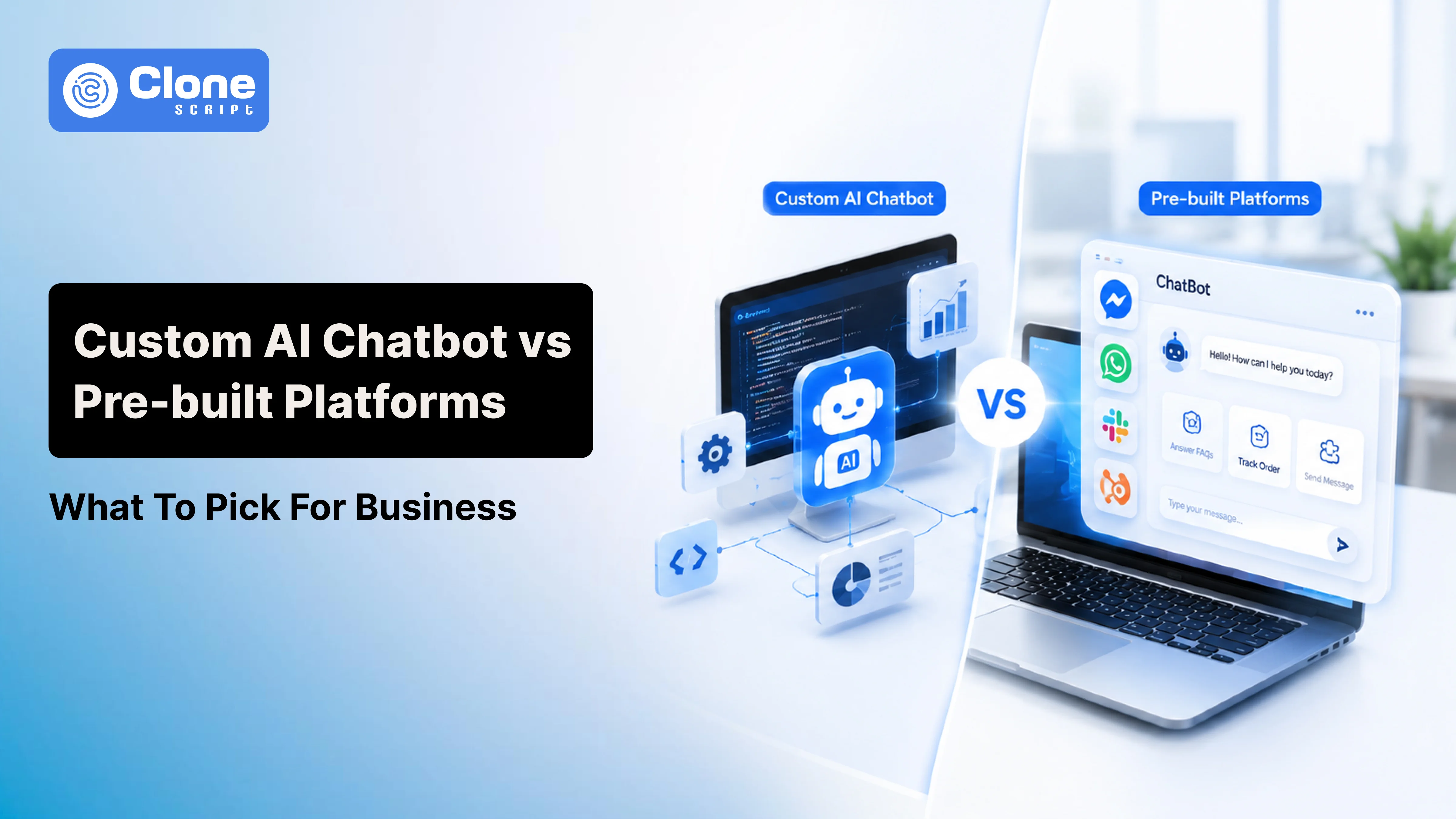
There are differences between a pre-built solution and custom AI chatbot development. Consider what your business requirements are and then decide the correct option. Certain factors play a key role.
Why Businesses Are Investing in White-Label AI Chatbot Solutions
To save costs and keep the operational workflow smooth, software providers are going towards white-label AI chatbot development. That doesn’t mean the team is not capable of making a chatbot like ChatGPT or a custom-designed one. It’s about investing time in what’s the matter most with agile methodology.
-
Faster Time-to-Market
We know how long it takes to make a new chatbot platform from scratch. There are multiple phases to cover, like planning, development, and testing. In a white-label model, businesses can have the advantage of launching their services instantly and focusing on acquiring customers rather than building technology from the ground up.
-
Scalable Revenue Potential
White-label chatbot platforms are sold through subscription plans, creating predictable recurring income. As more clients join the platform, revenue can grow without a proportional increase in operational effort. That’s a good opportunity for startups specifically.
-
Competitive Service Offering
To expand the service portfolio, agencies, consultants, and SaaS providers can manage multiple clients at a single time. This differentiates them from competitors and strengthens client handling.
Define Your White-Label Chatbot Business Model Before Development
You have to know who you want to serve and how you plan to monetize the platform will influence everything from feature development to pricing strategy.
Currently, most of the founders make the same mistakes: solely focus on the technology. Not considering how the platform makes revenue.
A successful white-label AI chatbot platform starts with a clear business model.
-
Identify Your Target Market
Different industries have different chatbot requirements. See what’s happening.
An e-commerce business may need product recommendations and order tracking. It’s all right.
A real estate agency may focus on lead qualification and appointment scheduling.
That means only a single chatbot won't work for every business. Choosing a target market early helps you build features that solve specific business problems.
-
Plan Your Pricing Structure
Most white-label platforms use subscription-based pricing. There’s no wrong choice at all.
But if you’re in a startup phase and want to generate revenue, consider a wide range of pricing.
There are choices for chatbot usage plans, number of users using the platform, AI credits, and advanced features. A well-structured pricing model makes it easier to attract both small businesses and enterprise clients.
-
Define Your Service Packages
Not every customer needs the same level of functionality. We know this very well.
Creating Basic, Professional, and Enterprise plans allows you to serve different customer segments while increasing revenue opportunities through upgrades.
Every White-Label AI Chatbot Platform Should Include These Features
The success of a white-label AI chatbot platform depends heavily on the features it offers. AI capabilities attract customers; the supporting tools are what make the platform practical for daily business use. The following features should be considered essential when planning your platform.
-
Multi-Tenant Architecture
This feature allows multiple clients to use the same platform while keeping their data completely isolated. This approach simplifies maintenance, reduces infrastructure costs, and makes it easier to scale the platform as new customers join.
-
Client Branding Controls
White-label customers expect the chatbot to reflect their brand identity. After all, they want to let customer trust their business. Providing options for logos, colors, chatbot names, domains, and widget styles helps clients create a seamless experience for their users.
-
AI Knowledge Base Training
Businesses need the ability to train chatbots using their own content. Whether it's FAQs, product catalogs, support documents, or website pages. A knowledge base training module helps the chatbot deliver more accurate and relevant responses.
-
Website Widget Integration
The chatbot should be easy to deploy on websites without requiring extensive technical knowledge. Including simple installation methods, such as script embedding or plugin support, can help businesses launch faster.
-
Live Chat Handover
AI cannot resolve every customer inquiry. A live chat handover feature allows conversations to be transferred to human agents when necessary to close the deal and make a sale. Customers think they receive the right level of support.
-
Analytics Dashboard
Businesses need visibility into how the chatbot is performing. An analytics dashboard can show conversations, response accuracy, user engagement, popular questions, and lead generation results.
-
User and Team Management
Many organizations have multiple employees managing chatbot operations. User management features allow teams to collaborate for maintaining proper access controls and accountability.
-
Conversation History
Having previous conversation storage business can understand customer interaction patterns, identify frequent issues, and improve overall responses. It also provides valuable context when support agents take over conversations.
-
Lead Capture Forms
Chatbots are used to generate leads. Built-in lead capture forms help to collect contact information, business requirements, and inquiry details directly from conversations.
-
CRM Integration
To transfer customer data and leads into existing sales workflows, the chatbot has to integrate with CRM platforms. This reduces manual work and improves follow-up efficiency.
-
API Access
API access gives businesses the flexibility to connect the chatbot with internal systems, third-party applications, and custom workflows. This becomes important as client requirements become more complex.
-
Role-Based Permissions
Different users require different levels of access. Role-based permissions help administrators control who can manage settings, view analytics, train the chatbot, or access customer data. This improves both security and operational management.
Right AI Model for Your Platform to Choose
The AI model is the core engine of your chatbot platform. The right choice depends on your budget, performance requirements, and business goals.
-
OpenAI Models
Need a strong language understanding, reliable performance, and easy integration, OpenAI models are known for it. They are suitable for businesses that prioritize fast deployment and consistent responses.
-
Anthropic Models
If it’s important to manage the entire platform's data safety and controlled outputs, then Anthropic models are the complete choice. They can be a good option for organizations handling sensitive customer interactions.
-
Open Source Models
Open-source alternatives offer greater customization and data control. However, they require additional infrastructure, maintenance, and technical expertise to handle the tasks.
-
Hybrid AI Approach
Many platforms combine multiple models to balance cost, performance, and flexibility. Proprietary models offer higher accuracy and scalability, while open-source solutions offer deeper customization.
Architecture Required to Build a White-Label AI Chatbot Platform
A well-structured architecture ensures your platform remains reliable, secure, and scalable as more clients join. While the technology stack may vary, most white-label chatbot platforms follow a similar foundation.
-
Front-end Layer: A front-end development for the user-facing interface where administrators manage chatbots, view reports, and configure settings.
-
Back-end Services: The back-end development handles business logic, user requests, chatbot configurations, and communication between different system components.
-
Database Layer: Databases store customer information, chatbot settings, conversation records, and platform data.
-
Authentication System: Authentication verifies user identities and protects client accounts from unauthorized access.
-
AI Processing Layer: This layer sends user queries to AI models and returns responses to the chatbot interface.
-
File Storage: Documents, FAQs, images, and training materials are stored here for chatbot knowledge management.
-
Analytics Engine: The analytics system tracks chatbot usage, user engagement, and performance metrics.
-
Integration Layer: This layer connects the platform with CRM systems, marketing tools, payment gateways, and other third-party applications.
Simplified Workflow Example
A visitor asks a question through the chatbot widget. The request passes through the backend, retrieves relevant information from the knowledge base, sends the query to the AI model, and returns a response. The conversation is then stored, analyzed, and synchronized with connected business systems when required.
AI Chatbot Development Process
Building a white-label AI chatbot platform involves much more than integrating an AI model. A structured development process helps reduce risks, control costs, and create a product that can scale with customer demand.
Step 1: Market Validation
Start by identifying your target audience and understanding their requirements. Research competitors, industry trends, and potential gaps in the market before investing in development.
Step 2: Feature Planning
Define the core features your platform will offer. Focus on functionality that delivers value to customers rather than trying to build everything at once.
Step 3: UI/UX Design
Create intuitive dashboards and chatbot management interfaces through custom website UI and UX design that are easy for both administrators and clients to use.
Step 4: Back-end Development
Build the infrastructure required to manage users, chatbot settings, conversations, and business workflows. With back-end development its easy to keep the platform secure.
Step 5: AI Integration
Connect your platform with the chosen AI model and establish processes for chatbot training and response generation.
Step 6: White-Label Branding Module
Develop customization options that allow clients to apply their own branding, domains, and chatbot designs.
Step 7: Testing and Security Reviews
Perform functional testing, performance testing, and security assessments to identify and resolve potential issues with QA executive support.
Step 8: Deployment
Launch the platform in a production environment and keep monitoring systems in place to control the system.
Step 9: Continuous Improvements
Collect customer feedback, monitor usage patterns, and release regular updates to improve performance and introduce new features.
Security and Compliance Considerations in AI Chatbot
Security should never be treated as an optional feature when building a white-label AI chatbot. Since the system handles customer conversations, business information, and user data, strong security practices are essential from the beginning.
-
Data Encryption
Encryption protects sensitive information that is being stored and transmitted across the platform. It’s your job to keep it as secure as possible.
-
Authentication and Access Control
Secure login systems and access controls help ensure that only authorized users can access platform resources. This is another important factor.
-
Client Data Isolation
Each client's data should remain completely separate to maintain privacy and prevent accidental exposure. Do not join the same segment businesses.
-
Compliance and Audit Logs
Regulations such as GDPR require businesses to handle customer data responsibly. Audit logs also provide visibility into system activities and user actions.
-
API Security
Secure APIs protect integrations and help prevent unauthorized access to connected systems. It is required to maintain the functionality of the platform.
Integrations That Increase AI Chatbot Platform Value
Integrations allow businesses to connect the chatbot with their existing tools and workflows, which means the platform becomes more useful and efficient.
-
CRM Systems
CRM integrations help capture, organize, and manage leads generated through chatbot conversations.
-
Helpdesk Software
Support teams can track and manage customer inquiries without switching between multiple systems with the support of AI chatbots.
-
E-commerce Platforms
With AI chatbot integrations, businesses can provide product information, order updates, and customer assistance directly through the chatbot.
-
Email Marketing Tools
With email marketing tool integrations for AI chatbots, user interactions can trigger automated email campaigns and follow-up sequences.
-
Calendars and Payment Gateways
Calendar integrations simplify appointment booking, while payment gateways support seamless transactions.
-
Communication Tools
Integrations with platforms like Slack and Microsoft Teams help teams receive notifications and collaborate more effectively.
All Clone Script Custom AI Chatbot Development Service
Looking to launch a custom AI chatbot for your business without dealing with complex development challenges? All Clone Script offers professional AI chatbot development services tailored to your specific business goals and customer engagement requirements.
-
Chatbot training using your FAQs, documents, products, and business knowledge.
-
Website and application integration for seamless customer interactions.
-
Support for lead generation, customer service, and automated user engagement.
-
Scalable architecture designed for startups, agencies, and growing businesses.
-
Testing and deployment assistance to ensure reliable performance.
-
Source code delivery and customization options for future enhancements.
Get the All Clone Script AI Chatbot Development Service and discuss your project requirements with our development team today.
FAQs
-
What are the common challenges for building a white-label AI chatbot?
You have to manage AI costs, maintain response accuracy, secure client data, support multiple tenants, integrate third-party tools, and scale infrastructure efficiently.
-
How to monetize a white-label AI chatbot platform?
You can monetize through monthly subscriptions, usage-based pricing, setup fees, premium integrations, custom development services, and enterprise support packages for clients.
-
Should you build from scratch or use a ready-made white-label solution?
Yes, if you need flexibility and ownership, then choose custom development. Only choose a ready-made solution when the priority is to reduce development time, lower costs, and instantly enter the market.
-
How much does it cost to white-label AI chatbot development?
The range is $2,000 to $10,000, or it can be increased if advanced features, AI models, integration, and customization requirements are added.
-
Is a clone script for a white-label AI chatbot helpful for my business to serve clients?
A clone script helps businesses launch faster, reduce development expenses, test market demand quickly, and provide branded chatbot solutions to clients.