BTC - Bitcoin
 USDTERC20 - USDT ERC20
 ETH - Ethereum
 BNB - Binance
 BCH - Bitcoin Cash
 DOGE - Dogecoin
 TRX - TRON
 USDTTRC20 - USD TRC20
 LTC - LiteCoin

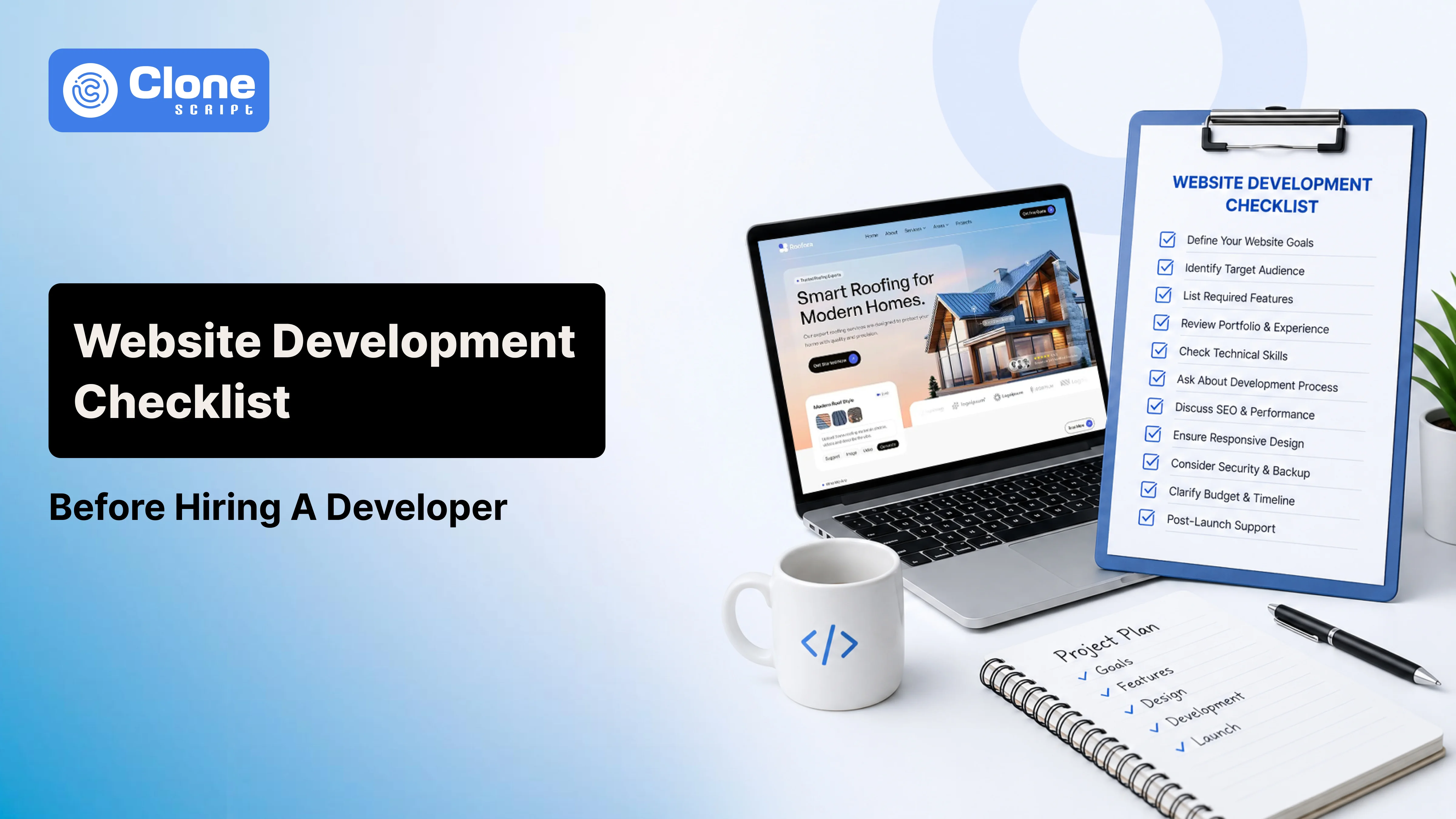
Website Development Checklist for Businesses Before Hiring a Developer
You may know that before a website development project begins, there are certain problems: unclear requirements, missing features, unrealistic budgets, and poor communication. As a business entrepreneur or executive team member, you will discuss how it significant investment to hire a website developer for the company’s products and services. By following the website development checklist, you can avoid such issues as mentioned before.
Overall, your business operations have been focused on the goals, working only with the required features, and planning execution for content and SEO strategy. This can also help with realistic website development budget management.
There’s no discussion if you’re launching a new website like gaming or redesigning the existing one; this checklist helps you make informed decisions. Build a website that supports your business today and scales as it grows.
1. Define Your Business Goals.
First, know why you’re building the website because a well-defined goal helps developers recommend the right features, estimate the project accurately, and create a website that supports your business.
-
Start by identifying your primary objective.
Are you trying to generate leads, sell products online, book appointments, showcase your services, or strengthen your brand presence? Your answer will influence everything from the website's layout and navigation to its content and functionality.
-
It's equally important to understand your audience.
Consider who will visit your website, what information they're looking for, and what action you want them to take. For example, a B2B service website focuses on inquiries and trust-building, while an online booking website prioritizes product discovery and a seamless checkout experience.
-
Documentation explains what to do.
Documenting these goals before development begins gives your developer a clear direction, reduces unnecessary revisions, and ensures every feature serves a purpose. To get value in your website for measurable business objectives, consider this. Design preferences may create risks.
2. Identify Your Target Audience.
Understanding your target audience helps developers create a website that meets visitor expectations from the moment they land on your homepage. Different audiences look for different information, so your website should be designed around their needs rather than assumptions.
-
Start by identifying who you're trying to reach.
Are your customers first-time visitors looking for information, existing clients accessing support, job seekers exploring career opportunities, or people ready to request a quote? Knowing this makes it easier to organize your navigation, prioritize important pages, and place calls to action where they'll have the greatest impact.
-
It's also worth considering how your audience discovers your website.
Some users may arrive through Google Search, while others come from social media, email campaigns, or paid advertisements. Understanding these user journeys helps developers create a smoother experience and supports your content and SEO. When your website reflects how real people search, browse, and make decisions, it's far more likely to keep visitors engaged and encourage them to take action.
3. Decide What Type of Website You Need.
Once you've defined your business goals and identified your audience, the next step is deciding what type of website best supports them. The type of website you choose affects the project scope, development timeline, budget, and technology required.
-
Focus on business needs.
For example, a service-based business may need a corporate website with service pages, contact forms, and appointment booking.
An online retailer requires an eCommerce website with product management, secure payments, and order tracking. Other businesses may need a membership portal, booking platform, learning management system (LMS), marketplace, or customer dashboard, depending on how they interact with users.
-
It's also worth thinking about how your website may evolve.
You might launch with a simple informational website today but plan to add online bookings, customer accounts, or a blog in the future. Sharing these plans with your developer early makes it easier to choose a scalable solution and avoid costly rebuilds as your business grows.
4. List the Features and Functionality You Need.
Before requesting quotes from developers, create a list of the features your website needs on day one. This gives everyone a clear understanding of the project and helps prevent confusion when comparing proposals.
-
Start by separating must-have features from nice-to-have additions.
Core functionality might include contact forms, user accounts, appointment booking, payment gateway integration, product catalogs, search, or a blog. Depending on your business, you may also need CRM integration, email marketing tools, analytics, multilingual support, or customer dashboards.
-
Prioritizing features makes it easier to control your budget and launch your website sooner.
Features that aren't essential can be scheduled for a later phase instead of delaying the entire project. It also helps developers recommend the right technology, estimate development time more accurately, and build a solution that matches your current needs. This leaves room for future improvements.
5. Plan Your Website Content.
Content plays a major role in how your website is designed and developed. Before hiring a developer, decide what content you'll need and whether it's ready to use. Waiting until development is almost complete to write website copy or gather images delays the project and leads to multiple design revisions.
-
Start by listing the pages you want on your website.
On your website, there are pages such as the Home, About, Services, Products, FAQs, Contact, or Blog pages. Then, identify the content each page should include, including headlines, descriptions, images, videos, testimonials, and calls to action. If you haven't created the content yet, decide who will be responsible for web copywriting or sourcing it.
Having your content prepared early helps developers design layouts around real information instead of placeholder text. It also ensures your messaging remains consistent and makes the review process much smoother before your website goes live.
6. Gather Your Brand Assets.
Before development begins, collect all the files and resources your developer will need to build your website. Having these assets ready reduces back-and-forth communication and helps the project move forward without unnecessary delays.
-
Start with the essential assets.
Start with the essentials, including your logo, brand colors, fonts, favicon, and high-quality images. If you have brand guidelines, product photos, videos, icons, or illustrations, keep them in a shared folder that's easy to access. You should also provide links to your social media profiles and any existing marketing materials that reflect your brand identity.
-
Follow business guidelines.
If your business follows specific messaging or writing guidelines, share those as well. Consistent branding includes visuals and how your business communicates with customers.
Preparing these assets before the website developer starts development allows the design team to work with final materials instead of placeholders. It reduces revisions and helps your website maintain a consistent look and feel from the first draft to launch.
7. Choose the Right Domain Name and Hosting.
Your domain name and hosting provider are the foundation of your website's online presence. Choosing them before website development begins can save time during the setup process and gives you complete ownership of your digital assets. Ideally, your domain name should be short, easy to remember, relevant to your business, and simple to spell.
-
Pick the relevant hosting provider.
When selecting a hosting provider, don't focus only on price. Consider factors such as website speed, uptime guarantee, security features, scalability, backups, SSL certificates, and technical support. The right hosting solution ensures your website performs well as your business grows and can handle increasing traffic without affecting the user experience.
-
Follow good practice.
It's also a good practice to register the domain and hosting account under your business name instead of a third party. This gives you full control over your website and prevents ownership issues if you decide to change developers or service providers in the future.
8. Create a Website Structure (Sitemap).
A sitemap is a simple outline of all the pages your website will include and how they're connected. You don't need a detailed wireframe, just a clear structure that helps both you and your developer understand how visitors will move through the site.
-
Start by listing your main pages.
This includes Home, About, Services, Products, Blog, FAQs, and Contact. If your website includes additional sections like a customer portal, booking system, knowledge base, or landing pages, include those as well. Then group related pages together and decide how users will navigate between them.
-
Avoid issues in website development.
Creating a sitemap early helps identify missing pages, unnecessary sections, or navigation issues before design and development begin. It also gives developers a clear understanding of your website's scope, then estimate the project, plan the user journey, and build a navigation structure that's intuitive for your visitors.
9. Plan Your SEO Requirements Early.
If organic traffic is important to your business, discuss your SEO requirements before development begins. Many SEO improvements are easier to implement while the website is being built than after it goes live. Planning can save time, reduce rework, and help your website perform better in search results.
-
Start by identifying the pages you want to rank.
The keywords your customers are likely to search for should be present on your site. Share this information with your developer so the website can be built with a logical URL structure, proper heading hierarchy, internal linking, and SEO-friendly page templates. It's also worth discussing technical requirements such as fast loading speeds, mobile responsiveness, HTTPS security, XML sitemaps, schema markup, and image optimization.
Treat SEO as part of the website planning process rather than something to add later. When developers and SEO teams work together from the start, it's much easier to build a website that's ready to grow its organic visibility after launch.
10. Set a Realistic Budget and Project Timeline.
Before requesting proposals, decide how much you're willing to invest and when you need the website to go live. Having a realistic budget and timeline helps developers recommend the right approach and prevents unnecessary discussions around features that don't fit your current scope.
-
Think beyond development cost.
When planning your budget, think beyond the development cost. Depending on your project, you may also need to account for UI/UX design, content writing, domain registration, hosting, premium plugins, third-party integrations, testing, maintenance, and future updates. Understanding these costs early makes it easier to plan your investment and avoid unexpected expenses.
-
Know the size and project development complexity.
Your timeline should also reflect the size and complexity of the project. A simple business website may take only a few weeks, while larger websites with custom functionality require additional time for design, development, testing, and feedback. If you're working toward a product launch or marketing campaign, discuss those deadlines with your developer from the start so they can recommend a realistic delivery schedule.
11. Research Competitor Websites and Collect References.
Before meeting with a website developer, spend some time reviewing websites in your industry. The goal isn't to copy another business. It’s to understand what works, what doesn't, and what your customers are likely to expect.
-
Focus on being unique.
As you browse competitor websites, note the features and design elements that stand out. Is the navigation easy to follow? Are important services easy to find? Does the website load quickly? Is it simple to contact the business or complete a purchase? These observations help you identify ideas worth adopting and mistakes worth avoiding.
-
Check the available references.
You can also save examples from businesses outside your industry if they have layouts, interactions, or features you like. Sharing these references gives developers a clearer understanding of your preferences than describing your ideas with words alone. It also makes design discussions more productive and helps ensure the final website reflects your brand while delivering an experience that's familiar, intuitive, and easy for visitors to use.
12. Understand Website Ownership and Ongoing Maintenance.
Launching your website isn't the end of the project. It’s the beginning of managing a long-term business asset. Before hiring a website developer, clarify what you'll own after the project is completed and what support will be available once the website goes live.
-
Manage website ownership.
As a business owner, you should have full access to your domain name, hosting account, CMS, website files, databases, and any third-party tools or licenses purchased for the project. Even if your developer sets everything up, the accounts should be registered under your business so you remain in control if you decide to change agencies or developers later.
-
Post-launch maintenance is required.
It's also important to discuss post-launch maintenance. Ask whether the developer offers ongoing support for software updates, security patches, backups, performance monitoring, bug fixes, and technical issues. Knowing what's included and what costs extra helps you avoid unexpected expenses and ensures your website remains secure, reliable, and up to date as your business grows.
Why Choose Professional Website Development Services?
Hiring a professional website development company is about more than building a website. It’s about creating a digital platform that supports your business goals. An experienced team takes the time to understand your requirements, recommend the right technology, and develop a solution that's secure, scalable, and easy to manage as your business evolves.
Professional developers also follow a structured process, covering everything from planning and UI/UX design to development, testing, deployment, and post-launch support. This approach helps reduce technical issues, keeps the project on schedule, and ensures your website delivers a reliable experience for your visitors.
At All Clone Script, we build custom websites that combine modern design with performance, security, and SEO best practices. Whether you need a business website, an eCommerce platform, or a custom web application, our team works closely with you to create a solution that aligns with your goals and growth plans.
Ready to get started? Explore our website development services and discuss your project with our experts. We'll help you transform your ideas into a website that's built for long-term success.