BTC - Bitcoin
 USDTERC20 - USDT ERC20
 ETH - Ethereum
 BNB - Binance
 BCH - Bitcoin Cash
 DOGE - Dogecoin
 TRX - TRON
 USDTTRC20 - USD TRC20
 LTC - LiteCoin

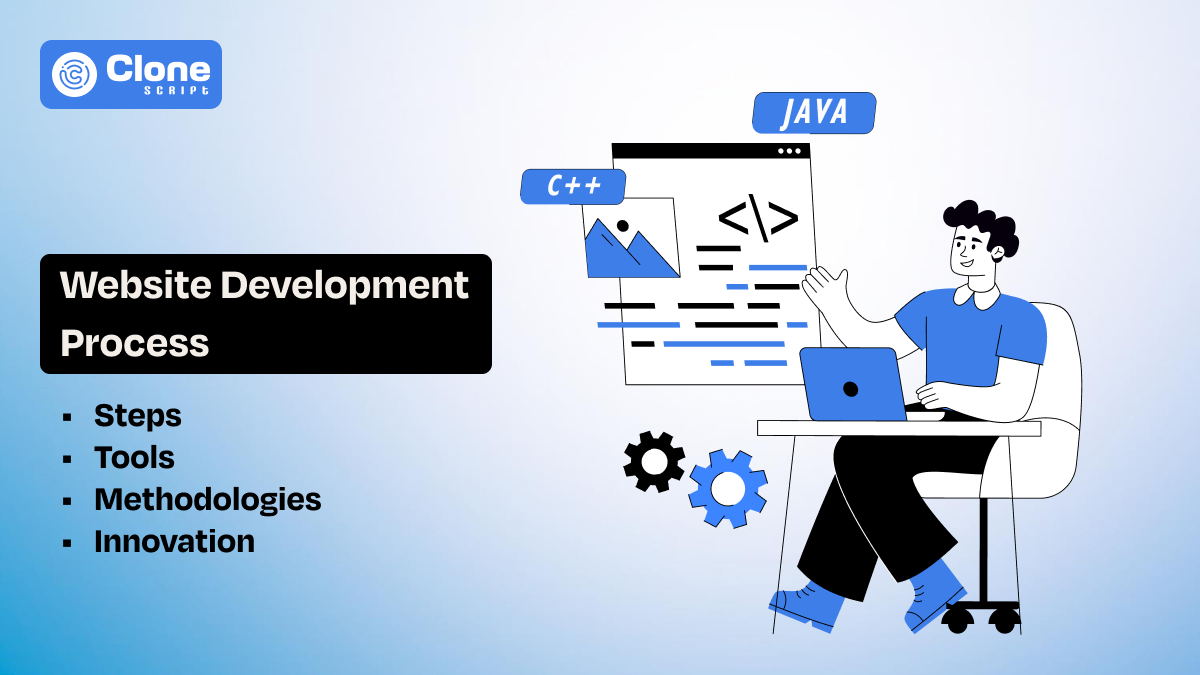
Website Development Process: Steps, Tools, Methodologies, and Innovation
What kind of frontend framework to use, which kind of API to integrate, and what tools to use for measuring the website performance depend on an accurate website development process.
A well-defined process reduces rework, prevents technical debt, and improves collaboration with designers and stakeholders. Ultimately, it results in a website that performs in real-world conditions.
This article explains what the website development process is, its steps, the real tools developers actually use, and the programming languages that matter today. We also talk about proven methodologies and how innovation is reshaping modern web development.
What Is Website Development?
Website development is the set of steps of planning, building, deploying, and maintaining websites or web applications that run on the internet or private networks. It goes far beyond visual design. At its core, development is about creating systems that handle data, user interactions, security, performance, and scalability.
From a technical standpoint, website development contains three main areas:
-
Frontend development: Everything users see and interact with in the browser, including layouts, animations, and responsiveness, comes under frontend development.
-
Backend development: Server-side logic, databases, APIs, authentication, and business rules applied to support the front-end are accomplished through backend development.
-
Full-stack development: A combination of both, where developers manage end-to-end implementation for the website.
In website development, complexity is maintaining a balance between multiple constraints at once: browser compatibility, device experience, SEO requirements, accessibility standards, and deployment environments.
This is why structured development matters. Without a clear process, even skilled developers can end up with fragile architectures, inconsistent codebases, or a static product.
What Are the Common Steps Involved in the Website Development Process?
A professional website development process follows a series of logical steps from analysis to improvement. While the exact order may vary depending on the project size or methodology, the core stages remain consistent across successful builds.

-
Requirement Analysis and Discovery
This stage defines what needs to be built and why. Developers gather the following requirements from stakeholders, product owners, or clients:
-
Business objectives
-
Target users and user journeys
-
Functional requirements (features, workflows)
-
Non-functional requirements (performance, security, scalability)
This phase prevents scope creep and unclear expectations, later costs than expected, and a delay to launch. Technical feasibility is often evaluated here, such as API availability, data complexity, or third-party integrations.
-
Planning and Architecture for Development
Once requirements are clear, developers plan the system architecture:
-
Choosing frontend and backend technologies according to the features and scalability needed in the website.
-
Designing database schemas for managing data privacy in a web application.
-
Defining API contracts to be integrated and make the website functional with essential support from third-party services.
-
Deciding on hosting and deployment strategies as the product becomes scalable.
Good planning reduces future refactoring. Decisions like monolith vs microservices, REST vs GraphQL, or SQL vs NoSQL have long-term implications.
-
UI/UX Design Collaboration for Website Prototype
Although designers lead this stage, developers play a key role. They check that designs are technically proper and performant. This includes responsive layouts, accessibility, and component reusability to avoid website redesign work later.
-
Development and Implementation for Design
This is where coding begins. Front-end and back-end development run together from here. Developers focus on the work to make a website useful:
-
They write clean, maintainable code that improves readability, handles bug issues, and follows best SEO practices.
-
They follow version control practices that become important when the development team tracks how much work has been ongoing and completed.
-
They prioritize modular web design and reusable components to reduce the design and coding work. It helps to maintain consistency across the website without making it generic.
-
They maintain secure data handling through the coding effort and keep the website users' privacy away from exposure.
With the proven coding standards and documentation saves significant time for developers, and also the testing team has an advantage from it.
-
Testing and Quality Assurance for Development
QA & Testing is not optional after the website is designed and coded by developers. To check if the website works as designed and coded accordingly, testing has been done. Common website testing types include:
-
Unit testing: It verifies individual functions or components in isolation, that means each piece of code behaves exactly as intended before integration.
-
Integration testing: It checks how different modules or services work together. This is important for identifying issues in data flow, APIs, and inter-component communication.
-
Functional testing: It validates complete features against defined requirements. This means the application delivers the expected user-facing behavior.
-
Performance testing: It measures speed, responsiveness, and stability under various load conditions to confirm the system can handle real-world traffic.
-
Security testing: It identifies vulnerabilities such as data leaks, unauthorized access, and injection flaws to protect the application from potential issues.
Developers usually automate tests through AI website testing tools to catch regressions early and resolve the issues before they go to deployment.
-
Deployment and Launch of Website
After testing, the website is deployed to production. This includes configuring servers, setting environment variables, enabling monitoring, and preparing rollback plans. Here, the website hosting platform and server management tasks are important to perform because they relate to the security and user experience.
-
Maintenance and Continuous Improvement in the Website
A website is never done after the development. Ongoing maintenance, including bug fixes, security updates, performance optimization, and feature enhancements based on user feedback, is required to check.
This structured approach defines a reliable website development workflow that values consistency and long-term stability.
What Types of Tools Are Required in the Development?
Choosing the right tools is a core part of optimizing website development, as every tool supports a specific stage of planning, coding, testing, or deployment.

-
Code Editors and IDEs
Developers spend most of their time writing and reviewing code, so a reliable editor or IDE is essential.
Some of the most useful examples of IDEs include Visual Studio Code (VS Code), WebStorm, and Sublime Text. These tools provide features like syntax highlighting, intelligent code completion, built-in debuggers, and extensible plugins.
For example, VS Code extensions for ESLint or Prettier help enforce coding standards and catch errors while typing. This reduces bugs early in development.
-
Version Control Systems
Version control systems manage source code changes and enable team collaboration.
Git is the industry standard platform, commonly used with platforms like GitHub, GitLab, or Bitbucket. These tools allow multiple developers to work on the same project simultaneously, track commit history, manage feature branches, and roll back to stable versions when issues occur.
For instance, GitHub Actions or GitLab CI can automatically run tests and deploy builds when code is merged.
-
Frontend Tooling
Frontend tooling focuses on optimizing assets and managing dependencies for the website.
Tools such as Webpack, Vite, Parcel, and Gulp handle bundling, code splitting, and minification. For example, Webpack can bundle JavaScript modules into optimized files, while Vite provides fast hot module replacement for a smoother development experience.
Package managers like npm or Yarn help manage third-party libraries efficiently. It means they reduce the coding work and manage the development cycle.
-
Backend and API Tools
Back-end development relies on frameworks and tools that simplify server-side logic.
Examples include Express.js for Node.js, Django for Python, Laravel for PHP, and Spring Boot for Java. These frameworks manage routing, authentication, and database interactions.
To make functionality-proven and optimized API testing tools like Postman or Insomnia allow developers to test endpoints. They validate request–response cycles and debug issues before frontend integration.
-
Testing Tools
Testing tools identify reliability and stability throughout the development lifecycle.
Jest, Mocha, and JUnit are commonly used for unit and integration testing, while Cypress and Playwright support end-to-end testing.
For performance and load testing, tools like Apache JMeter or k6 simulate real user traffic to identify issues and scalability limits.
What kind of tool for website testing to use depends on the project’s requirements and goals to complete.
-
Deployment and DevOps Tools
Web deployment and DevOps tools automate releases and maintain consistent environments.
Take the example of cloud platforms. This includes AWS, Google Cloud, and Azure, used for hosting applications at scale. Containerization tools like Docker package applications with their dependencies, while orchestration tools like Kubernetes manage containers in production.
Continuous Integration (CI)/ Continuous Deployment tools also play an important role. These tools are Jenkins, GitHub Actions, or GitLab CI/CD automate testing and deployment pipelines. It reduces manual errors during releases.
These tools are making website development optimized and organized for the best output as the client wants. Accurately using them, the development cycle becomes polished and reliable.
What Kind of Essential Programming Language Is Used in Website Development?
Programming languages form the foundation for the website development process. Each layer of development uses languages optimized for specific tasks.

-
Frontend Languages
The following client-side programming language makes the visuals interesting:
-
HTML structures web content using semantic elements that enhance accessibility, improve SEO, and ensure consistent cross-browser rendering.
-
CSS styles and layouts web pages for responsive designs, animations, and visual consistency across devices.
-
JavaScript adds interactivity, handles client-side logic, and provides dynamic user experiences within modern browsers.
-
Backend Languages
Backend languages handle server logic, data processing, and integrations. Commonly used options include:
-
Node.js (JavaScript) runs server-side applications, handling APIs, real-time features, and scalable backend services efficiently.
-
Python simplifies backend development with readable syntax, rapid development, and powerful libraries for data handling.
-
PHP powers dynamic websites by processing server-side logic and integrating seamlessly with popular content management systems.
-
Java supports large-scale, secure web applications with strong performance, multithreading, and enterprise-level reliability.
-
C# enables robust backend development within the .NET ecosystem, offering security, scalability, and strong tooling support.
The choice depends on performance needs, ecosystem maturity, and team expertise.
-
Database Languages
These database options manage the information securely of the website, and it’s required:
-
SQL manages structured data using relational databases to get consistent integrity and efficient query performance.
-
NoSQL stores unstructured or semi-structured data for flexible schemas and high scalability for modern applications.
-
JSON formats data for lightweight, readable communication between frontend and backend systems across platforms.
-
YAML simplifies configuration management through human-readable syntax, commonly used in DevOps and deployment pipelines.
A strong understanding of how these languages interact is important for building scalable and secure websites.
What Methodologies Are Used in Website Development?
Website development methodologies provide a clear working structure that helps teams plan tasks, manage changes, and deliver predictable results.
-
Waterfall methodology
This follows a step-by-step execution model where planning, design, development, and testing happen sequentially. It suits projects with clearly defined scopes, but can slow down progress when requirements change mid-development.
-
Agile methodology
It emphasizes flexibility and continuous improvement. By working in short sprints, developers can release functional updates quickly, gather feedback, and refine features based on real user behavior and performance data.
-
Scrum
A popular Agile framework introduces defined roles, regular meetings, and sprint-based planning. This structure helps development teams stay focused, track progress clearly, and deliver features in a controlled, predictable manner.
-
DevOps-oriented development
It bridges the gap between coding and deployment. By automating testing, integration, and releases, DevOps helps developers make updates faster while maintaining system stability and reducing production risks.
For developers, the right methodology reduces confusion, improves communication, and makes technical decisions that align with project goals rather than short-term fixes.
What Kind of Innovation Website Development Is Coming?
Website development is entering a phase where speed, intelligence, and scalability define success more than ever. Innovation is no longer limited to new frameworks; it now influences how developers plan architecture, write code, test features, and deliver experiences that adapt to users in real time.
-
AI-assisted development
AI in website development is transforming daily workflows by helping developers generate boilerplate code, detect bugs early, and optimize logic through intelligent suggestions. This allows teams to spend more time on system design, performance strategy, and solving complex problems rather than repetitive tasks.
-
Progressive Web Applications (PWAs)
They are closing the gap between websites and native mobile apps. With offline capabilities, push notifications, and app-like performance, PWAs help businesses reach users without the cost and complexity of maintaining separate mobile applications.
-
Headless architecture
It is redefining content delivery by decoupling frontend and backend systems. This approach gives developers freedom to build fast, custom user interfaces while reusing the same backend across websites, mobile apps, and emerging platforms like smart devices.
-
Performance-first development
It is becoming a standard mindset rather than an optimization step. Developers now consider loading speed, Core Web Vitals, and efficient asset delivery from the earliest planning stages to meet both user expectations and search engine requirements.
-
Enhanced security practices
They are being built directly into the development lifecycle. From automated security testing to stronger encryption and compliance-driven development, security is treated as a continuous responsibility instead of a final checklist. This is considered an important aspect in the future of back-end development.
Together, these innovations are pushing website development beyond static pages. It enables developers to build intelligent, secure, and scalable digital ecosystems designed for long-term growth.
Conclusion
Website development today is more than assembling pages or choosing the latest framework. It is a thoughtful process that combines planning, technology, collaboration, and continuous improvement. When developers understand each stage from methodology selection to emerging innovations, they gain better control over quality, performance, and scalability. By staying curious, choosing tools wisely, and following modern practices, developers can build experiences that are functional, meaningful, and ready for the future.