BTC - Bitcoin
 USDTERC20 - USDT ERC20
 ETH - Ethereum
 BNB - Binance
 BCH - Bitcoin Cash
 DOGE - Dogecoin
 TRX - TRON
 USDTTRC20 - USD TRC20
 LTC - LiteCoin

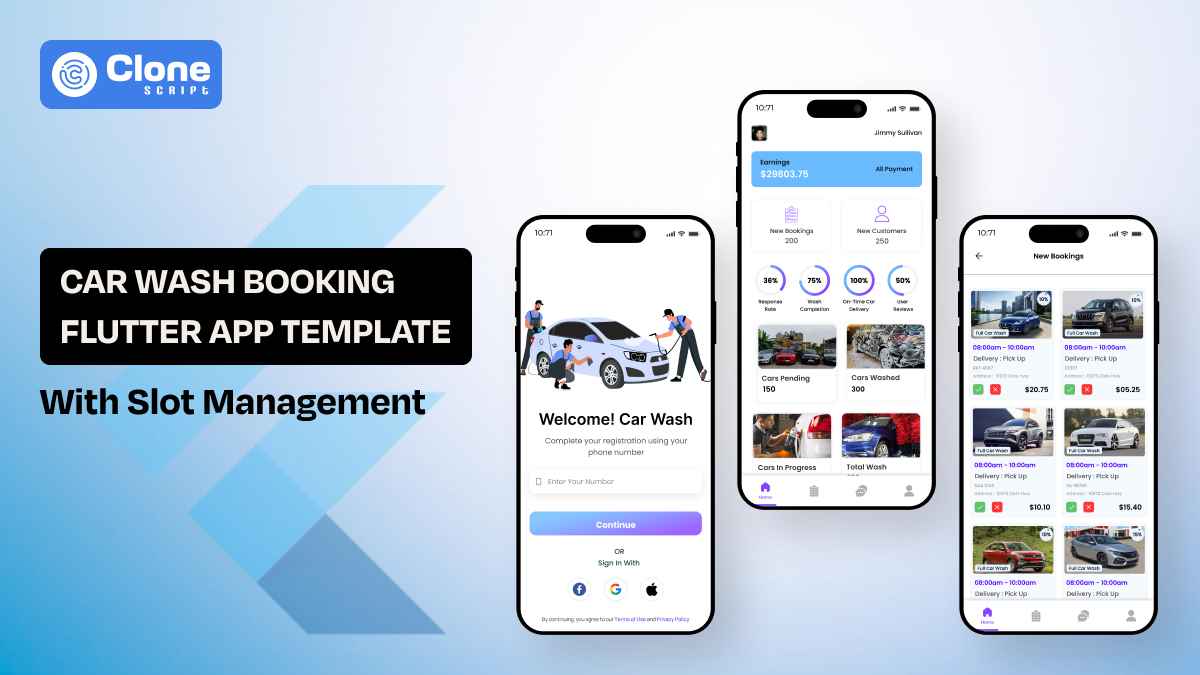
Car Wash Booking Flutter App Template with Slot Management
Launching a scalable car wash booking app is just enough to design attractive screens?
No.
It requires structured scheduling logic, booking validation, administrative control, and a codebase that can evolve as the business grows. Many service apps fail not because of poor UI, but because their internal logic cannot handle real-world operational complexity.
The Flutter template from AllClone Script is designed to fill that gap. It delivers a production-ready foundation with built-in slot management, structured booking workflows, and an extendable architecture suitable for SaaS expansion.
Flutter app developers can begin with a system that already solves the most important engineering challenges in service-based booking platforms.
What It Really Takes to Build a Scalable Car Wash Booking App
A fully functional booking application must address both user experience and back-end development reliability. Most early-stage apps focus heavily on screens and navigation, but neglect operational stability.
To build a sustainable solution, you need this:
-
A reliable slot management engine
-
Conflict prevention and booking validation
-
Modular and maintainable code architecture
-
Clear separation between UI and business logic
-
Administrative control over services and schedules
-
Extensibility for multi-service or SaaS expansion
Each of these components directly impacts business performance. Without them, the app may work during testing but struggle under real usage conditions. This template addresses those requirements upfront, reducing development risk and long-term design and technical debt.
Slot Management Logic: The Core Requirement Most Apps Get Wrong

Slot management is the key aspect of any service-based booking platform. If this layer is unstable, customer trust erodes quickly. Double bookings, incorrect availability displays, and last-minute car wash scheduling conflicts can damage business credibility.
Then, why is slot logic critical?
A car wash operation manages multiple time intervals per day, service durations that vary, buffer times between bookings, and capacity limitations.
Handling these variables manually or with poorly structured logic increases operational friction.
How does the Flutter template handle it?
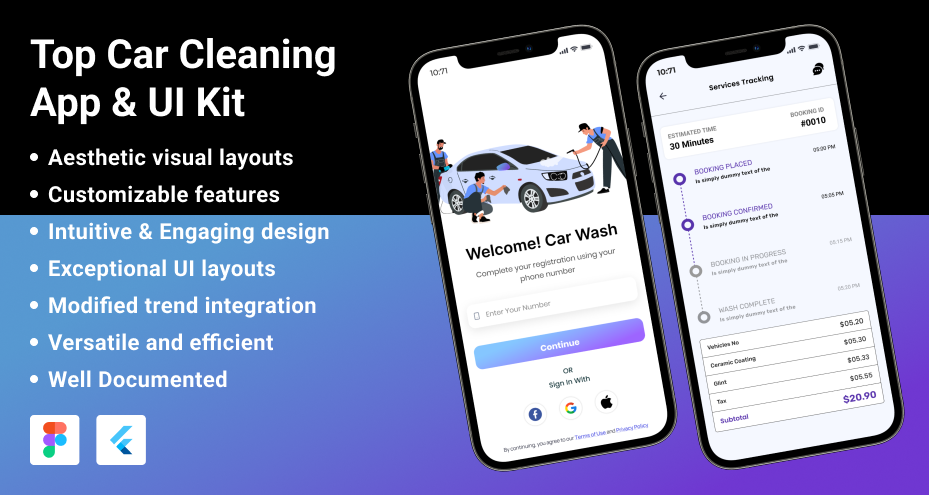
The template includes a structured scheduling system with date-based slot rendering, configurable time intervals, dynamic availability state updates, automatic disabling of unavailable slots, and booking validation before confirmation.
Instead of treating time selection as a static UI feature, this Flutter app template has been optimized to connect availability to actual booking conditions. Developers can extend this logic to support multiple providers, location-based scheduling, or dynamic capacity adjustments.
For SaaS builders, this slot engine becomes the reusable core that can be helpful for appointment-based services.
Structured Booking Flow Designed for Production Deployment
A successful car wash booking experience must guide users clearly from service discovery to confirmation. Any friction in this journey increases drop-off rates.
Here are the essential booking flow stages to know.
-
Authentication (OTP or secure login)
-
Service selection
-
Date selection
-
Slot availability display
-
Booking summary review
-
Confirmation and tracking
This car wash booking app template includes a complete end-to-end flow that aligns with real operational processes. The transition between steps is structured to maintain context and minimize user confusion.
App developers can customize the flow by:
-
Adding optional service upgrades.
-
Introducing promotional logic.
-
Integrating subscription-based booking.
-
Expanding into recurring appointment scheduling.
Because the structure is already in place, native and cross-platform app development teams can focus on enhancement rather than foundational planning.
Clean Flutter Architecture That Reduces Technical Debt
Long-term scalability depends on code quality. A car wash appointment booking app may start as a single-service solution but evolves into a multi-service or multi-vendor system.
The Flutter template is built with modularity in mind. The architecture supports:
-
Separation of UI components from business logic
-
Reusable widgets
-
Organized folder hierarchy
-
Scalable routing
-
API integration flexibility
This reduces the need for major refactoring when adding new features. Development agencies delivering white-label solutions will find this structure especially useful, as they can modify branding and services without rewriting core system requirements.
For Flutter developers, maintainability is a priority. Clean structure translates to easier debugging, faster iteration, and reduced onboarding time for new customers who need car washing service.
Admin Control Layer for Real Service Operations
A car washing booking app without proper administrative controls cannot function effectively in production. Business owners require visibility and control over operations.

Here are the operational requirements:
-
Add or edit services.
-
Modify pricing
-
Adjust service durations
-
Configure available time slots
-
View daily bookings
-
Update booking statuses
-
Track revenue
The template you opted for checks if it includes a functional admin layer that supports these actions. Instead of managing car detailing schedules manually, administrators can control availability and service offerings directly within the system.
For SaaS expansion, this admin structure can evolve into role-based access models like multi-provider or multi-branch management. The foundational structure already supports this type of growth.
Although the core use case is car wash booking, the architecture is not limited to one service category. The slot engine and booking workflow can power multiple verticals.
You can expand opportunities for:
-
Home cleaning services
-
Car detailing platforms
-
Salon appointment systems
-
Repair and maintenance booking apps
-
Multi-vendor service marketplaces
By adjusting service taxonomy and pricing logic, developers can transform the base system into a broader service-based SaaS solution.
This flexibility makes the template suitable for founders testing different service verticals without rebuilding infrastructure for each new idea.
Monetization Architecture for Service-Based SaaS Builders
Revenue generation in service apps extends beyond one-time bookings. A scalable system must support layered monetization strategies.
Here are the core revenue models:
-
Pay-per-service booking
-
Subscription plans
-
Recurring membership packages
-
Add-on upgrades
-
Discount and promotional codes
The configurable service structure allows developers to adjust pricing logic according to business requirements. For example, introducing recurring weekly washes or discounted bulk packages can be implemented without redesigning the booking engine.
This adaptability allows SaaS builders to experiment with pricing models and optimize lifetime value without major architectural changes.
Reduce Development Timeline Without Sacrificing Scalability
Building a car wash appointment app for Android and iOS from scratch involves several complex stages:
-
Architecture planning
-
Database schema design
-
Slot engine development
-
Booking validation testing
-
Admin panel development
-
Payment integration
This process can take several months for development, especially when scheduling logic requires extensive debugging.
Using the Flutter template significantly reduces the timeline by providing:
-
Pre-built booking infrastructure
-
Integrated slot management
-
Structured UI components
-
Admin configuration tools
Developers can move directly into customization and integration phases instead of foundational engineering work. This shortens the time to market while maintaining structural integrity.
Why Choose AllClone Script for Service App Booking Templates
AllClone Script has positioned itself around ready-to-launch digital solutions that reduce development friction. We focus on operational usability rather than superficial UI replication.
With the AllClone Script, the key advantages include:
-
Structured and deployment-ready Flutter app templates
-
Continuous product refinement
-
Support for customization
For developers and SaaS teams, reliability and clarity matter more than marketing claims. This template emphasizes function, structure, and scalability.
Performance and Deployment Considerations in Flutter
A production-ready app must perform consistently under load. Flutter’s cross-platform capabilities allow Android and iOS deployment from a single codebase, reducing maintenance overhead.
This template supports the following:
-
Integration with REST APIs
-
Back-end expansion via Firebase or custom servers
-
Scalable authentication models
-
Expandable database schema
Because the UI and logic layers are structured cleanly, developers can integrate analytics, push notifications, or advanced payment systems without disrupting core functionality.
Long-Term Product Vision with Flutter App Template
Launching a car wash booking app is often the first step toward building a service-oriented digital ecosystem. Over time, businesses may introduce:
-
Multi-branch management
-
Vendor partnerships
-
Dynamic pricing
-
Geo-location-based slot filtering
-
Loyalty and referral programs
The template’s modular structure allows important feature addition without structural collapse. Instead of rebuilding, teams can extend.
Ready to Launch Your Car Wash Booking App with a Scalable Foundation?
Time-to-market matters in competitive service industries. Delays in development translate to lost revenue and missed opportunities.
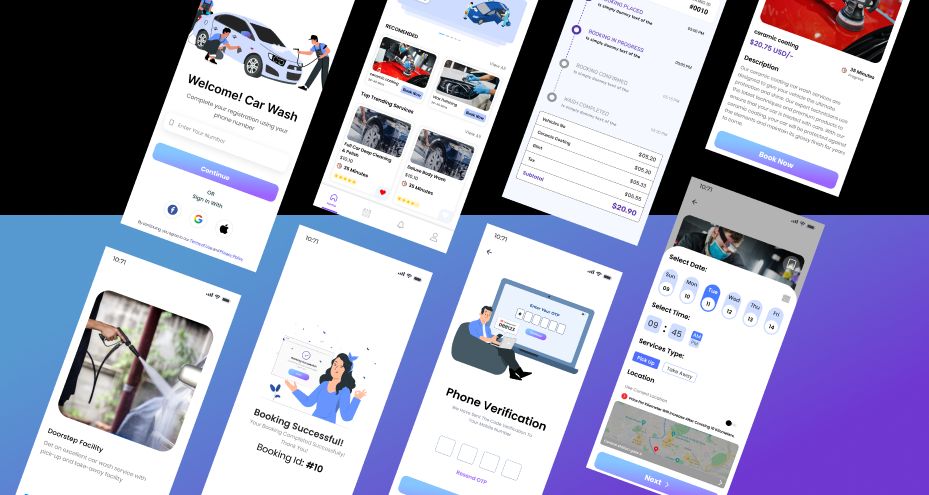
This Flutter template provides:
-
A stable booking engine
-
Integrated slot management
-
Administrative control
-
Extensible architecture
-
Cross-platform compatibility
Developers can focus on business differentiation and customer experience rather than core scheduling logic.
If your goal is to launch a production-ready car wash booking app or expand into a service-based SaaS platform, starting with a structured foundation significantly reduces risk.
Evaluate the architecture and determine how this system can support your next deployment.