BTC - Bitcoin
 USDTERC20 - USDT ERC20
 ETH - Ethereum
 BNB - Binance
 BCH - Bitcoin Cash
 DOGE - Dogecoin
 TRX - TRON
 USDTTRC20 - USD TRC20
 LTC - LiteCoin

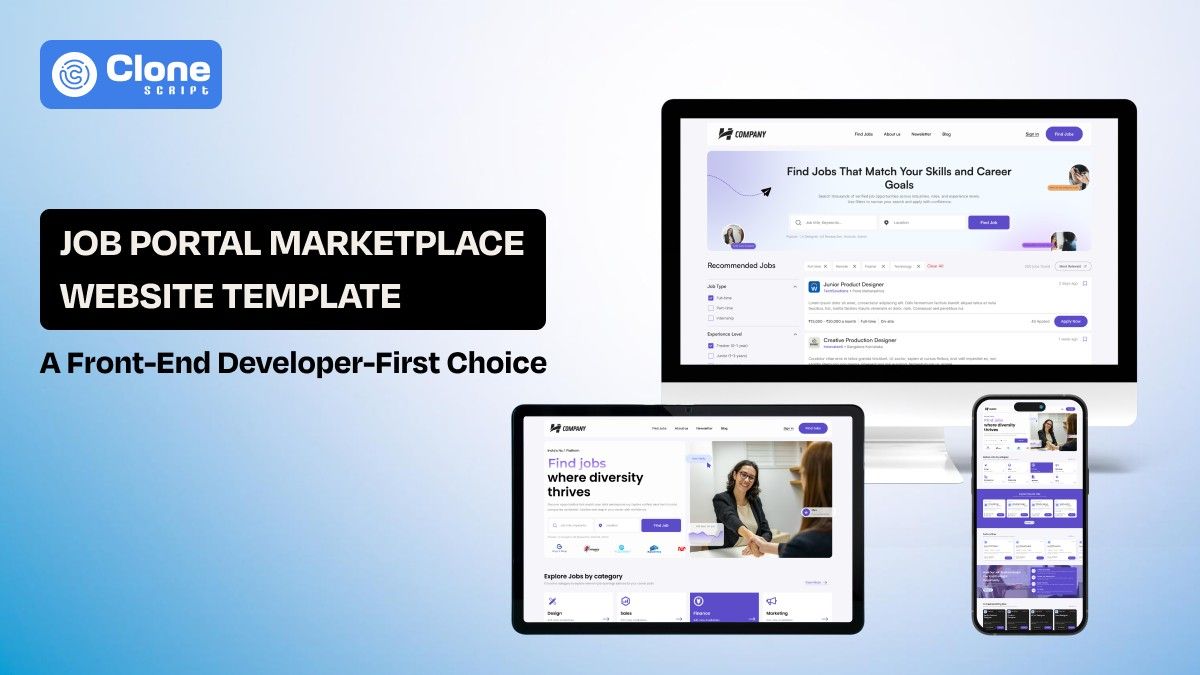
Job Portal Marketplace Website Template: A Developer-First Choice for Recruitment Web Projects
The recruitment industry is dominated by generic job boards. In 2026, we are seeing micro-niche job marketplaces, remote-first hiring platforms, staffing portals for specific industries, and regional recruitment ecosystems. For developers handling client projects in this space, the real question is not: “Can we build this?” But rather “How fast can we deploy a stable, scalable MVP?”
This is where a job portal marketplace website template becomes strategically valuable. Instead of spending 8–12 weeks building UI from scratch, developers can leverage a structured front-end system such as the Segment Staffing and Recruiting HTML5 and Tailwind CSS template and focus on back-end logic, integrations, and performance optimization.
This article provides a technical, developer-oriented evaluation of using a job portal marketplace website template in modern recruitment projects.
Why Developers Are Choosing Marketplace Templates in 2026
Recruitment startups operate under tighter validation cycles than ever before. Investors expect traction before heavy capital deployment. Clients expect launch timelines measured in weeks, not quarters.
Several market forces are influencing developer decisions:
-
Rise of niche job boards (tech-only, healthcare, blue-collar, remote-first).
-
Increased focus on MVP validation before ATS-level complexity.
-
Preference for utility-first frameworks like Tailwind CSS for faster UI modification.
-
Growing demand for SEO-optimized websites and static-first rendering.
For freelance developers and small agencies, template-based development improves:
-
Delivery speed
-
Cost predictability
-
Margin protection
-
Reduced UI debugging time
Instead of reinventing dashboards, filters, pricing tables, and listing layouts, developers work from a pre-structured base and allocate effort where it matters, architecture and integration.
Core Architecture of a Job Portal Marketplace Website Template
From a front-end website development standpoint, the strength of a job board template lies in its structural completeness.
A modern recruitment marketplace must support three primary layers:
-
Public User Layer
This is the conversion engine. It includes the following:
-
Homepage with hero section, search, and featured jobs
-
Advanced job search with filters
-
Job listing archive pages
-
Individual job detail page
-
Candidate registration and login UI
-
Company profile pages
The most valuable aspect here is the search and filter UX design. If the HTML template includes a structured filter sidebar (location, salary, job type, experience), developers can map these filters directly to database queries later without redesigning layouts.
-
Employer / Recruiter Layer
A job portal marketplace differs from a simple job board because it supports multiple recruiters.
The HTML website template should include these screens:
-
Employer dashboard UI
-
Post job form interface
-
Manage listings table
-
Applicant management placeholders
-
Subscription or pricing plans UI
Even if back-end development logic is not implemented, the front-end scaffolding significantly reduces development overhead.
-
Marketplace Logic UI Structure
Marketplace implies multi-vendor architecture. In a job portal platform, this fundamental works where the recruiters list the job openings and invite candidates to apply.
The front-end of the website must support:
-
Multiple employer accounts
-
Segmented dashboards
-
Pricing plans for job postings
-
Featured job promotion areas
-
Company branding sections
If the template is built correctly, UI segregation between candidates and recruiters is already visually defined, making back-end integration straightforward.
Technical Stack Evaluation: HTML5 + Tailwind CSS + Bootstrap
Choosing a template built with HTML5, Tailwind CSS, and Bootstrap is not accidental. This combination gives developers both utility-level control and component-level speed, which is important when building job marketplace platforms under tight deadlines.
A hybrid-ready front-end stack and technologies offer flexibility. Developers can lean on Bootstrap’s prebuilt components for rapid structural deployment while using Tailwind for granular UI customization and branding precision.
Why Tailwind CSS Matters in 2026
Utility-first CSS has matured into a production-grade standard. It enables the following:
-
Rapid component-level customization
-
Minimal CSS bloat (when properly purged)
-
Easier dark mode support
-
Faster prototyping
-
Consistent design tokens
For agencies building multiple recruitment portals, Tailwind ensures scalable design systems. Through its rebranding, a job board for different staffing niches becomes a configuration exercise rather than a CSS rewrite.
Why Bootstrap Still Holds Strategic Value
Bootstrap remains relevant in recruitment templates because it provides:
-
Grid system stability
-
Prebuilt responsive utilities
-
Ready-to-use modals, dropdowns, navbars
-
Form validation styling
-
Consistent cross-browser compatibility
For developer teams handling quick client turnarounds, Bootstrap components reduce UI scaffolding time. Its grid system is particularly useful for:
-
Job listing layouts
-
Multi-column dashboard designs
-
Pricing comparison tables
-
Employer and candidate profile pages
When combined with Tailwind, Bootstrap handles structural consistency while Tailwind refines aesthetics and micro-interactions.
Semantic HTML for SEO
Recruitment websites compete aggressively in organic search. Proper semantic structure is non-negotiable.
A well-built HTML5 foundation ensures:
-
Clean heading hierarchy (H1–H6 discipline)
-
Structured job card markup
-
Accessible navigation patterns
-
Logical sectioning for indexing
Because the template is static-first, developers can integrate the following without UI conflicts:
-
Headless CMS systems
-
API-driven back-end architectures
This separation between presentation and business logic makes the stack both flexible and future-ready.
In practical terms, the combination of HTML5, Tailwind CSS, and Bootstrap delivers rapid deployment, customization depth, and structural reliability, a balanced front-end foundation for modern job portal marketplace projects.
UI Components That Reduce Development Time
Time efficiency is the primary economic advantage of using a job portal marketplace website template. In recruitment projects, the front-end surface area is large, with multiple user roles, listing systems, dashboards, and pricing structures. Designing all of this from scratch introduces avoidable friction.
A production-ready template typically includes reusable and modular UI components such as:
-
Job listing cards with structured metadata (location, salary, job type, CTA)
-
Advanced filter sidebars (experience, category, employment type, location)
-
Pagination modules optimized for listing-heavy pages
-
Candidate dashboards with profile completion indicators
-
Employer dashboards for posting and managing jobs.
-
Pricing tables for subscription-based job posting models
-
Contact and inquiry forms
-
Responsive navigation menus with dropdown segmentation
These components are not just visual elements. They represent solved UX problems. Search flows, dashboard layouts, and pricing comparison grids have already been structurally defined.
Instead of investing cycles in layout prototyping, developers can:
-
Connect filters to back-end queries
-
Bind forms to APIs
-
Implement authentication
-
Optimize performance
Estimated Time Savings
From a practical development standpoint, the gains are measurable:
-
Dashboard UI development: It can save up to 25–40 hours.
-
Search and filter layout implementation: It can save up to 15–20 hours.
-
Responsive optimization across breakpoints: It can save up to 10–15 hours.
-
Pricing page structure and comparison tables: It can reduce the work by 8–12 hours.
For freelance developers or small agencies billing per milestone or hourly, this compression of front-end build time directly improves project margin. More importantly, it reallocates effort toward back-end robustness and SEO performance, areas that create long-term platform value.
Back-end Integration Readiness in Website Template
It is important to set correct expectations: a job portal marketplace website template is front-end infrastructure, not a fully functional SaaS recruitment system. It delivers presentation architecture, interaction flows, and role-based UI scaffolding, but back-end logic must still be implemented.
The real value of such a template lies in integration flexibility. A cleanly structured HTML5 codebase with modular components allows developers to connect APIs without restructuring layouts.
A well-organized template can integrate seamlessly with modern backend stacks, such as:
-
Laravel, which is ideal for structured MVC recruitment systems.
-
Node.js + Express is known for lightweight API-first architectures.
-
Django is considered for rapid back-end scaffolding with admin control.
-
Ruby on Rails is useful for convention-based SaaS development.
-
Headless CMS systems are known for content-driven recruitment portals.
Because UI segmentation is typically predefined, separating candidate, employer, and admin layers, API binding becomes systematic.
Typical Database Entity Mapping
When integrating a job marketplace back-end, the core relational entities usually include:
-
Jobs that include title, description, category, salary, and location.
-
Employers contain a company profile, verification status, and subscription tier.
-
Candidates known for resume data, skills, and experience.
-
Applications that use job-to-candidate mapping.
-
Subscription plans to posting limits, featured listing privileges.
If dashboards, forms, and listing views are logically structured, developers can map endpoints directly to UI components without rewriting layout logic.
In practical terms, strong front-end segmentation reduces integration chaos. Instead of retrofitting UI to back-end architecture, developers plug structured data into predefined components, accelerating deployment while maintaining scalability.
SEO and Performance Considerations for Recruitment Platforms
Recruitment websites operate in one of the most competitive SEO environments. Job-related queries have high commercial intent, and search engines prioritize structured, fast, and well-organized listings. Technical SEO is not optional. It is foundational.
A job portal marketplace website template provides structural readiness, but optimization must be implemented intentionally.
Key Technical Areas Developers Should Address
-
Implement JobPosting structured data (Schema.org)
Adding the JobPosting schema improves eligibility for rich results in search engines. Structured fields like title, location, salary, employment type, and valid-through dates enhance visibility and click-through rates.
-
Optimize Core Web Vitals
Focus on Largest Contentful Paint (LCP), Interaction to Next Paint (INP), and Cumulative Layout Shift (CLS). Compress hero images, defer non-critical scripts, and minimize render-blocking CSS.
-
Use lazy loading for job archives.
Job boards often contain hundreds or thousands of listings across the local areas, regions, and counties. Lazy loading reduces initial payload size and improves time-to-interactive.
-
Implement clean pagination logic.
Avoid infinite scroll without proper indexing support. Use crawlable pagination with structured URLs and rel attributes where appropriate.
-
Add canonical tags for filtered results.
Filters such as location, salary range, or job type can create duplicate content variations. Canonicalization prevents dilution of ranking signals and makes website content authenticated.
Static-First Advantage
Because the template is static-first, performance tuning is more predictable. Developers can deploy through CDN-backed environments to:
-
Reduce Time to First Byte (TTFB)
-
Improve global content delivery.
-
Enhance crawl efficiency
-
Increase indexing speed
Static-first architecture also simplifies integration with server-side rendering frameworks or edge-based deployments if scaling becomes necessary.
In recruitment SEO, technical precision compounds over time. A well-optimized recruitment template provides structural strength, but disciplined performance engineering determines long-term search dominance.
Customization Scope: What Developers Can Modify Easily
One of the strongest advantages of a Tailwind and Bootstrap-based job marketplace website template is its customization depth without structural disruption. Developers are not locked into rigid styling systems. Instead, they can adapt the interface to fit different recruitment niches, geographies, and brand identities with minimal overhead.
Because utility classes and grid systems are already structured, modifications become configuration-driven rather than rewrite-driven.
Core Customization Areas
Developers can quickly modify:
-
Brand colors: Update Tailwind configuration or Bootstrap variables to align with client branding guidelines.
-
Typography systems: Adjust font families, weights, and heading scales to match corporate identity or industry tone.
-
Layout spacing and grid behavior: Refine padding, margins, and column layouts for denser enterprise interfaces or cleaner startup aesthetics.
-
Icon systems: Replace default icons with industry-specific sets (HR-focused, tech-focused, healthcare-oriented).
-
Dashboard widgets: Add analytics counters, applicant summaries, or subscription usage indicators without redesigning the base layout.
-
Pricing tiers: Modify plan structures for freemium models, pay-per-post systems, or subscription bundles.
-
Role categories and job taxonomies: Adapt job types for specialized marketplaces such as remote-only, contract-based, or industry-segmented platforms.
-
Language support and RTL readiness: Prepare for multi-region recruitment platforms by adjusting text direction and localization strings.
Extending Platform Modules
Adding complementary sections is also straightforward:
-
Career advice blog
-
Employer resource center
-
Resume-building guide
-
Industry insights section
-
Hiring trend reports
Because the base template already follows modular sectioning patterns, new modules can be integrated without layout conflicts.
For agencies serving multiple staffing clients, this flexibility enables white-label deployments. A single structural foundation can power multiple recruitment brands with distinct identities, improving scalability while reducing recurring website development effort.
Deployment Workflow for Developers
A structured deployment pipeline prevents scope drift and integration bottlenecks. With a job portal marketplace website template, most UI groundwork is already complete. The deployment phase becomes an exercise in system alignment rather than visual construction.
Below is a practical, developer-oriented workflow.
-
Install and Structure the Template
Consider these steps:
-
Extract template files
-
Separate assets (CSS, JS, images)
-
Organize layout files and reusable components.
-
Standardize naming conventions
If using a build-based Tailwind setup, ensure the configuration file aligns with your project architecture.
-
Configure Tailwind and Bootstrap (If Required)
Depending on the template structure:
-
Validate Tailwind configuration (tailwind.config.js)
-
Enable purge settings for production optimization.
-
Confirm Bootstrap grid and utility usage consistency.
-
Minify CSS and JS bundles
This step ensures production-readiness before back-end binding.
-
Integrate Back-end Framework
Connect the front-end to your selected back-end stack:
-
Laravel
-
Node.js + Express
-
Django
-
Rails
Define routing structures early to avoid UI mismatches.
-
Map API Endpoints to UI Components
Systematically bind the following to your website:
-
Job listing endpoints → Job card components
-
Employer data → Dashboard tables
-
Candidate profiles → Account pages
-
Applications → Status modules
Clear UI segmentation simplifies this process and prevents chaotic data injection.
-
Implement Authentication and Role Logic
-
Candidate login and registration
-
Employer login and job posting privileges
-
Role-based access control
-
Secure session management
Front-end dashboards should conditionally render based on authentication state.
-
Add JobPosting Structured Data
Implement Schema.org JobPosting markup dynamically:
-
Title
-
Description
-
Hiring organization
-
Location
-
Employment type
-
Salary range
-
Expiration date
This enhances search visibility and improves CTR.
-
Test Responsiveness and Cross-Browser Stability
Validate the following in the website template:
-
Mobile breakpoints
-
Dashboard usability on tablets
-
Navigation behavior
-
Form accessibility
Recruitment platforms receive high mobile traffic. Performance must remain consistent across devices.
-
Optimize Performance
Before launching the website, optimize the following:
-
Compress images
-
Enable caching headers
-
Minify CSS/JS
-
Implement lazy loading for job archives.
-
Audit Core Web Vitals
Static-first templates allow predictable optimization without complex rendering conflicts.
-
Deployment Options
Depending on infrastructure preference, choose the deployment:
-
Vercel: It is very fast for static and hybrid deployments.
-
Netlify: This is useful for efficient CI/CD for frontend-heavy builds.
-
VPS with Nginx is acceptable for full back-end control.
-
Cloud hosting with CDN is known for scalable production environments.
Choose based on back-end architecture and traffic expectations.
-
Post-Deployment Technical Setup
Final production steps include:
-
SSL configuration
-
XML sitemap generation
-
robots.txt validation
-
Google Search Console integration
-
Analytics setup
-
Error monitoring
Recruitment portals are listing-heavy platforms. Continuous monitoring ensures indexing health and performance stability.
A disciplined deployment workflow transforms a front-end template into a production-ready recruitment marketplace. When executed systematically, launch timelines compress without compromising technical robustness.
Final Evaluation: Is a Job Portal Marketplace Website Template Worth It?
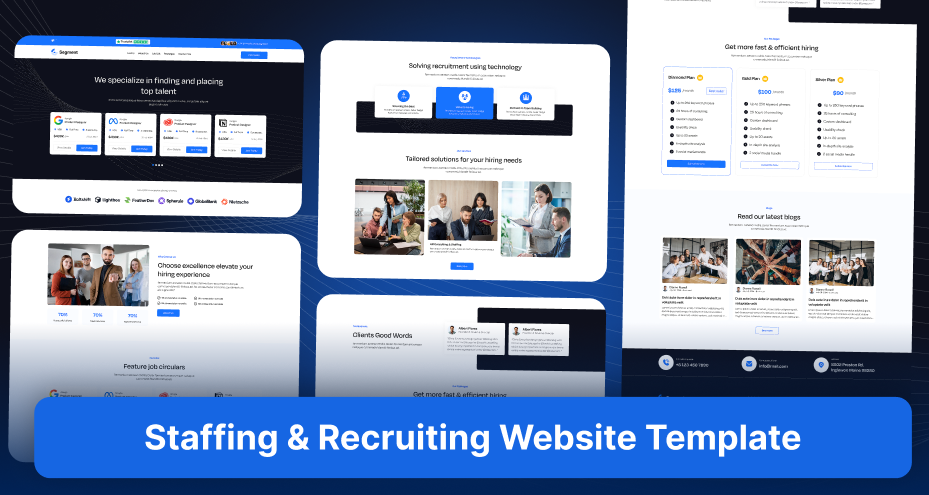
For recruitment platform projects in 2026, the real variable is execution speed, not technical possibility. A structured job portal marketplace website template built with HTML5 and Tailwind CSS enables immediate UI deployment, faster MVP validation, lower development risk, stronger margin control, flexible customization, and smooth backend integration.
For standard marketplace features, job posting, candidate registration, employer dashboards, and subscription systems, it is a rational engineering shortcut. However, AI-driven resume parsing, predictive analytics, or enterprise HR automation requires custom architecture. For most startup and SME recruitment builds, a template delivers scalable acceleration without structural compromise.