BTC - Bitcoin
 USDTERC20 - USDT ERC20
 ETH - Ethereum
 BNB - Binance
 BCH - Bitcoin Cash
 DOGE - Dogecoin
 TRX - TRON
 USDTTRC20 - USD TRC20
 LTC - LiteCoin

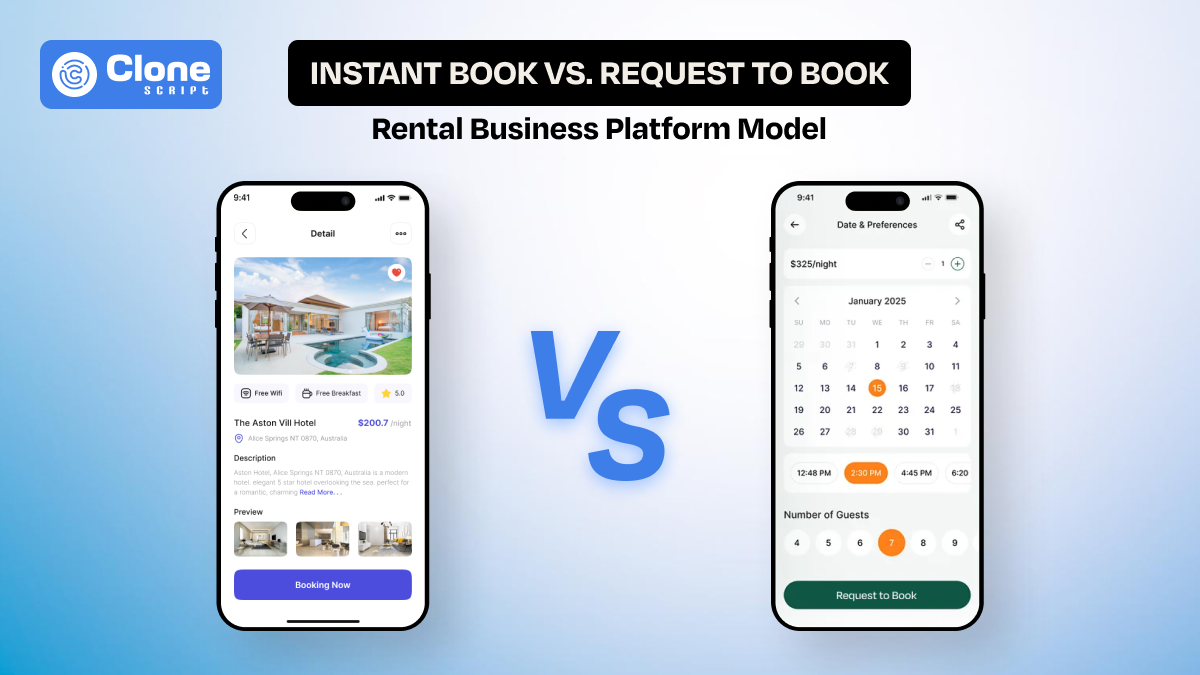
Instant Book Vs. Request to Book: Best Rental Business Model to Choose
Choosing the right booking model is one of the most critical decisions when building a rental marketplace. The difference between instant book and request to book directly impacts user experience, conversion rates, and trust levels on your platform. Many startups struggle to balance speed and control, often choosing the wrong system for their business stage.
A frictionless experience can increase bookings, but too much automation can reduce trust. On the other hand, adding approval layers improves safety but may hurt conversions. Most importantly, understanding how the working rental system is becoming a key element to operate the booking business efficiently.
This guide explains both models in detail, helping rental entrepreneurs understand which booking system aligns with their business goals, inventory type, and growth strategy.
What Is Instant Book in a Rental Marketplace?
Instant booking is a system where users can reserve a property or service immediately without waiting for the host's approval. It is widely used in platforms focused on speed and user convenience.

The workflow is straightforward in this model.
Users browse listings → select available dates → confirm their booking instantly.
Through automated system reservation systems, this eliminates delays and creates a seamless experience.
Key features of an instant booking system for rental apps:
-
Real-time availability and pricing updates
-
Automatic reservation confirmation
-
Pre-set host rules and filters
-
Integrated payment processing
Advantages of this quick booking model:
-
No waiting time to book the service
-
Easy to use and recommended
-
No heavy and complex IT infrastructure needed (compared to the request for the booking)
This model is highly effective for high-demand marketplaces. According to industry data, platforms using instant booking can improve conversion rates by up to 30%, as users prefer immediate confirmations.
But there are cons also to choosing the instant booking model. The manual control is no longer available. Also, the absence of proper safeguards can increase risks of cancellations and misuse. Therefore, platforms must combine it with verification mechanisms.
What is the Request to Book Model?
Request to book is a booking workflow where users must send a request that the host reviews before confirming the reservation. This model emphasizes trust and control over speed.

The process involves multiple steps.
Users select a listing → submit a booking request → and wait for the host’s decision.
The host evaluates the request based on the user profile, reviews, and requirements.
Key elements of the request booking workflow marketplace systems:
-
Manual approval process
-
User-host communication before confirmation
-
Flexible decision-making for hosts
Advantages of requesting to book:
-
Enhanced user screening
-
Greater control over bookings
-
Reduced risks for high-value assets
However, this system introduces friction. Studies show that delayed confirmations can reduce conversions by 20–40%, especially when users compare multiple platforms.
Despite this drawback, request booking is essential for marketplaces that prioritize trust, safety, and transaction quality over speed.
Instant Book vs Request to Book: Key Differences
To fully understand instant book vs book request, it’s essential to compare how each model performs across key operational factors.
| Factor | Instant Book | Request to Book |
|---|---|---|
| Booking Speed | Immediate | Delayed |
| User Experience | Seamless | Controlled |
| Host Control | Limited | High |
| Risk Level | Higher | Lower |
| Conversion Rate | High | Moderate |
| Trust Level | Moderate | High |
Key insights:
-
Instant booking prioritizes efficiency and scale
-
Request to book focuses on quality and control.
-
Each model solves a different marketplace problem.
Platforms targeting rapid growth often lean toward instant booking, while niche or premium marketplaces benefit from controlled approval systems.
Especially if you’re in the accommodation business, the rental system features are required. Otherwise, the issues remain regarding management and services.
Which Booking Model Works Best for Different Rental Businesses?
Different rental categories demand different booking strategies. When evaluating instant book vs book request, the right choice depends on asset value, booking frequency, and how much control your marketplace requires.

Rental platforms dealing with high-volume, low-risk transactions benefit from speed and automation. An instant booking system for rental apps works best where users expect immediate confirmation and minimal friction.
Best for Instant Book:
-
Vacation rentals and short stays
-
Budget accommodations
-
Car-sharing and mobility platforms
-
High-frequency booking marketplaces
Conversely, a request booking marketplace is better suited for businesses where trust and asset protection are important. These platforms require manual approval to reduce risks and ensure quality transactions.
Best for Request to Book:
-
Luxury property rentals
-
Equipment rental platforms
-
Long-term leasing services
-
Peer-to-peer marketplaces with higher risk
Why this segmentation matters:
-
High-volume platforms need fast, frictionless booking systems.
-
High-value platforms need controlled approval workflows.
For instance, vacation rentals succeed on urgency and instant decisions, while equipment rentals depend on verification to prevent misuse. Selecting the wrong model can reduce conversions or increase operational risks, directly impacting marketplace growth.
Hybrid Model: The Strategy Used by Leading Platforms
For most growing marketplaces, the real solution is hybrid models that create a measurable competitive advantage in instant and request booking.

Instead of applying a single system across all listings, hybrid platforms segment booking logic based on risk scoring, user trust signals, and inventory type. In an instant-booking and request-booking framework, platforms can optimize both conversion and safety simultaneously.
How advanced hybrid models actually work:
-
Enable instant booking only for users with verified IDs, payment history, or positive reviews.
-
Apply the request to book for high-ticket listings or new users with no history.
-
Use dynamic rules (AI or logic-based) to switch between models in real time.
This approach transforms a basic instant booking system for rental apps into an intelligent conversion engine. It maintains the safeguards of a request booking workflow marketplace where necessary.
Unique advantages:
-
Increases trust without sacrificing speed.
-
Improves host confidence, leading to better supply retention.
-
Reduces cancellations by matching the right users with the right booking flow.
Hybrid models are not just flexible. They are data-driven systems that evolve with your marketplace. This makes them essential for platforms aiming to scale efficiently and minimize risk.
Key Factors to Consider Before Choosing a Booking Model
Choosing between instant book vs request to book should not be based on trends. It requires a structured evaluation of your marketplace dynamics. The wrong decision can either slow down growth or increase operational risk.
Your goal is to align the booking flow with user intent, asset value, and platform maturity. This ensures both conversions and trust scale together.
Evaluate these factors:
-
Inventory Type: Low-cost, high-availability listings perform better with an instant booking system for rental apps. High-value or sensitive assets need approval layers.
-
User Trust Level: New platforms with unverified users benefit from a request booking marketplace to reduce misuse and build credibility.
-
Marketplace Stage: Early-stage platforms need speed to generate traction, making instant booking more effective. Famous platforms can introduce control mechanisms.
-
Customer Expectations: Modern users expect quick confirmations. Delays can lead to drop-offs, especially in competitive markets.
-
Risk Tolerance & Revenue Model: Volume-driven platforms prioritize bookings, and premium marketplaces prioritize transaction quality.
As your platform grows, you should evolve from a simple booking system to a more adaptive, hybrid approach that balances speed, trust, and scalability.
How Booking Models Impact Revenue and Growth
The choice between instant book and book request directly affects how your marketplace earns, scales, and retains users. Each model shapes a different growth opportunity.
Instant systems remove friction from the user journey. When users can book immediately, they are less likely to abandon the process. This makes an instant booking system for rental apps highly effective for increasing conversion rates, booking frequency, and overall revenue velocity. It is particularly useful in competitive markets where speed influences user decisions.
However, faster bookings can come with trade-offs. A request booking marketplace with workflow introduces a validation layer that filters out low-intent or risky users. While this may reduce total bookings, it improves transaction quality and platform reliability.
From a business perspective:
-
Instant booking drives higher volume and faster cash flow.
-
Request to book ensures better booking quality and fewer losses.
-
Lower cancellations and disputes improve net revenue margins.
Growth impact:
-
Instant booking supports rapid user acquisition and scaling.
-
Request booking builds trust, retention, and long-term value.
If your goal is aggressive growth, instant booking accelerates momentum. But for sustainable and predictable revenue, combining it with controlled workflows creates a more balanced and resilient marketplace.
Common Mistakes Rental Startups Make When Choosing Instant Book and Request Book
Many startups misunderstand instant book vs request to book as a fixed feature choice, rather than a strategic growth decision.
-
Adding Too Much Friction Too Early
Early-stage platforms often rely heavily on request-based systems to maintain control. However, this slows down the booking process when the priority should be gaining traction.
When users are forced to wait for approvals, they are more likely to abandon the platform and explore faster alternatives. This reduces early conversions and makes it harder to build marketplace liquidity. For new platforms, speed is essential to validate demand and attract both users and suppliers.
-
Over-Relying on Instant Booking Without Safeguards
An instant booking system for rental apps can significantly improve conversions, but using it without proper safeguards introduces operational risks. Without verification mechanisms, platforms may face issues such as fake bookings, cancellations, or misuse of assets.
This not only affects revenue but also damages trust between users and hosts. Over time, this can increase support costs and reduce platform reliability. Instant booking must be supported with strong back-end controls to ensure sustainable growth.
-
Ignoring Host Control and Preferences
One drawback in poorly designed systems is the lack of flexibility for hosts. While automation improves user experience, it can limit the control hosts have over who books their listings.
This is especially problematic in high-value rentals where trust is critical. If hosts feel they cannot screen users, they may hesitate to list their assets. A balanced approach, often seen in a request booking workflow marketplace, helps maintain host confidence and improves supply quality.
-
Not Evolving the Booking Model Over Time
A common long-term mistake is treating booking models as static. Marketplaces evolve, and so should their booking systems. What works at the early stage may not be effective as the platform scales.
For example, starting with a request to book may ensure quality, but failing to introduce instant options later can limit growth. Similarly, only instant booking without adding controls can increase risks. Successful platforms continuously optimize their approach, often moving toward hybrid systems.
Key takeaway:
Avoid rigid implementation. The most effective platforms treat instant booking and request to book as an evolving strategy, adapting to user behavior, risk levels, and marketplace maturity.
How to Implement the Right Booking Model in Your Platform
Selecting between instant book and book request is only the first step. The real impact comes from how effectively you implement and scale the system. A well-executed booking flow can significantly improve conversions, trust, and operational efficiency.

-
Start with a Goal-Oriented MVP
In an instant booking vs request booking approach, early-stage platforms should prioritize simplicity. Launching with an instant booking system for rental apps helps reduce friction and generate initial traction.
Focus on:
-
Fast booking flow with minimal steps
-
Clear availability and pricing visibility
-
Seamless checkout experience
This ensures users can quickly adopt your platform without confusion.
-
Introduce Control Layers Gradually
As your platform grows, begin integrating elements of a request booking workflow marketplace to manage risk and improve quality.
You can:
-
Enable request-based booking for high-value listings
-
Add manual approval for new or unverified users
-
Introduce booking rules based on listing categories
This phased approach helps maintain growth while improving trust.
-
Use Technology to Optimize Booking Decisions
Modern platforms leverage automation and data to enhance booking systems.
Key implementations include:
-
User verification systems (KYC, reviews, ratings)
-
AI-based risk scoring for bookings
-
Smart notifications to reduce response delays
These features allow you to balance speed and control without compromising user experience.
-
Enable Flexibility for Hosts and Users
Rigid systems limit scalability. Allowing customization improves both supply and demand satisfaction.
-
Hosts can choose between instant or request booking
-
Users get faster or more secure booking options
-
Platform adapts to different use cases
The most effective platforms do not rigidly choose between instant book and book request. Instead, they implement a flexible system that evolves with user behavior, ensuring long-term growth, trust, and efficiency.
Choose a Booking System Platform Clone Script: A Wise Decision
If you’re ready to launch the hotel booking website and app but have limited resources, in terms of capital and time, clone scripts are an ideal choice. These softwares are available with the professional UI design, tested coding, and functionality. That means the waiting time to have a live platform is reduced to 3-5 days instead of 3-5 months.
Let’s say you’re like to operate in the Airbnb model, then the Airbnb clone script is the perfect option for you. You don’t have to ask for quotes and hire app designers and developers from a freelancing platform. Your platform is yours, and you have a legal license to operate on it on the web.
At AllClone Script, we help entrepreneurs like you to have a secure platform for business with limited resources. You can explore our hotel booking system clone script optimized for:
-
Professional branding
-
Custom functionality
-
Secure database handling
Conclusion
Choosing between instant book and request to book ultimately depends on your marketplace’s priorities, risk tolerance, and growth stage. An instant booking system for rental apps accelerates conversions and user acquisition, while a request booking workflow marketplace strengthens trust and transaction quality.
The most successful platforms don’t treat this as a fixed decision. They evolve. By starting with the right model and gradually adapting based on user behavior and inventory type, you can balance speed with control. In a competitive rental ecosystem, a flexible, data-driven booking strategy is key to building a scalable, profitable, and user-centric platform.
FAQs
-
What is the difference between instant booking and request booking?
Instant booking confirms reservations immediately, while request booking requires host approval, adding control but increasing booking time and friction.
-
Which booking model is better for startups?
Startups should use instant booking initially for faster traction, then introduce request booking later to improve trust and control.
-
Can I use both booking models on one platform?
Yes, platforms can combine both models, using instant booking for speed and request booking for high-risk or premium listings.
-
Does instant booking increase conversions?
Yes, instant booking reduces friction in the user journey, leading to faster decisions and higher conversion rates in competitive marketplaces.
-
Is the request to book safer?
Yes, request booking allows hosts to review users before approval, reducing risks and ensuring safer, more reliable rental transactions.