BTC - Bitcoin
 USDTERC20 - USDT ERC20
 ETH - Ethereum
 BNB - Binance
 BCH - Bitcoin Cash
 DOGE - Dogecoin
 TRX - TRON
 USDTTRC20 - USD TRC20
 LTC - LiteCoin

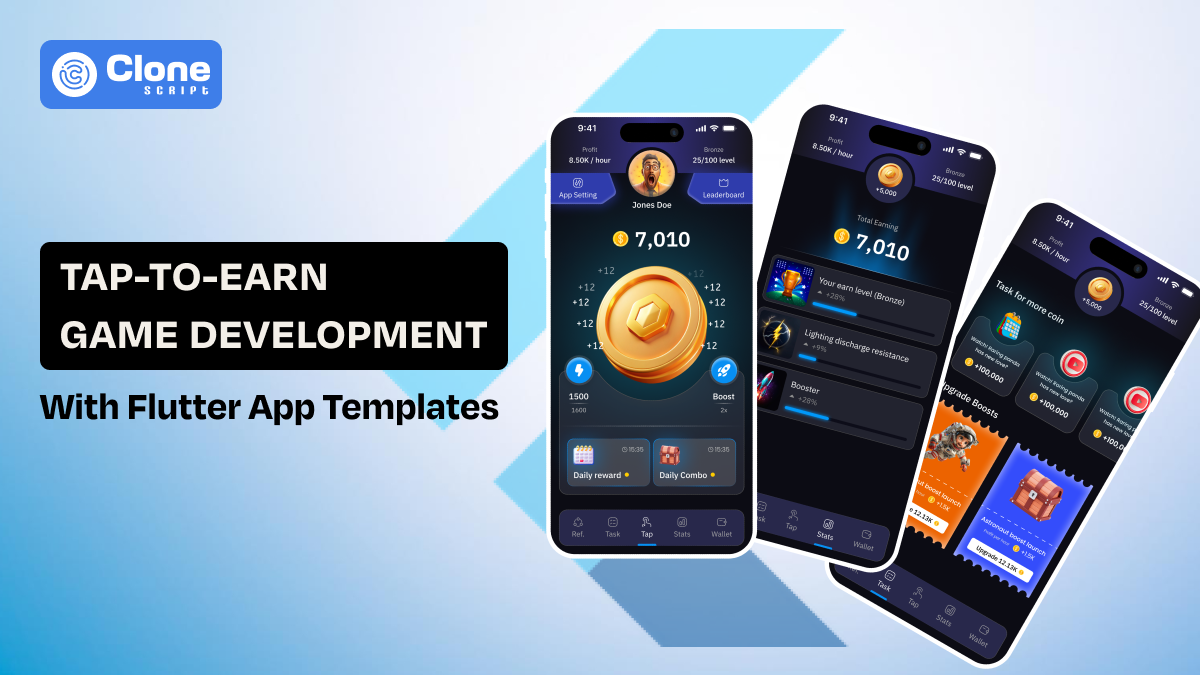
How to Build a Tap To Earn (T2E) Game With Flutter App Templates?
A few years ago, the gaming industry was mainly about fun and entertainment, with no focus on revenue opportunities. Today, with the rise of Web3 and growing crypto adoption, Tap-to-Earn (T2E) games like Hamster Kombat and TapSwap are gaining massive attention.
The real challenge appears when a client demands a T2E app within a fixed timeline, specific features, and a strict budget—without compromising quality. This is a common situation faced by most tap-to-earn game development companies and agencies.
In this article, we will explore the most practical approach to building a T2E game, the technology stack involved, common development challenges, monetization models, and post-launch growth strategies.
What Is a Tap-to-Earn (T2E) Game?
A Tap-to-Earn (T2E) game is a reward-based digital experience of gaming. Here, users earn value by performing simple actions like tapping the screen, completing small tasks, or staying active within the ecosystem.
The concept of these games is intentionally minimal. There is no complex learning curve, no advanced gaming skills required, and no heavy onboarding friction.
But are T2E games different from traditional mobile games?
Yes, with the support of the value exchange model. Users are participating in a system where engagement translates into rewards, like in-game points, tokens, credits, or future redeemable benefits.
In T2E games, generally, these aspects work:
-
High-frequency micro-interactions
-
Predictable user behavior patterns
-
Strong retention loops
-
Lightweight but scalable backend logic
If you need a better idea of how the easy mechanism works, then look at the Hamster Kombat and TapSwap games. With a smart reward system and viral distribution, these games attract millions of users in less time.
Why Are T2E Games in High Demand Today?
Notably, Notcoin, a Telegram-based gaming platform, achieved a $1.9 billion market cap, and the daily volume of transactions is around 1 billion.
There are three reasons pushing businesses to go with the tap-to-earn game app development: 1. User behavior shift, 2. Platform evaluation and practical advantages.
-
User behavior shift
Users now don’t want to wait for the reaction of their action on the game, such as a 2-minute loading time for the display. They are willing to play those games where their inputs are valued and welcomed easily. Tapping mechanics match this behavior perfectly.
-
Platform evaluation
We know to play such a game, visit Google Play Store or App Store, download it, install and then start to play. Platforms like Telegram have removed those traditional distribution barriers. Users can access T2E games instantly without downloading an app or creating lengthy accounts.
-
Business advantages
These games are easier to justify as a business investment. Compared to full-scale gaming projects, tap-to-earn game involves less cost to develop, can be launched faster, scale more predictably, and allow monetization testing early.
This demand translates into repeatable project opportunities with shorter sales cycles and clearer delivery expectations for development agencies.
Why Choose Templates for T2E Game Development?
Starting a secure tap-to-earn game development from the first phase of the development cycle looks like an impossible task, especially when clients approach you with tight deadlines and fixed budgets. This is where ready-made T2E game templates become a practical solution rather than a compromise.
Templates offer a structured foundation that already includes:
-
Core tap-to-earn mechanics: The layouts are optimized and working with the support of core mechanics like tapping and earning rewards. There is no rework needed. The front-end mobile app development is easy to do with the templates.
-
Reward calculation logic: In the template, the T2E game app design is already optimized to calculate the rewards in a predefined logic and justify the playing style.
-
User progression systems: Templates have a set of user progression layouts, like level 1 to level 1000, with UI components that can be used for development.
-
Admin control panels: Premium templates feature the admin controls to manage the platform without getting involved in the technical setup. The back-end development has already been done and saves extra cost to spend.
-
Scalable architecture: The source code available in the template is customizable to support growth and not be stuck, even if new functionality needs to be added. It works for iOS, Android, and web versions.
This is, of course, spending weeks building and testing basic functionality, development teams can focus on customization, branding, and performance optimization.
Recommended Flutter-Based T2E Game Templates Useful for App Development
Currently, there are two types of T2E game templates we like to present as:
1. Hamster Kombat T2E Game App Flutter Template
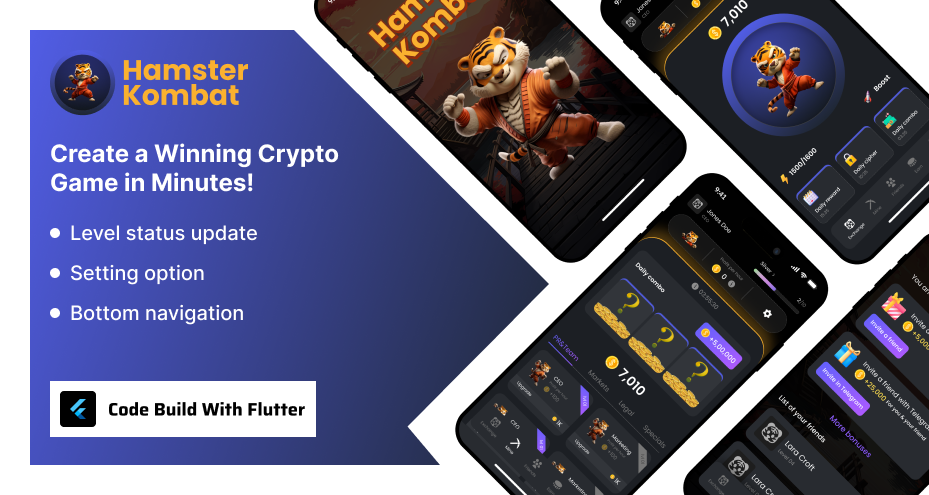
If the client needs a humor, entertainment, and revenue opportunity in a single tap-to-earn game, a Hamster Kombat-like game is the right choice for them. This Flutter template is optimized to support the Telegram-based T2E game. From useful modular design to functionality, make the front-end development simplified, and with back-end support, it is ready to go live.
Why choose this template?
-
Simple yet engaging tapping mechanics have already been tested for interactive gameplay.
-
Structured user progression and upgrades are optimized to increase the engagement rate and hold the attention of players.
-
Referral-driven growth systems layouts keep the task easier to maintain the core intent of a T2E game development.
-
Flutter-powered UI for smooth performance through source code made for iOS, Android, and web apps.
This Flutter app template works well when you want a proven concept with room for customization. The Flutter framework makes it easier to adapt the game for mobile platforms if the project expands beyond Telegram.
2. TapSwap T2E Game App Flutter Template
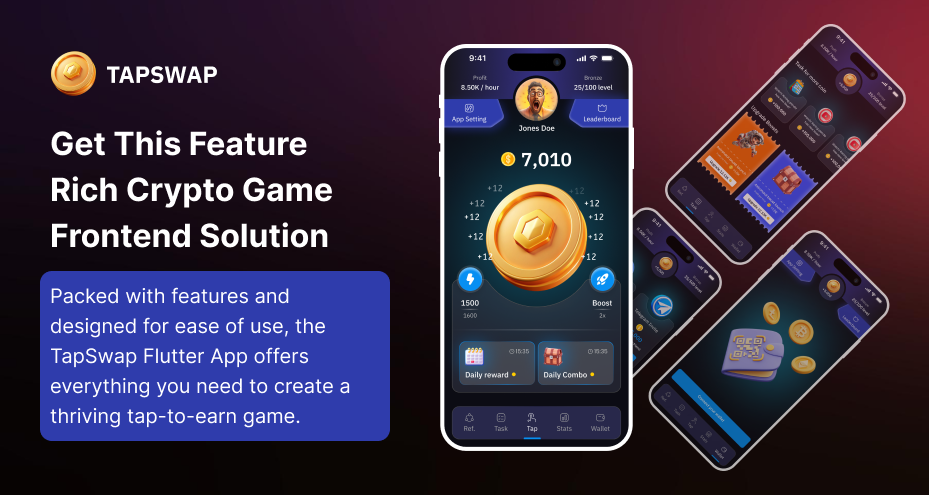
Same as the Hamster Kombat app mechanism, the TapSwap T2E game also got attention. Tapping the screen is the core theme of this game, and earning crypto rewards in the form of the TAPSWAP tokens remains a priority. The TapSwap Flutter app template emphasizes high-frequency interaction and reward accumulation. It is built for projects where daily activity and repeat engagement are the main success metrics.
Why choose this template?
-
A clean and responsive tapping interface is included for development without grounded design and coding work. Save costs here.
-
The dashboards are designed with the UI and UX principles for the reward tracking section. This is important to improve engagement in the newly launched crypto-earning game.
-
App source code is optimized for proven functionality in cross-platforms like iOS, Android, and web with a single codebase.
-
A scalable backend-ready architecture is added to support every new feature and make the development cycle faster.
Using the Flutter app templates for tap-to-earn game development is not about cutting costs, but it’s a smart solution that development teams currently choose.
What Types of T2E Games Are Available in the Market?
What type of T2E games to develop depends on the client’s requirements. But it’s good to know it before starting the design and coding.
-
Telegram-Based T2E Games: These games run inside the Telegram platform, even on the web and app, using bots or mini apps. If you need viral growth, fast onboarding, and community-driven engagement, we recommend this type of game.
-
Mobile App-Based T2E Games: If the client plans to publish their game on the Google Play Store and App Store for Android and iOS separately, pick this type. But note that you need an overall control over UI, analytics, monetization, app store compliance, and face longer approval cycles.
-
Crypto-Integrated T2E Games: In these games, rewards are linked to tokens or wallets when the task is completed. Crypto game development requires stronger security, compliance awareness, and long-term reward sustainability planning.
-
Web-Based T2E Games: If the client likes to make a lightweight and accessible game, then this game is the right choice. For campaigns or early validation before complete launch, go with this type.
-
Non-Crypto Reward Games: Keeping the main theme for tapping into the games, but the focus is to distribute points, coupons, and in-app benefits to mainstream audiences. This game type is a good choice for mainstream audiences.
For crypto earning games development, the top 3 types are beneficial to have, and for just market adoption, go for the remaining.
What Features Should Be Included in a T2E Game App?
Users remember their gaming experience with the tap-to-earn game. This depends on the features the app has. There are two types of features: 1. For users, and 2. For admins.
-
User-Focused Features in a T2E Game App
User features are designed to keep gameplay simple, rewarding, and engaging. You can ask the client to confirm the features they want in the prototype and then integrate them into the app.
-
Tap-Based Earning Logic: This feature keeps the gameplay interactive and minimal for cognitive load. On the homepage, users can easily recognize what they have to do.
-
User Profiles and Progress Tracking: This feature is helpful for users to track what level they completed, how much they earn, what activity they perform, and what is their progress in the competition.
-
Daily Tasks and Bonus Rewards: This feature is useful for daily challenges and bonus rewards to keep motivating users. It invites users to open the app regularly and maintain consistent engagement.
-
Referral and Invite System: This feature turns active players into promoters of the game. With a referral system, users are allowed to invite friends and earn additional rewards like tokens, NFTs, and in-app points.
-
Leaderboards and Achievements: This leaderboard feature adds friendly competition in the game and inspires users to put more effort into milestone achievement.
-
Notifications and Reminders: This feature works as a marketing tool to remind users about tasks, bonuses, or rewards with personalized messages. It lets users know the app cares about their gameplay, not pushing to in-app purchase only.
-
Admin-Focused Features in a T2E Game App
Admin features give game operators full control over performance, rewards, and growth without requiring constant development changes.
-
Admin Dashboard: This feature is a centralized dashboard that provides visibility into user activity, earnings distribution, and overall game performance.
-
Reward and Economy Management: This feature allows admins to adjust reward rates, limits, and bonus structures to maintain balance and long-term sustainability.
-
User Management Tools: This feature offers admin controls to help monitor users, manage suspicious activity, and take action against abuse or violations.
-
Analytics and Reporting: This feature provides detailed analytics to track user behavior, engagement trends, and retention metrics to support data-driven decisions.
-
Referral and Campaign Management: This feature allows admins to configure referral rewards, promotional campaigns, and seasonal events to drive user acquisition.
-
Security and Anti-Fraud Controls: This built-in security feature tool helps detect bots, prevent fake taps, and protect the reward economy from misuse.
These features are making the tap-to-earn game not only an entertainment and revenue generation tool for users and businesses, respectively. But it helps both to achieve their independent goals.
What Technology Stack Is Required for T2E Game Development?
The selection of the tap-to-earn game development technology stack depends on the complex requirements. But usually, the following stacks are used.
|
Layer |
Technology |
Purpose in T2E Game Development |
|---|---|---|
|
Front-end |
Flutter |
Builds fast, responsive, cross-platform user interfaces for mobile and Telegram-based T2E games. |
|
Back-end |
Node.js |
Handles real-time user actions, reward calculations, and high-concurrency tap events efficiently. |
|
Back-end |
Laravel |
Manages structured APIs, admin panels, authentication, and business logic with strong security controls. |
|
Database |
Firebase |
Provides real-time data syncing for user actions, rewards, and instant gameplay updates. |
|
Database |
MongoDB |
Stores flexible user activity data and game events, supporting scalable and dynamic data structures. |
|
Database |
PostgreSQL |
Manages structured data such as transactions, user records, and reward histories reliably. |
|
In-App Purchase |
Google Play Billing API |
Manages Android in-app purchases, subscriptions, and purchase validation. |
|
In-App Purchase |
Apple In-App Purchase API |
Handles iOS purchases, subscriptions, and receipt verification securely. |
|
APIs |
Telegram APIs |
Allows bot integration, user authentication, and seamless gameplay inside Telegram platforms. |
|
APIs |
Payment Gateways Integration |
Supports in-app purchases, subscriptions, and reward monetization securely. |
|
APIs |
Crypto Payment Gateways |
Allows token purchases, wallet-based rewards, and Web3-aligned monetization models. |
|
Security |
Anti-Bot Systems |
Detects automated taps and suspicious behavior to protect the reward economy. |
|
Security |
Rate Limiting |
Controls request frequency to prevent abuse, spam, and server overload. |
|
Cloud Infrastructure |
AWS / Google Cloud |
Provides auto-scaling, load balancing, and high availability during traffic improvement. |
The best way to make a perfect choice for technology, whether it’s front-end, back-end, or API make sure to know what the client wants. If they prefer a fast loading speed, then choose accordingly; if they prioritize blockchain-level security, then opt for it wisely.
What Challenges Are Faced During T2E Game Development?
These challenges require development teams to pay more attention to counter them:
-
Fake Taps and Bot Abuse: Users are adopting new techniques to win more rewards, and they implement bot-based taps, not humans. To prevent it, anti-bot logic and behavior validation are essential from day one.
-
Reward Inflation and Maintaining Sustainability: Poorly balanced reward systems can devalue incentives over time, and it becomes boring to continue. This requires consistent tuning to maintain long-term user interest and trust with the introduction of a unique concept in rewards.
-
Sudden Traffic Spikes in App: Viral growth can overload servers quickly, so scalable cloud infrastructure selection like AWS, Google Cloud, Flare, or MS Azure is important to have for handling peak user activity without downtime.
-
Balancing Monetization with User Trust for Long-term: Over-monetization in a tap-to-earn game can frustrate users and ruin their experience of spending real money for level unlocking. At the same time, under-monetization affects revenue. Keeping a balance between these two options is a key strategic challenge.
-
Platform Compliance Issues: The concept of earning crypto or real money by tapping the screen is like gambling. For that, Telegram policies and app store rules have to be followed. The federal and local regional laws should comply to avoid restrictions or unexpected platform bans.
Addressing these challenges early keeps a stable, trustworthy, and growth-ready T2E game ecosystem.
How Experienced Teams Manage These Challenges?
Skilled development teams follow these ways to tackle challenges:
-
They validate the back-end for user actions in an encrypted way.
-
They integrate real-time analytics for behavior monitoring in further strategy planning.
-
They make controlled reward distribution systems that are not partial. But it is transparent and value-driven.
-
They deploy a scalable cloud infrastructure to make the game work even the users onboard with more users on board.
Conclusion
Tap-to-Earn game is becoming a new segment to enter in the billion-to-trillion-dollar video gaming market, especially based on Web3, blockchain, and crypto. Businesses want to step in with a limited budget and secure a gaming platform, and for that, Flutter templates are useful choices. Tap-to-earn game development companies and agencies can use them with the technology stack and launch the app on Telegram or the Play Store.
FAQs
-
How much does it cost to make a tap-to-earn game like Hamster Kombat?
It usually takes $20,000 to $100,000 for a custom Hamster Kombat tap-to-earn game development cost. The cost depends on features, platform, and customization needed in the game, with the complexity.
-
What platforms and frameworks are best for T2E game development?
Flutter, Node.js, and Laravel are widely used for T2E game development. These frameworks offer cross-platform support, scalability, and smooth performance for Telegram and mobile users.
-
Is Flutter good for Telegram-based game development?
Yes, Flutter works well for Telegram-based games as it helps with flexible UI design and easy expansion to Android and iOS platforms with a single codebase.
-
How do tap-to-earn game apps generate revenue?
There are five ways to generate revenue in a tap-to-earn game: in-app purchases, rewarded ads, premium features, sponsored tasks, and token-based economies integration into gameplay.
-
Where to host T2E games, Telegram or Play Store?
It depends on the priority. For a faster launch and instant growth, Telegram is an unmatched choice. Play Store suits long-term scaling, monetization control, and broader audience reach.
-
What is the future of T2E game development?
The future trends for tap-to-earn games are expected to reach smarter reward systems, stronger fraud prevention, cross-platform expansion, and deeper integration with Web3 and loyalty ecosystems.
-
How can you market a newly made tap-to-earn game for maximum downloads?
You have multiple options, like using Telegram communities, referral programs, influencer marketing, app store optimization, and regular in-game events to drive consistent user growth for a new tap-to-earn game.
-
What should you consider before launching a T2E game?
You have to focus on reward sustainability, back-end scalability, anti-bot protection, analytics tracking, platform compliance, and a clear post-launch growth strategy. This can reduce the work after the launch of the tap-to-earn game.