BTC - Bitcoin
 USDTERC20 - USDT ERC20
 ETH - Ethereum
 BNB - Binance
 BCH - Bitcoin Cash
 DOGE - Dogecoin
 TRX - TRON
 USDTTRC20 - USD TRC20
 LTC - LiteCoin

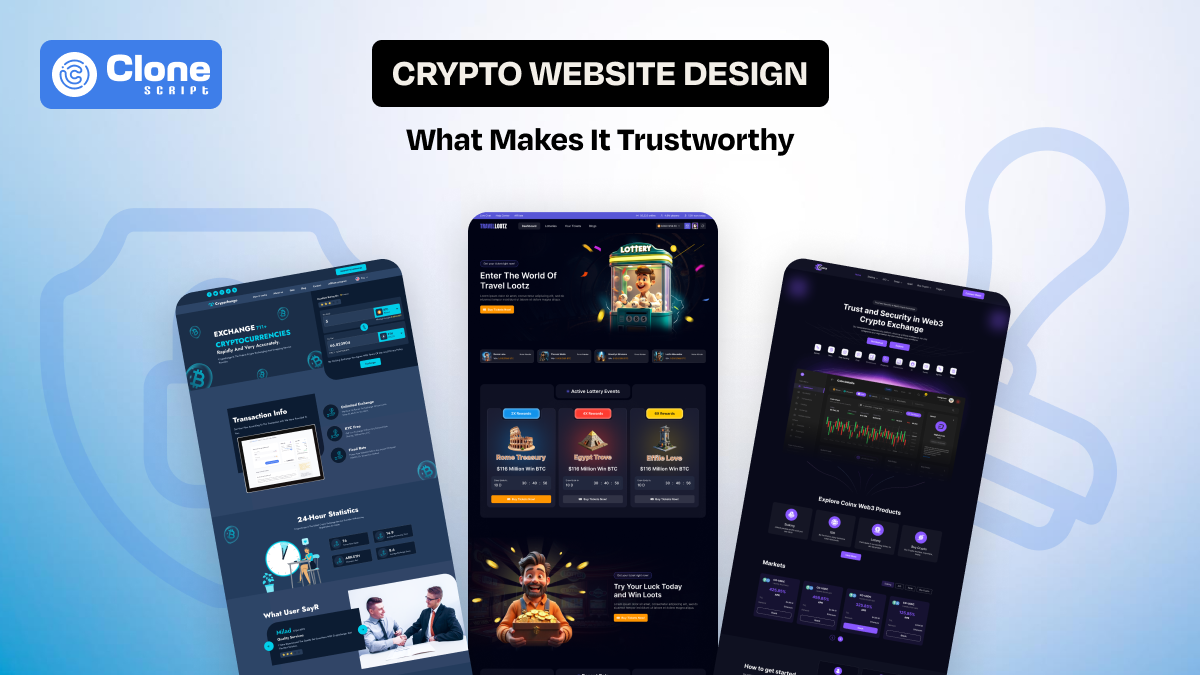
How to Design a Crypto Website That Users Actually Trust and Find Useful
Crypto users do not browse websites casually, but they evaluate them. Every page load, animation, and interaction is subconsciously audited for legitimacy. According to multiple UX studies in fintech, users form a trust judgment within the first 3–5 seconds of landing on a financial website. In crypto, that window is even shorter due to scams, rug pulls, and poorly built products flooding the market.
Adding interesting visuals in a cryptocurrency website design is not enough. You must try to reduce perceived risk, communicate transparency, and guide users through complexity with minimal friction. This article breaks down how expert designers approach crypto website design today, with what works, what fails, and how to design trustworthy platforms.
Why Crypto Website Design Is a Trust Problem?
Does an outdated website lose the conversion in the crypto? No, it’s not like that only. It fails because the trust and legitimacy are not proven. In traditional SaaS, users assume safety by default. In crypto, users assume risk by default.
Every design decision contributes to one core question in the user’s mind:
“Is this safe enough for me to connect my wallet or invest money?”
If your website design speaks for itself, you don’t have to prove anything further. The trust wins.
Websites overloaded with animations, vague taglines, or buzzwords like “next-gen” and “revolutionary” often perform worse than simpler, information-rich layouts. Data from fintech UX research shows that clarity consistently outperforms creativity in high-risk industries.
Crypto websites must do:
-
Communicate real utility immediately without confusing users anymore.
-
Explain value without jargon and complex words that only experts can understand.
-
Make security visible, not implied, to encourage engagement on the website.
We analyze that designers who treat crypto design as another branding exercise ignore the psychological weight of financial risk.
Trust is not added through visuals. It is earned through structure, predictability, and transparency.
Why Do Crypto Designers Need to Think Like Risk Managers?
Crypto users are not a single audience. Each segment interacts with risk differently, and the design must adapt accordingly.
-
Retail traders
These users are in a hurry and need to access such information in real-time without any errors and delays:
-
Clear pricing: They want to know the correct price of cryptocurrencies for making decisions for trade and holding.
-
Fast access to charts: The access to price volatility charts, trading graphs, and infographics has to be quick.
-
Familiar UI patterns: The icons, images, and other visual assets can guide users on what to do next without confusion.
-
DeFi users
Apart from retail crypto traders, Decentralized Finance users prioritize the following:
-
Transparency of protocols: They like to have easy access to see the protocols that are decided on the network and manage the entire platform.
-
Documentation access: To support the new crypto project launch on the DeFi platform, they want documentation like a roadmap, a whitepaper, staking, and tokenomics.
-
Smart contract visibility: By showcasing on blockchain, is the smart contract deployed it increasing the trust and encouraging participation in the platform.
-
NFT collectors
These users are looking forward to having fun and generating revenue on the crypto website.
-
Community signals: Presenting the trust elements and community support throughout the channels inspires them to collect more NFT assets.
-
Brand identity: Before selling and buying NFT, users search for a platform that is trustworthy and widely used by other collectors. A trusted branding design adds credibility.
-
Social proof: How many users are already using the NFTs, and what they like about the website, helps others to start trading.
-
Institutional or enterprise users
These users are considered for the B2B segment, and designing a website is a challenging task.
-
Compliance indicators: These users are already aware of the crypto scams, so they prefer to have regulatory practices established by the website.
-
Professional tone: They do not like marketing but like to read content based on the use cases. Create the layout design structure accordingly.
-
Detailed product explanations: Creating a tutorial section to represent the product in an image or video format improves conversions.
A common mistake is designing one generic interface for all. Expert crypto designers prioritize the primary user group and optimize the interface for their decision-making process.
Trust is contextual. What reassures a DeFi power user may confuse a retail investor.
What Are the Core Principles of High-Trust Crypto Website Design?
Usually, these three design principles are present in a perfect way.
-
Transparency by Design
The first principle is to prove transparency on the website. The entire layout has to be present. Do not implement the elements in footers where usually not everyone visits. Users should immediately understand:
-
What the product does
-
How it works
-
Why it exists
Keep prioritizing to include the key transparency elements:
-
Best hero section with clear messaging and real product screenshots. This was done well for the first interaction.
-
Visible links to security audits, GitHub repositories, or documentation increase trust.
-
Honest explanations of features and risks help to make decisions far easier, rather than reading news and other social channels for a crypto website.
Websites that depend on abstract illustrations instead of real interfaces often trigger skepticism.
-
Predictability Over Creativity
The design is transparent, but is still optimized for users to know what to do next. There’s this principle work, “predictability over creativity.” Crypto users expect familiar interaction patterns.
Reinventing navigation or basic flows introduces friction, and that is enough to break the trust. Predictability increases confidence.
Designers should favor the following UI components:
-
Standard navigation placement above the fold, and every link has to be clickable.
-
Recognizable CTA language helps users perform the necessary action on the website, like sign-up, deposit amount, trade execution, etc.
-
Conventional dashboard layouts have to present the information in a minimal effort and simple manner, where making decisions is easy.
Keep understanding that creativity in web design should enhance clarity, not replace it.
-
Security Signals That Users Actually Notice
In crypto security is the most important aspect, and the design has to prove it. After all, only transparency and predictability can’t help users to board until they find that the website is secure.
Security indicators must be contextual as follows:
-
Wallet connection prompts should explain why access is needed and what usage it has.
-
Audit badges should link to real reports so they reflect the trustworthiness that the website promises.
-
Security language should be specific, not generic. For example, “trusted by 10+ million users” can work better than “We’re a first-choice crypto platform.”
Users do not trust vague claims like “military-grade security.” They trust verifiable signals.
What UX Patterns Make a Crypto Website Usable and Trustworthy?
Your UI design should communicate properly with the user experience (UX), and that creates the secure and trusted crypto website everyone likes to visit. Crypto platforms are information-dense by nature. Poor UX increases confusion.
Effective crypto website UX depends on:
-
Progressive disclosure to avoid overwhelming users.
-
Clear separation between marketing pages and application interfaces helps individual users know what they want to do.
-
Consistent terminology across pages increases the trust in the website.
Here, we recommend what you have to optimize:
-
Wallet interaction flows require special attention.
-
Confirmation steps, error handling, and fallback states must be designed to reduce anxiety.
-
A failed transaction without explanation can permanently lose a user. So, handle it with a proper message and display the feedback.
Designers should also avoid assuming technical knowledge. Even experienced crypto users appreciate clear explanations and visual guidance.
What UI Design Elements Increase Trust in Crypto Products?
When you visit a famous crypto website like Coinbase or CoinGecko, you may notice how perfectly they implement the UI design elements. You can also use branded elements in the crypto website:
-
Color Psychology in Crypto and Financial Interfaces
The color you choose for website design should avoid excessive neon or gimmicky tones; it does not look professional. Also, using the contrast to highlight important actions like a high amount of BTC deposits, withdrawal requests, and trading without gas fees. Additionally, maintain readability in both light and dark modes.
-
Typography and Readability for Data-Heavy Pages
The fonts should support the content you want to present to users without creating confusion. For example, Sans-serif fonts with strong numeric clarity perform best for dashboards and pricing tables.
-
Iconography Standards for Crypto Actions
Iconography should follow industry conventions. Custom icons for universal crypto actions confuse users. Try to add icons that users are already familiar with and gather feedback first before insisting on preferences in the development.
-
Dark Mode vs Light Mode in Crypto UI
Most Web3 websites are designed with dark mode and light mode. Dark mode is popular, but it must be optional. Many users still prefer light interfaces for long sessions, especially in analytics-heavy environments. Prioritize designing them related to the UI.
The web design presence strongly influences credibility in finance-oriented products.
What Are the Most Common Crypto Website Design Mistakes?
Sometimes, overdesigning and complexity affect the interaction with the website. Here we find those mistakes:
-
Overusing Words Instead of Explaining Value
This is one of the most damaging errors. Phrases like “next-gen DeFi,” “revolutionary protocol,” or “AI-powered blockchain” sound impressive but communicate nothing. Even if the product or service is valuable, no one can take an interest in it.
See the websites of Coinbase and CoinGecko. They succeed because they explain features in plain language before introducing technical depth. In crypto UX, clarity always outperforms hype.
-
Hiding the Actual Product Behind Marketing Pages
New crypto websites are overconfident and use marketing methodology, but do not explain what the product itself is. When users are influenced to scroll excessively to see real dashboards, token utilities, or workflows, skepticism increases. Here, the chances are very high of not converting a visit into leads.
Trustworthy crypto websites surface the product early. Usually, within the first viewport, they use real interface previews instead of abstract visuals.
-
Ignoring Mobile and Accessibility Standards
Not optimizing the website for mobile can prove to be costly for the business. Industry data shows that more than 55% of crypto users access platforms via mobile, yet many sites still treat mobile as secondary. The common errors, including small tap targets, unreadable charts, and broken wallet flows, signal low maturity.
Designers also frequently ignore accessibility and readability, especially in dark-mode-heavy interfaces. They implement low contrast text, dense layouts, and unclear hierarchies that create friction and fatigue.
-
Inconsistent Messaging Across Pages
Finally, inconsistent messaging reduces confidence quickly. If the homepage promises simplicity but the app feels complex and opaque, users disengage. In crypto, a single confusing interaction is often enough for permanent abandonment.
Overcoming these crypto design mistakes is possible, but you have to be agile because you have to help both the client and its users.
Figma-First Workflow for Designing Crypto Websites at Scale
Figma has become the default design tool for crypto teams due to its collaborative and system-driven approach.
Step 1: Define the Crypto Design System
Start by creating a shared design system in Figma. Include core components such as buttons, forms, charts, tables, modals, and transaction states. In crypto product websites, reusing these elements frequently helps in maintaining consistency for trust.
Step 2: Design Key User Flows First
After the design system, you are requested to map essential flows like wallet connection, onboarding, trading, or staking. Use those elements accordingly in the layouts as per the best practices. Designing the user flows early prevents usability gaps and reduces rework during development.
Step 3: Build Reusable Components
Once the user flow is designed, it’s time to convert recurring UI elements into reusable Figma components. This allows faster iteration cycle updates and ensures visual uniformity across dashboards and pages.
Step 4: Collaborate with Developers
This step is to hand off the approved prototype to developers and start coding work. Use shared libraries and real-time comments to align with developers. Clear messaging minimizes errors in complex crypto interfaces and reduces development time.
Step 5: Scale Without Redesigning
As features grow, update components. Not screens. This approach supports long-term scalability without constant redesign cycles. This can help you manage the development of a crypto website, whether it’s a startup or an enterprise.
When Should You Use Pre-Designed Crypto Website UI Kits? (And When Not To)
Pre-designed crypto UI kits are strategic tools when used correctly in the workflow. They are ideal for:
-
MVP launches
-
Proof-of-concept products
-
Time-sensitive releases
Custom crypto website design is still valuable for highly differentiated products, but many crypto platforms share common UX patterns. Reinventing these patterns increases cost without improving trust.
You can depend on the high-quality UI kits as it optimized:
-
Proven layout structures
-
Consistent component systems
-
Faster go-to-market timelines
The key is choosing kits designed specifically for crypto, not generic SaaS templates. Here we have some premium UI design kits for use.
Top 5 Cryptocurrency Website Design UI Kit Examples
Get these templates for your cryptocurrency website design workflow.
1. TravelLootz – Crypto Lottery Website Design

TravelLootz UI kit is tailored for crypto lottery platforms where transparency and excitement must coexist. The layout balances gamification with clear information architecture. This makes it easy for users to understand mechanics, odds, and participation flows without confusion. It is well-suited for blockchain-based gaming and lottery MVPs.
2. VelociPay – Stablecoin Crypto Payment Gateway Website Design

VelociPay UI is designed for payment-focused crypto products. This UI kit emphasizes clarity, trust, and transaction visibility. The interface structure aligns with fintech expectations to suit stablecoin platforms, payment gateways, and crypto-financial services targeting businesses.
3. CoinX – Modern and Trustworthy IDO Platform Design
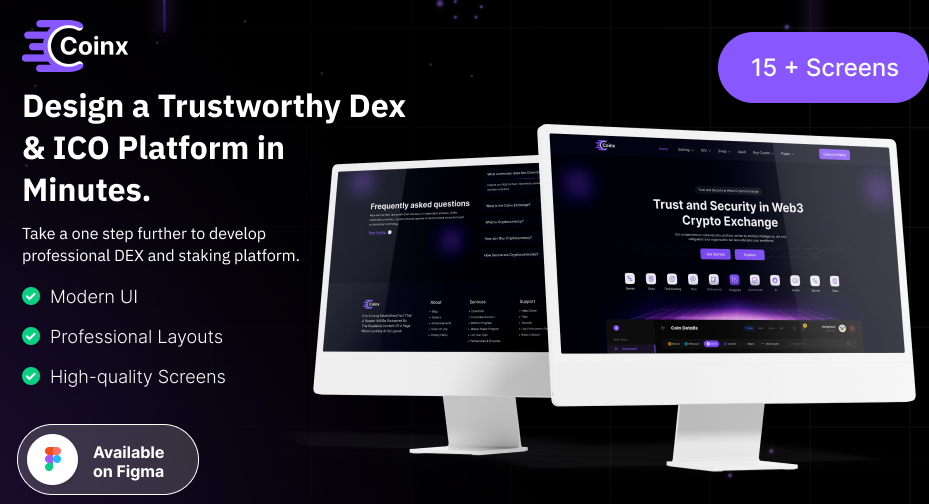
CoinX focuses on credibility and structure, important for IDO and launchpad platforms. The design supports project listings, token details, and investor flows. The content placement and dark mode are maintaining a professional tone that appeals to serious investors rather than speculative users.
4. Crypschange – Crypto Exchange Website Design
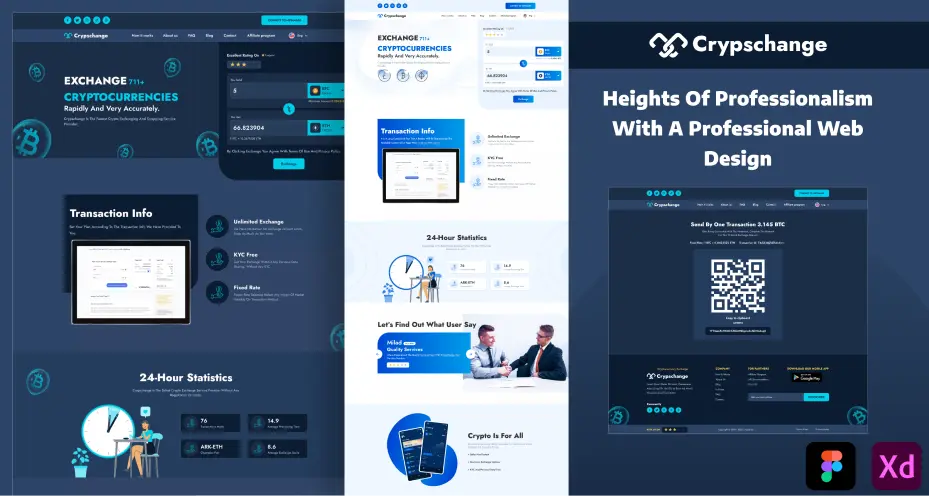
Crypschange UI kit is optimized for exchange platforms, with dashboard-ready layouts, trading-focused components, and data-centric design. It supports scalability and is suitable for centralized or hybrid exchange products aiming for fast deployment. Having the modular web design support getting a crypto exchange development being optimized and agile.
5. Punchi Meme Coin Website Design
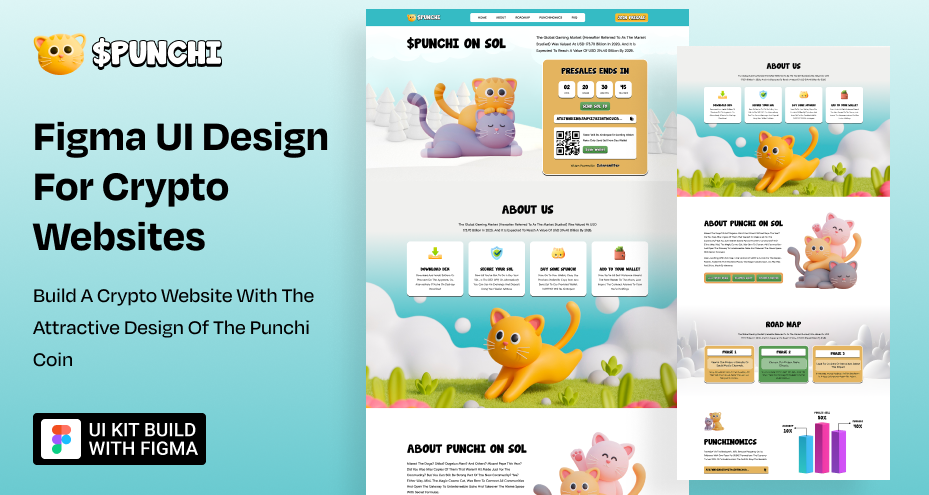
Punchi meme coin website design demonstrates how tokens can still maintain usability. While visually expressive, the design avoids chaos by anchoring key information clearly. It is ideal for community-driven tokens that require branding without sacrificing trust.
Choosing these web design UI kits makes the work easier for you and your clients. But when combined with a custom design, the overall crypto website looks branded and professional, as famous crypto platforms do.
Final Checklist for Designing a Crypto Website Users Trust
Before launching or redesigning a crypto website, use this checklist to ensure the product communicates trust at every interaction point.
-
Clear value proposition: Users should immediately understand what the product does and who it is for. Avoid vague messaging and explain the core benefit in simple, direct language.
-
Visible transparency signals: Display audits, documentation, product screenshots, and real data where users expect them. Add transparency as a part of the layout, not hidden in footers.
-
Familiar UX patterns: Use predictable navigation, standard wallet flows, and recognizable interaction patterns. Designing a website with familiarity reduces cognitive load and user anxiety.
-
Performance-optimized layouts: Fast load times and smooth interactions signal reliability. Slow or laggy interfaces raise immediate red flags in crypto products.
-
Accessible and readable UI: Maintain strong contrast, readable typography, and responsive layouts across devices. Accessibility directly affects credibility.
-
Honest communication: Set accurate expectations across marketing and product experiences because consistency builds confidence over time.
With the checklist, get a trustworthy crypto website design ready and move forward with the website development and other phases to complete.