BTC - Bitcoin
 USDTERC20 - USDT ERC20
 ETH - Ethereum
 BNB - Binance
 BCH - Bitcoin Cash
 DOGE - Dogecoin
 TRX - TRON
 USDTTRC20 - USD TRC20
 LTC - LiteCoin

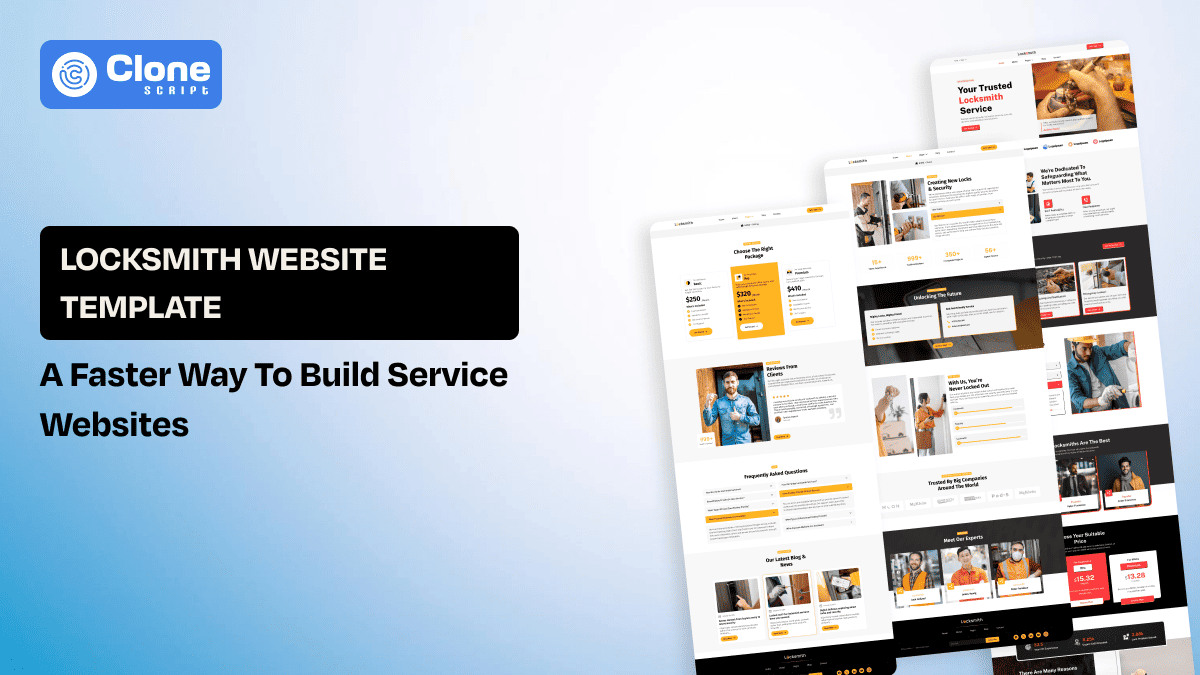
Locksmith Website Template: A Faster and Smarter Way to Build A Service Website
Local service businesses operate in urgency-driven environments. When someone searches for an emergency locksmith, they are not browsing casually. They need immediate help, clear communication, and instant trust.
That urgency is exactly why a professionally structured locksmith website is no longer optional. It is foundational.
For web designers and developers building service business websites, creating everything from scratch wastes time and budget. Most locksmith websites share similar structures: service segmentation, emergency call-to-actions, trust badges, location targeting, and fast mobile responsiveness.
Instead of rebuilding these elements repeatedly, a structured locksmith service template with front-end website development allows you to deploy faster while maintaining professional standards.
This guide explains why templates outperform custom builds for this niche, how customization works, and how to implement one efficiently using modern development stacks.
Why a Locksmith Website Template Is Better Than Custom Development
Custom development sounds impressive in proposals. In practice, it increases cost and takes time for improved performance for local service businesses. But the brand wants to be visible immediately. There is an HTML template optimized with a modern front-end framework helpful.
-
Faster Project Delivery
First of all, it’s a fact that designing a professional website from the start needs time and resources.
Here, layout and coded templates eliminate repetitive design planning, accelerate front-end implementation, reduce revision cycles, and enable client-ready deployment within significantly shorter timelines.
When agencies manage multiple local service clients, time-to-launch directly affects profitability. A template compresses the production cycle without affecting quality.
-
Lower Development Cost
You quote the locksmith client the following:
-
UI design and UX optimization for $500-$1000.
-
Front-end development with a modern stack remain $1000 to $5000.
-
Back-end development costs range from $3000 to $10,000.
-
Any additional third-party integrations cost around 10-20% of the overall budget.
Then, the client ask is any chance to save 20-30% of the website development project?
Yes, front-end site templates can do.
It reduces UI sprint expenses, testing overhead, redesign iterations, and manual layout structuring that custom development frequently requires.
Usually, local locksmith businesses typically operate on moderate marketing budgets. A template helps agencies deliver professional outcomes within those constraints.
-
Pre-Optimized Conversion Structure
The initiative part of using a template in development is that it includes strategically placed emergency banners, service segmentation sections, and visible call-to-action buttons designed for immediate user engagement.
So, what does that result in?
-
You don’t have to ask every user what they feel.
-
Not have to read the research and watch videos to understand user behavior.
-
Do not implement the A/B testing to analyze which section works best and what color to choose.
Conversion is the primary objective of a locksmith website. Templates structured around urgency-based behavior outperform decorative custom designs.
-
Built-In Responsive Design
At night, someone visits the locksmith website in iPhone, and sometimes a corporation executive needs to ask for a quote through a large desktop screen.
A website has to be responsive and load fast without facing lag and collisions. Otherwise, it costs only losing the leads and revenue for clients.
You have to ensure consistent layout adaptability across devices, prioritizing mobile-first interaction where most locksmith searches originate today.
In 2026, mobile performance is non-negotiable. A responsive locksmith template removes the need for later structural adjustments.
Customization Capabilities of a Locksmith Website Template
The myth about the website templates is that they are only copy and pasted solution rather than offering creativity. The reality is different. In reality, a modern customized template offers proper flexibility.
One of the most common misconceptions about templates is rigidity. In reality, a modern customizable locksmith website template offers extensive flexibility.
-
Brand Personalization
Premium templates that are paid allow easy modification of color schemes, typography systems, logo placement, imagery assets, and visual tone while preserving structural consistency.
This means designers maintain brand integrity without altering layout hierarchy.
Otherwise, the free-of-cost locksmith templates are not useful but only looks a static HTML structure that we saw in 2010.
-
Service Page Expansion
Front-end code-ready templates enable duplication of structured sections to create dedicated pages for residential, automotive, commercial, and emergency locksmith services.
Creating keyword-targeted landing pages becomes straightforward without rebuilding user interface components from scratch.
-
SEO Optimization Control
The best part of modern HTML5 website templates it supports editing of meta titles, descriptions, heading structures, internal links, and structured schema for improved visibility. These templates are built with semantic HTML to simplify the navigation.
Website search performance depends on structure. As a simple and SEO-friendly recommended structure, the search crawlers can understand the site prominently.
-
Integration Flexibility
Paid website templates are not just decorative layouts; they are tested before being sold to development agencies.
Accommodates CRM integrations, call tracking tools, Google Maps embeds, WhatsApp chat, and contact form back-end processing, all has been checked with the Figma design and front-end code.
You maintain development flexibility without architectural friction.
Development Process: How to Build a Locksmith Website Using an HTML5 Template
Using an HTML5-based locksmith website template does not remove the need for development expertise. It manages repetitive structural engineering and allows you to focus on optimization, branding precision, and deployment efficiency.
Instead of architecting layout systems from scratch, you inherit a pre-structured, conversion-ready framework. That shifts your effort toward refinement rather than reconstruction.
Let’s explain the process in technical clarity.
-
Front-End Technology Stack
A professional locksmith HTML5 template is typically structured around modern front-end best technologies and practices.
-
HTML5 (Semantic Markup): Clean semantic tags such as header, section, article, and footer improve accessibility, SEO crawlability, and structural clarity.
-
CSS3 (Scalable Styling Architecture): Modular stylesheets allow consistent spacing, typography systems, and color management. This improves maintainability and future redesign flexibility.
-
Responsive Grid Framework (e.g., Bootstrap or custom grid): Grid systems ensure proper alignment across breakpoints. It increases seamless mobile-first responsiveness.
-
Optimized JavaScript: Lightweight scripts handle navigation toggles, sliders, testimonial carousels, and call-to-action animations without compromising page speed.
A clean front-end architecture reduces technical debt. Developers can scale, refactor, or extend features without destabilizing the layout structure. It also improves Core Web Vitals performance, which directly impacts SEO rankings for local locksmith searches.
-
Optional Backend Integration
Most locksmith websites are lead-generation platforms rather than complex web applications. Therefore, back-end scripting language and framework requirements are usually minimal but preferable.
Common back-end development implementations include:
-
PHP Form Handling: It processes contact form submissions and sends email notifications securely.
-
Node.js (Optional): This is used when additional dynamic behavior or API integrations are required.
-
CMS Conversion (Optional): If clients request blog management capabilities, the template can be converted into a WordPress or headless CMS setup.
-
Database Integration (Rarely Needed): Only required if booking systems or account-based features are implemented.
For the majority of locksmith businesses, lightweight back-end processing is sufficient. The primary objective is reliable form submission and quick inquiry routing.
Keeping back-end complexity low improves security, reduces hosting costs, and minimizes maintenance overhead.
What Makes a High-Converting Locksmith Website Template
Every locksmith website template is not made for performance. Some focus purely on visual appeal. High-converting templates, however, are structured around behavioral psychology, urgency triggers, and local intent alignment.
Locksmith customers rarely browse casually. They act under pressure. That means the website must reduce friction, build trust instantly, and make contact effortless.
Below are the structural elements that separate average templates from conversion-focused ones.
-
Emergency-Focused Hero Section
The hero section on the website is not decorative. It is the primary decision zone.
A premium website template places the emergency message immediately above the fold, combined with a highly visible phone number and a strong call-to-action button. The copy communicates availability (24/7 service), response speed, and trust signals such as “Licensed & Insured.”
Why this matters:
-
Visitors scanning under stress look for reassurance first.
-
A visible call button shortens the decision path.
-
Clear urgency messaging reduces hesitation.
The first five seconds determine whether visitors call or leave. The hero section must remove uncertainty immediately.
-
Service Segmentation Structure
Locksmith businesses typically offer multiple services. A strong template separates them clearly rather than listing everything in a single paragraph.
Dedicated sections for:
-
Residential locksmith services
-
Automotive locksmith services
-
Commercial locksmith solutions
This segmentation improves clarity and allows visitors to identify relevant services instantly. It also supports SEO by enabling keyword-targeted landing pages for each category.
From a usability perspective, a structured service section reduces cognitive overload. From an SEO standpoint, they strengthen topical relevance.
-
Trust and Credibility Elements
In emergency-based industries, trust drives action.
A front-end locksmith template integrates credibility signals throughout the layout rather than isolating them on a single page. These may include:
-
Client testimonials
-
Google review ratings
-
Security certifications
-
Years of operational experience
-
Service guarantees
Trust elements work because locksmith services involve property access and personal safety. Users must feel confident before making contact.
Strategic placement of testimonials near call-to-action sections significantly improves conversion likelihood.
-
Location-Based Optimization
Locksmith services are usually local. Visibility within geographic markets determines lead volume.
A flexible and code-ready template includes:
-
Service area sections listing cities or neighborhoods
-
Embedded Google Maps for proximity confirmation
-
Location-specific landing page structure
-
Localized contact details
This approach strengthens local SEO signals while also reassuring users that the service provider operates in their area.
Templates do not have geographic structure and often underperform in competitive city markets.
-
FAQ Integration
Frequently Asked Questions are not filler content. They serve a proper psychological and SEO function.
Common locksmith-related concerns include:
-
How quickly can you arrive?
-
Are your services available 24/7?
-
What payment methods do you accept?
-
Are you licensed and insured?
Addressing these questions reduces hesitation and pre-call uncertainty. It also allows implementation of FAQ schema markup, which can enhance search visibility.
Why the Locksmith Service Provider HTML5 Website Template Is a Strategic Choice
Choosing the right locksmith website template is about operational efficiency, scalability, and conversion performance. The Locksmith Service Provider HTML5 Website Template is designed specifically for service-driven businesses where speed, trust, and clarity drive lead generation outcomes.
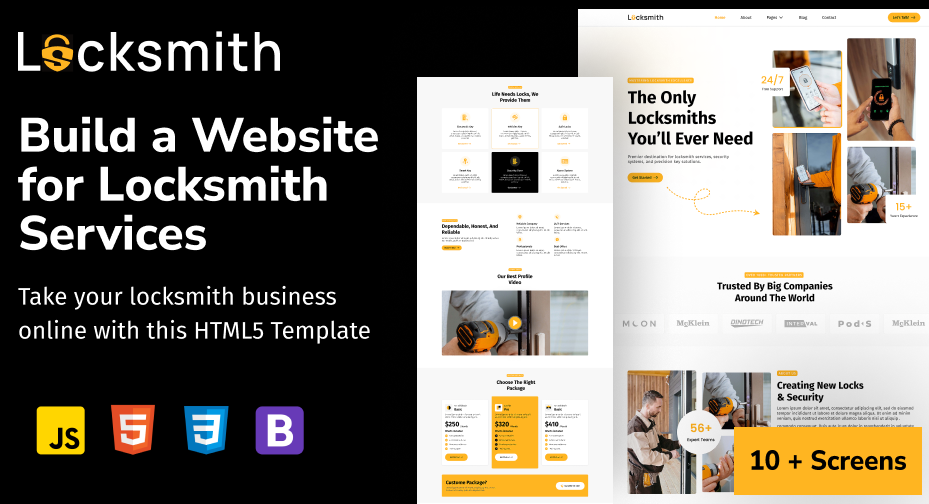
Below is an explanation of why this template becomes a strategic development asset rather than just another downloadable theme.
-
Clean and Maintainable Codebase
A well-structured HTML5 template begins with an organized architecture.
The file hierarchy is logically separated into CSS, JavaScript, and asset directories, which simplifies navigation and reduces development friction. Semantic HTML5 markup improves accessibility and SEO crawlability while keeping the codebase readable.
For developers, this means:
-
Faster customization cycles
-
Reduced debugging time
-
Easier performance optimization
-
Scalable expansion for future features
Clean code directly lowers long-term maintenance costs. When updates are required, whether for SEO refinement, content expansion, or integration, developers can implement changes without restructuring the entire framework.
-
Conversion-Driven Layout Architecture
This template is not built around aesthetics alone. Its layout hierarchy prioritizes conversion behavior.
-
Call-to-action buttons are strategically placed in high-visibility zones, including the hero section and service blocks.
-
Emergency messaging is positioned above the fold to capture urgency-driven users immediately.
-
Trust indicators such as testimonials and service guarantees appear near inquiry prompts, encouraging confidence at decision points.
This intentional architecture reduces user hesitation and shortens the contact journey. Instead of forcing visitors to search for information, the structure guides them toward action naturally.
For locksmith businesses operating in competitive local markets, this conversion-focused layout directly impacts lead volume.
-
Fully Responsive Design System
Most locksmith searches occur on mobile devices, especially during emergencies. A mobile-first responsive framework ensures that the website performs flawlessly across smartphones, tablets, and desktops.
The layout adapts seamlessly across breakpoints, maintaining the following:
-
Clear visibility of emergency phone numbers
-
Accessible navigation menus
-
Properly scaled typography
-
Optimized touch targets
Responsive consistency improves user experience while also supporting search engine ranking signals tied to mobile usability.
A responsive design system is no longer optional in 2026; it is a performance baseline.
-
Easy Customization Workflow
Efficiency is important for agencies managing multiple client projects. This HTML5 locksmith template supports rapid customization without structural disruption.
Designers can do these:
-
Replace brand colors through centralized style variables
-
Update typography systems easily.
-
Modify service sections without rebuilding layout grids.
-
Expand pages while maintaining design consistency
Because the foundational components are already engineered, customization becomes refinement rather than reconstruction.
This workflow flexibility enables faster project turnaround while maintaining professional output standards.
Template Strategic Usability for Agencies and Developers
The value of this template extends beyond aesthetics. It delivers:
-
Faster time-to-launch
-
Lower development overhead
-
Reduced technical complexity
-
Improved conversion structure
-
Strong local SEO foundation
For service-based industries like locksmith businesses, where urgency and trust-related conversions, structural efficiency, and performance optimization take precedence over experimental design trends.
The Locksmith Service Provider HTML5 Website Template provides a stable, scalable, and conversion-oriented foundation, making it a strategic choice for developers building modern locksmith websites.