BTC - Bitcoin
 USDTERC20 - USDT ERC20
 ETH - Ethereum
 BNB - Binance
 BCH - Bitcoin Cash
 DOGE - Dogecoin
 TRX - TRON
 USDTTRC20 - USD TRC20
 LTC - LiteCoin

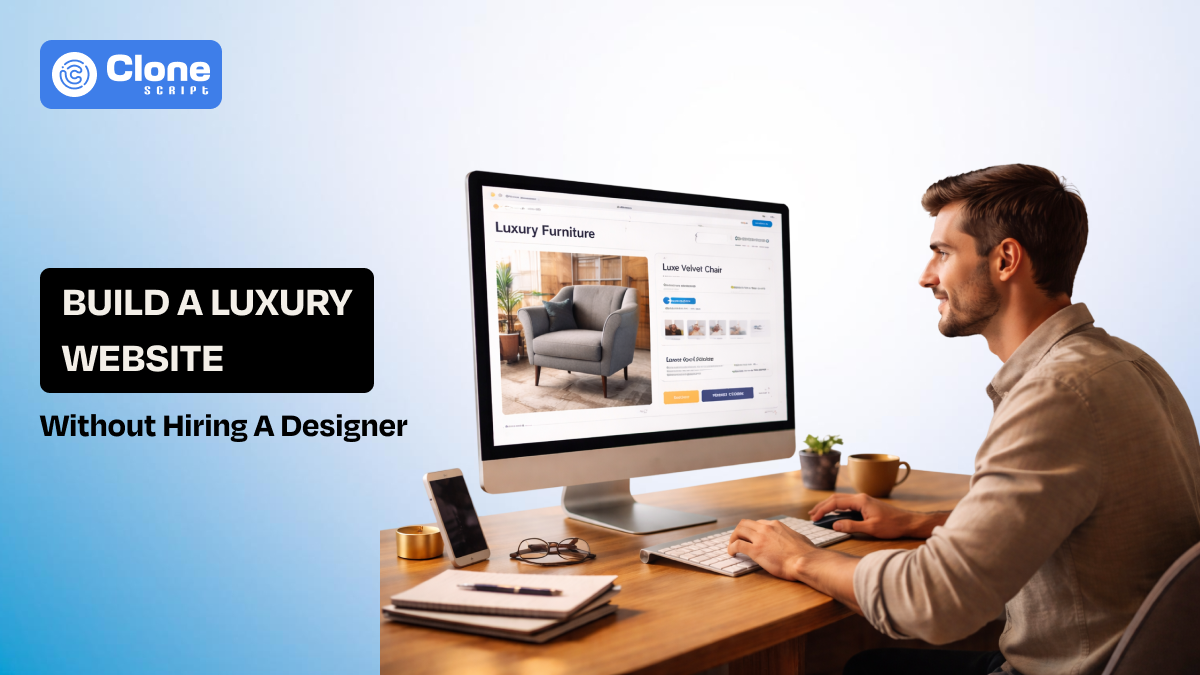
How to Design a Luxury Website Without Hiring a Designer
Luxury website design is no longer reserved for brands with massive budgets or in-house creative teams. The rise of modern UI kits, structured templates, no-code platforms, and performance-driven frameworks has made it possible for founders, marketers, and developers to create high-end digital experiences independently.
However, building a luxury website is about choosing a “premium-looking template” that can make a difference. It is about understanding luxury psychology, visual hierarchy, spacing science, content narrative, performance engineering, and conversion behaviour.
This guide will help you build a truly premium website without hiring a designer. You can ensure real user value and brand credibility.
What Makes a Website “Luxury”
Luxury in digital design is primarily perception engineering.
Research from the Stanford Web Credibility Project indicates that 75% of users judge business credibility based on website design. Meanwhile, behavioural UX studies show users form visual trust impressions within milliseconds.
Luxury websites communicate:
-
Trust
-
Exclusivity
-
Calmness
-
Authority
-
Craftsmanship
-
Confidence
Unlike mass-market websites, luxury platforms do not chase attention through noise. They guide attention through visual rhythm and controlled storytelling.
Luxury design is defined by:
-
Minimal but powerful layouts
-
Strong typographic personality
-
Cinematic imagery
-
Sophisticated spacing
-
Reduced UI friction
-
Performance smoothness
-
Emotional copywriting
Understanding these foundations is the first step before opening any website design tool.
Here is a process to follow for making a website for a luxury brand.
Step 1: Define Strategic Brand Positioning Before Designing
According to HubSpot research, consistent branding across channels increases revenue by up to 23%.
Most DIY website creators fail because they get involved directly with templates.
Luxury design begins with answering strategic questions:
-
Is the brand modern luxury or heritage luxury?
-
Is the audience the aspirational middle segment or the ultra-premium niche?
-
Is conversion the primary goal or brand perception building?
-
Does the product rely on storytelling or specification comparison?
Create a simple positioning framework:
-
Brand Tone: Elegant, bold, futuristic, artistic
-
User Emotion Goal: Desire, trust, curiosity, admiration
-
Visual Direction: Dark mode minimal, editorial white, cinematic gradient
Brands with clear positioning see significantly higher engagement.
Step 2: Reverse Engineer Competitor Luxury Websites
You do not need a designer. You need observation skills.
Study 8–10 premium brands in your category and document:
-
Navigation simplicity
-
Content density
-
Image styles
-
Button language
-
Typography scale
-
Scroll storytelling
Notice patterns such as:
-
Fewer menu items the site has
-
Larger headlines that catch the attention
-
Slower scroll pacing affecting user experience
-
Editorial layouts that feel exclusive
-
Grid consistency sounds professional
-
Micro-interaction refinement in the website
Now, create a reference sheet. This becomes your design blueprint.
This step alone can replace weeks of trial-and-error design work.
Step 3: Choose the Right Foundation, UI Kit, or Template System
The competitor analysis has been done. Now, it’s time to choose the foundation: UI kit and template. Note that luxury design without structure leads to visual inconsistency.
Instead of designing from scratch, start with:
-
Structured Webflow templates
-
Component-based design systems
Using them, the benefits include:
-
Pre-defined spacing systems
-
Typographic hierarchy
-
Responsive breakpoints
-
Interaction presets
-
Visual rhythm consistency
This reduces design decision confusion and ensures professional alignment even for non-designers.
When selecting a website template, check the following:
-
Does it use an 8px or 10px spacing grid?
-
Are section paddings consistent?
-
Is typography scalable?
-
Are animations smooth and subtle?
-
Is the mobile layout thoughtfully optimized?
Avoid templates overloaded with gradients, shapes, or decorative elements.
Luxury equals restraint.
Step 4: Master Layout Science, Grid, Balance, and Visual Flow
Luxury websites feel effortless because they follow invisible layout mathematics.
Use a 12-column grid system to maintain balance.
Key layout principles to follow:
-
Content Width Discipline: Luxury websites rarely use full-width text blocks. Optimal reading width is 60–75 characters per line.
-
Section Breathing Space: Use large vertical spacing (80–140px desktop). This improves comprehension and perceived elegance.
-
Visual Anchoring: Each section should have one dominant element, like a large product image, a strong headline, a cinematic video, and a bold statistic. This guides user focus.
-
Modular Consistency: Cards, testimonials, and service blocks must follow the same rhythm. Consistency increases usability and perceived quality.
These are helpful to make a website that looks genuine.
Step 5: Typography Strategy That Signals Premium Quality
Google UX research shows improved typography can increase reading engagement significantly.
Typography is the fastest way to elevate a website's utilization.
Luxury typography patterns include:
-
High contrast serif fonts (editorial feel)
-
Neutral geometric sans fonts (modern feel)
-
Large heading scales (48–96px desktop)
-
Generous line height (140–170%)
-
Subtle letter spacing
Limit typography choices:
-
One primary font
-
One secondary font
-
One accent weight variation
Avoid mixing multiple font personalities.
Typography must feel intentional, not decorative.
Step 6: Visual Content Production Without a Huge Budget
According to MDG Advertising research, 67% of consumers consider image quality very important in purchase decisions.
You don’t always need a professional photoshoot.
You can achieve premium visuals through:
-
Direction-based stock selection
-
AI-assisted photography styling
-
Cinematic color grading
-
Texture overlays
-
Lighting contrast editing
-
Minimal composition framing
Luxury visual principles:
-
One subject focus
-
Neutral backgrounds
-
Dramatic shadows
-
Controlled color palette
-
Editorial crop framing
Better visuals increase perceived product value.
Step 7: Micro-Interactions and Motion Design Psychology
Google studies show that smoother interaction improves perceived usability scores.
Luxury websites rarely use aggressive animation.
Instead, they use motion to guide emotion.
Effective luxury interactions:
-
Fade-in on scroll (200–400ms delay)
-
Hover lift effects (2–6px movement)
-
Image zoom micro feedback
-
Cursor reveal effects
-
Smooth section transitions
-
Magnetic buttons
Motion principles to note:
-
Predictable
-
Smooth
-
Low amplitude
-
Performance friendly
Avoid the following:
-
Bounce animations
-
Fast parallax
-
Loud hover colors
-
Motion overload
When the site provides the experience that the user wants, the conversion rate becomes achievable.
Step 8: Performance Optimization: The Hidden Luxury Factor
Amazon famously reported that every 100ms delay costs conversion revenue.
Website speed performance is the most underestimated luxury signal.
Luxury users expect the following:
-
The site has to instantly load
-
Fluid scroll must present
-
Zero layout shifts will experience professional
-
Seamless navigation helps to find information
Optimize the following things:
-
Using WebP or AVIF images to reduce the load
-
Lazy loading media for asset appearance
-
Reducing font files to make the entire page easy to load
-
Eliminating unused CSS as it affects the user experience
-
Using CDN hosting for faster loading of the website
-
Implementing caching to offer a unique experience
-
Limiting heavy sliders that do not load on the slow network connection
Core Web Vitals optimization also improves SEO ranking potential.
Step 9: Luxury Copywriting Framework
Luxury brands do not “sell.” They invite experience.
Use these writing principles and, for the required results, hire a web copywriting expert:
-
Benefit-Emotion Balance: Instead of features, describe the transformation.
-
Editorial Tone: Users read luxury websites like magazines, not product catalogs. Consider tone.
-
Slow Narrative Flow: Use storytelling sections, craftsmanship, vision, philosophy, experience, and signature offerings.
-
Soft Call-to-Actions: Include the examples, “Discover the Collection,” “Begin Your Experience,” and “Explore Signature Services.”
This reduces pressure while increasing curiosity.
Step 10: Mobile Luxury Experience Engineering
Google reports that mobile users abandon visually cluttered pages faster.
Luxury design must scale to mobile without losing elegance.
Follow these strategies:
-
Use vertical storytelling stacks for a responsive website experience
-
Increase font size readability on small-sized devices
-
Maintain image dominance for a clear presentation
-
Reduce navigation depth to reach whenever they want to move
-
Add sticky action bars to help users find where they have to go
-
Optimize thumb reach zones
Test the aspects:
-
Scroll comfort
-
Tap accuracy
-
Animation smoothness
-
Image clarity
-
Load speed on 4G
When getting a sufficient result, then integrate with the real-world use case.
Step 11: Building Authority and Trust Signals
Nielsen research shows users trust peer recommendations significantly more than brand claims.
Luxury buyers research deeply.
Add subtle credibility boosters:
-
Client logos
-
Real testimonials
-
Case studies
-
Press features
-
Awards
-
Founder story
-
Process transparency
However, present these elements minimally, avoid overcrowded “logo walls.”
Step 12: Continuous Optimization Through Behaviour Analytics
Luxury websites evolve through user insight. Track these metrics:
-
How much is the scroll depth
-
What do click heatmaps show
-
Which are the most exit pages
-
CTA engagement is good or overoptimized
-
Session recordings sufficient to reach any decision
If users drop at a section:
-
Improve headline clarity
-
Increase visual contrast
-
Adjust spacing
-
Simplify copy
Data-driven iteration replaces guesswork.
Conclusion
You need strategic clarity, structured systems, and disciplined execution for luxury website design.
By using premium templates, mastering typography and spacing, producing strong visual narratives, and optimizing performance, any founder or team can craft a high-end digital presence.
We can’t reduce the importance of technology-related knowledge. After all, to make your site live, you need information for UI design, front-end and back-end development, and deployment.
Need support? AllClone Script provides an entire full-stack web development for you. Just contact us, and we will come to you with the complete details of launching the website.