BTC - Bitcoin
 USDTERC20 - USDT ERC20
 ETH - Ethereum
 BNB - Binance
 BCH - Bitcoin Cash
 DOGE - Dogecoin
 TRX - TRON
 USDTTRC20 - USD TRC20
 LTC - LiteCoin

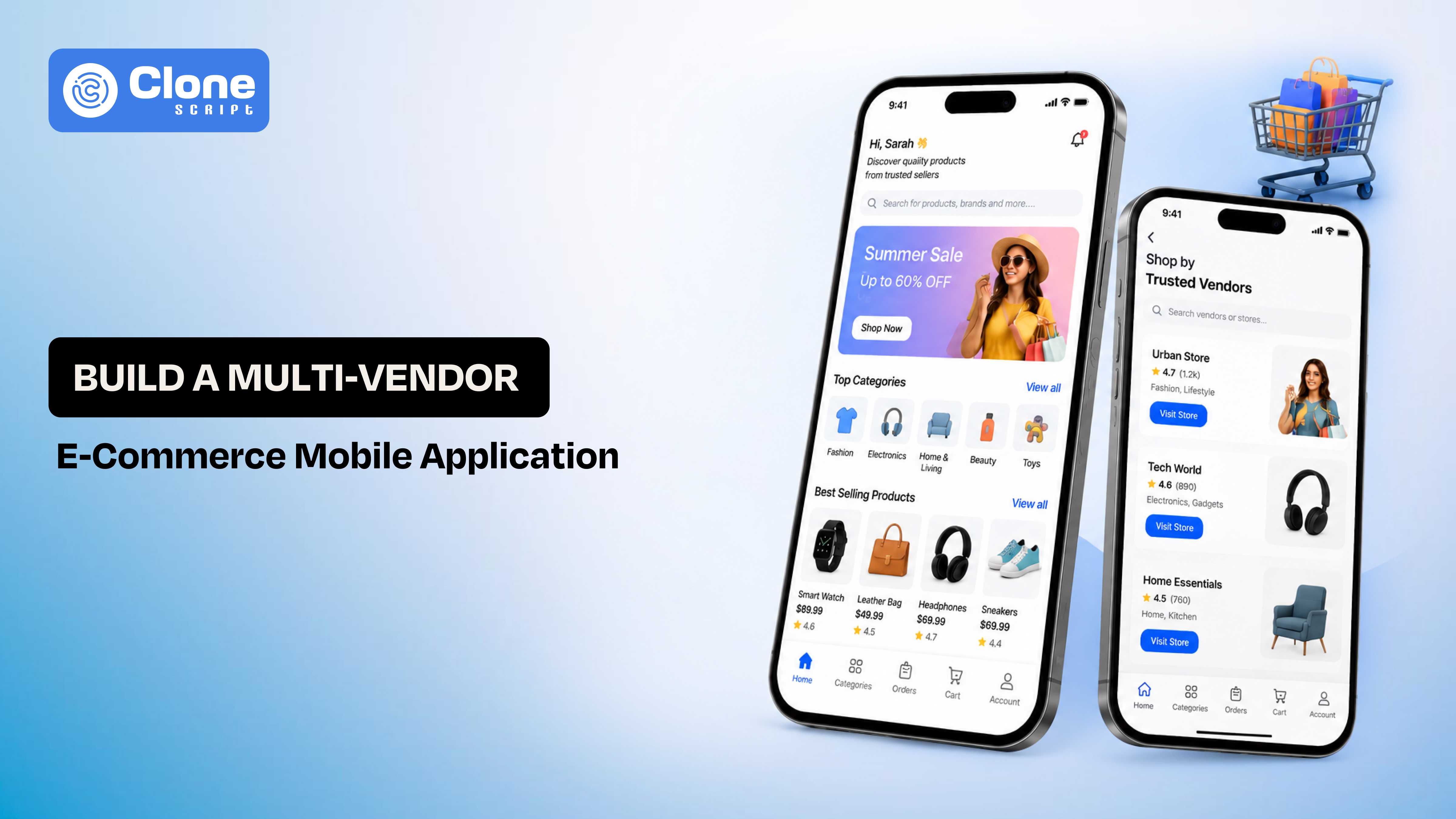
How to Build a Successful Multi-Vendor E-commerce Mobile Application
Global online marketplaces now drive more than 60% of e-commerce sales, which is why many entrepreneurs are exploring multi-vendor app models. Instead of holding inventory, marketplace businesses can scale by connecting buyers and sellers through a single platform.
But e-commerce mobile app development is rarely straightforward. Vendor acquisition can take months, custom development may take 4 to 9 months, and costs can rise quickly when payment splits, logistics, and marketplace workflows become more complex.
Many founders underestimate these challenges early, especially when working with startup-level budgets. Choosing the wrong development approach or feature set can delay launch and increase costs.
This guide describes the process, costs, features, and practical strategies to build and launch a scalable multi-vendor marketplace app successfully.
What Is a Multi-Vendor E-commerce Mobile Application?
It is a kind of digital commerce system that allows independent sellers to list and sell products through the app. At the same time, customers can browse, compare, and purchase products in one place. Additionally, admins have full control of the entire e-commerce app.
So, how is it different from a traditional online e-commerce store development?
Look, there is only one merchant; the platform owner manages the marketplace infrastructure and earns revenue through commissions, subscriptions, or other monetization models.
In a multi-seller e-commerce model, some of the largest digital businesses operate, from broad marketplaces to niche vertical platforms. Its appeal is simple: it allows entrepreneurs to scale product variety and revenue potential without owning inventory themselves.
How Does a Multi-Vendor Marketplace App Work?
Most marketplace apps operate through three core components:
-
Customer App
This is the front-end shopping experience where users can:
-
Search and filter products
-
Compare multiple sellers
-
Place orders and make payments
-
Track shipments
-
Leave ratings and reviews
For customers, the experience should feel as seamless as a standard e-commerce app, even though multiple vendors operate behind the platform.
-
Vendor Panel
Each seller typically gets access to a dedicated dashboard to manage:
-
Product listings
-
Inventory
-
Pricing
-
Orders and fulfillment
-
Sales reports
This vendor layer is what separates a marketplace from a traditional e-commerce store. Strong seller tools often influence vendor retention and marketplace growth.
-
Admin Dashboard
The marketplace owner controls the platform through an admin panel used to manage:
-
Vendor approvals
-
Commission settings
-
Product moderation
-
Payment distributions
-
Disputes and refunds
-
Marketplace analytics
This is where business operations and platform governance happen.
Popular Multi-Vendor Marketplace Models
Every marketplace operates differently. Most follow one of these marketplace business models:
-
Product Marketplaces: Amazon and Etsy are the prime examples of these marketplaces that allow multiple merchants to sell physical goods through one ecosystem.
-
Hyperlocal Marketplaces: Take the example of DoorDash and Swiggy apps that are used for grocery delivery, food ordering, or local services where multiple vendors serve users within a region. There is a difference between quick commerce and e-commerce businesses.
-
Niche Vertical Marketplaces: These are the focused marketplaces built around a category such as fashion, electronics, handmade goods, or B2B wholesale, like OLX.com and CarDekho.
For many startups, niche marketplaces are easier to launch because they face less competition and require lower vendor acquisition costs early on.
Why Multi-Vendor Marketplace Apps Are Growing
Most of the global e-commerce sales are growing. That means if a 5-product sold online, then 3 products are purchased through marketplaces. Entrepreneurs see the opportunity to bring sellers onto one platform and earn from transactions across the ecosystem.
-
Lower-Cost Entry Compared to Traditional E-commerce.
For early-stage founders, one major advantage is capital efficiency. In a marketplace model, vendors manage products and stock, which reduces inventory risk for the platform owner.
That makes the model appealing for startups looking to launch without the operational burden of a traditional retail business.
-
Niche Marketplaces Are Expanding Fast
Growth is no longer limited to broad marketplaces like Amazon or Etsy. Much of the opportunity now sits in niche and vertical marketplaces, where specialized demand often faces less competition.
Some examples include:
-
B2B procurement marketplaces
-
Hyperlocal delivery apps
-
Category-specific retail marketplaces
-
Service-based multi-vendor platforms
For entrepreneurs, niche models can be easier to validate and launch.
-
The Revenue Model Is Attractive
Unlike e-commerce websites that rely mainly on product margins, marketplace apps can generate revenue through multiple channels:
-
Sales commissions
-
Vendor subscriptions
-
Featured listings
-
Advertising placements
That diversified monetization model is a major reason marketplace businesses remain attractive.
But Growth Comes With a Core Challenge
Marketplace businesses grow only when both sides of the platform grow together, buyers and sellers.
This is called the marketplace liquidity problem, and it is where many startups struggle. Bringing in vendors without demand leads to churn. Getting customers without enough seller supply creates a poor marketplace experience.
Understanding that challenge early matters as much as choosing the right features, which is where marketplace development planning starts.
Every Multi-Vendor Marketplace App Needs These Key Features
The three core layers: buyer features, vendor tools, and admin controls, define the guaranteed adoption or total ignorance of the platform.
Rather than overloading an MVP with functionality, the focus should be on features that support transactions, trust, and marketplace operations from day one.
-
Customer Features
The customer experience has a direct impact on conversion and retention. Even small usability issues can affect sales, especially on mobile, where cart abandonment rates tend to be high.
Key customer features typically include:
-
Product search with filters and sorting
-
Wishlist and saved items
-
Secure checkout and multiple payment options
-
Real-time order tracking
-
Ratings and reviews
Search and filtering are especially important in marketplaces with multiple sellers, where product discovery can quickly become overwhelming without strong navigation. AI in customer experience can be useful here; prioritize to integrate that.
-
Vendor Features
Seller experience matters just as much as buyer experience. If vendors struggle to manage inventory or fulfill orders, marketplace growth often slows.
Essential vendor-side features include:
-
Product listing management
-
Inventory updates
-
Order management dashboard
-
Sales and performance reports
-
Vendor profile and store controls
Strong vendor tools can also improve seller retention, which is important because replacing churned vendors increases acquisition costs.
-
Admin Features
The admin layer is where marketplace operations stay controlled and scalable.
Key admin features usually include:
-
Vendor approvals and verification
-
Commission management
-
Product moderation
-
Order and dispute management
-
Payment settlement controls
-
Marketplace analytics dashboard
These functions become increasingly important as transaction volume grows.
Features to Prioritize for a Minimal Viable Product
Many founders try to launch with enterprise-level functionality too early, which increases both the mobile app timeline and development costs.
For an MVP, prioritize features that support:
-
Product listings
-
Multi-vendor checkout
-
Order management
-
Commission handling
-
Basic reviews and ratings
Advanced capabilities like AI recommendations, loyalty systems, or complex seller analytics can usually come later.
Starting lean often reduces e-commerce app development risk while helping validate demand faster.
Features That Affect Development Costs Most
The same complexity in every feature is not available every time.
These often increase the scope significantly:
-
Multi-vendor payment splitting
-
Real-time delivery tracking
-
Advanced search engines
-
Multi-language or multi-currency support
-
Vendor analytics and reporting modules
This is one reason feature planning heavily influences app development cost, which we’ll cover next.
How to Build a Multi-Vendor E-commerce App Step by Step
A business model design is important. It’s not about a product development exercise.
Many failed marketplace launches happen because founders move into development before validating demand, defining monetization, or narrowing MVP scope.
A phased approach reduces that risk.
-
Validate the Marketplace Idea First.
Before writing code, test whether there is real demand on both sides of the marketplace, buyers and vendors.
Start by validating:
-
Is there a clear market gap?
-
Can vendors be acquired at a reasonable cost?
-
Is there enough buyer demand in the niche?
-
Can the marketplace generate sustainable commissions?
This matters because the biggest challenge for new marketplaces is not technology, but reaching a supply-demand balance.
Many founders begin with a narrower niche for this reason.
-
Define the Business Model Early.
Your revenue model affects product requirements, payment logic, and even feature scope.
Common marketplace models include:
-
Commission per transaction
-
Vendor subscription plans
-
Listing fees
-
Featured product promotions
For example, commission-based models may require stronger payment split functionality, while subscription models may prioritize seller dashboards and billing controls.
These decisions are easier to make before development than after launch.
-
Start With an MVP, Not a Full Marketplace Platform.
A common mistake is trying to build too much in version one.
An MVP should focus on validating transactions, vendor participation, and user behavior with essential functionality only.
Typical MVP scope includes:
-
Buyer storefront
-
Vendor onboarding
-
Product listings
-
Checkout flow
-
Admin controls
For many startups, launching in 3–5 months with a lean MVP is often more practical than spending 8+ months building advanced functionality before testing the market.
-
Choose the Right Development Approach
At this stage, founders usually choose between:
-
Custom development: E-commerce mobile app development is related to higher flexibility, but longer timelines and higher costs.
-
Ready-made marketplace solutions: This option is useful for faster launch, lower initial investment, but customization may vary.
For early-stage entrepreneurs, the right choice often depends on budget, speed to market, and long-term product goals.
-
Build, Test, and Launch in Phases
Once development begins, focus on staged execution:
-
Wireframes and user flows
-
Core development
-
Beta launch
-
Post-launch iteration
Many successful marketplaces improve after launch through feedback rather than trying to perfect everything initially.
That approach reduces both cost and product risk.
A strong development process starts with the right roadmap, but the technology choices behind that roadmap matter just as much, which is where selecting the right tech stack comes in.
Choosing the Right Tech Stack for Marketplace App Development
The technology stack influences development cost, scalability, integrations, and how easily the platform can evolve as the business grows.
For most startups, the goal is not choosing the “most advanced” stack, but choosing one aligned with budget, speed, and long-term needs.
-
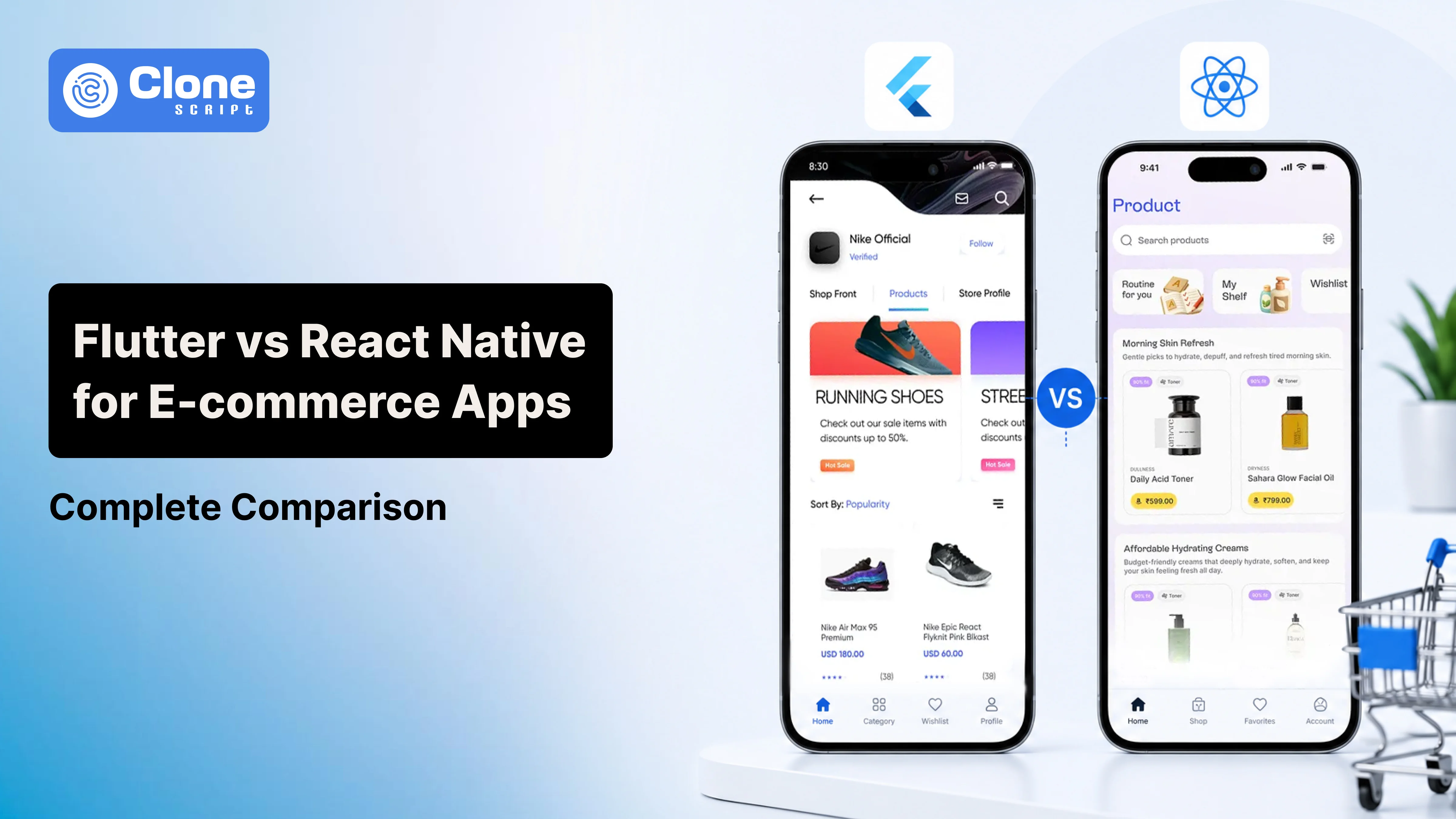
Front-end: Native vs Cross-Platform
For mobile marketplace apps, many startups consider cross-platform frameworks first because they reduce development time and cost.
Common front-end app development options include:
-
Flutter - popular for high-performance cross-platform apps
-
React Native - widely used for scalable mobile products
For MVP-stage marketplaces, cross-platform development can often be more practical than building separate iOS and Android apps.
-
Back-end and Marketplace Logic
The mobile app back-end handles the operational complexity of a marketplace, including:
-
User authentication
-
Product and inventory data
-
Order processing
-
Payment workflows
-
Vendor management
Technologies often used include:
-
Node.js
-
Laravel
-
Django
The right back-end development usually depends less on trends and more on scalability requirements and development expertise.
-
Database and Infrastructure
As vendor and product volume grow, the database structure becomes critical.
Marketplace apps commonly use:
-
PostgreSQL or MySQL for relational data
-
Cloud hosting, like AWS or Google Cloud
-
Scalable storage for catalogs and media
This matters because marketplaces often manage much more dynamic data than standard e-commerce apps.
Integrations Often Matter More Than Core Stack
In many cases, integration complexity affects development more than the core stack itself.
Critical integrations often include:
-
Payment gateways and split payments
-
Shipping and logistics APIs
-
Notifications and messaging
-
Search engines
-
Analytics tools
Payment splitting, in particular, can significantly affect technical scope in multi-vendor applications.
Technology decisions shape both product flexibility and budget, which is why the next question most founders ask is just as important: the cost for a multi-vendor marketplace app.
How Much Does It Cost to Build a Multi-Vendor Marketplace App?
Multi-vendor marketplace apps can vary widely in cost because pricing depends less on “building an app” and more on feature complexity, integrations, and development approach.
For startups, the biggest cost drivers are usually payments, vendor workflows, and custom functionality.
-
MVP Development Costs
For a lean marketplace MVP with core functionality, budgets often start in the $10,000–$20,000 range, depending on scope and development model.
An MVP typically includes:
-
Customer app interface
-
Vendor onboarding and product management
-
Multi-vendor checkout
-
Basic admin controls
-
Payment integration
For founders validating a concept, this is the most practical starting point.
-
Mid-Range Custom Marketplace Builds
Once advanced functionality is added, costs can rise significantly.
Features that commonly increase budget include:
-
Custom vendor dashboards
-
Real-time order tracking
-
Multi-currency support
-
Advanced search and filtering
-
Complex commission logic
Projects in this range fall between $30,000–$60,000, though requirements heavily influence cost.
-
Enterprise-Level Marketplace Development
Large-scale custom marketplaces can exceed $100,000+, especially when building:
-
Native apps for multiple platforms
-
Custom back-end architecture
-
High-volume infrastructure
-
Advanced automation or analytics systems
For early-stage entrepreneurs, this level is often unnecessary at launch.
Ongoing Costs Are Overlooked
Many founders budget for development but miss recurring costs such as:
-
Hosting and infrastructure
-
Maintenance updates
-
Security monitoring
-
Third-party service fees
-
Ongoing feature improvements
These can become a key aspect as the marketplace grows.
Why Many Startups Begin With Ready-Made Solutions
Because custom development can demand budgets quickly, many founders start with pre-built marketplace solutions to reduce upfront costs and launch faster.
That can be especially practical when the goal is validating attention before investing in heavy custom web development for the marketplace.
Check Our E-commerce Marketplace Clone Script
FAQs
-
What are the biggest challenges in multi-vendor app development?
Vendor acquisition, payment splitting, marketplace trust, supply-demand balance, and scaling operations are common challenges in multi-vendor marketplace development.
-
How do multi-vendor marketplace apps make money?
Multi-vendor apps earn through commissions, seller subscriptions, featured listings, advertising fees, and sometimes delivery or transaction service charges.
-
Should you build a marketplace app from scratch or use ready-made software?
Custom development offers flexibility, while ready-made marketplace software reduces cost, speeds launch, and suits startup or mid-budget founders.
-
How do you launch and grow a multi-vendor marketplace app successfully?
Focus on vendor onboarding, targeted user acquisition, retention strategies, and phased scaling to grow a multi-vendor marketplace sustainably.
-
How much does it cost to build a multi-vendor e-commerce app?
Multi-vendor app development costs typically range from $10,000 for MVPs to $100,000+ for large custom marketplace platforms.
-
How long does it take to develop a multi-vendor marketplace app?
An MVP may take 3–5 months, while custom multi-vendor marketplace apps require 6–9 months or longer.
-
What features are essential in a multi-vendor marketplace app?
Essential features include vendor dashboards, product management, multi-vendor checkout, order tracking, commission management, and an admin control panel.
-
What is the best tech stack for marketplace app development?
Many startups use Flutter or React Native with scalable back-end technologies like Node.js, Laravel, and cloud infrastructure.
-
Is ready-made marketplace software better than custom development?
For many startups, ready-made marketplace software offers faster deployment, lower costs, and reduced development risk compared to custom builds.